When a Landowner Takes Back Riding Permission
It’s a scenario no off-highway recreational vehicle (OHRV) rider wants to face: you’ve been enjoying a fantastic private trail for months, maybe even years, only to arrive one day and find new "No Trespassing" signs or a stern word from the landowner. The sudden loss of a riding spot due to a landowner taking back permission can be incredibly frustrating and disheartening. This guide dives deep into why this happens, what it means for you, and how we, as riders, can prevent it and foster better relationships with the generous folks who share their land in New Hampshire.
Why Landowners Might Revoke Riding Permission
Landowners in New Hampshire are often incredibly generous people, offering access to their private property for OHRV enthusiasts. This isn't a right; it's a privilege, and unfortunately, that privilege can be withdrawn for a variety of reasons. When a landowner decides to take back permission, it often comes from a place of frustration, concern, or changing personal circumstances. It’s rarely a snap decision, but rather the culmination of issues that, from their perspective, make continuing access untenable.
Misunderstandings and Rule-Breaking
One of the most common reasons landowners revoke permission stems directly from riders not respecting established boundaries or rules. Perhaps they’ve granted access for a specific trail, but some riders venture off into sensitive areas, causing erosion or disturbing wildlife. Maybe there’s a designated parking area, but vehicles are routinely left in inconvenient spots, blocking access for farm equipment or family visitors. Sometimes, the rules are implicit: "don't be a nuisance," but riders might interpret that differently than the landowner. Excessive noise, especially from machines with modified exhausts, is a frequent complaint. While many riders enjoy upgrading their machines with performance parts, maybe from a brand like SuperATV, it's crucial to remember that noise regulations and respect for others' peace are paramount. It’s hard to blame a landowner for feeling exasperated when their requests for quiet or adherence to designated paths are ignored.
Another issue can be litter. It sounds simple, but nothing sours a landowner's generosity faster than finding trash, broken parts, or even just discarded snack wrappers on their property. This isn't just an aesthetic problem; it can be a hazard for their livestock, pets, or even their own children. They’re allowing us to recreate, and in return, they expect us to leave their land cleaner than we found it. When a few individuals fail to uphold this basic courtesy, it reflects poorly on the entire riding community and often leads to widespread loss of access.
Changing Circumstances for the Landowner
Sometimes, a landowner's decision has absolutely nothing to do with rider behavior, which can be even more confusing and upsetting for the OHRV community. Life happens, and circumstances change. A landowner might decide to sell their property, and the new owners may not share the same enthusiasm for OHRV access. They might have plans for development, farming expansion, or simply prefer privacy. A family member could move onto the property, requiring more secluded space, or new safety concerns might arise if children or elderly relatives are now regularly using areas previously open to OHRVs.
Liability is another significant factor, even with New Hampshire's recreational use statutes offering some protection to landowners. The fear of an accident, a lawsuit, or even just the hassle of dealing with incidents can become too great. They might experience increased insurance premiums or simply decide the potential risks outweigh the benefits of allowing access. In these situations, the decision is often regrettable for the landowner too, but it’s a necessary step they feel they must take for their own peace of mind and protection.
Impact of Negative Rider Behavior
It only takes a few bad apples to spoil the bunch, and this adage holds particularly true for OHRV access on private land. A single instance of significant property damage – perhaps a fence torn down, a field rutted during wet conditions, or even just reckless riding too close to a home – can immediately lead to revoked permission for everyone. Landowners often view the OHRV community as a whole; if one rider misbehaves, it can create a negative impression of all riders.
The cumulative effect of minor infractions also takes its toll. While one piece of litter might be overlooked, a persistent pattern of trash, noise complaints, or observed disregard for speed limits can chip away at a landowner's patience. They might feel taken advantage of, or that their generosity is being abused. This is why [What a Club Does to Keep a Landowner Onside] is so important – clubs often work tirelessly to educate riders and police their own, demonstrating to landowners that the OHRV community values and respects their property. When this trust is broken, even by a small minority, the consequences can be severe for everyone who relies on that access.
The Legalities of Landowner Permission in New Hampshire
Navigating access to private land for OHRV riding in New Hampshire involves understanding the nuances of permission. It’s not always as straightforward as you might think, and the legal implications can vary significantly depending on how that permission was granted – or not granted.
Written vs. Verbal Permission
In New Hampshire, the gold standard for OHRV access to private land is always [Written Permission on New Hampshire Private Land]. This provides clarity for both the rider and the landowner. A written agreement can specify the exact trails, times of access, rules of conduct, and any other conditions. It removes ambiguity and provides a clear record, which is invaluable if any disputes arise. If you have written permission, you have a solid basis for your presence on the land.
Verbal permission, while common, is far more precarious. "Sure, you can ride here," might seem like an open invitation, but it's open to interpretation and memory lapses. The landowner might recall granting permission for one specific field, while the rider believes it covers the entire property. A new family member might not be aware of the verbal agreement, or the landowner themselves might simply change their mind without feeling obligated to formally rescind something that was never formally documented. This lack of clear documentation leaves riders vulnerable to suddenly finding themselves accused of trespassing, even if they genuinely believed they had permission.
Posted Land and Trespass
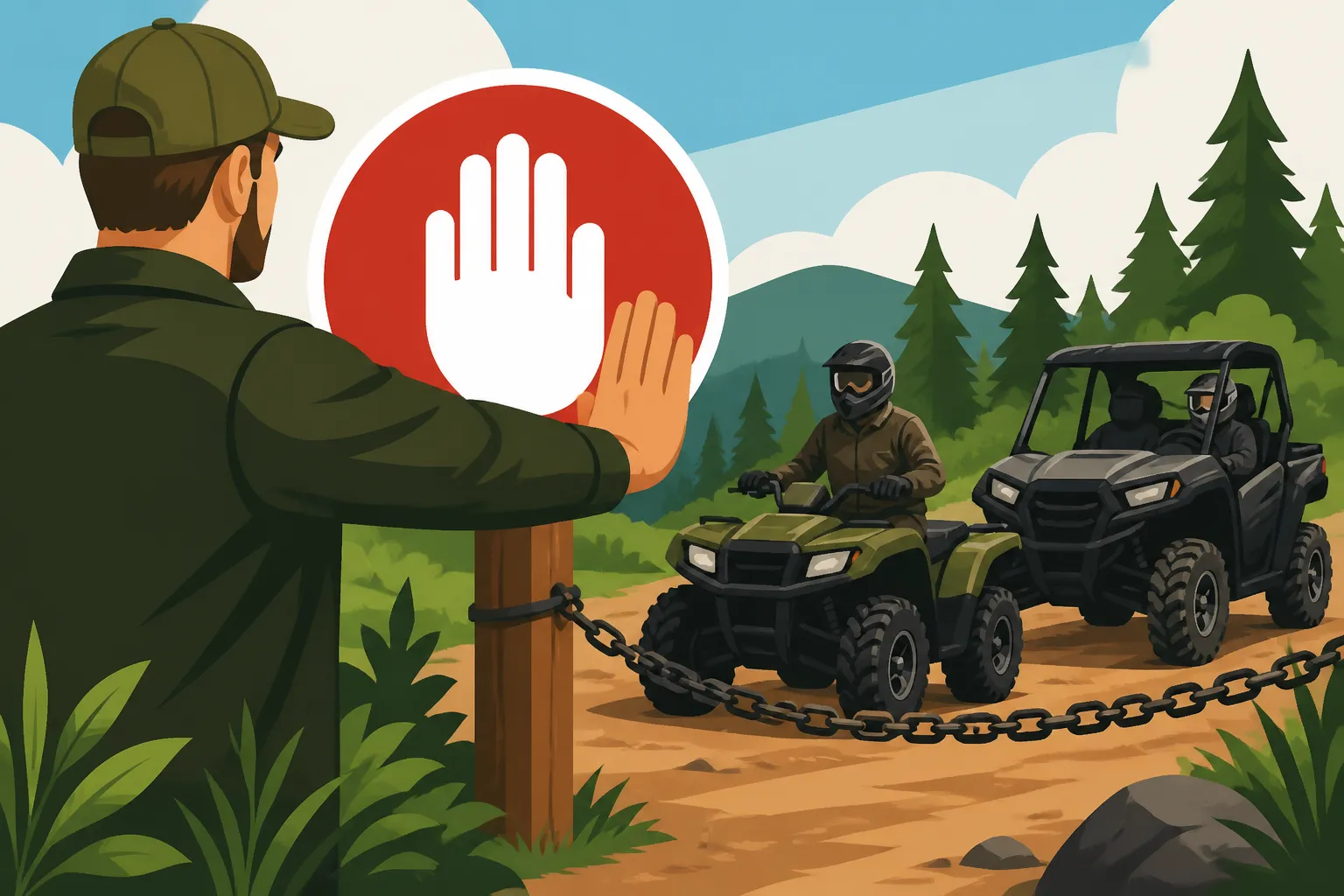
New Hampshire law is very clear about [New Hampshire Trespass Rules for Riders] on posted land. When a landowner explicitly marks their property with "No Trespassing" signs, "No OHRV" signs, or similar clear notices, there is no ambiguity. Riding on such land without explicit, written permission is trespassing, plain and simple. These signs are a direct communication that access is forbidden, and ignoring them can lead to fines and legal trouble.
It's not just about signs, either. Fences, gates, or other physical barriers can also serve as a clear indication that property is off-limits. Even if you've ridden a certain path for years, if new signs or barriers appear, that's the landowner's way of taking back permission. Respecting these boundaries immediately is not just legal advice, it's a fundamental part of being a responsible OHRV enthusiast. Ignoring such postings not only puts you at risk but also damages the reputation of all riders, making it harder for clubs and individuals to secure access elsewhere.
Implied Permission and Its Limits
This is where things can get particularly tricky and lead to common misunderstandings. Many riders mistakenly believe that if land is unposted, it's automatically open for public use. This is a dangerous assumption and fundamentally incorrect. As we discuss in [Why Unposted Land Is Not an Invitation], in New Hampshire, permission to enter private land is not implied simply because there are no "No Trespassing" signs. The absence of a sign does not grant you the right to ride.
Landowners are not required to post their property to protect it from trespass. If you ride on unposted land without seeking and receiving explicit permission, you are still technically trespassing. The legal repercussions might be less severe than on clearly posted land, but you are still violating the landowner's property rights. This misunderstanding is a huge source of friction and a major reason why landowners decide to post their land or withdraw permission entirely. Always assume private land is off-limits unless you have direct permission from the owner.
What to Do When Permission Is Revoked
Discovering that your riding privileges on a piece of private land have been rescinded can be a real punch to the gut. It's frustrating, disappointing, and sometimes confusing. However, how you react in this situation is crucial, not just for your own legal standing, but for the wider OHRV community.
Respect the Landowner's Decision
First and foremost, respect the landowner's decision immediately and without argument. This is paramount. Whether the permission was verbal and suddenly withdrawn, or if new "No Trespassing" signs have appeared where you once rode freely, your immediate action must be to comply. Do not try to argue, negotiate on the spot, or demand an explanation. Doing so will only escalate the situation, solidify the landowner's negative view of OHRV riders, and potentially lead to legal trouble for you.
Gather your belongings, turn your machine around, and leave the property calmly. Even if you feel the decision is unfair, or you believe you had valid permission, challenging the landowner in the moment is never the right approach. Your goal should be to de-escalate and demonstrate that OHRV riders can be respectful and responsible, even in the face of disappointment. This positive interaction, even as you're leaving, might just leave a tiny crack open for future conversations, perhaps through an OHRV club, down the road.
Seeking Alternative Riding Areas
Once you've respected the landowner's decision, it's time to pivot and find new places to ride. New Hampshire offers an incredible network of public and club trails that are legally accessible with a proper OHRV registration. Don't let the loss of one private spot ruin your entire riding season!
Consider exploring:
- State Parks and Forests: Places like [Jericho Mountain State Park at Berlin] offer dedicated OHRV trails and are fantastic destinations. They often have well-maintained trails and clear rules.
- The Ride the Wilds Network: This vast system of interconnected trails in northern New Hampshire provides hundreds of miles of riding. Look into clubs that maintain sections of [Ride the Wilds in Coos County] for detailed maps and trail conditions.
- Other Club Trails: Many OHRV clubs throughout the state maintain extensive trail systems, often through agreements with multiple landowners. Joining a club is a great way to discover these trails and contribute to their maintenance.
- Designated Rail Trails: Some rail trails are open to OHRVs for specific seasons or sections. Always check local regulations, as not all rail trails allow OHRV use.
There are countless miles of adventure waiting for you on sanctioned trails. It might require a bit of research and a new approach to your riding habits, but it ensures your enjoyment is always legal and sustainable.
Understanding Your Rights and Responsibilities
While you might feel aggrieved when permission is revoked, it's vital to remember that as an OHRV rider, you have specific responsibilities, and private property owners have rights. Your primary responsibility is to ensure you have valid permission before you ride on private land. This includes understanding [New Hampshire Rules for Riding Private Land], which emphasize seeking explicit permission.
Landowners in New Hampshire are largely protected by the state's recreational use statute, which limits their liability when they allow public use of their land for recreational purposes without charge. However, this protection isn't absolute, and liability concerns can still be a reason for them to withdraw permission. From a rider's perspective, this means you generally cannot sue a landowner if you get injured while riding on their property, provided they haven't charged you for access or intentionally caused harm.
It's also important to be familiar with the consequences of not adhering to these rules. Riding without permission is trespassing, which can lead to fines. If you cause damage, you could be held financially responsible. Knowing these facts helps you appreciate the landowner's perspective and reinforces the importance of acting as a good steward of the land.
Rebuilding and Maintaining Landowner Relationships
The loss of private land access is often a symptom of strained relationships between the OHRV community and landowners. However, it's not a lost cause. Through diligent effort, community involvement, and consistent good behavior, these relationships can be rebuilt and maintained, ensuring sustainable riding opportunities for years to come.
The Role of OHRV Clubs
New Hampshire's OHRV clubs are the backbone of much of our trail system, and they play an absolutely critical role in forging and nurturing landowner relationships. These clubs, run by dedicated volunteers, act as intermediaries. They approach landowners, explain the benefits of managed trail access, and often sign formal agreements that protect both parties. They are instrumental in getting [Landowner's Signature in New Hampshire] for trail easements.
When a landowner has a direct point of contact – a club president, a trail administrator – they know exactly who to call if an issue arises. This communication channel is invaluable. Clubs organize work parties for trail maintenance, build bridges, install signage, and ensure trails are properly managed. This demonstrates to landowners that OHRV riders are not just consumers of trails but active stewards of the land. Furthermore, clubs provide clear guidance to riders on how to behave on private property, ensuring that the rules of responsible riding are communicated and enforced. Many of these clubs also operate at the local level, fostering personal connections with the property owners in their area.
Best Practices for Riders
Every single OHRV rider has a part to play in maintaining good landowner relations. This isn't just the club's job; it's our responsibility. Here are some best practices:
- Stick to Marked Trails: Never, ever venture off designated trails. This is arguably the most common cause of revoked permission. Landowners have specific areas they've agreed to open; going beyond them is disrespectful and damaging.
- Respect Private Property: This includes not cutting fences, leaving gates as you found them (open or closed), and staying out of fields, especially agricultural ones.
- Leave No Trace: Pack out everything you pack in, and if you see litter, pick it up. Your machine, whether it's stock or equipped with accessories from SuperATV, should leave no physical trace of your passage beyond tire marks on the trail.
- Manage Noise: Be mindful of your OHRV's sound. While a roaring engine is fun, it can be a nuisance to nearby residents, especially early in the morning or late in the evening. If your exhaust is excessively loud, consider alternatives.
- Be Courteous: If you encounter a landowner or local resident, offer a friendly wave and a smile. A little politeness goes a long way.
- Report Issues: If you see other riders behaving irresponsibly, or notice a problem on a trail (like downed trees or trail damage), report it to the local OHRV club or the New Hampshire Fish and Game Department. Don't be a bystander.
Open Communication and Stewardship
Beyond following the rules, actively fostering communication and demonstrating stewardship can make a huge difference. If you have a relationship with a landowner, consider reaching out periodically to express gratitude. A simple thank you note or a small gesture of appreciation can reinforce their generosity.
Consider volunteering with your local OHRV club. Participating in trail maintenance, clean-up days, or sign installation projects shows landowners that you are invested in responsible land use. When landowners see OHRV riders actively caring for the land, it builds trust and demonstrates that the privilege of access is deeply valued. This collective effort ensures that not only are existing trails preserved, but new opportunities for riding can also be explored responsibly. From ensuring your machine, perhaps outfitted with robust protection from SuperATV, is ready for trail work to simply showing up with a rake, every bit helps.
Maintaining landowner permission is an ongoing process that requires respect, responsibility, and collaboration from the entire OHRV community. When we uphold our end of the bargain, we help secure the future of riding in the Granite State.
Understanding OHRV Permission Types in New Hampshire
To clarify the various forms of access and their implications, here's a quick reference table:
| Permission Type | Legal Standing | Clarity for Rider | Clarity for Landowner | Rider Protection | Landowner Protection | Risk to Access |
|---|---|---|---|---|---|---|
| Written | Strong | High | High | High | High | Low |
| Verbal | Weak | Low (subjective) | Low (subjective) | Low | Low | High |
| Implied | None | None (incorrect) | High (no permission) | None | High | Very High |
| Posted Land | None (prohibited) | High (explicitly no) | High (explicitly no) | None | Very High | Absolute |
Disclaimer
This article is for general informational purposes only and does not constitute professional advice. Laws, prices and regulations vary by location and change over time. Consult a qualified professional for guidance on your specific situation.