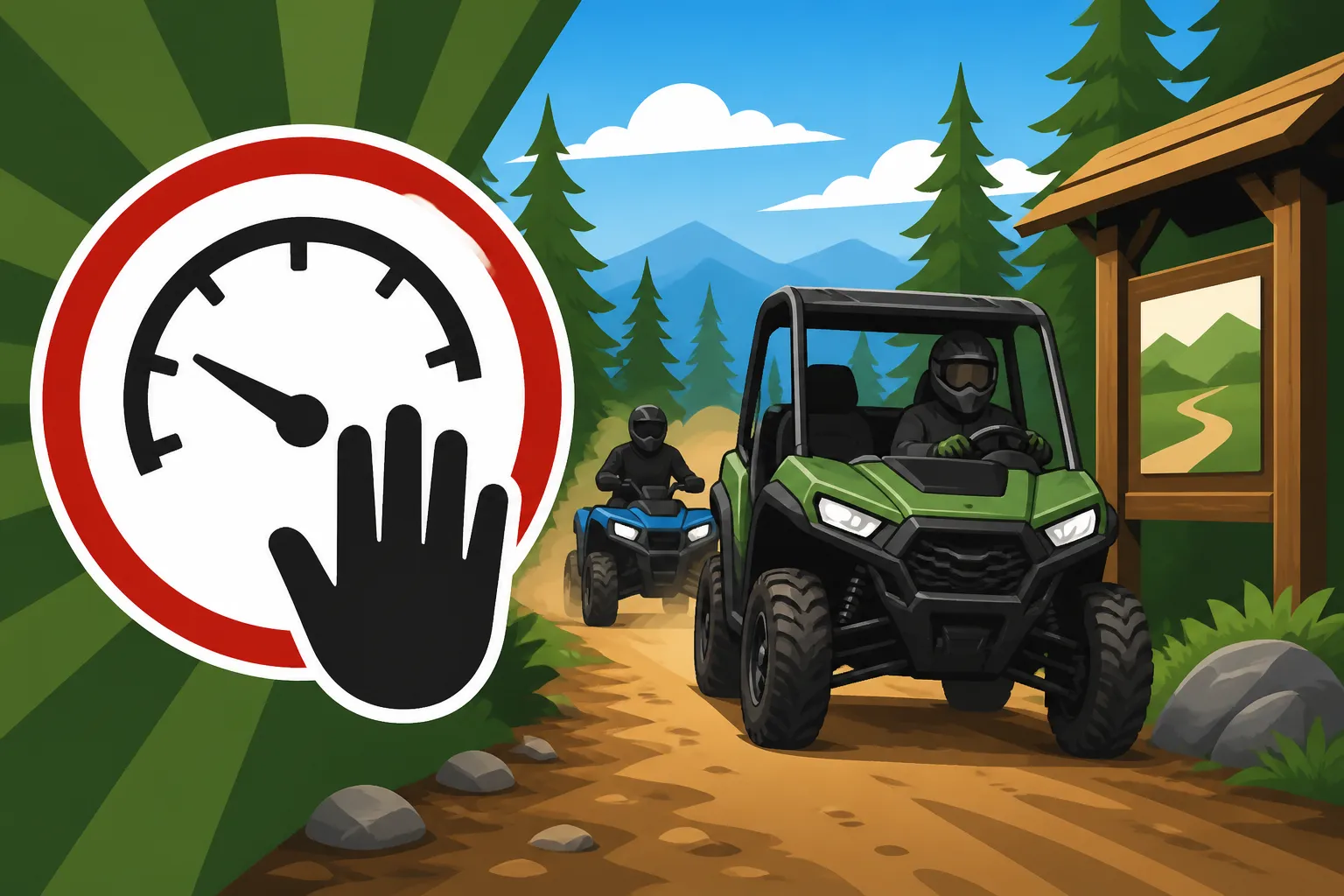
10 mph at a Trail Entrance
Riding an OHRV in New Hampshire is an exhilarating experience, but many folks hit a snag when it comes to understanding all the specific rules and regulations, especially the speed limits. It can feel like a maze, particularly when you're transitioning from the excitement of a winding trail to a more subdued entry point or even a short stretch of paved road. This guide is here to untangle the complexities of OHRV speed limits in the Granite State, shedding light on why that "10 mph at a Trail Entrance" sign is so vital, and what else you need to know to ride safely and legally.
Understanding New Hampshire's OHRV Speed Limits on Trails and Roads
Navigating the vast network of New Hampshire's OHRV trails and town-approved roads means understanding a patchwork of speed limits. It's not a one-size-fits-all situation, and riders often get confused, thinking that the wide-open trails allow for unrestricted speed. This assumption can quickly lead to trouble, as specific regulations are in place to protect everyone.
General Speed Limits on Designated Trails
While the rush of speed is part of the off-road appeal, most designated OHRV trails in New Hampshire aren't race tracks. The general rule of thumb on multi-use trails, especially those managed by clubs and the Bureau of Trails, is to ride at a reasonable and prudent speed, always considering visibility, terrain, and other trail users. However, specific posted limits will often supersede this general guidance. You'll encounter signs that clearly state the maximum allowable speed, which can vary significantly depending on the trail's character – whether it's winding through dense woods, crossing open fields, or running parallel to residential areas. Ignorance of these posted limits is no excuse, and Fish and Game officers or local police actively patrol these areas.
Even without a specific number on a sign, the expectation is that you're not tearing through the landscape. Riding responsibly means being able to stop or swerve safely if a deer jumps out, another rider appears around a blind corner, or a walker is sharing a section of the trail. The beauty of New Hampshire's trails is in their varied landscape, and that often means narrow sections, tight turns, and unexpected obstacles where high speeds are simply dangerous.
Varying Limits in Different Municipalities and Corridors
The picture gets even more complex when you factor in the different towns and the types of corridors you might be riding on. What's permissible in one town might not be in another, and this is particularly true for roads that have been designated as open to OHRVs. Towns like Gorham and Berlin have embraced OHRV tourism, opening certain municipal streets to allow riders to access trails, gas stations, restaurants, and lodging. However, these privileges come with strict rules, including reduced speed limits. For example, while you might be able to ride [Riding Main Street in Gorham], you'll find very specific speed restrictions, often much lower than regular vehicle traffic, to ensure pedestrian safety and minimize disruption to residents.
Furthermore, rail trails, which are common multi-use corridors, often have their own set of rules and lower speed limits, sometimes capping machines at [New Hampshire Trails With a 50-Inch Limit] or other restrictions. These trails are frequently shared with bicyclists, walkers, and even horseback riders, making lower speeds essential for harmonious coexistence. It's truly up to the individual rider to be aware of what kind of corridor they're on and to seek out the specific rules for that area. Clubs often post this information, and town websites will have ordinances listed.
Speed Limits When Sharing Roadways or Shoulders
One of the trickiest situations for OHRV riders is when a trail segment requires you to share a short stretch of roadway or ride along a shoulder. New Hampshire law allows for this in very specific circumstances, primarily to connect trail systems or access services. When you are on a designated road or shoulder that is open to OHRVs, your speed is generally limited to the posted speed limit of the road itself, or a lower limit if specified for OHRVs. However, you're always expected to travel at a speed that is reasonable and prudent for the conditions.
Consider a situation where you're riding a gravel road that doubles as an OHRV trail connector. Even if the posted limit for cars is 45 mph, if it's dusty, there's heavy traffic, or the surface is rough, you should slow down considerably. Safety is paramount, and it's essential to remember that OHRVs are sharing the road with much larger, heavier, and faster vehicles. Always be prepared to [Yielding to Every Conventional Vehicle] and maintain a safe following distance. Understanding the [Which of the Six Road Classes Allow OHRVs] is critical before you ever put a tire on pavement.
The Critical 10 mph Rule: Why Trail Entrances Demand Caution
You've probably seen them—those distinctive yellow or white signs, often with a bold "10 MPH" prominently displayed, usually accompanied by an OHRV symbol. These aren't just suggestions; they are legally binding speed limits at crucial transition points. Ignoring them can lead to serious accidents, fines, and give OHRV riders a bad reputation in the very communities that welcome them.
The Purpose Behind the Reduced Speed Zone
The 10 mph rule at a trail entrance serves several critical purposes, all centered around safety. Firstly, these entrances often feed directly into or out of parking areas, staging lots, or public roads where pedestrian and vehicle traffic is common. A low speed limit allows riders to react to unexpected obstacles like children, pets, or other vehicles. Secondly, trail entrances are typically transition zones from one surface to another—pavement to dirt, or gravel to a narrower trail. Entering or exiting at high speed can lead to a loss of control, especially if the ground is uneven, muddy, or icy.
Think about pulling out of a busy trailhead parking lot onto a main trail. There could be families unloading machines, people getting geared up, or even vehicles pulling in and out. If you're zooming out at 30 mph, the chances of a collision are dramatically higher than if you're cautiously traveling at 10 mph. This rule isn't meant to spoil your fun; it's designed to create a buffer, a safe space for everyone involved in the OHRV experience. It's a reminder that even the most experienced rider can encounter unforeseen circumstances, and a reduced speed offers crucial reaction time.
Identifying 10 mph Zones: Signage and Awareness
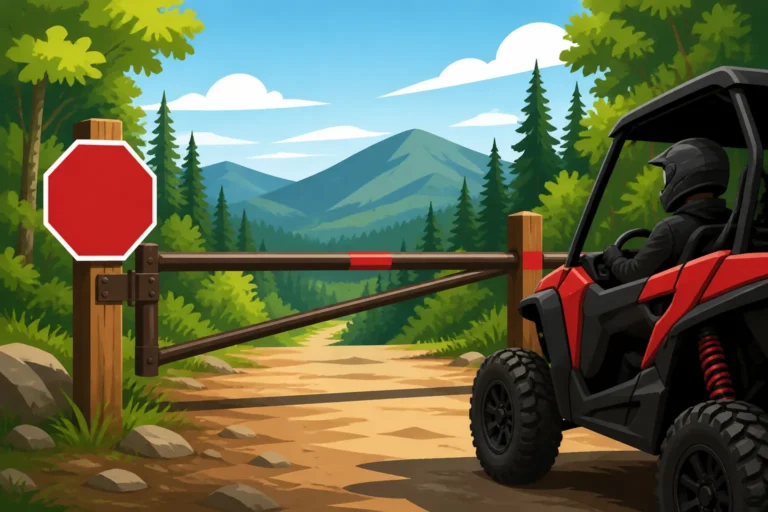
These 10 mph zones are almost always clearly marked with official signage. You'll typically see these signs right at the point where a trail officially begins or ends, particularly if it connects to a road, a shared multi-use path, or a public staging area. It's the rider's responsibility to constantly be on the lookout for these signs, which might be on posts, trees, or even painted on a gate. However, even in the absence of a specific sign, the general expectation is that riders will exercise extreme caution and reduce speed when entering or exiting any trail system, especially where visibility is limited or where multiple user groups might converge.
A perfect example is when you're 10 mph at a Trail Entrance at Jericho Mountain State Park. The main gate area and immediate access points are designed for low-speed traffic, allowing you to pay fees, get your bearings, and safely merge with other park users. Always assume that areas around kiosks, parking lots, and trailheads require a significantly reduced speed, even if a sign is temporarily obscured or missing. Being a responsible rider means being proactively cautious, not just reacting to signs.
Real-World Scenarios and the Impact of Violations
Let's imagine you're heading out from a staging area near the Great North Woods Riders trail system. You've just pulled your UTV off the trailer, geared up, and you're eager to hit the miles of open trail. You see the main trail ahead and, perhaps in your excitement, you accelerate quickly, bypassing the 10 mph sign without a second thought. Just around a slight bend, a family with two small children is crossing the trail to get to their picnic spot. Your quick acceleration leaves you with minimal time to react, and a dangerous situation unfolds.
This isn't just a hypothetical. Accidents at trail entrances are preventable and often result from excessive speed. Beyond the immediate danger of injury, violating these speed limits can lead to significant penalties. A New Hampshire Fish and Game conservation officer or local law enforcement could be present, and you might face a substantial fine for speeding in a restricted zone. Such violations reflect poorly on the entire OHRV community, potentially jeopardizing access to trails and roads in the future. Always think of the consequences: safety for others, your own well-being, and the continued privilege of riding in New Hampshire.
Navigating OHRV Road Crossings and Permitted Street Sections
The ability to cross a paved road or, in some towns, even ride a short distance on a public street, is a huge convenience for OHRV riders in New Hampshire. It allows for seamless connections between trail segments, access to fuel, food, and lodging, and truly makes the state a destination for multi-day OHRV adventures. However, this privilege comes with a stringent set of rules that every rider must internalize to ensure safety and prevent conflicts with traditional vehicle traffic.
Rules for Crossing Paved Roads
Crossing a paved public road with your OHRV is not something to be taken lightly. It's a moment when you move from the relative freedom of a trail to a high-risk environment with cars, trucks, and often higher speed limits. New Hampshire law is very clear on how these crossings must be executed. You must always come to a complete stop before entering the paved surface, just as you would at a stop sign in a car. From that stopped position, you must proceed to cross the road at a right angle (90 degrees) to the roadway, traversing the shortest possible distance across the pavement. You should never ride down the road, even for a few feet, unless it is a specifically designated open OHRV street.
Visibility is key here. Before crossing, you need to ensure a clear line of sight in both directions, and you must yield to all oncoming traffic. If a vehicle is approaching, you wait. Patience is paramount. Imagine a logging truck coming around a bend on a rural New Hampshire road; you absolutely cannot risk pulling out in front of it. These rules are in place because [Why You Must Stop Before Every Road Crossing] ensures riders prioritize safety over convenience, and it minimizes the time an OHRV is exposed to the dangers of high-speed traffic.
Designated Open Roads and Town Ordinances
Some towns in New Hampshire, recognizing the economic benefits of OHRV tourism, have gone through the process of opening certain town-maintained roads to OHRV traffic. This is a deliberate decision made by the local selectboard or town council, often after public hearings and careful consideration of local impacts. When a road is designated open, it will be clearly marked with signs indicating that OHRVs are permitted, often alongside the regular speed limit signs for that road. Towns like Gorham, Berlin, and Pittsburg are pioneers in this regard, offering fantastic access to amenities and connecting various trail systems.
However, even on these designated roads, OHRVs are subject to all the same rules of the road as conventional vehicles, plus additional specific OHRV regulations. This typically includes strict speed limits (often lower than the posted limit for cars), restrictions on riding hours (e.g., [Berlin's Ten O'Clock Closing]), and sometimes even specific routes you must follow. It's never safe to assume a town road is open to OHRVs just because you see a trail nearby. Always check local ordinances or trail maps from clubs like the Great North Woods Riders or Metallak ATV Club to confirm which roads are open. Riding on a non-designated road is trespassing and can lead to fines and loss of riding privileges. [How a New Hampshire Town Opens Its Roads] is a complex process, and the rules are there for a reason.
The "Extreme Right" Rule and Yielding to Other Traffic
When you're legally riding on a designated public road in New Hampshire, the law requires you to stay to the extreme right of the traveled way. This isn't just a suggestion; it's a critical safety measure. OHRVs are generally slower and less visible than cars and trucks, and keeping as far right as possible minimizes interference with regular traffic flow and provides a wider safety margin. This also means being acutely aware of your surroundings and [Riding the Far Right of a Town Road] and [Yielding to Every Conventional Vehicle], especially larger commercial vehicles that need ample space.
Furthermore, regardless of whether you're crossing a road or riding on a designated street, OHRVs must yield the right-of-way to all conventional vehicles. You are the guest on the road, and their safety takes precedence. If a vehicle approaches from the front or rear, or you're at an intersection, be prepared to slow down, pull over to the shoulder, or even stop to allow them to pass safely. This courteous and cautious behavior is not only a legal requirement but also helps foster positive relationships between OHRV riders and local residents, ensuring continued access to these vital connectors.
Equipment and Safety Considerations for Mixed-Use Riding
Taking your OHRV from the trail to a town street, even for a short distance, demands more than just a keen understanding of the rules; it requires specific equipment and a heightened focus on safety. Your machine, and you as the operator, need to be prepared for the different demands of mixed-use riding. This isn't about looking cool; it's about being seen, being heard (appropriately!), and being protected.
Essential Equipment for Road-Legal OHRVs
To legally operate an OHRV on any designated public road in New Hampshire, your machine must meet certain equipment standards that go beyond what's required solely for trail riding. First and foremost, you'll need a headlight and a taillight that are operational, especially if you anticipate riding near dawn, dusk, or in adverse weather. Visibility is crucial when sharing the road with cars. Secondly, a rearview mirror is a must; specifically, a mirror mounted on the left side of the machine, allowing you to see traffic approaching from behind. Aftermarket options from companies like SuperATV can provide robust and compliant mirror setups that stand up to the rigors of off-road use while meeting road requirements.
Beyond lights and mirrors, your OHRV must also have a functioning braking system, a spark arrester on the exhaust (to prevent fires, crucial in dry conditions), and an exhaust system that complies with [New Hampshire's OHRV Decibel Limit]. Loud machines are not only annoying but can also lead to fines and generate negative sentiment towards OHRV use in towns. A horn is also a wise, if not always legally required, addition for alerting other riders or pedestrians. All of these components are checked when a New Hampshire officer performs a [What a New Hampshire Officer Checks Roadside] stop.
Maintaining Your Machine for Safe Operation
Having the right equipment is one thing; ensuring it's always in top working order is another. Before every ride that includes any road or trail-to-road transition, you should perform a quick safety check on your machine. Are your tires properly inflated and in good condition? Worn or under-inflated tires can significantly compromise handling, especially on pavement. Are your brakes responsive and firm? A mushy brake pedal is a serious hazard. Do your headlights and taillights work, and are your turn signals (if equipped) visible?
Regular maintenance, such as oil changes, checking fluid levels, and inspecting suspension components, contributes directly to the reliability and safety of your OHRV. A machine that breaks down on a busy road is not only an inconvenience but also a danger. Investing in quality parts, perhaps from a reputable supplier like SuperATV for items like A-arms, bushings, or axles, ensures durability and reduces the likelihood of unexpected failures. Proper maintenance is not just about extending the life of your OHRV; it's about extending the safety of your ride for yourself and others.
Personal Protective Gear Beyond the Machine
While your OHRV needs to be properly equipped, your personal safety gear is equally, if not more, important. A DOT-approved helmet is legally required for all OHRV riders and passengers under the age of 18 in New Hampshire. However, even if you're an adult and not legally required to wear a helmet on trails, it's always the smartest choice, particularly for mixed-use riding where the risks are higher. The difference between a minor bump and a life-altering injury can often come down to wearing appropriate head protection. [New Hampshire Helmet Rules for Riders Under 18] exist for a reason, and adults should follow suit for their own safety.
Eye protection, such as goggles or a face shield, is also critical to prevent debris, dust, or insects from impairing your vision, especially at higher speeds or on dusty trails. Sturdy over-the-ankle boots, long pants, and a long-sleeved shirt or jacket offer protection from scrapes, burns, and impacts. Gloves can improve grip and protect your hands. While [Why New Hampshire Exempts Adults From Helmets] on trails, it's truly a personal choice that every responsible rider should make for their own well-being, especially when sharing roads.
Enforcement and Fines: Consequences of Speeding or Violating Rules
The New Hampshire Fish and Game Department, along with local law enforcement, takes OHRV regulations very seriously. Their goal isn't just to issue tickets, but to ensure safety, protect natural resources, and preserve the positive relationship between riders and the communities that host them. Violating speed limits or other rules can lead to more than just a slap on the wrist; it can result in significant financial penalties, loss of riding privileges, and even impact future access for everyone.
How OHRV Laws are Enforced in New Hampshire
You'll often see Fish and Game conservation officers patrolling New Hampshire's OHRV trails, particularly in popular riding areas like the Ride the Wilds system or Jericho Mountain State Park. These officers are highly trained in OHRV laws and safety. They conduct roadside checks, monitor trailheads, and respond to complaints from landowners and other trail users. Enforcement isn't limited to uniformed officers; local police departments in towns with open OHRV roads also have the authority to stop and cite OHRV operators for violations, including speeding.
It's common for officers to look for proper registration decals, check for spark arresters, and ensure riders are adhering to speed limits, especially at trail entrances and on town roads. They're also vigilant about age restrictions and the presence of safety certificates for younger riders. [New Hampshire Fish and Game and OHRVs] work closely to ensure compliance and promote responsible riding. Don't be surprised if you're pulled over for a routine check; it's part of ensuring everyone is playing by the rules.
Common Violations and Associated Penalties
Speeding is a very common OHRV violation, particularly the failure to observe the 10 mph limit at trail entrances or the posted limits on town roads. The penalties for such infractions can be substantial, often involving fines that start in the hundreds of dollars. Beyond monetary fines, other common violations include operating an unregistered OHRV, riding on private land without permission, riding on closed trails (especially during mud season), and operating under the influence.
Operating an OHRV while impaired by alcohol or drugs carries penalties similar to those for operating a motor vehicle, including potential loss of driving privileges and significant legal consequences. Repeat offenses can lead to even harsher penalties, including suspension of OHRV registration privileges. [New Hampshire Fines for an Unregistered OHRV] or other serious violations can quickly turn a fun day of riding into a very expensive and regrettable experience. These fines are not trivial; they are designed to deter unsafe and illegal behavior.
The Importance of Knowing Before You Go
The single most effective way to avoid fines and ensure a safe and enjoyable riding experience is to be fully informed about New Hampshire's OHRV laws and regulations before you even load your machine onto a trailer. This means reviewing the official New Hampshire Fish and Game OHRV laws, checking trail conditions and rules with local clubs, and understanding the specific ordinances of any town you plan to ride through. Many clubs post detailed maps and rules on their websites, which are invaluable resources.
If you're new to New Hampshire OHRV riding, consider taking an OHRV safety course. While not always mandatory for adults, it provides a comprehensive overview of safe operating procedures and state laws. Remember that a portion of your OHRV registration fees goes towards maintaining the trails, and respectful riding helps to ensure this funding continues and trails remain open. By being informed, responsible, and courteous, you contribute to a positive future for OHRV riding in the Granite State.
| OHRV Speed Limit Scenarios in New Hampshire | Typical Speed Limit | Key Considerations |
|---|---|---|
| Trail Entrance/Exit Zones | 10 mph | Critical for safety, often near parking lots, roads, or shared-use areas. Always watch for signs. |
| Designated Town Roads (e.g., Gorham) | Variable (often 10-25 mph) | Posted limits for OHRVs usually lower than for cars. Adhere to town ordinances, specific hours, and stay to the extreme right. |
| Shared Rail Trails | Often 20 mph (or lower) | Shared with walkers, bikers, and horses. Expect lower speeds and yield to all users. Check for width restrictions like [New Hampshire Trails With a 50-Inch Limit]. |
| General Designated Trails | Reasonable & Prudent (often up to 35 mph, if unposted) | Ride according to visibility, terrain, and other trail users. Look for specific posted limits. Avoid high speeds on blind corners or uneven surfaces. |
| Road Crossings | Stop, then proceed slowly | Come to a complete stop, yield to all traffic, cross at 90 degrees, and traverse the shortest possible distance. |
Disclaimer
This article is for general informational purposes only and does not constitute professional advice. Laws, prices and regulations vary by location and change over time. Consult a qualified professional for guidance on your specific situation.