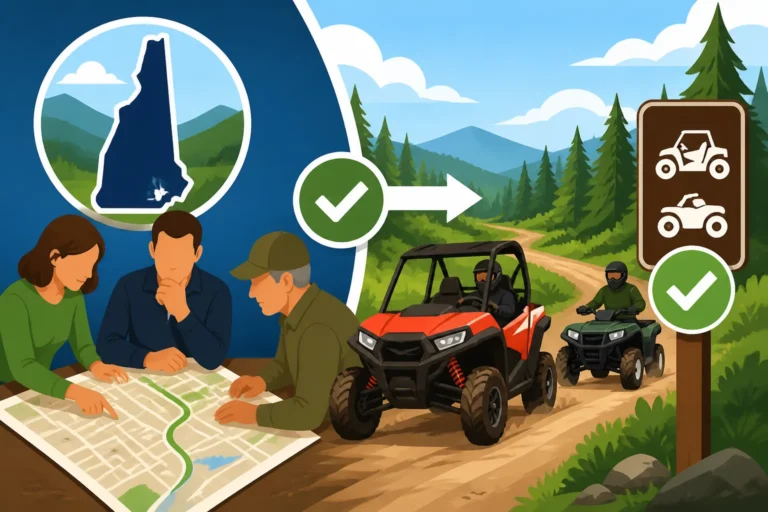
Posted Land in New Hampshire
One of the biggest anxieties riders face in New Hampshire, especially when exploring new areas, is the fear of inadvertently riding onto private property where you're not welcome. It's a horrible feeling to realize you might be trespassing, and the consequences can range from an awkward encounter to a hefty fine. This guide is here to help you understand what "posted" land means in the Granite State, how to secure proper permission, and why respecting private property is absolutely vital for the future of ATV and UTV riding in New Hampshire.
Understanding "Posted" Land in New Hampshire
When you're out on the trails, you've probably seen those signs: "Private Property," "No Trespassing," or often just a plain white sign with red letters declaring the land "Posted." It's not just a suggestion; these signs carry significant legal weight, and understanding them is crucial for any responsible rider.
What "Posted" Really Means for Riders
In New Hampshire, "posted" land isn't just a friendly reminder from a landowner; it's a formal declaration of intent to restrict access. These signs are a landowner's way of explicitly communicating that their property is private and that entry without permission constitutes trespass. The law supports this, making it much easier for law enforcement to act if someone is found riding on clearly marked land without prior consent. You might see specific requirements for these signs, such as size, spacing, and even the color of the text, all designed to ensure that the message is clear and unmistakable to anyone passing by.
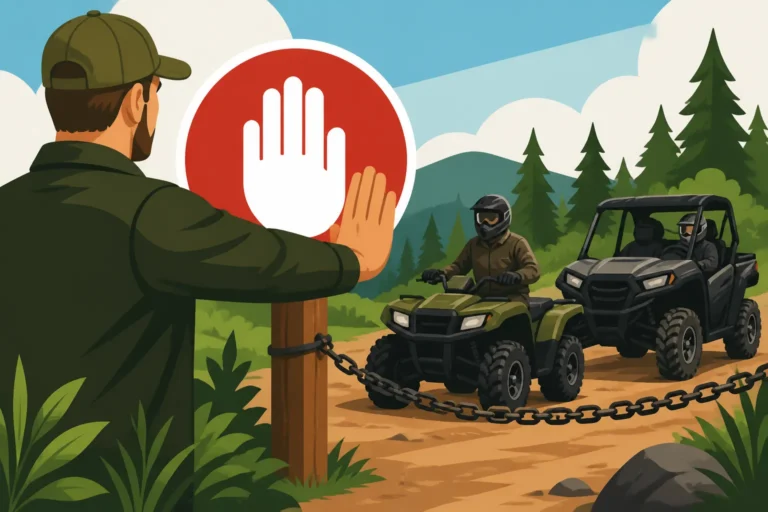
Imagine you're cruising along a beautiful, winding trail, enjoying the peace and quiet, when you come across a series of these stark white and red "Posted" signs flanking the trail ahead. That feeling of sudden dread? It's your cue to stop, turn around, and re-evaluate your route. Even if the trail looks inviting, those signs mean business. Ignoring them isn't just disrespectful; it's a legal risk. The landowner has made their position clear, and any argument of "I didn't know" won't hold up in court. Always assume the landowner means exactly what the sign says.
The Difference Between Posted and Unposted Land
Here’s where a common misconception often trips up riders: many assume that if land isn't "posted," it's fair game. This couldn't be further from the truth, and it's a misunderstanding that can lead to some uncomfortable situations. In New Hampshire, all private land requires permission to access, whether it's marked with "No Trespassing" signs or not. The difference is primarily legal and practical, not about whether you need permission.
Unposted private land is still private property. While it might not have the explicit warning of a "Posted" sign, the legal expectation is that you still need the landowner's permission before you ride on it. The absence of a sign doesn't grant implied consent. However, for a landowner to pursue a trespass charge on unposted land, they often need to have previously communicated that the land is off-limits, or prove that a reasonable person would have known it was private. When land is formally "posted," it removes any ambiguity and makes it much easier for law enforcement to enforce trespass laws. So, while riding on unposted land without permission might feel less overtly confrontational, it's still illegal and just as damaging to landowner relations. Always err on the side of caution: if you don't have explicit permission, stay off private land. For more details on what constitutes trespass, you can look into [New Hampshire Trespass Rules for Riders].
Navigating Landowner Permission
Riding off-road in New Hampshire is an incredible experience, but it largely depends on the goodwill and generosity of private landowners. Without their permission, many of the trails we enjoy simply wouldn't exist. This makes understanding and securing permission paramount for any responsible rider.
How to Legally Ride on Private Property
The golden rule for riding on private property is simple: get permission. But how do you go about it? The best way is always to seek written permission. A quick verbal "sure, go ahead" might seem friendly, but memories fade, and disputes can arise. Written permission provides a clear record of what was agreed upon. This document should ideally include the dates or duration of the permission, the specific areas where riding is allowed, the type of machine (ATV, UTV, dirt bike) permitted, and the names of the individuals granted access. It's also smart to include contact information for both parties.
Think of it like this: you're asking a favor, and showing respect for their property is the fastest way to earn their trust. Approach landowners politely, explain your intentions, and assure them you will stick to designated paths and respect their land. Offer to show them your machine and demonstrate responsible riding. Building a positive relationship can open up opportunities and ensure future access. For a deeper dive into the specifics, check out [New Hampshire Written Permission Requirements] and [New Hampshire Rules for Riding Private Land]. A well-crafted permission slip, even a simple one, can save you a lot of headaches down the line.
The Risks of Riding Without Permission
Riding on private land without permission isn't just a minor infraction; it carries significant risks and consequences, not just for you, but for the entire riding community. First and foremost, you could face fines and penalties. Law enforcement officers are well within their rights to issue citations for trespassing, and these aren't cheap. In some cases, your machine could even be impounded, leading to further costs and inconvenience. You can learn more about general penalties by looking up [New Hampshire Fines for an OHRV Violation].
Beyond the immediate legal repercussions, there's the much broader issue of landowner relations. Every time a rider disrespects private property, it erodes trust and makes landowners less likely to grant permission to anyone, including organized clubs. This can lead to the closure of existing trails or make it impossible to establish new ones. Imagine the frustration of a landowner who finds tracks torn up in their field or litter left behind. It's a direct threat to the very existence of the trail systems we cherish. Furthermore, there are liability concerns. If you get injured on someone's property without their permission, they might not be liable, but the situation can still be messy and unpleasant for everyone involved. Riding responsibly and with permission protects you, the landowner, and the future of our sport in New Hampshire.
Posted Land and the Trail System
New Hampshire boasts an incredible network of OHRV trails, particularly in the northern regions like the Ride the Wilds system. What many riders don't realize is that these expansive trail systems don't magically appear on public land; they largely depend on the generosity and cooperation of private landowners.
Club Trails and Landowner Agreements
The vast majority of the interconnected OHRV trails in New Hampshire, especially those managed by local clubs, exist because of formal and informal agreements with private landowners. These clubs, like the Milan Trail Huggers or the Great North Woods Riders, spend countless hours fostering relationships, securing easements, and getting written permission to route trails across private property. These agreements are the lifeblood of our trail system. The clubs act as intermediaries, ensuring that riders behave responsibly and that landowner concerns are addressed, from noise levels to fencing. [New Hampshire Landowner Permission Rules] are complex, and clubs do the heavy lifting to navigate them.
Without these dedicated clubs and their hard-won landowner permissions, our sprawling network of trails would shrink dramatically. Clubs often provide landowners with benefits, such as liability protection (through specific state laws), trail maintenance, and clear communication channels. Every rider who joins a club or registers their machine helps to support this vital work. It's a delicate balance, and the strength of the relationship between clubs and landowners directly impacts where and how much we can all ride. This intricate web of agreements is why you'll often see specific rules about trail usage, such as width restrictions or speed limits, which are often part of these agreements. You can gain access to many of these trails simply by being a registered OHRV in New Hampshire, as explained in [New Hampshire Club Trail Access].
When a Landowner Revokes Permission
Despite the best efforts of clubs and conscientious riders, there are times when a landowner decides to revoke their permission for a trail to cross their property. This can happen for a variety of reasons: new ownership, concerns about noise, perceived disrespect from riders, or simply a change of heart. When this occurs, it can have a significant impact on the trail system, potentially closing miles of interconnected trail or forcing clubs to undertake costly and time-consuming reroutes. This is a very real challenge that clubs face, and it directly affects where we can ride.
Imagine a critical section of trail that connects two major riding areas. If the landowner of that section decides to pull their permission, suddenly riders might have to find an entirely different, much longer route, or even be cut off from certain destinations. Clubs work tirelessly to prevent this, maintaining open communication and addressing landowner concerns promptly. However, sometimes it's unavoidable. [When a Landowner Takes Back Riding Permission] describes this scenario, highlighting the vulnerability of our trail access. It underscores why every rider's behavior matters – a single incident of irresponsible riding can jeopardize access for hundreds of others. Maintaining respect and good conduct on the trails is our collective responsibility to ensure these invaluable agreements remain in place.
Respecting Private Property and Ensuring Trail Access
The health and expansion of New Hampshire's OHRV trail system depend almost entirely on the actions of individual riders. Every time we head out, we're not just representing ourselves; we're representing the entire community.
The Rider's Responsibility
Ultimately, the responsibility for respecting private property and preserving trail access rests squarely on the shoulders of every rider. This means more than just avoiding "Posted" signs; it means adopting an ethic of stewardship and courtesy on every ride. Stick to marked trails, even if an unmarked path looks tempting. Adhere to speed limits, especially in areas where trails pass close to residences. Be mindful of noise, particularly with aftermarket exhausts. A machine equipped with quality components, like those from SuperATV, can actually help with responsible riding. For instance, robust skid plates protect your machine from damage, preventing fluid leaks that could harm the environment on private land, while well-maintained suspension and tires help you stay on designated paths, reducing the temptation to stray into sensitive areas.
Picking up any trash you see, whether it's yours or not, goes a long way. Consider the impact of your actions on the environment, especially around stream crossings and wetlands. Remember that landowners aren't just faceless entities; they're individuals who are generously allowing us to enjoy their land. A polite wave, a friendly nod, or even an active effort to learn about and adhere to local ordinances (like those found in [New Hampshire Rules for Riding a Closed Trail]) can significantly improve the public perception of OHRV riders and help solidify our access for years to come.
Supporting Trail Preservation
Beyond individual riding etiquette, there are concrete ways riders can actively support the preservation and expansion of New Hampshire's trail system. The most impactful way is to join a local OHRV club. These clubs are the boots on the ground, maintaining trails, negotiating with landowners, and advocating for rider rights. Your membership dues and volunteer hours directly contribute to keeping trails open and in good repair. Clubs rely heavily on this support, as they are often responsible for everything from clearing downed trees to building bridges and posting appropriate signage.
Another crucial aspect is understanding where your registration fees go. A significant portion of OHRV registration fees in New Hampshire is funneled back into the trail system through grant programs. This money helps clubs fund maintenance projects, purchase equipment, and develop new trails. By registering your machine, you're directly contributing to the financial health of the trails you love. You can learn more about this by looking at [New Hampshire Trail Grant Program]. Supporting the clubs and understanding the financial mechanisms behind trail maintenance are key to ensuring that future generations can continue to explore the incredible wilderness of New Hampshire on their ATVs and UTVs.
Here's a quick summary of the key differences:
| Feature | Posted Land | Unposted Land |
|---|---|---|
| Permission | Absolutely required (explicitly stated) | Still required (implied by private ownership) |
| Signage | Clearly marked with "No Trespassing" signs | No specific "No Trespassing" signs |
| Legal Clarity | Trespass is explicit, easier to enforce | Trespass still applies, may require prior notice |
| Rider Action | Do NOT enter without explicit written consent | Do NOT enter without explicit written consent |
| Impact | Ignoring signs harms landowner trust severely | Riding without permission still harms trust |
Disclaimer
This article is for general informational purposes only and does not constitute professional advice. Laws, prices and regulations vary by location and change over time. Consult a qualified professional for guidance on your specific situation.