Winter Access Opening November First
A November 1 winter opening can make an ATV or UTV trip in New Hampshire possible, but it does not mean every trail is open. Access depends on the specific trail system, the landowner’s permission, seasonal conditions, and current club notices. This guide explains how to plan around the date, confirm where you can ride, and prepare for colder, darker, more changeable conditions.
What November 1 winter access means
A seasonal date is not a statewide opening
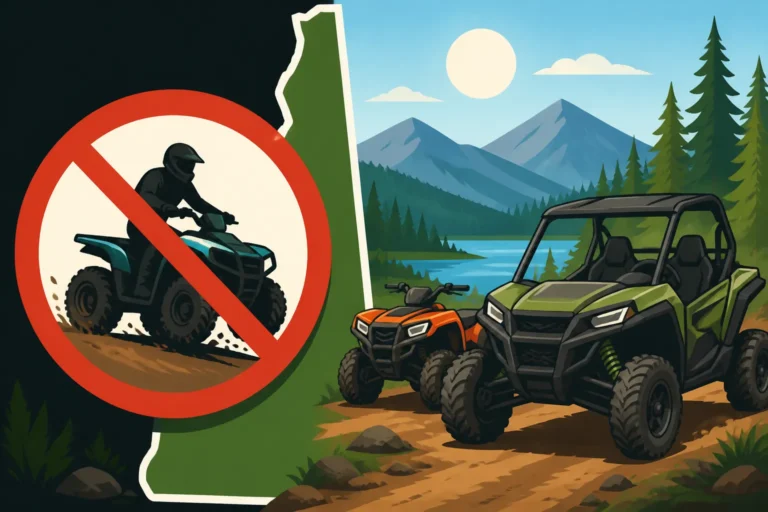
New Hampshire does not have one winter opening date that automatically applies to every ATV and UTV trail. A November 1 opening may relate to a particular trail system or local access arrangement. It should not be treated as permission to ride anywhere in the state on that date.
That distinction matters because trails cross different kinds of land and may be managed by clubs, towns, agencies, and private landowners. One section might be open while a nearby connector remains closed. A route that was rideable in October may also close when conditions change, even if the calendar says winter access has begun.
If you are planning around a specific November 1 opening, identify the exact trail area first. Then confirm the current status with the local club or land manager before unloading your machine. Winter Access Opening November First is a useful starting point for understanding the date, while New Hampshire Trails Open in Winter helps put winter riding into the wider seasonal picture.
Winter access can mean different things in different places
Winter riding is not simply summer riding with snow on the ground. A corridor may be shared with snowmobilers, closed to wheeled machines, limited by conditions, or open only on designated routes. Some trails also depend on snow cover or frozen ground to protect the surface. Riding too early, too late, or during a thaw can damage a trail and risk future access.
Before leaving home, look for notices that specify the actual route, permitted machine types, seasonal restrictions, and any conditions for use. A general statement that a region has winter access is not a substitute for checking the trail you intend to ride. See New Hampshire Rules for Riding in Winter and New Hampshire Rules for Riding a Snowmobile Trail for related rules and shared-corridor considerations.
How to confirm a trail is open
Check local trail status before you travel
A route shown on a map is not necessarily open today. A trail may be temporarily closed because of weather, maintenance, landowner concerns, logging, or a change in conditions. Winter can make those changes especially hard to spot: snow can hide a gate, a washed-out section, a posted notice, or the edge of a water crossing.
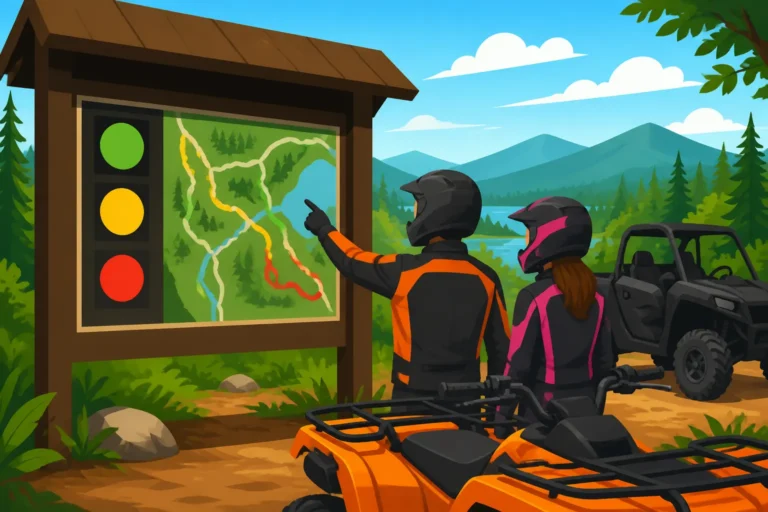
Check the local club or trail organization’s current updates before setting out, and check again close to departure if your trip is planned in advance. When you reach a trailhead, obey signs and barriers even if an app or printed map shows the route as available. New Hampshire Trail Status Before You Ride and New Hampshire Trail Closures to Check First are helpful reminders that access information can change.
Mapping tools such as onX Offroad can help you plan a route and understand where trails appear to connect. Use it as a planning aid, not as proof that a trail is open or that you have permission to ride it. If an onX Offroad route conflicts with a local closure notice or a signed gate, follow the closure notice.
Confirm land access, not just the route line
Many New Hampshire trails depend on permission to cross private land. A trail line on a screen does not grant that permission, and a route that appears to offer a convenient shortcut may cross land that is not open to riders. Stay on marked, authorized trails and do not ride around a closed gate or across an unmarked field.
This is a practical issue, not just a technicality. A single unauthorized crossing can create trouble for landowners and local clubs, and access can be lost for other riders as a result. If your route crosses private ground, make sure it is part of the designated trail system and that current access has not been withdrawn. See New Hampshire Written Permission Requirements and New Hampshire Rules for Riding Private Land for more on the difference between a route and permission to use it.
| Planning question | What to verify before riding |
|---|---|
| Is the trail open on November 1? | Confirm the date and current status with the local club or land manager |
| Is my machine allowed? | Check machine type, width limits, and any seasonal restrictions |
| Does the map show an authorized route? | Compare the route with local trail information and signs |
| Does the trail cross private land? | Stay on the designated corridor and follow permission rules |
| Is the route suitable for today’s conditions? | Check weather, surface conditions, gates, and closures |
| Can I safely complete the loop? | Plan for fuel, daylight, communications, and a backup route |
Preparing an ATV or UTV for a winter ride
Plan for cold, darkness, and slower progress
A winter route can take longer than the same ride in warmer weather. Snow, frozen ruts, reduced traction, and shorter daylight all affect how quickly you travel. Build extra time into the plan rather than assuming your summer pace will hold. Choose a route that suits the least experienced rider in your group, and agree on a turnaround time before anyone sets off.
Check the forecast for the whole riding area, not just the town where you are staying. Conditions can differ between low elevations and higher terrain, and a clear morning can turn into poor visibility or a sharp temperature drop. Keep your group together at junctions, and do not let a rider continue alone because the rest of the group is stopped farther ahead.
A phone map can be useful, but cold weather can drain batteries quickly, and some North Country areas have limited cell coverage. Download or carry route information before you leave, and bring a backup way to navigate. onX Offroad can help organize a planned route, but it should sit alongside local trail updates and a practical backup plan—not replace them.
Inspect the machine and carry the right gear
Before riding, check tires, brakes, steering, lights, and battery condition. Cold starts can be harder on a machine, and a weak battery that seemed fine in mild weather may become a problem. Make sure your lights work before dusk, even if you expect to be back well before dark. Carry basic tools and the supplies needed for the machine you are riding.
Dress for waiting as well as riding. If a machine breaks down or a group has to stop, wind and low temperatures can make a short delay uncomfortable quickly. Bring warm layers, gloves suited to the conditions, eye protection, water, snacks, and a first-aid kit. A spare dry layer can be especially useful after snow or slush works into clothing.
Tell someone who is not on the ride where you plan to go and when you expect to return. Share a route or general riding area, and update that person if your plan changes. If you use onX Offroad to map a route, make sure the rest of your group knows the plan too; a route saved on one rider’s phone does not help much if that rider becomes separated.
Riding responsibly on shared winter trails
Respect closures and other trail users
Winter corridors may be used by several kinds of visitors, including snowmobilers, hikers, and local land users. Slow down when visibility is limited, approach corners cautiously, and give other trail users room. Avoid spinning tires or forcing a machine through a soft or damaged section. If the ground is thawing or the trail surface is visibly vulnerable, turn around rather than making a rut that others will have to navigate.
Be especially careful around bridges, gates, and trail intersections. Snow can make a narrow passage look wider than it is, and a drift can conceal an obstacle or the edge of a ditch. Do not assume that a groomed-looking track is intended for ATVs or UTVs. Check signage and the rules for that specific corridor before continuing.
If you encounter a closure, respect it even when the trail appears passable. A closure may protect a landowner’s property, prevent damage during a thaw, or address a safety issue that is not obvious from the trailhead. For route-specific guidance, consult New Hampshire Rules for Riding a Closed Trail and Sharing a Corridor With Snowmobiles.
Keep your plan flexible
The most reliable winter ride is one that can change without turning into a stressful day. Pick a main route and a shorter alternative, and decide in advance what conditions will make you turn back. If a trail is closed, a connector is blocked, or the weather shifts, use the backup plan rather than trying to improvise a route across unfamiliar land.
Before you leave, make sure everyone understands where the group will regroup if riders get separated. Keep a reasonable distance between machines, but do not let the gap become so large that the last rider cannot see the group’s turns. On unfamiliar trails, stop at safe junctions to check the route together rather than splitting up to search for a way through.
A little preparation also makes it easier to enjoy the ride. Confirm access, check the machine, dress for a delay, and leave room in the schedule to head back early. For winter ATV and UTV riding in New Hampshire, the November 1 date is only one part of the decision. The exact trail status, permission to use it, and conditions on the ground determine whether the ride is actually a go.
Disclaimer
This article is for general informational purposes only and does not constitute professional advice. Laws, prices and regulations vary by location and change over time. Consult a qualified professional for guidance on your specific situation.