New Hampshire Rules for Riding a Snowmobile Trail
It's a common dilemma for anyone who loves riding their ATV or UTV in New Hampshire: you see a beautifully maintained trail, perhaps one you've admired during the winter snowmobile season, and you wonder, "Can I ride my quad on that?" The rules around using snowmobile trails for OHRVs can be confusing, leading to frustration, potential fines, and even jeopardizing future trail access for everyone. This guide aims to clear up that confusion, providing a comprehensive look at New Hampshire's regulations and best practices for riding on trails that often pull double duty.
The Seasonal Dance: When Snowmobile Trails Become OHRV Trails and Vice Versa
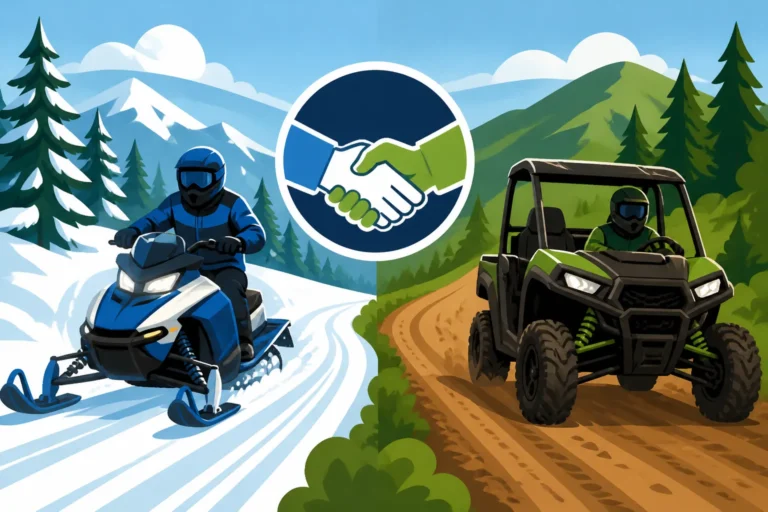
New Hampshire's expansive trail network is a treasure, offering incredible riding opportunities through diverse landscapes. What many riders don't realize is that much of this network operates on a seasonal rotation. A trail you enjoyed on a snowmobile in January might be completely off-limits to your ATV or UTV in July, and vice-versa. It’s not just about the snow; it's about landowner agreements, trail integrity, and the dedicated efforts of volunteer clubs.
Why Trail Designations Change
The primary reason for these seasonal shifts lies in the very nature of the trails and the machines that use them. Snowmobile trails are designed to be ridden when the ground is frozen solid and covered in a protective layer of snow. This allows for smooth gliding and minimizes impact on the underlying terrain. When the snow melts and the ground thaws, these trails often become soft, muddy, and extremely vulnerable to damage from wheeled vehicles. A single ride on a wet trail can create deep ruts, erode the surface, and cause significant long-term damage that takes countless volunteer hours and dollars to repair.
Beyond the physical impact, landowner agreements are at the heart of why designations change. Many of New Hampshire's trails cross private land, and landowners grant permission to clubs under specific conditions. These conditions often stipulate the type of machine and the season of use. For instance, a farmer might allow snowmobiles to cross a field in winter when crops are dormant and the ground is frozen, but prohibit OHRVs in summer to protect growing crops or newly planted fields. It’s a delicate balance, and violating these agreements can lead to trails being closed permanently, hurting the entire riding community. The [New Hampshire Fish and Game and OHRVs] department works closely with clubs and landowners to manage this complex system.
The Standard OHRV and Snowmobile Seasons
Generally speaking, New Hampshire's OHRV trails, which include those open to ATVs and UTVs, typically open in late May and close around October 31st or November 1st. This timing allows the ground to dry out from spring thaws and closes trails before the heaviest fall rains or early snows can cause damage. After the OHRV season wraps up, the trails transition into the snowmobile season, usually opening once there's sufficient snow cover, often in December, and running through April.
However, these dates aren't set in stone for every single trail. Some areas might open a little later due to lingering mud, especially in higher elevations or shaded sections. Conversely, some trails in the northern part of the state might have slightly longer seasons for one type of machine over another, depending on local conditions and landowner permissions. It’s crucial to remember that "standard" doesn't mean "universal," and riders must always verify the current status of specific trails before heading out. Checking [New Hampshire Trail Opening Day] and [New Hampshire Trail Closing Dates] for the areas you plan to visit is always a good idea.
Understanding Shared Corridors and Exclusivity
One of the most common misconceptions among OHRV riders is that if a trail is part of a "network," it must be open to all machines, all the time. This is simply not the case in New Hampshire. While the state boasts an incredible system of interconnected trails, particularly in the North Country with "Ride the Wilds," understanding which segments are truly shared and which are exclusive to snowmobiles (or vice versa) during specific seasons is paramount.
Not All Snowmobile Trails Are Created Equal for OHRVs
It's tempting to look at a vast snowmobile map and assume those lines magically convert to ATV trails once the snow melts. Unfortunately, that's not how it works. Many miles of snowmobile trails are never open to wheeled OHRVs, even during the summer months. This often comes down to specific landowner agreements or the physical characteristics of the trail itself. Some trails might pass through environmentally sensitive areas where wheeled traffic is deemed too disruptive, or they might be on easements that explicitly restrict use to snowmobiles only.
Furthermore, some snowmobile trails are simply not built to withstand the demands of ATVs and UTVs. They might be too narrow, too steep, or have bridges and culverts that are adequate for a snowmobile's lighter footprint but not for a side-by-side's weight and tires. Riders who ignore "Snowmobile Only" or "No OHRVs" signs risk not only fines but also damaging delicate infrastructure and jeopardizing landowner goodwill. Always assume a snowmobile trail is not an OHRV trail unless it is explicitly marked or designated as such by the local club or [New Hampshire Fish and Game and OHRVs].
The Role of Clubs and Landowner Agreements
The backbone of New Hampshire's trail system, for both OHRVs and snowmobiles, is its network of volunteer clubs. These dedicated groups spend thousands of hours negotiating with landowners, building and maintaining trails, and putting up signage. They are the direct link between riders and the land. Access to private land, which makes up a significant portion of our trails, is a privilege, not a right, and it’s granted based on trust and the assurance that riders will respect the rules.
When a club secures an agreement with a landowner for a snowmobile trail, that agreement is often very specific. It might cover only the winter months, or it might restrict the type of machine. If OHRV riders then use that trail out of season or against the specific agreement, it can cause the landowner to pull permission for all recreational use, including snowmobiles. This is why [New Hampshire Landowner Permission Rules] are so crucial. Clubs like the Milan Trail Huggers or the North Country ATV work tirelessly to maintain these relationships. Supporting these clubs through membership, even if you primarily ride your ATV, helps fund their efforts and preserve precious trail access for everyone.
Navigating the Rules: What Every OHRV Rider Needs to Know
Knowing which trails you can ride, and when, is probably the single most important piece of information for any OHRV enthusiast in New Hampshire. Riding on designated snowmobile trails during the OHRV season is possible, but it requires diligence and a commitment to following the rules. It's about being a responsible rider, not just for your own enjoyment, but for the sustainability of the entire trail system.
Checking Trail Status Before You Ride
Never, ever assume a trail is open to your ATV or UTV just because you've ridden it on a snowmobile, or because it's the "right" time of year for OHRVs. Trail conditions can change rapidly, and local closures for logging, mud, or maintenance are common. The absolute best way to ensure you're riding legally and safely is to check the current trail status before you even load up your machine.
Start with the New Hampshire Fish and Game website, which often has statewide alerts or links to regional information. More importantly, consult the websites or social media pages of the local clubs that maintain the trails in the area you plan to visit. Clubs are usually the first to know about specific closures, detours, or changes in conditions. Many clubs update their trail reports daily during peak seasons. You can also often find trail status boards in popular riding towns like Berlin or Gorham. Checking [New Hampshire Trail Status Before You Ride] and being aware of [New Hampshire Trail Closures to Check First] are non-negotiable steps. Remember, even if the general OHRV season is open, a specific trail might be temporarily closed due to [New Hampshire's Mud Season Ban] or other local issues.
Respecting Signs and Trail Markings
Once you're on the trail, pay close attention to all signage. Trail systems are clearly marked for a reason, and those signs are your guide to legal and safe riding. You'll encounter signs that explicitly state "OHRV Trail," "Snowmobile Only," "Multi-Use," or "Trail Closed." If you see a sign indicating "Snowmobile Only" or "No OHRVs," that means your ATV or UTV is prohibited, regardless of the season or what other trails nearby might allow. These signs often reflect specific landowner requests or the physical limitations of the trail.
Beyond machine-type restrictions, you'll also see signs for speed limits, trail width restrictions (some trails, especially rail trails, have a 50-inch width limit), and directional arrows. Adhering to these signs is paramount. Ignoring them can lead to serious accidents, conflicts with other trail users (like hikers, mountain bikers, or equestrians on multi-use paths), and, of course, hefty fines from conservation officers who regularly patrol these areas. If a sign says "Closed," it's closed for a reason—don't try to go around it.
Equipment and Etiquette on Shared-Use Trails
When you are on a designated OHRV trail that also serves as a snowmobile corridor in winter, it's particularly important to practice excellent trail etiquette. These trails are often enjoyed by a diverse group of users, even during the OHRV season. Always stay to the right, especially on blind turns, and yield to all non-motorized traffic. Slow down when approaching other trail users, and offer a friendly wave.
Your machine's equipment also plays a role in responsible riding. Ensure your ATV or UTV has a properly functioning spark arrestor to prevent wildfires, especially during dry conditions. If you're riding a machine with aftermarket parts, like those from SuperATV, make sure they are compliant with New Hampshire's sound regulations and safety standards. Good lighting is also essential, even during the day, for visibility to other trail users. Remember, your actions reflect on the entire OHRV community, and respectful riding helps secure continued access for everyone.
Consequences of Misuse and Protecting Future Access
The temptation to ride a perfectly groomed snowmobile trail in the off-season, or to ignore a "Trail Closed" sign, might be strong. However, understanding the severe consequences of such actions, both for individual riders and for the broader OHRV community, is crucial for preserving the future of riding in New Hampshire.
The Impact of Unauthorized Riding
Riding an OHRV on a snowmobile trail that is not designated for wheeled vehicles, or riding on any trail when it's closed (especially during mud season), has far-reaching negative impacts. The most immediate is environmental damage. Soft, wet ground is easily rutted by tires, leading to erosion, damage to vegetation, and pollution of nearby waterways. These ruts also make the trail unusable or dangerous for other users once it reopens. Imagine trying to snowmobile over deep ruts that have frozen solid—it's not only rough but can damage snow grooming equipment.
Beyond the environment, unauthorized riding severely strains relationships with landowners. As discussed, much of New Hampshire's trail system relies on the generosity of private landowners. If their property is damaged, or their specific agreements are violated, they are highly likely to revoke permission, sometimes for good. One landowner's decision to close their land can effectively shut down an entire section of trail, disrupting popular loops and limiting access for hundreds of responsible riders. This is why organizations and clubs work so hard to educate riders and enforce rules.
Fines and Legal Ramifications
New Hampshire Fish and Game conservation officers actively patrol the trail systems, and they do not take violations lightly. Riding on a closed trail, or a trail not designated for your machine type, can result in significant fines. These aren't just minor tickets; they can be substantial, and they often come with additional penalties like court fees. If your machine isn't properly registered, or you're operating it without the necessary safety certificate (if applicable), those are additional violations that will add to the financial burden. [New Hampshire Fines for an OHRV Violation] can quickly add up, turning what was supposed to be a fun day into a very expensive regret.
It's not just about the money, though. Repeated violations can lead to more serious legal consequences. More importantly, every time a rider disregards the rules, it erodes public trust and gives ammunition to those who wish to see OHRV trails closed down entirely. To protect our access to these incredible resources, every rider must commit to responsible, legal, and respectful riding practices. Always check local regulations, follow signage, and support the clubs that make our riding experiences possible.
| Feature / Rule | OHRV (ATV/UTV) Use on Snowmobile Trails | Snowmobile Use on Snowmobile Trails |
|---|---|---|
| Primary Season | Late May – Oct 31 (approx.) | Dec – April (approx., with snow) |
| Ground Condition | Dry, firm ground | Frozen, snow-covered ground |
| Landowner Agreements | Specific permission often required | Specific permission often required |
| Trail Damage Risk (wet) | High, leads to ruts & erosion | Low, protected by snow |
| Common Designations | "OHRV Trail," "Multi-Use" | "Snowmobile Only," "Multi-Use" |
| Permitted Use | Only if explicitly designated | Generally permitted in season |
| Required Check | Club/F&G status updates, signage | Club/F&G status updates, signage |
| Impact of Misuse | Trail closure, fines, landowner anger | Trail closure, fines |
Disclaimer
This article is for general informational purposes only and does not constitute professional advice. Laws, prices and regulations vary by location and change over time. Consult a qualified professional for guidance on your specific situation.