New Hampshire Trails Open in Winter
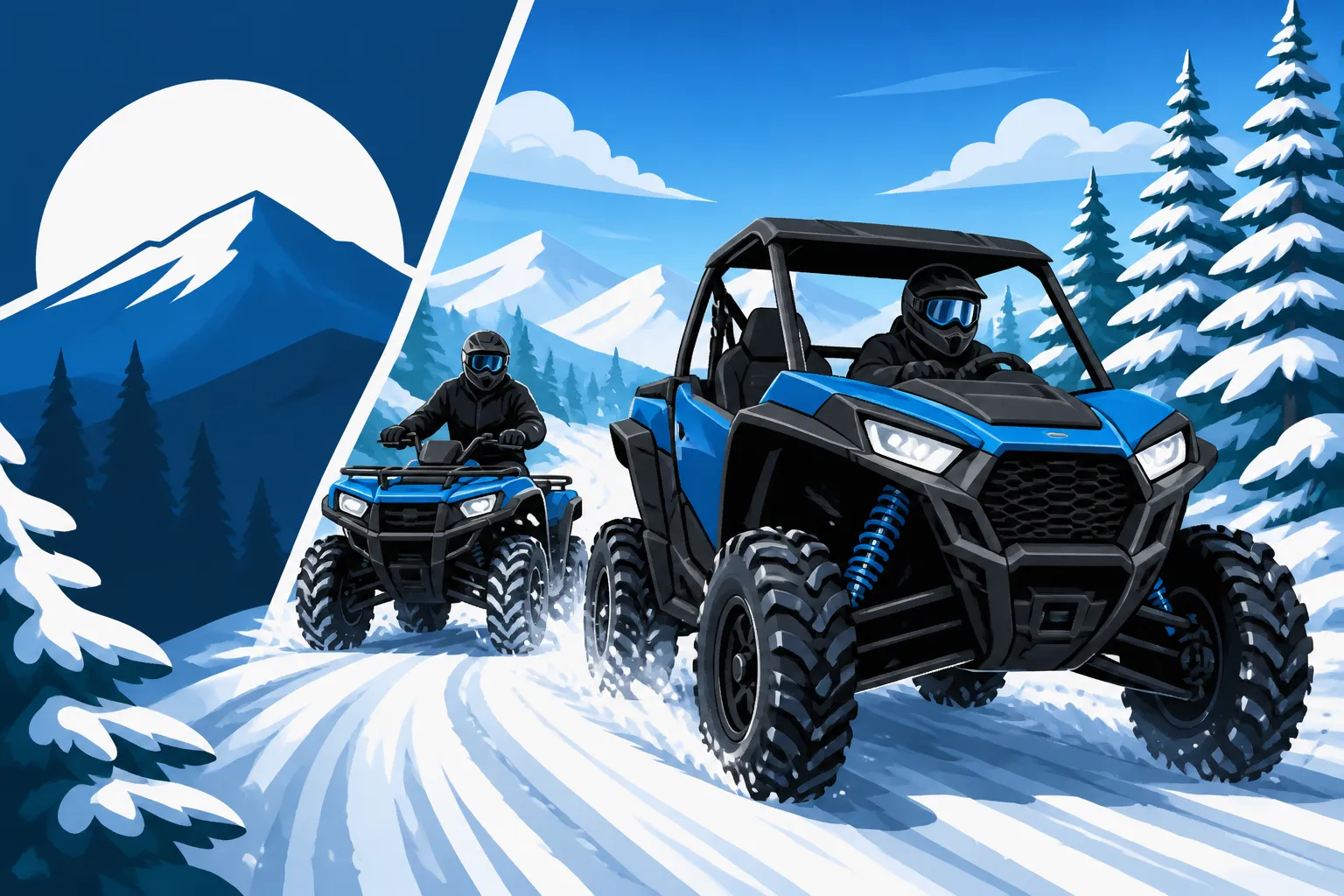
Winter riding in New Hampshire can be confusing: a trail that welcomes ATVs in summer may be closed to wheeled machines once snowmobile season begins, while a few corridors may allow year-round OHRV use. This guide explains how to find winter access, check conditions, and avoid mistaking a groomed snowmobile route for an open ATV or UTV trail.
Where You Can Ride an ATV or UTV in New Hampshire During Winter
Winter access is not a statewide yes-or-no rule. It depends on the specific trail, the landowner, the local club’s decisions, seasonal conditions, and the type of machine you plan to ride. Even in a region known for OHRV riding, one corridor may remain open while another is closed or reserved for snowmobiles.
Start with the exact trail or trail system you want to use, rather than searching for a general list of “winter ATV trails.” Then confirm that the route is open to your machine on the day you plan to ride. For background on how permission and access work, see [New Hampshire's Club Membership and Access] and [New Hampshire Rules for Riding a Snowmobile Trail].
Year-round access is limited and trail-specific
Some New Hampshire trail areas may offer winter access for OHRVs, but that does not mean every trail in the area is open, or that every machine is permitted. A club may close a section because of snow, thawing ground, landowner concerns, grooming work, or a conflict with snowmobile traffic. Conditions can also change quickly: a route that was open earlier in the week may be closed after warm weather softens the surface.
The Ammonoosuc Valley Rail Trail is one corridor riders may look into when searching for year-round options. Its name, location, or past availability should not be treated as a guarantee that a particular segment is open to your ATV or UTV on a particular date. Check local access information before setting out. The same caution applies to southern rail trails; read [New Hampshire's Southern Rail Trails] and [Riding a Southern Rail Trail Open Year Round] as starting points for identifying possible routes, then confirm the specific corridor’s rules and current status.
In the North Country, riders may also hear about winter access around the Androscoggin Valley. That region’s riding opportunities are worth investigating, but don’t assume that “year-round access” means every club trail remains open all winter. A regional network can include different landowners, trail managers, and seasonal rules. Look for information about your intended route, not just the broader area. [Androscoggin Valley's Year-Round Access] and [Riding Androscoggin Valley in Winter] can help you narrow down what to check.
A snowmobile trail is not automatically an ATV trail
Seeing snowmobile tracks, groomed snow, or a trail sign does not establish that a wheeled ATV or UTV can use the route. Many winter corridors are managed primarily for snowmobiles, and access for other machines may be restricted. Even where summer OHRV use is allowed, winter access can change to protect the trail base, accommodate grooming, or prevent machines from damaging a thawing surface.
Pay attention to signs at trailheads and intersections. A corridor that connects two familiar summer routes might be open to snowmobiles but closed to ATVs, or open only to a particular kind of winter machine. If the sign or club notice is unclear, contact the managing club or land manager before riding. Don’t rely on another rider’s tire tracks as permission; someone else may be in the wrong place, or the route may have changed since they passed through.
Winter use also depends on what you mean by “ATV or UTV.” Wheeled machines and tracked machines may be treated differently under local trail rules. Never assume that adding tracks makes a closed route legal to ride, or that a trail open to snowmobiles is open to a tracked ATV. For more context, see [Trails That Carry Quads in Summer and Sleds in Winter] and [Clubs That Groom in Winter and Ride in Summer]. The decisive question is always whether the trail manager allows your specific machine on that route at that time.
How to Check Winter Trail Status Before You Leave
A winter ride can take more preparation than a summer outing. Plowed roads may lead to trailheads that are unplowed, parking areas may be buried or unavailable, and a trail may close with little notice after a weather change. Checking access and conditions before you load the trailer can save a long drive to a locked gate—or keep you from riding into a closure.
Use more than one planning tool when possible. A map is useful for understanding where a route goes, but it may not show a last-minute closure or a landowner’s updated restriction. Pair mapping with current information from the club or organization responsible for the trail.
Check the club or land manager’s latest notice
Before heading out, identify which club or agency manages the trail you want to ride. Look for a recent trail-status update, seasonal notice, or direct contact information. If the information you find is old or doesn’t clearly name your route, ask a specific question: “Is this section open to a wheeled UTV this weekend?” is more useful than “Are the trails open?”
Try to confirm these details:
- Whether the exact route is open to OHRVs
- Whether access includes your machine type, width, and tires or tracks
- Whether the route is shared with snowmobiles
- Whether there are temporary closures or conditions-based restrictions
- Where you may park and unload
- Whether local rules limit riding hours or access to certain sections
A wide UTV deserves particular attention. Some corridors have width limits, and a route that is open to a narrower machine may not accommodate yours. Check [New Hampshire Trails for a Wide Machine] and verify the limit for the specific trail system. A map line alone cannot tell you whether your vehicle fits through gates, barriers, or narrow sections.
Use maps for navigation, not as proof of permission
An app such as onX Offroad can help you plan a route, understand nearby roads and trail connections, and prepare for areas where cell service may be unreliable. Before leaving home, review the route and save any available offline map information so you are not depending on a live connection in a remote area. This is especially useful around northern riding areas, where coverage can be inconsistent.
Still, treat onX Offroad as a navigation aid, not the final authority on seasonal access. A route shown on a map may be closed, restricted to another vehicle type, or subject to a temporary landowner decision. Compare the route with current club or land-manager information, and pay attention to signs on the ground. If the map and the posted notice disagree, stop and clarify access rather than assuming the map gives permission.
It also helps to plan a backup route before you leave. If a gate is closed or a trail status changes, don’t improvise by turning onto an unmarked woods road, private driveway, or snowmobile corridor. Use onX Offroad to understand your surroundings, then choose an alternative route that you have separately confirmed is open. For seasonal updates, [New Hampshire Trail Status Before You Ride] and [New Hampshire Trail Closures to Check First] are useful topics to review during trip planning.
Winter Riding Rules and Trail Etiquette
Open access is only one part of a safe, responsible winter ride. Snow can hide rocks, branches, washouts, signs, and trail edges. A familiar summer route may feel completely different once covered, and winter visibility can shrink quickly in falling snow or low light. Ride at a pace that gives you time to respond, and be prepared to turn around if the conditions are worse than expected.
Respect closures, grooming, and changing trail conditions
A closed trail is not an invitation to see whether you can get through. Closures may protect soft ground, allow grooming equipment to work, address a landowner’s concern, or prevent damage to a trail that would take a long time to repair. Riding through a closure can also threaten future access for everyone who uses the network.
The surface can change noticeably over the course of a day. A route that is firm in the morning may soften as temperatures rise, while a sudden freeze can create ruts that are difficult to steer through. Keep an eye out for fresh signs, barriers, and club notices, and turn around if you encounter a closure or unsafe conditions. Avoid widening the trail to go around mud, standing water, snowbanks, or an obstruction; that can damage vegetation and push riders onto land where they may not have permission.
On shared corridors, be alert for snowmobiles, grooming equipment, and other trail users. Slow down near intersections, blind corners, trailheads, and narrow bridges. Give groomers and work crews room, and follow any posted direction about passing or yielding. A quiet stretch of trail can become busy quickly, particularly near a staging area or a popular connector.
Prepare your machine and group for cold-weather riding
Cold temperatures can make small problems harder to manage. A weak battery, frozen controls, low tire pressure, or a fuel issue may become more than an inconvenience when you are far from a road. Inspect your machine before the trip, and bring basic equipment appropriate to the route and weather. Tell someone where you are going and when you expect to return.
A practical winter checklist includes:
- Confirm the route is open to your machine and check the forecast.
- Inspect tires or tracks, brakes, lights, battery, and fuel before departure.
- Bring warm layers, water, a charged phone, and a backup way to communicate where coverage is poor.
- Carry basic recovery and repair supplies suited to your machine and group.
- Agree on a turnaround time and a plan if a rider becomes separated.
- Recheck signs and trail conditions as you ride, and turn back when access or safety is uncertain.
Cold-weather gear matters even on a short outing. Wind chill from riding can make a moderate temperature feel much harsher, especially for passengers. Keep hands and feet warm, wear eye protection suitable for blowing snow, and avoid assuming that a heated cab makes a UTV immune to winter hazards. Snow-covered surfaces can conceal ice, and a warm vehicle can still become stranded or lose traction.
Planning a Winter Ride by Area
New Hampshire’s riding areas vary in terrain, access, and winter use. Instead of choosing a destination solely because it is popular in summer, build your trip around a confirmed open route, legal parking, and a realistic plan for the conditions. If the trail network is unfamiliar, a shorter out-and-back ride is often a better first outing than a long route linking several areas.
| Planning question | What to confirm before you go |
|---|---|
| Is the trail open? | Check a recent update from the club or land manager and confirm the exact section. |
| Is my machine allowed? | Ask about wheeled ATVs, UTVs, tracks, and any width restrictions. |
| Is the route shared? | Find out whether snowmobiles or grooming equipment use the corridor. |
| Can I reach the trailhead? | Confirm winter parking, road access, and whether the lot is plowed. |
| Can I navigate without service? | Review the route and save offline map information before leaving. |
| What is my backup plan? | Identify another confirmed open route or be ready to cancel. |
North Country destinations need a careful status check
Berlin, Gorham, and other North Country communities are closely associated with OHRV riding, but a well-known riding destination is not a promise of winter access on every trail. A route may be open only in certain sections, and a club network can have distinct rules across connected land. Start with the trail system’s own information, then check specific access and parking details.
If you are considering the Androscoggin Valley, verify the route and machine type rather than assuming that regional winter riding opportunities apply to every corridor. The same approach works for areas around Pittsburg, Colebrook, and other Coos County destinations. Weather, grooming needs, landowner decisions, and trail conditions all influence what is actually rideable.
onX Offroad can be useful for previewing how roads and trail segments connect in these areas, particularly when you are deciding where to stage or how far to travel. Use it alongside club updates, not instead of them. If you cannot confirm that a trail is open to your particular machine, choose a route with clear permission or postpone the ride.
Southern rail trails may offer different options
Some southern New Hampshire corridors may have different seasonal access patterns from northern club networks. Rail trails can be attractive because they often follow relatively direct routes, but access depends on the corridor’s rules, the town or land manager, and the vehicle types permitted there. A multi-use path or rail trail is not automatically open to ATVs and UTVs simply because it is physically wide enough.
Before planning a southern ride, confirm that OHRVs are allowed on the exact segment and check whether winter conditions affect access. Look for posted restrictions, seasonal notices, and information about parking. Do not ride onto a rail trail based only on a map label or the fact that it is open to pedestrians, cyclists, or snowmobiles.
If the route is open, keep the experience considerate and controlled. Shared corridors can bring together different users with different speeds and expectations. Slow down around walkers and other trail users, stay on the authorized route, and leave enough room to stop safely. When a trail’s status is uncertain, contact the managing organization before driving there; a quick check can prevent a wasted trip and help preserve access for future seasons.
Disclaimer
This article is for general informational purposes only and does not constitute professional advice. Laws, prices and regulations vary by location and change over time. Consult a qualified professional for guidance on your specific situation.