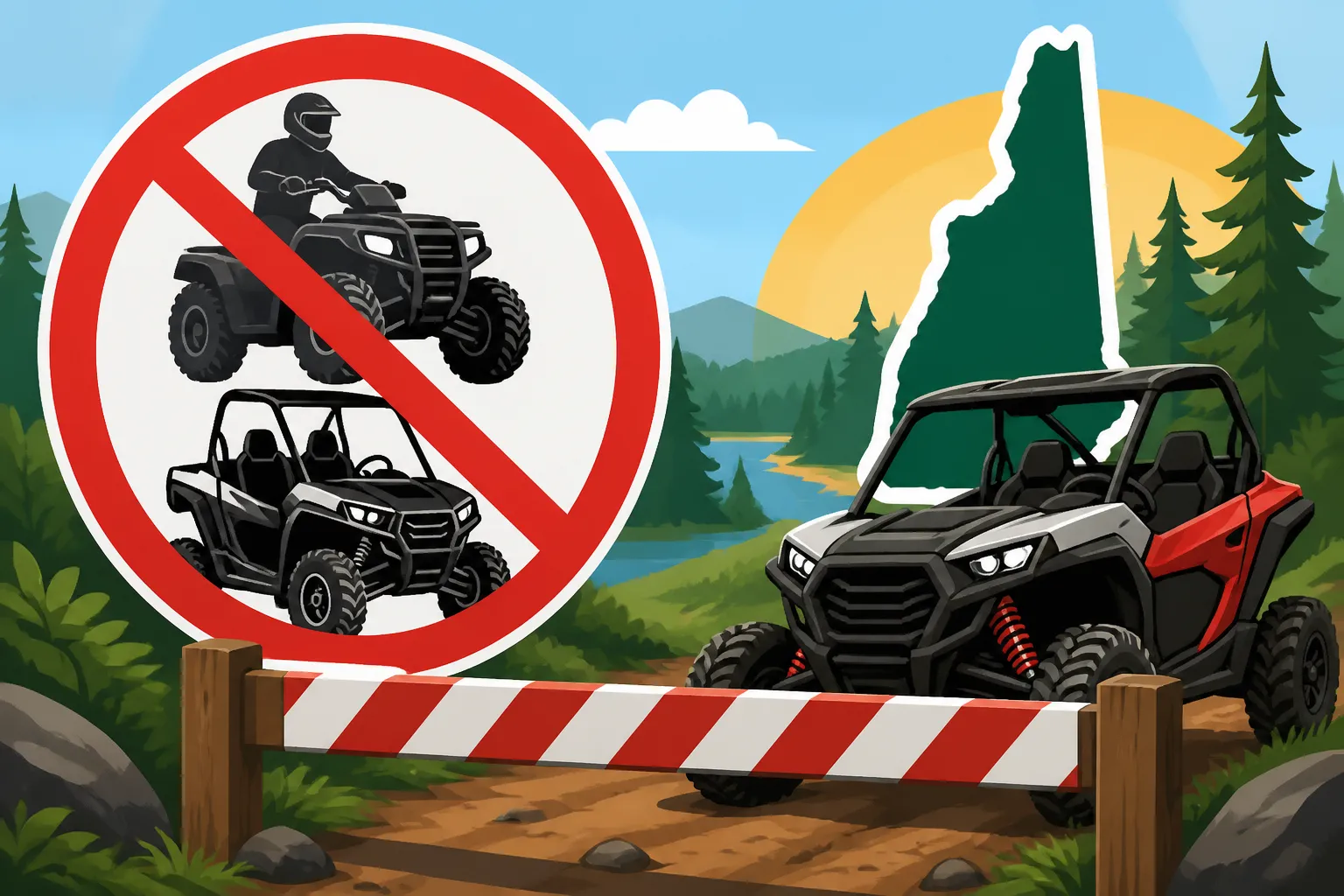
New Hampshire Rules for Riding a Closed Trail
It's incredibly frustrating, isn't it? You've loaded up the rig, checked your tires, maybe even driven a good distance, only to arrive at your favorite trailhead and see that dreaded "CLOSED" sign. It's not just a minor inconvenience; it can throw off an entire day or even a weekend of planned adventure. Navigating the rules around closed trails in New Hampshire can feel like a maze, especially with varying reasons and enforcement. This guide is here to cut through the confusion, helping you understand why trails close, what the repercussions are for ignoring those signs, and how to stay informed so your next ride is always on an open, legal path.
Understanding Why Trails Close in New Hampshire
New Hampshire offers an incredible network of OHRV trails, but the privilege of riding them comes with responsibilities, one of the biggest being respecting closures. These closures aren't arbitrary; they're put in place for very important reasons, often to protect the environment, ensure rider safety, or preserve crucial landowner relationships.
The 'Why' Behind Closures: Safety, Seasonality, and Stewardship
Trail closures are a critical component of responsible trail management in the Granite State. One of the most common and widely recognized reasons for closures is the infamous "mud season." This period, typically in the spring, occurs when the ground thaws and becomes extremely saturated with water from melting snow and spring rains. Riding on trails during this time can cause irreparable damage. Tires churn up soft soil, leading to deep ruts, significant erosion, and widening of the trail corridor. This not only makes the trail impassable for future riders but also harms the natural ecosystems by compacting soil, damaging vegetation, and polluting waterways with sediment. It’s a collective effort to avoid further damage and ensure the longevity of our beloved trails. [New Hampshire's Mud Season Ban] is a testament to the state's commitment to preserving these natural resources.
Beyond mud season, trails can close for a variety of other legitimate reasons. Seasonal closures often coincide with specific times of the year, such as hunting season in the fall, to ensure the safety of both riders and hunters. Logging operations, which are common in many parts of New Hampshire, also necessitate temporary closures to keep riders out of active work zones where heavy machinery and falling trees pose significant hazards. Sometimes, a trail might close due to an unexpected event like a severe storm that causes washouts, downed trees, or bridge damage. These "temporary" closures are vital for safety, allowing time for assessment and repairs.
Finally, many trails in New Hampshire rely on the goodwill and continued permission of private landowners. A landowner might withdraw their permission for a variety of reasons, leading to a permanent or temporary closure of a section of trail. This highlights the delicate balance and the immense work that OHRV clubs do to maintain these relationships. Every time a rider ignores a closure, it jeopardizes these agreements, potentially leading to a loss of access for everyone. The collective stewardship of riders is paramount to keeping our trails open and thriving.
Who Closes the Trails and How You're Notified
It's not always a single entity that decides to close a trail. The authority can come from several sources, including the New Hampshire Bureau of Trails, which is part of the Department of Natural and Cultural Resources, or individual OHRV clubs. Many of the extensive trail networks in New Hampshire are managed and maintained by dedicated volunteer clubs under agreements with the state and private landowners. These clubs have direct knowledge of trail conditions and landowner requirements, making them key players in implementing and communicating closures. Landowners themselves also retain the right to close access to their property at any time, which can impact trail segments running through their land.
Staying informed about trail status is crucial before you even hitch up your trailer. Relying solely on memory or last year's experience is a recipe for disappointment. The best practice is to check the most current information. Many clubs maintain active websites and social media pages where they post real-time updates on trail conditions and closures. Some popular trailheads, especially in areas like Jericho Mountain State Park or along the Ride the Wilds network, have physical trail status boards. These boards are updated regularly and provide critical information on which routes are open, closed, or have specific warnings. Think of it as your flight status board before you take off; you wouldn't fly without checking, so don't ride without checking [New Hampshire Trail Status Before You Ride].
It’s important to understand that not all closures are widely publicized months in advance. Emergency closures due to weather events like flash floods, or sudden issues like a critical bridge washout, might only be announced hours before. This is why a quick check on the morning of your ride, or even the night before, is an essential part of your pre-ride ritual. Having your machine equipped with reliable parts from reputable brands, perhaps even robust aftermarket components from companies like SuperATV, is a fantastic way to ensure it can handle the rugged terrain of New Hampshire's open trails. But even the best-equipped machine can't defy a "Closed" sign.
The Consequences of Riding a Closed Trail
While the temptation to "just sneak through" a closed section might be strong, especially if it looks clear, the risks far outweigh any perceived reward. The consequences of riding a closed trail extend beyond personal penalties, impacting the entire OHRV community and the very trails we cherish.
Legal Repercussions: Fines and Penalties
Let's not sugarcoat it: riding on a closed trail is a violation of New Hampshire law, and law enforcement takes it seriously. Conservation Officers from the New Hampshire Fish and Game Department regularly patrol the trail systems, and they are authorized to issue citations. The fines for riding a closed trail can be substantial, often hundreds of dollars, and are designed to deter riders from causing damage or trespassing. Imagine driving all the way to a trail system, only to get a hefty ticket just a few miles in because you ignored a sign. It's a costly mistake that no one wants to make. [New Hampshire Fines for a Trail Violation] can put a real damper on your wallet and your spirits.
Beyond the immediate financial hit, there can be other, more severe penalties. In some cases, repeated offenses or particularly egregious violations could lead to the temporary or permanent loss of your OHRV registration, making it illegal for you to operate any OHRV in the state. In extreme circumstances, your machine could even be impounded. This isn't just a minor slap on the wrist; it's a serious legal problem that can keep you off the trails entirely. Conservation Officers have full authority to enforce these rules, and they are trained to identify violations. It's simply not worth the risk.
Furthermore, if you cause damage to property or injuries to others while riding on a closed trail, your liability significantly increases. Insurance policies might not cover incidents that occur while you are violating posted closures or trespassing, leaving you personally responsible for potentially massive repair costs, medical bills, or legal fees. It’s a very real scenario that can turn a fun day into a financial nightmare. Always ride within the rules, and make sure your machine is in peak condition for legal adventures. Before heading out, checking your machine’s health is key. Components like suspension, tires, and even recovery gear—think winches, where a strong option from a brand like SuperATV could be invaluable—should always be in top shape, especially when navigating complex or remote open routes.
Damage to Trails and Relationships
The legal consequences are just one side of the coin. The environmental impact of riding on closed trails, particularly during mud season, is profound and long-lasting. When you ride on soft, wet trails, your tires dig in, creating deep ruts that act as channels for water, accelerating erosion. This not only destroys the riding surface but can also lead to sediment runoff into streams and rivers, harming aquatic habitats and water quality. It takes countless volunteer hours and significant financial resources to repair this kind of damage, money that could otherwise be spent on expanding or improving the trail system.
Perhaps even more critical, riding closed trails severely damages the relationships between the OHRV community and the landowners who graciously permit access across their property. Many of New Hampshire's trails traverse private land, and the continued existence of these trails depends entirely on landowners' trust and willingness to allow passage. When riders ignore closure signs, landowners see their property being damaged, their privacy invaded, and their generosity disrespected. This can, and often does, lead to landowners withdrawing permission, resulting in the permanent closure of entire sections of trail or even entire trail systems. [New Hampshire Rules for Riding Private Land] and [New Hampshire Landowner Permission Rules] are not just suggestions; they are the bedrock of our trail access.
The dedication of volunteer OHRV clubs is what keeps many of these trails open and maintained. These individuals spend countless hours clearing debris, repairing bridges, grading surfaces, and negotiating access agreements. When riders disregard closures, it undermines all that hard work and discourages these volunteers who are doing so much for the sport. It's a betrayal of the community and the spirit of shared access. While top-notch gear from companies like SuperATV can enhance your experience on designated trails, no amount of heavy-duty equipment gives you permission to disregard a closure sign.
What to Do When You Encounter a Closed Trail
So, you're out on the trail, perhaps on a grand adventure through the White Mountains, and you come across that dreaded closure sign. What's the best course of action? The answer is simple, yet sometimes hard to swallow: respect it.
Respecting the Signs and Rerouting
The absolute, non-negotiable rule when you encounter a closed trail is to turn around. No matter how inconvenient, no matter how tempting it might be to push through, you must respect the closure. These signs are there for a reason – whether it’s for safety, environmental protection, or landowner requests – and ignoring them puts you, others, and the future of the trails at risk. Trying to bypass a closure by going off-trail is equally, if not more, damaging and illegal. It's trespassing and can cause immense environmental harm to sensitive areas.
This is where planning truly pays off. Always have a backup plan or alternative routes in mind before you head out. A well-prepared rider doesn't just know their primary route; they've studied the trail maps and have identified secondary options in case of unforeseen closures or conditions. Modern GPS devices or even apps on your smartphone, loaded with up-to-date trail maps, can be invaluable for navigating around closures. These tools allow you to quickly assess your options and find an open path, rather than being stuck with no recourse. Taking the time to study maps from various [New Hampshire Trail Maps From a Club] before your ride will make a world of difference.
It's also a good idea to consider the time of year you're riding. If you're planning a trip during the shoulder seasons—early spring or late fall—be extra diligent in checking trail conditions, as closures are more frequent during these periods due to mud, hunting season, or early snow. Having the flexibility to adapt your route on the fly means you're less likely to be disappointed or tempted to violate a closure.
Reporting and Advocating for Open Trails
If you encounter a closure that seems unusual, or if you notice damage on an open trail that needs attention, reporting it to the proper authorities is a helpful act of trail stewardship. For general questions or to report significant issues, you can often contact the New Hampshire Fish and Game Department. For issues specific to a particular trail system, reaching out directly to the local OHRV club that maintains that segment is usually the most effective approach. They are on the ground, literally, and are best equipped to address concerns or provide clarification.
Beyond reporting, one of the most impactful things you can do to support the New Hampshire OHRV trail system is to become an active advocate. This means joining a local OHRV club. [New Hampshire's Club Membership and Access] isn't just about getting a discount on your registration; it's about contributing to the very organizations that build, maintain, and protect our riding opportunities. Your club dues go directly towards trail maintenance, insurance, landowner relations, and advocacy efforts. Moreover, volunteering your time with a club, even for a few hours a year, can make a huge difference. Helping with trail work days, clearing brush, or assisting with events directly contributes to keeping trails open and in good condition.
Remember, the trails we enjoy are a privilege, not an inherent right. By respecting closures, staying informed, and actively supporting the OHRV community through club membership and volunteering, we ensure that these incredible riding opportunities remain available for generations to come. It’s a collective responsibility, and every rider plays a role in it.
Special Considerations and Nuances
While the general rule for closed trails is straightforward, there are a few nuances and recurring situations that deserve a closer look. Understanding these can help prevent misunderstandings and keep you on the right side of the rules.
"Temporarily" Closed vs. "Permanently" Closed
It's important to distinguish between a trail that is "temporarily" closed and one that has been "permanently" closed. A temporary closure, as discussed, is usually for a specific period due to mud season, logging, hunting, or emergency repairs. These trails are expected to reopen once the conditions or issues are resolved. Signs for temporary closures will often indicate the reason and, sometimes, an anticipated reopening date or period. For instance, you might see signs detailing [New Hampshire Trail Opening Day] and [New Hampshire Trail Closing Dates] for seasonal access.
A "permanently" closed trail, on the other hand, means access has been withdrawn indefinitely. This can happen if a landowner decides they no longer want to allow OHRV access to their property, or if a trail segment becomes environmentally unfeasible to maintain. Signs for permanent closures might be more definitive, sometimes stating "No Trespassing" or "Trail Closed Indefinitely." These are serious and should be treated with the utmost respect, as attempting to ride them is a clear act of trespassing with significant legal consequences. When in doubt, always err on the side of caution and assume a closure means no access until otherwise confirmed by an official source.
The impact of a permanent closure on the trail network can be substantial, sometimes breaking critical links in longer routes. This is another reason why maintaining good landowner relations and adhering to all rules, including closures, is so vital. We lose more than just a trail; we lose part of the connective tissue of our riding areas.
The Role of Weather and "Mud Season"
New Hampshire's weather is notoriously unpredictable, and it plays a massive role in trail conditions and closures. While "mud season" is a well-known annual event, it's not always confined to a specific calendar window. A particularly wet summer or fall can create mud season-like conditions at any time, leading to unexpected closures. Similarly, early thaws or late freezes can shift the start and end dates of spring mud season, which is why constantly checking current conditions is paramount.
The necessity of the [New Hampshire's Mud Season Ban] cannot be overstated. Riding on saturated ground causes deep ruts and compaction, which then prevents water from draining properly, exacerbating future mud issues. It becomes a vicious cycle that degrades the trail over time. These closures are an investment in the long-term health and rideability of our trails. Without them, we would quickly lose much of what makes New Hampshire OHRV riding so special.
Even outside of official mud season, heavy rains can saturate trails, making them exceptionally soft and prone to damage. It's not just about getting stuck; it's about the lasting harm to the trail system. Being mindful of recent weather, even if a trail isn't officially "closed," and opting for higher, drier trails if available, is a responsible riding practice. This personal judgment, combined with checking official trail status updates, contributes to the overall sustainability of our beloved riding areas.
| Reason for Closure | Typical Duration | Key Impact | How to Stay Informed |
|---|---|---|---|
| Mud Season | Seasonal (Spring) | Trail erosion, ruts, environmental damage | Club websites, state Bureau of Trails, trail status boards |
| Logging Operations | Temporary/Variable | Rider safety, active work zone | Club updates, signage at trailheads |
| Hunting Season | Seasonal (Fall) | Rider/hunter safety, specific dates | NH Fish & Game, club websites, state regulations |
| Washouts/Damage | Temporary/Variable | Unsafe conditions, infrastructure repair | Club updates, local alerts, direct signage |
| Landowner Withdrawal | Permanent | Loss of access, critical trail segments | Club announcements, signage, long-term trail maps |
| Environmental Issues | Temporary/Variable | Habitat protection, sensitive areas | Specific club/state alerts |
Disclaimer
This article is for general informational purposes only and does not constitute professional advice. Laws, prices and regulations vary by location and change over time. Consult a qualified professional for guidance on your specific situation.