New Hampshire Rules for Retrieving Game
Retrieving game with an ATV or UTV in New Hampshire can save time, but a harvested animal does not give you permission to ride wherever you can reach it. The key is to separate the right to recover and carry game from the rules governing the machine, the trail, and the land. Here’s how to plan a recovery without assuming an exception applies.
Start with the land and route, not the machine
A common mistake is to treat a game recovery as a special reason to leave an authorized route. It is not safe to assume that a lawful harvest makes riding off-trail, around a gate, or across another person’s property legal. The machine still has to be operated where that type of riding is allowed, and the route must be open to it.
Before heading out, identify the exact location of the animal and the route you intend to take. A trail that gets you close may not lead to the recovery site, and the final stretch can cross private property, leased trail land, or an area where motorized travel is restricted. Trail access is not blanket permission to ride beyond the marked route.
If the recovery requires crossing private land, get permission from the landowner before riding there. A trail crossing or nearby public access point does not grant permission to travel across private ground. Written permission can help prevent misunderstandings about where you may go, what machine you may use, and whether you may return for the animal. See New Hampshire Landowner Permission Rules and Written Permission on New Hampshire Private Land.
State-owned land is not automatically open to every motorized use either. Access can depend on the property, the designated route, and any applicable restrictions. Check the rules for the specific area rather than assuming that public ownership means an ATV or UTV can travel off trail. New Hampshire Rules for Riding State Land is useful background.
The following distinctions help keep the decision clear:
| Situation | What to check before riding |
|---|---|
| The animal is beside an open, authorized trail | Whether the route is open to your machine and whether you can recover it without leaving the permitted corridor |
| The animal is off the trail on private land | The landowner’s permission and any limits on where the machine may travel |
| The animal is on state or leased land | The property’s motorized-access rules and any seasonal or area restrictions |
| A gate or closure blocks the route | Whether the closure applies to your machine; do not go around it just because the purpose is game recovery |
| The animal is near a road | Whether OHRV operation on that road is allowed, and whether the road crossing or travel route is legal |
If there is no legal machine route to the animal, plan a non-motorized recovery or contact the landowner or relevant land manager. A difficult carry is frustrating, but it is not a reason to improvise a route through closed or unauthorized ground.
Registration, trail access, and hunting rules still matter
Game retrieval does not replace the ordinary requirements for operating an OHRV. If you are riding on a public trail or other area where registration is required, make sure the machine is properly registered and that its registration evidence is available as required. New Hampshire does not issue a separate trail pass that makes otherwise restricted riding legal; registration and access rules still apply. For the basics, see New Hampshire OHRV Permits Explained and Showing a Decal and a Certificate.
Registration alone is not permission to ride on every trail. The trail must be open, the machine must meet any restrictions for that route, and you must follow the land manager’s rules. A route may close seasonally, temporarily, or because of conditions. If a closure sign is posted, do not assume that retrieving game creates an exception. Check New Hampshire Rules for Riding Off a Marked Trail and New Hampshire Fines for Riding a Closed Trail before relying on a route.
Hunting rules are a separate part of the plan. If you are still hunting, transporting a firearm, or retrieving an animal during a season when special restrictions apply, check the current New Hampshire Fish and Game requirements for the activity and location. The rules for carrying a firearm are not the same as the rules for operating an ATV or UTV. A legal machine route does not automatically make every way of carrying or using a firearm lawful. See New Hampshire Rules for Carrying a Firearm and New Hampshire Rules for Riding in Hunting Season.
Also consider whether the person riding is legally able to operate the machine under the applicable age, supervision, and safety requirements. A recovery trip is still an OHRV ride. If a young rider is involved, confirm the rules before setting out rather than treating a short trip as an exception.
Check the route before you leave
A practical pre-ride check should answer four questions:
- Is the route open today? Confirm current trail status with the trail manager or club. A map may show a route that is closed or restricted now.
- Can your machine use it? Check for width limits and other route-specific restrictions, especially if you are using a wide side-by-side.
- Does the route reach the recovery site legally? Mark the boundary between the authorized trail and any private or restricted land.
- Do you have permission where it is needed? Arrange access with the landowner or manager before taking the machine onto land outside the authorized route.
The details matter most near trail edges. A machine that stays on a legal route while a person walks to the animal is different from a machine that drives into brush, a field, or a neighboring parcel. If the intended recovery requires leaving the corridor, stop and confirm permission and applicable rules first.
Carrying the animal safely and responsibly
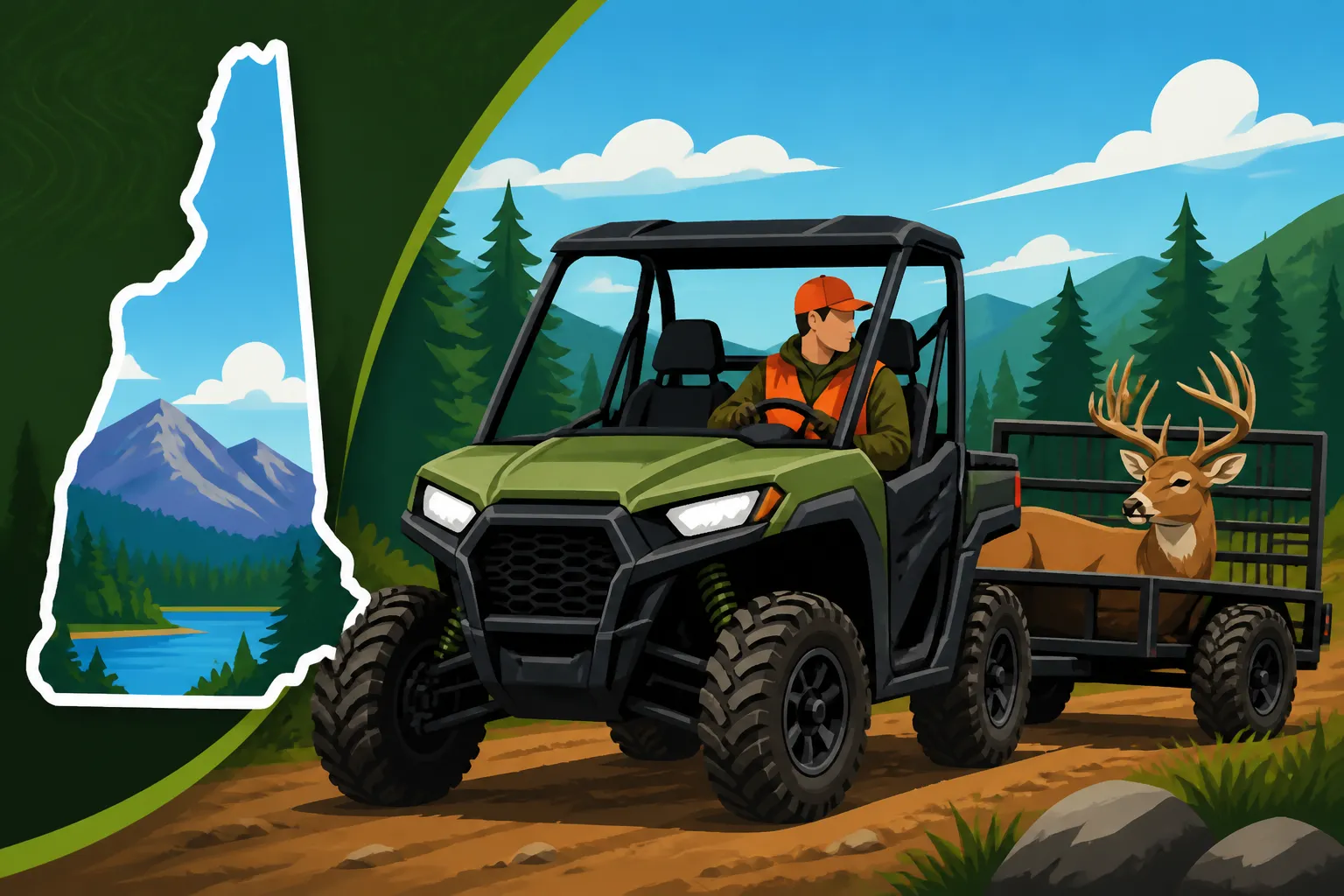
Once you have confirmed that the route and recovery are lawful, think through how the animal will be moved. ATVs and UTVs vary in cargo capacity, and the animal’s size, terrain, and distance can change what is safe. Do not assume that a passenger seat, rack, or cargo bed is suitable for an unsecured load.
Use equipment designed to secure cargo, and keep the load from shifting into the operator’s controls, wheels, exhaust, or moving parts. A load that blocks the operator’s view or makes steering and braking unreliable creates a hazard for the rider and anyone sharing the trail. If the animal cannot be secured without exceeding the machine’s capacity, make more than one trip or use another method.
A UTV’s cargo bed may offer a more stable carrying area than an ATV rack, but capacity is not the only issue. Keep weight within the manufacturer’s limits, distribute it so the machine remains balanced, and secure the load against movement on rough ground. Avoid carrying a large load on a steep, uneven, or narrow trail if it makes the machine difficult to control. Follow the machine’s operating manual and use judgment about the terrain.
Plan for the route back, too. A trail that was manageable on an unloaded machine may feel very different with added weight. Go slowly, leave extra room for stopping, and avoid sudden turns or sharp maneuvers. If the trail is too steep or rough for a controlled return with the load, do not force it. Consider a safer route that is still authorized or use a different way to transport the animal.
Hygiene and wildlife-handling requirements can also apply. Follow current Fish and Game instructions for handling, tagging, reporting, and transporting the species involved. Do not assume that a machine-recovery question answers those separate requirements. If you are unsure about a legal harvest or the handling rules, check with New Hampshire Fish and Game before moving the animal.
Be considerate of other trail users
Recovery rides can happen during busy hunting periods, when trails may be shared by riders, hunters on foot, landowners, and other users. Slow down near people, communicate clearly, and give others room to pass. A loaded machine may handle differently, so leave more stopping distance than usual.
Do not leave an animal, equipment, or other material in a way that blocks the trail or creates a hazard. If a recovery takes longer than expected, keep the machine and load out of the travel corridor when practical and safe. Respect any posted instructions and avoid damaging vegetation, trail structures, or property while loading.
If a gate, washout, or other barrier makes the planned route unusable, turn back rather than trying to bypass it. Trail conditions can change, and a workaround may take you onto land where motorized access is not allowed. For broader seasonal and access considerations, see New Hampshire Trail Status Before You Ride.
A simple decision process before retrieval
Use this sequence before bringing a machine to a harvested animal:
- Confirm the harvest and handling requirements. Make sure the animal may be legally possessed and that any required tagging or reporting steps are understood.
- Locate the recovery site and identify land ownership. Do not rely only on a trail map or the fact that the animal is close to a trail.
- Choose a legal route. Verify that the trail or road is open to your machine and that the final approach is authorized.
- Get permission where required. Contact the landowner or manager before crossing private or restricted land.
- Check the machine and operator requirements. Confirm registration, route restrictions, safety equipment, and any applicable age or supervision rules.
- Prepare a safe way to carry the animal. Keep the load within the machine’s capacity, secure it, and make sure it will not interfere with control.
- Reassess at the site. If the only way forward is off trail, past a closure, or onto land without permission, stop and change the plan.
The guiding rule is straightforward: the purpose of the ride does not erase the rules for the route. A lawful recovery depends on both the game-related requirements and the rules for operating the OHRV where you intend to ride. When the location, access, or method is uncertain, confirm it with the relevant landowner or public authority before moving the animal.
Disclaimer
This article is for general informational purposes only and does not constitute professional advice. Laws, prices and regulations vary by location and change over time. Consult a qualified professional for guidance on your specific situation.