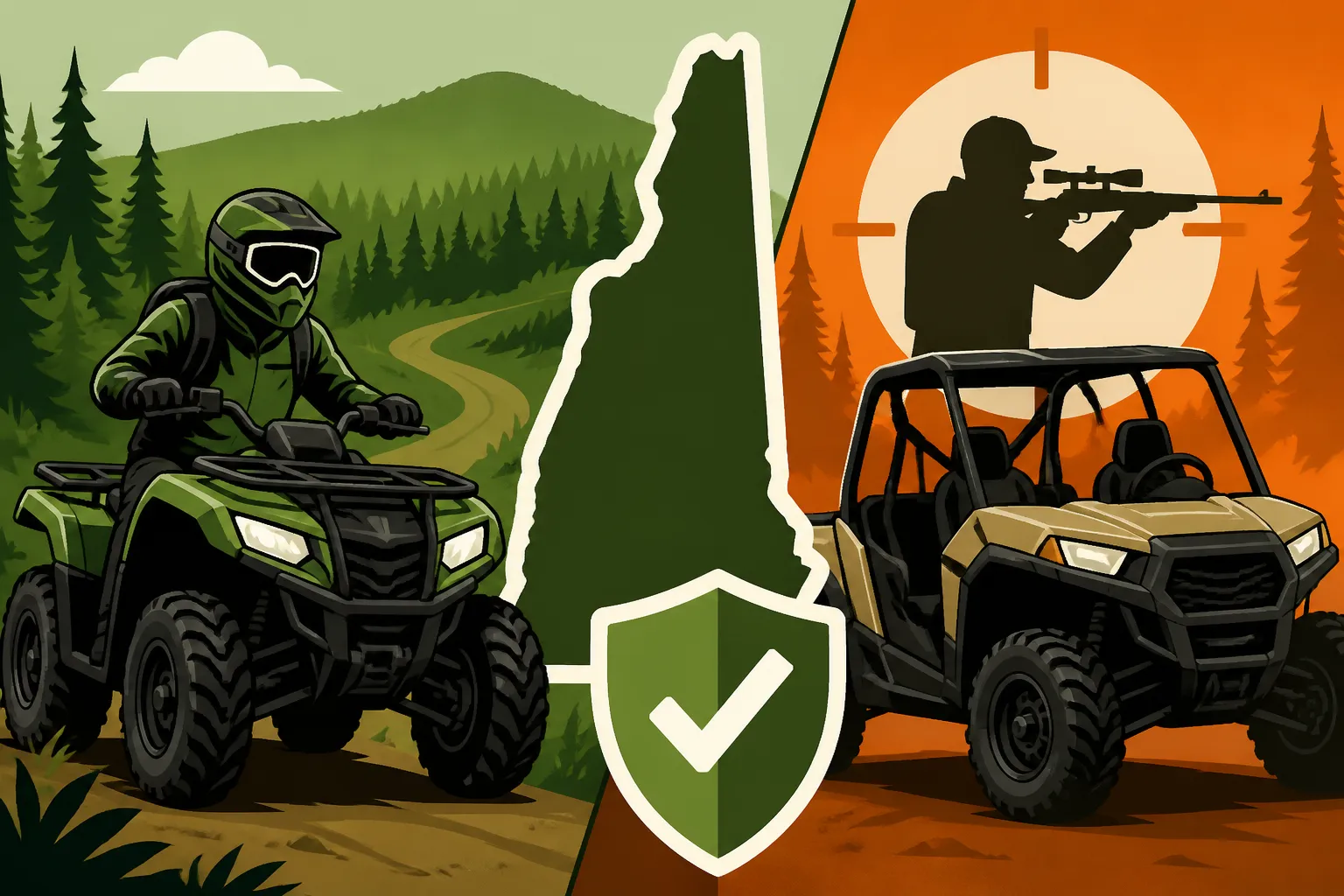
New Hampshire Rules for Riding in Hunting Season
One of the most common worries for riders heading out onto the beautiful New Hampshire trails, especially as the leaves start to turn and the air gets crisp, is bumping into hunting season. It’s a legitimate concern, too – nobody wants to accidentally disrupt someone else's hunt or, worse, put themselves in a dangerous situation. This guide is here to untangle the New Hampshire rules for riding your ATV or UTV during hunting season, helping you understand your responsibilities, the restrictions you might encounter, and the best ways to stay safe out there.
Understanding the Overlap Between OHRVs and Hunting Seasons in New Hampshire
New Hampshire is a paradise for outdoor enthusiasts, and that means our trails and vast forests are shared spaces. When autumn rolls around, particularly from late September through December, the woods become even busier. This is prime time for many hunting seasons, and it brings a unique dynamic to our beloved OHRV trails. It's not just about designated hunting areas; many public and private lands accessible to OHRVs are also frequented by hunters. Understanding this overlap is the first step to a safe and respectful experience for everyone.
The Calendar of Hunting Seasons and Shared Spaces
New Hampshire's hunting calendar is quite comprehensive, encompassing everything from archery season for deer, which often kicks off in September, to various firearm seasons for deer, bear, and moose that extend well into November or even early December. Small game seasons, like for turkey or upland birds, can also run throughout the fall. These seasons don't just happen in isolated pockets; they occur across the very same landscapes where we love to ride our OHRVs.
Imagine you're out on a scenic trail, perhaps a logging road that doubles as an OHRV corridor in Pittsburg or a club trail winding through the mountains of Milan. These are precisely the kinds of areas where hunters are also active, setting up stands, tracking game, or moving through the woods. The intersection of these activities means that every OHRV rider needs to be extra vigilant and informed. It's not just about avoiding hunters; it's about being aware of their presence, respecting their pursuit, and ensuring your actions don't create an unsafe situation for yourself or others.
Why the Concern? Potential for Conflict and Safety Issues
The concern isn't just theoretical. A rumbling ATV or UTV can scare off game, frustrating a hunter who has spent hours, or even days, patiently waiting. Conversely, an OHRV rider might unexpectedly encounter a hunter, perhaps one camouflaged and hidden, leading to a startling or even dangerous situation. The primary goal of New Hampshire's regulations and recommendations during hunting season is to minimize these conflicts and ensure the safety of all outdoor users.
One common scenario involves a rider cruising down a wide woods road, perhaps enjoying the fall foliage, completely unaware that a hunter is tracking deer parallel to the trail just a hundred yards in. The noise of the machine can easily alert the deer, sending it fleeing and ruining the hunter's opportunity. From the hunter's perspective, this can be incredibly frustrating. From the rider's perspective, they're just enjoying a legal trail ride. This highlights the need for mutual awareness and adherence to established guidelines. It's about more than just legalities; it's about shared courtesy and proactive safety.
Specific Rules for OHRV Use During Hunting Season
New Hampshire doesn't just ask us to be nice; it has specific rules and regulations that govern OHRV use, particularly when hunting is involved. These rules are designed to prevent unethical hunting practices and ensure public safety. It’s crucial to know these inside and out, especially if you’re planning to carry a firearm or transport game.
Transporting Firearms and Game on Your OHRV
This is where things get really specific. If you’re a hunter who uses an OHRV to get to your hunting spot, or even just to retrieve game, you need to pay close attention. New Hampshire law states that you can indeed transport a firearm on your OHRV, but it must be unloaded. That means no ammunition in the chamber or magazine. It's about preventing accidental discharge and ensuring that the OHRV is used primarily for transportation, not as a mobile hunting platform.
For example, if you’re bringing your shotgun or rifle to a remote blind, you'd carry it in a secure scabbard or case, ensuring it's unloaded. Many riders choose a strong, durable gun boot system, perhaps from a brand like SuperATV, to keep their firearms protected and safely stowed during transport. Once you're off the machine and legally positioned, then you can load your firearm. The same rule applies if you've harvested an animal. You can use your OHRV to retrieve it, but your firearm must remain unloaded during the transport of the game back to your vehicle or camp. This helps prevent any perception of "road hunting" or illegal activity. Remember, the machine is for transport, not for hunting directly. For more detail on this, check out [New Hampshire Rules for Carrying a Firearm].
Targeting Game from an OHRV: A Strict Prohibition
Let's be absolutely clear on this: you cannot hunt from your OHRV in New Hampshire. This is a strict prohibition. You cannot shoot at, wound, kill, or harass any wild animal from an OHRV, whether it's moving or stationary. This also extends to using the OHRV to herd or drive game towards other hunters. The OHRV is not to be used as a tool to gain an unfair advantage or to directly participate in the act of hunting.
Imagine a situation where a rider spots a deer while on their side-by-side. Even if they stop the machine and get off, if the intent was to use the machine to approach the game or as a platform for hunting, they are in violation. The spirit of the law is to maintain fair chase and ethical hunting practices. So, if you're on a trail and you see game, enjoy the sight, but keep your hunting efforts separate from your machine. You need to be off your OHRV, in a legal hunting position, and following all other hunting regulations before taking a shot.
General Riding on Public Trails During Hunting Season
For the majority of OHRV riders who aren't hunting, the question is simply: "Can I still ride my regular trails?" Generally, yes, OHRV trails remain open during hunting season unless specifically posted as closed by the landowner or the managing club. However, "open" doesn't mean "business as usual." The expectation is that riders will be extra cautious and aware.
Many club trails, especially those that cross private land, might have specific advisories or even temporary closures during peak hunting weekends. It's always, always a good idea to check the trail conditions and club websites before you head out. Don't assume. A trail you rode last month might have new signage or recommendations in November. When riding on private land, even if it's part of a club trail system, remembering [New Hampshire Landowner Permission Rules] is crucial, as hunter access might be prioritized or landowner agreements might have specific stipulations during certain times of year. Your registration still applies, of course, as per [New Hampshire's May to April Registration Year], but the usage guidelines can change.
Safety Precautions and Best Practices for Riders
Even if you have no intention of hunting, if you're riding your OHRV in New Hampshire during hunting season, you are sharing the woods with people who do. Taking some common-sense precautions can make a huge difference in your safety and the enjoyment of everyone sharing the outdoors.
Wearing Blaze Orange: It's Not Just for Hunters
This is perhaps the most important safety measure for any non-hunter in the woods during hunting season. Wear blaze orange. A lot of it. Even if New Hampshire doesn't legally require you to wear blaze orange as an OHRV rider (it typically applies to hunters during specific seasons), it is an incredibly smart decision. Hunters are trained to look for this color, and it makes you highly visible against the natural backdrop of the woods, especially in the low light of dawn or dusk, or on an overcast day.
Think about it: a hunter might spot movement in the distance and, if they don't see blaze orange, their initial assumption might be game. If they see a bright orange vest or helmet, they immediately know it's a person. This simple act drastically reduces the risk of being mistaken for an animal. Make sure it's not just a small patch, but a visible vest, hat, or even a brightly colored helmet. You can even find accessories for your machine, perhaps from SuperATV, that incorporate bright, reflective colors to enhance visibility. For more on this, consider reading [Blaze Orange in a New Hampshire November].
Trail Etiquette and Awareness: Be Respectful of Others
Beyond visibility, mindful riding is key. This includes several aspects of trail etiquette:
- Be Aware of Your Surroundings: Scan the woods, not just the trail ahead. Look for parked vehicles, hunter signs, or even tracks off the main trail that might indicate hunter presence.
- Manage Your Noise: While OHRVs are inherently noisy, being mindful of unnecessary revving or prolonged idling in sensitive areas can show respect. If you encounter hunters, perhaps give them a wider berth or briefly pause if it seems appropriate.
- Yield to Others: If you see hikers, horseback riders, or hunters, slow down, be prepared to stop, and yield the right-of-way. A friendly nod or greeting can go a long way in fostering good relationships.
- Stay on Marked Trails: This is always good practice, but it's especially critical during hunting season. Veering off-trail can lead you into someone's hunting area, onto private land without permission, or disturb game that a hunter might be pursuing. Respecting [New Hampshire Rules for Riding Private Land] and [New Hampshire Rules for Riding State Land] means staying where you're supposed to be.
Checking Trail Status Before You Ride
As mentioned earlier, some trails or specific areas might have temporary closures or special restrictions during hunting season. Before you even load up your machine, make it a habit to check the latest trail conditions. This means:
- Club Websites: If you're riding on a club trail system, the local OHRV club's website is your best friend. They often post real-time updates on closures, conditions, and hunting season advisories.
- New Hampshire Fish and Game Department: Their website is a great resource for official hunting season dates and any broader OHRV-related advisories.
- Online Forums/Social Media Groups: Local riding groups can often provide anecdotal information or confirm trail statuses from recent rides.
Taking just a few minutes to confirm trail status can save you a wasted trip and keep you out of potentially restricted or high-activity hunting areas. This is a critical step covered in more detail in [New Hampshire Trail Status Before You Ride].
Legal Implications and Penalties for Violations
Ignoring the rules, whether intentionally or out of ignorance, can lead to serious consequences. New Hampshire takes its hunting and OHRV regulations seriously, and violations can result in significant fines, loss of privileges, and even criminal charges in some cases.
Fines for Carrying a Firearm Illegally on an OHRV
If you are caught transporting a loaded firearm on your OHRV, or using the OHRV to hunt directly, you can expect a hefty fine. The exact amount can vary depending on the severity of the offense and whether it's a first-time violation or a repeat offense. These aren't just minor tickets; they are often substantial penalties designed to deter unsafe and illegal hunting practices. Beyond the monetary fine, you could also face the confiscation of your firearm or even your OHRV.
Imagine you're stopped by a New Hampshire Fish and Game Conservation Officer, perhaps during a routine trail check. If they discover a loaded rifle in your scabbard while you're operating your ATV, you're immediately looking at a violation. The officer isn't just checking registrations; they're ensuring compliance with all wildlife and OHRV laws. This type of infraction falls under the umbrella of [New Hampshire Fines for an OHRV Violation], but specifically relating to hunting statutes.
Broader Penalties for Hunting-Related OHRV Violations
Beyond just carrying a loaded firearm, other hunting-related OHRV violations can include:
- Harassing or Chasing Game: Using your OHRV to intentionally drive or disturb wildlife could lead to fines and potentially even hunting license suspension.
- Hunting from a Closed Area: If an OHRV trail passes through a temporarily closed hunting area and you're caught hunting there, the penalties can be severe.
- Trespassing while Hunting: If you're on your OHRV and inadvertently or intentionally trespass onto private land to hunt, that's a double violation.
These penalties are in place to protect wildlife, ensure ethical hunting, and maintain public safety. It’s a stark reminder that when we choose to enjoy New Hampshire's incredible outdoor resources, we also take on the responsibility of understanding and abiding by the rules. Ignorance of the law is rarely an excuse that holds up, so making sure you're well-informed is your best defense.
The table below summarizes some key do's and don'ts for OHRV riding during hunting season in New Hampshire.
| Activity/Action | Do | Don't | Potential Consequence (if applicable) |
|---|---|---|---|
| Transporting Firearms | Ensure firearm is completely unloaded (no ammo in chamber/magazine). | Carry a loaded firearm on your OHRV. | Fines, confiscation of firearm. |
| Hunting from OHRV | Get off your machine, find a legal hunting position, then hunt. | Shoot at, wound, kill, or harass game from your OHRV (moving or stationary). | Fines, hunting license suspension, confiscation. |
| Visibility | Wear blaze orange clothing and/or helmet, even if not hunting. | Ride in camouflage or dark clothing without any blaze orange visibility. | Increased risk of being mistaken for game, serious injury. |
| Trail Use | Check club/Fish & Game websites for trail status and advisories. Stay on marked trails. | Assume all trails are open as usual. Venture off-trail into unknown areas. | Trespassing fines, disturbance of hunters/wildlife, [New Hampshire Fines for an OHRV Violation]. |
| Noise & Etiquette | Be mindful of noise, slow down for others, yield to hunters/hikers. | Unnecessarily rev your engine, blast loud music, or ride aggressively in hunting areas. | Negative interactions, disruption of hunting, potential safety issues. |
| Game Retrieval | Use your OHRV to retrieve harvested game (firearm unloaded). | Use OHRV to chase or drive game towards other hunters or for direct hunting. | Fines, hunting license suspension. |
Remember, the goal is for everyone to enjoy the natural beauty and opportunities New Hampshire offers, safely and respectfully. By understanding and adhering to these rules and best practices, OHRV riders and hunters can coexist harmoniously in our shared outdoor spaces.
Disclaimer
This article is for general informational purposes only and does not constitute professional advice. Laws, prices and regulations vary by location and change over time. Consult a qualified professional for guidance on your specific situation.