Jericho Mountain State Park at Berlin
Jericho Mountain State Park offers a memorable way to ride an ATV or UTV in Berlin, New Hampshire, but a good day starts before you unload the trailer. Riders need to sort out machine fit, registration, access fees, seasonal conditions, and where park trails connect with the wider North Country network. This guide explains how to plan confidently, avoid common surprises, and ride responsibly.
What to expect at Jericho Mountain State Park
A park ride and a regional trail ride are not quite the same thing
Jericho Mountain State Park is in Berlin, in Coos County’s North Country. It is a familiar destination for ATV and UTV riders, but it helps to distinguish the state park itself from the broader network of trails and roads in the surrounding area. A route that begins near the park may lead into a larger riding area, and the rules or conditions can change as you move between managed lands, club trails, and town connections.
That distinction matters when you are planning a loop. A trail shown on a regional map may not necessarily be open, suitable for every machine, or available under the same access arrangements as a trail within the park. Before assuming that a route forms one continuous ride, check which organization manages each section and whether it is open to your vehicle and during your planned dates.
For a wider sense of the riding landscape around Berlin, see [New Hampshire ATV Trails Near Berlin]. If you are comparing areas across the state, [New Hampshire's Jericho Mountain Trails] can help you think about Jericho as part of a broader collection of riding opportunities rather than a single isolated track.
Expect variety, not one uniform trail experience
Riders often picture a state park as one clearly marked loop with a predictable surface. In practice, a day at an off-highway recreation area can involve changing terrain, different trail widths, intersections, gates, and stretches that feel more exposed or rough than others. The exact experience depends on your route, recent weather, maintenance, and what portions of the network are open.
A new rider might enjoy a shorter outing close to the staging area, where it is easier to pause, check directions, and get comfortable with the machine. An experienced group may prefer a longer outing that includes more varied terrain, provided everyone in the group has the equipment, stamina, and navigation skills for it. Either way, choose a route based on the least experienced rider—not just the person who most wants to keep going.
The park is also more enjoyable when you leave room for changes of plan. If a trail is wet, closed, or busier than expected, a shorter route or a different riding area may be the sensible choice. Having a flexible itinerary turns those small disappointments into manageable adjustments instead of a stressful push to finish a route that no longer suits the conditions.
Choosing an ATV or UTV for the ride
Check width and trail access before you make the trip
A machine that fits comfortably in your garage may not fit every trail you hope to ride. Trail systems can have width restrictions, and the stated limit may apply to the machine’s actual outside measurement rather than the number printed in a model name. Accessories such as aftermarket wheels, fender flares, mirrors, or other add-ons can affect that measurement.
Measure the machine at its widest point, including permanent modifications. If you are bringing a UTV, check its width against the rules for the specific trail or access point you plan to use. Do not rely on a seller’s description, a model’s advertised category, or a friend’s memory. The same machine can be permitted in one area and excluded from another.
If you are unsure how a width limit works, [New Hampshire Trails With a 50-Inch Limit] offers useful context for interpreting that kind of restriction. Treat any online trail information as a starting point, then verify the current local rules before towing north. Finding out at a narrow entrance that your machine cannot continue is a frustrating way to begin a day.
Match the machine to the people riding in it
The right vehicle is not automatically the biggest or most powerful one. Consider how many people will ride, whether every passenger has a proper seat and protective gear, and how comfortable the driver is handling the machine on uneven surfaces. A two-person ATV may suit a solo rider or a small, experienced group better than a larger side-by-side, while a UTV can make a family outing more practical if it is permitted on the planned route.
Passengers should not be treated as extra cargo. Confirm that the machine is designed and equipped to carry them, and review the relevant New Hampshire passenger requirements before riding. A passenger who is nervous, cold, or uncomfortable can change the pace and safety of the whole trip. Build in breaks, and make sure everyone knows how to communicate with the driver.
Think about the trailer and tow vehicle, too. A machine that suits the trail may still be awkward to haul, unload, or park in a crowded staging area. Check tie-down points, trailer capacity, and whether your group can safely load and unload without blocking other visitors. If you are renting rather than bringing your own machine, confirm the rental’s allowed riding area and what gear, registration, and route guidance are included.
Planning your arrival, access, and costs
Know what each charge is for
One common source of confusion is treating vehicle registration and park access as if they were the same thing. New Hampshire OHRV registration is a separate requirement from any applicable day-use or facility charge. Having a registered machine does not automatically mean that every park or riding area is free to enter, and paying an access charge does not replace required registration.
Before leaving home, look up the current access arrangements for Jericho Mountain State Park and confirm what applies to your vehicle and visit. Charges, payment methods, operating arrangements, and available facilities can change. For a focused overview of the park’s access costs, see [Jericho's Day Use Fees in New Hampshire], then verify the details through the relevant park information before you go.
It also helps to budget for the whole outing rather than one line item. Depending on your plans, costs may include fuel, food, trailer travel, lodging, camping, equipment, and machine rental. If the group is splitting expenses, decide in advance who is handling each payment and whether everyone has a backup way to pay. That avoids the awkward scramble at the gate or after a long ride.
Make staging and arrival part of your plan
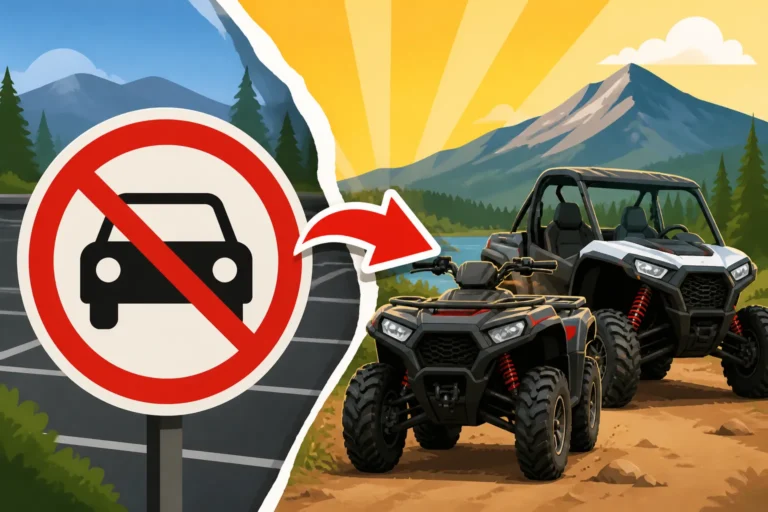
Arriving without a clear idea of where to unload can make an otherwise easy day feel chaotic. Before setting out, identify the appropriate access or staging location, check whether parking is available for both your vehicle and trailer, and note any posted instructions. Do not assume you can leave a truck or trailer wherever there is open ground; designated parking areas and local rules matter.
On busy days, give yourself more time than the ride itself seems to require. Unloading, checking the machine, fastening helmets, reviewing the route, and getting a group organized can take longer than expected. If one rider needs to adjust a strap or find a missing glove, you will be glad you did not schedule the first mile down to the minute.
Keep the staging area orderly. Park so other visitors can maneuver, secure loose equipment, and avoid leaving fuel containers or tools where they could create a hazard. Before riding away, do a quick walk-around: check straps and cargo, confirm that everyone has water and protective gear, and make sure the group knows where it plans to regroup if riders become separated.
| Planning item | What to confirm before you go | Why it matters |
|---|---|---|
| Machine registration | Whether your ATV or UTV needs New Hampshire OHRV registration | Park access does not replace registration requirements |
| Park access | Current day-use arrangements, payment method, and any posted conditions | Registration and park access are separate considerations |
| Machine fit | Width, passenger capacity, and any equipment rules | Restrictions may differ across trail sections |
| Trail status | Openings, closures, maintenance, and weather-related changes | A route that looked usable earlier may no longer be suitable |
| Staging | Where to unload and where a truck and trailer may be parked | Improves safety and prevents avoidable parking problems |
| Overnight plans | Whether camping or lodging is available and what must be reserved | Nearby availability can be limited during popular riding periods |
Understanding seasons and trail conditions
Do not assume the trail is open because the calendar looks good
In northern New Hampshire, trail access can depend on more than the month. Spring thaw and mud can make a route vulnerable to damage, while rain, drainage, maintenance work, or landowner decisions can affect access at other times. A pleasant forecast in Berlin does not guarantee that every trail farther into the network is firm, passable, or open.
Check conditions close to your departure and again before starting a longer ride. Look for official park or trail updates and information from the clubs or agencies responsible for the sections you intend to use. [New Hampshire Trail Status Before You Ride] is a helpful topic to review when building this habit. If the status is unclear, call or contact the managing organization rather than treating an old map or social post as confirmation.
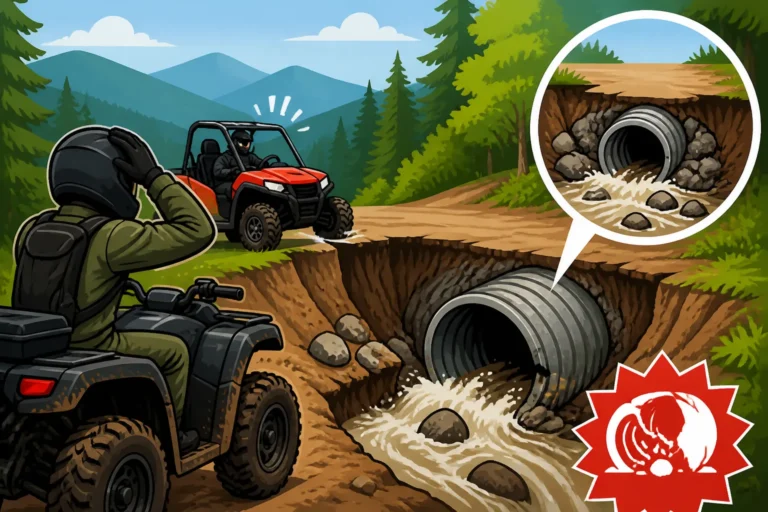
A change in conditions is not a reason to force the route. Muddy ground can be damaged by repeated traffic, and a washed-out section or blocked crossing can turn a simple loop into a risky detour. Choose a backup plan before you leave. That may mean shortening the ride, sticking to a confirmed open section, or saving the trip for another day.
Prepare for changing weather and a long day outside
The North Country can feel very different from the weather where you started your drive. A cool morning may warm up by midday, while rain, wind, or a sudden temperature drop can make an exposed ride uncomfortable. Check the forecast for the riding area, not just your hometown, and dress in layers that are practical under protective gear.
Pack water, food, basic first-aid supplies, and clothing suited to the expected conditions. Even when a ride is planned as a short outing, a delay, mechanical problem, or route change can extend the day. Keep essential items in a secure compartment or a small bag that will not interfere with the driver or passenger. A phone is useful, but it should not be your only way to navigate or communicate.
Weather also affects the machine. Wet surfaces can reduce traction, while dust and dry conditions can affect visibility and group spacing. Ride at a pace that matches what you can see and control. Leave more room between machines when visibility is poor, and do not follow another rider so closely that a sudden stop leaves you with nowhere to go.
Registration, rules, and responsible access
Take care of registration before you arrive
New Hampshire requires OHRV registration in circumstances defined by state rules, and riders should not assume that an out-of-state registration automatically satisfies New Hampshire requirements. The details can depend on where and how the machine is operated, so confirm the rules that apply to your trip before loading the trailer.
For help understanding the process and costs, review [New Hampshire OHRV Registration Cost] and [Registering an OHRV in New Hampshire]. Check the current registration requirements with the appropriate state or registration agent, especially if you recently bought the machine, are visiting from another state, or are borrowing a vehicle. Keep the required certificate and decals in the condition and locations specified by the rules.
Do not leave registration until the last minute. A missing document, an unresolved ownership question, or a decal problem is much easier to handle at home than at the trailhead. If you are buying a used machine for a Jericho trip, confirm that the paperwork and identification details are in order before completing the purchase. Registration questions are not a good surprise to discover after you have driven several hours.
Follow posted access rules and respect private land
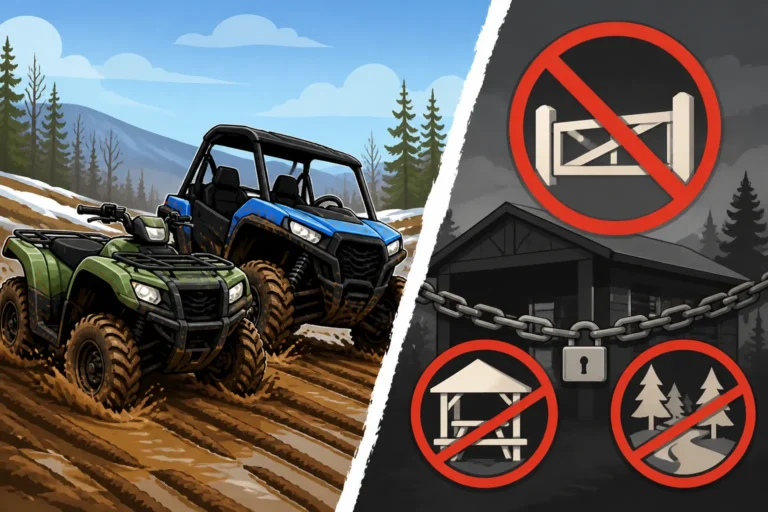
A marked trail or a visible tire track is not permission to ride everywhere nearby. Routes may cross different kinds of land, and access can depend on a specific designation, agreement, or landowner permission. Stay on marked and authorized routes, obey closed gates and signs, and do not create a shortcut around a closure. A detour onto private ground can put future access at risk for other riders.
Be especially attentive where trails approach roads, parking areas, homes, or other public spaces. Ride slowly where people may be walking or vehicles may be moving, and follow any posted speed or crossing instructions. Do not assume that a town road is open to OHRVs just because it connects two trail sections. Road access is governed by local designations and applicable state requirements.
Good trail etiquette is practical, not just polite. Keep noise under control, avoid spinning tires, yield appropriately, and leave gates and signs as you found them. If you encounter hikers, workers, landowners, or another group, slow down and give them space. A courteous interaction can help preserve a route; one careless one can contribute to a closure.
Navigation and safety on the trail
Plan a route your whole group can finish
Before riding, agree on the destination, approximate ride length, turnaround point, and regrouping plan. A vague “we’ll see where we end up” plan can work for a small, experienced group on familiar ground, but it is a poor fit for mixed skill levels or an area with changing trail conditions. Decide who will lead and who will sweep at the back, and make sure no one is left riding alone unintentionally.
Use a current map, posted trail information, and other reliable navigation tools together. Some riders use onX Offroad to review possible routes and keep track of their location, but a digital map should not override a closure sign or current information from a trail manager. Download or save the information you may need before you lose service, and carry a backup method of navigation if your phone battery or signal becomes unreliable.
Set a simple group procedure for unexpected stops. For example, agree that the lead rider will pause at major intersections and wait until the whole group catches up. If someone is delayed, the group should stop at the agreed location rather than scattering to search in different directions. Make sure every rider knows the day’s plan well enough to explain it if the group gets separated.
Make safety checks routine, not optional
A quick pre-ride inspection can catch problems before they become trail problems. Check tires, brakes, throttle operation, lights, steering, and visible leaks. Confirm that cargo is secure and that the machine’s controls work as expected. If something feels wrong in the staging area, do not count on the ride to fix it. A small delay is preferable to being stranded farther from help.
Wear appropriate protective equipment and check that it fits correctly. A helmet that shifts, goggles that fog, or footwear that does not protect your feet can become a constant distraction. Passengers should have suitable equipment as well. Before setting off, explain how to communicate, where to hold on, and what to do if the machine stops or tips.
Ride within your ability and leave room for other people’s mistakes. Keep a safe following distance, slow down when approaching a blind corner, and avoid risky passing. If a section looks beyond your comfort level, stop in a safe place and assess it rather than letting group pressure decide for you. A confident rider can still make a cautious call.
Building a comfortable Berlin riding trip
Decide whether you are making a day trip or staying overnight
A day trip can work well for riders who live within practical driving distance, have a straightforward route, and can finish without rushing. For visitors traveling farther into Coos County, staying overnight may make the experience more relaxed. It gives you time to unload, ride at a comfortable pace, and avoid turning the return drive into a tired late-night haul.
If you are considering camping, check the park’s current season, availability, and rules rather than assuming that a site will be open when the trails are. [Jericho's Campground Season] is a useful starting point for planning that part of the visit. Confirm what is provided, what you need to bring, and whether reservations or other arrangements apply.
Berlin can also work as a base for exploring the wider Androscoggin Valley and nearby North Country communities. Think through how far you want to travel between lodging, staging, food, and the ride itself. If the group is towing a large trailer, convenience and parking may matter more than finding the closest possible place to stay.
Make room for the people who are not riding
A successful group trip does not require every person to spend the entire day on a machine. Some friends or family members may prefer a shorter outing, a later start, or time in town while others ride. Agree on those differences ahead of time, including where everyone will meet and how you will stay in touch if mobile service is inconsistent.
For riders using a navigation app, onX Offroad can be one part of preparing a route, but make sure everyone understands the plan in plain language too. Identify recognizable meeting points, expected return times, and a backup contact method. Do not assume that every person in the group has the same app, data access, or comfort with digital navigation.
If your trip includes rentals, lodging, or a guided outing, confirm the practical details directly with the provider. Ask what the booking includes, what equipment you must bring, which trails are allowed, and what happens if conditions change. Read the terms before you travel, and allow time for check-in and orientation rather than scheduling arrival right before your intended departure.
A practical checklist for your Jericho ride
Before leaving home
Start with the basics: verify registration, check the machine’s condition, confirm that its width and passenger setup suit the intended trails, and review current access information. Check weather and trail status shortly before departure. If a crucial detail is uncertain—such as whether a route is open or whether a particular machine is permitted—resolve it before you tow.
Pack protective gear, water, food, a basic first-aid kit, and suitable clothing. Bring charging options for navigation devices and save important information for offline use where possible. If you are traveling with a group, make sure each rider has the meeting plan and knows who is leading. Write down a contact number for someone outside the ride who knows your general itinerary.
Finally, give yourself enough time. The drive, unloading, parking, equipment checks, and route discussion all count as part of the day. A rushed departure tends to lead to forgotten gear or skipped checks, and neither is worth shaving a few minutes off the morning.
At the staging area and after the ride
At arrival, follow posted directions and use the appropriate staging and parking areas. Keep the trailer and equipment organized, and do not block access for other visitors. Before starting the engine, make sure helmets and other gear are fastened, the machine is ready, and everyone understands the route and regrouping plan.
During the ride, treat signs and closures as authoritative, not as suggestions. Pause when the group needs to regroup, adjust the route when conditions call for it, and stop if a machine or rider is not doing well. A planned turnaround is a sensible part of the outing, not a failure to complete it.
When you return, check the machine for damage or loose parts, secure it properly for the drive, and pack out anything you brought in. If you noticed a downed tree, damaged sign, or unsafe trail condition, report it through the appropriate park or trail-management channel. Responsible riding helps keep Jericho Mountain and the surrounding North Country riding network welcoming for the next visit.
Disclaimer
This article is for general informational purposes only and does not constitute professional advice. Laws, prices and regulations vary by location and change over time. Consult a qualified professional for guidance on your specific situation.