What a Washed-Out Culvert Does to a Spring Ride
A washed-out culvert can turn an ordinary spring ride into a dangerous dead end: water may hide a deep rut, an undermined trail edge, or a channel that is still moving fast. This guide explains what to look for, how to respond when a crossing is damaged, and how to plan a safer New Hampshire ATV or UTV ride during spring conditions.
Why culverts wash out in spring
What a culvert does on a trail
A culvert is a pipe or covered channel that carries water beneath a trail. It lets a route cross a small stream or drainage without forcing water to run over the trail surface. When the culvert is clear and the ground around it is stable, the crossing may feel like an ordinary patch of trail.
Spring puts that infrastructure under stress. Snowmelt, rain, and water moving downhill can push branches, leaves, gravel, and ice into the pipe. If water cannot pass through freely, it may build up on one side, spill over the trail, or cut a new route around the culvert. Even when the pipe itself remains in place, fast-moving water can wash away the soil supporting its ends.
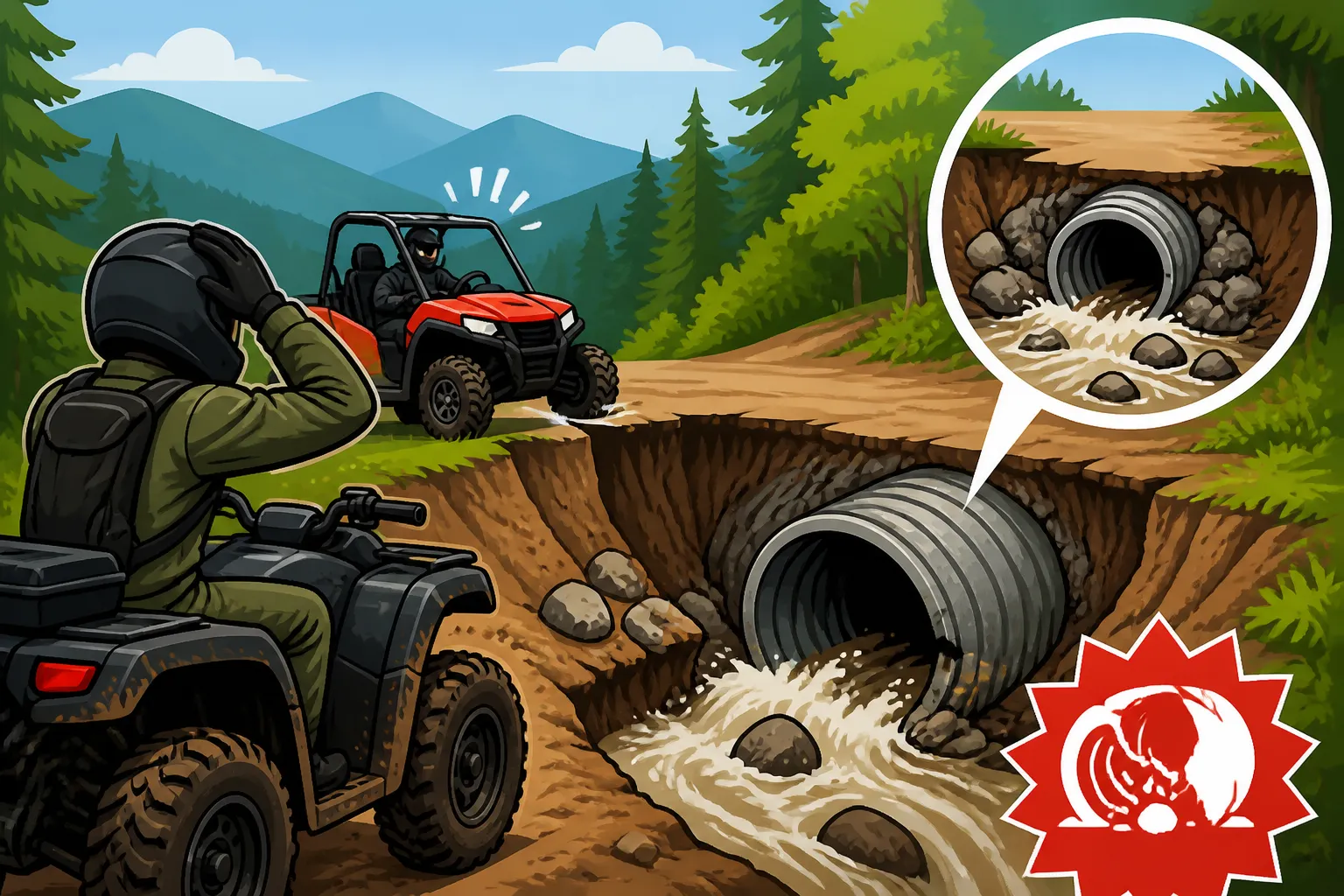
That damage is not always obvious from the trail entrance. A shallow-looking puddle may cover a hole, loose rocks, or a section of trail that has lost support underneath. The surface can look firm while the edge beside it is soft and ready to collapse beneath a tire.
How damage changes the trail
A washed-out culvert can create a sharp drop, a trench, or a narrow channel across the route. It may also leave a loose pile of gravel or branches where water has moved material downhill. For a UTV, the main concern may be a sudden tilt or a wheel dropping into a rut. For an ATV, a narrow gap or unstable edge can be just as serious, particularly if the machine is angled across the flow.
Water can also make the trail wider in the wrong way. Riders sometimes try to skirt a blocked or damaged crossing by driving around the wet section. That shortcut may break through soft ground, damage plants, and create a second muddy track. If more riders follow the same line, a small failure can spread into a broad, eroded area that takes longer to repair.
A washed-out crossing is also a sign that conditions nearby may be poor. A drainage problem can be part of a longer stretch of saturated trail, with soft shoulders, standing water, or other damaged structures around the next bend. If a culvert looks compromised, it is sensible to treat the route ahead with extra caution rather than assume the damage is isolated.
How to assess a damaged crossing safely
Stop before the water or broken ground
If you approach a crossing and see rushing water, a fresh cut in the trail, exposed pipe, missing gravel, or a sharp drop, stop well back from the edge. Avoid parking on a soft shoulder or directly above the washed-out section. Leave room for other riders to stop, and do not let a group crowd the damaged area while everyone tries to inspect it.
Look from a stable position without walking onto the weakened edge. Do not ride into water to test its depth, and do not assume that a familiar crossing is safe because it was passable on an earlier trip. Water can conceal the bottom, and the shape of a washout may change after each period of rain or melt.
If the crossing is not clearly safe, turn around or use a route that is known to be open and suitable. A machine’s size, tires, or four-wheel drive do not make an unstable culvert safe. Trying to power through can leave the machine stuck, damage the trail further, or put a rider in fast-moving water.
Recognize when a detour is not a safe workaround
A bypass is not automatically a better option. Driving around the culvert through brush, wet ground, or private property can cause additional damage and may take you off the authorized trail. The route’s apparent openness does not establish permission to ride there. For guidance on access, see New Hampshire Rules for Riding Private Land and New Hampshire Written Permission Requirements.
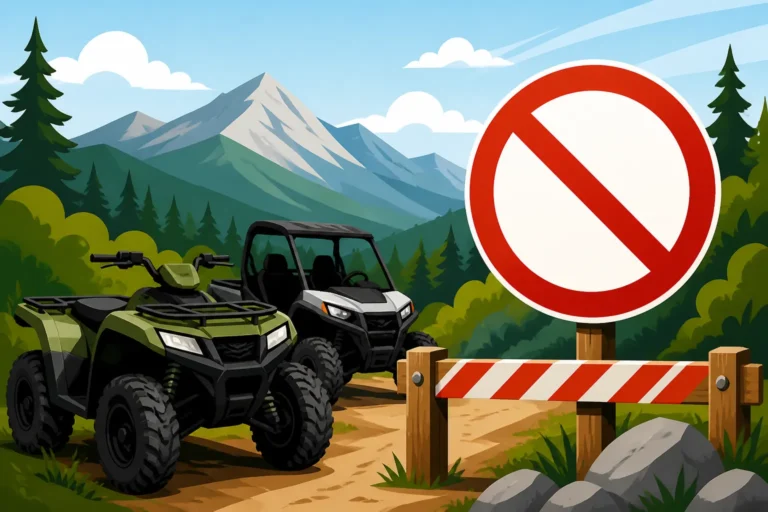
Do not move a barricade or ignore a closure sign to continue the ride. A closure may protect riders from a hazard that is difficult to see, or give a club or land manager time to inspect and repair the trail. If you are unsure whether a route remains open, check information from the responsible club or land manager before setting out. New Hampshire Trail Status Before You Ride is a useful topic to review when planning a trip.
A map can help you understand where a trail runs and identify possible alternatives, but it cannot confirm that a culvert is intact or that a trail is open today. Riders using onX Offroad or another mapping tool should treat the map as a planning aid, not an inspection report. Check current local trail information as well, and be prepared to turn around even when the route appears continuous on the screen.
| What you notice | What it may indicate | Safer response |
|---|---|---|
| Water flowing over the trail | The culvert may be blocked or overwhelmed | Stop before the crossing and do not ride through to test it |
| Exposed pipe or a hollow sound under the surface | Soil may have washed away around the culvert | Keep off the damaged section and turn back |
| A sharp rut or missing trail edge | The trail surface may be unstable | Avoid the edge and do not attempt a narrow bypass |
| Fresh branches, gravel, or debris | Water may have recently moved through the crossing | Treat nearby ground as potentially soft or changing |
| A closure marker or barricade | The route is not open for passage | Do not move it; choose another route |
What to do when you find a washed-out culvert
Turn around and notify the right people
Once you decide a crossing is unsafe, turn around carefully in a suitable spot. Keep the group together, make sure each rider understands the route change, and avoid leaving a machine or person in the trail where others may come around a bend unexpectedly. If there is no safe place to turn around nearby, move only as far as needed to reach stable ground without approaching the damaged crossing.
Report the issue to the club or land manager responsible for that trail. Share a clear location, the direction you were traveling, and what you observed. A nearby trail sign, intersection, or recognizable landmark can be more useful than an uncertain estimate of distance. A photo taken from a safe place may help explain the damage, but do not walk onto the unstable structure just to get a closer image.
If the trail has a posted status board or a club reporting process, use it. Club volunteers may not know about a new washout until someone reports it, especially when spring weather changes conditions quickly. For context on who helps maintain many riding routes, see Who Cuts and Maintains a Volunteer Club Trail. A report does not mean the trail will reopen immediately; inspection and repair may require safe working conditions, equipment, materials, and landowner coordination.
Avoid making the damage worse
Do not try to clear a blocked culvert yourself unless you have permission, suitable training, and the right equipment. Debris can be under pressure, the surrounding bank may be unstable, and removing material can send water or loose soil toward the trail. A well-intentioned attempt to fix the crossing can create a new hazard for riders or people working downstream.
Keep machines off the soft ground beside the culvert. Tires can widen the washout, compact wet soil, and push gravel or mud into the drainage. Even a short detour can leave a visible rut that channels later water across the trail. If the damaged route is marked closed, stay out until the responsible group confirms it is open again.
For the same reason, avoid riding around a puddle simply to keep your machine clean. In spring, a wet stretch may be part of the trail’s natural drainage rather than a defect to drive around. Repeatedly widening the route can damage the surrounding ground and create an erosion problem where there was only a wet spot. Why Mud Season Closes Everything explains why spring trail conditions deserve more restraint than a typical dry-season ride.
Planning a safer New Hampshire spring ride
Check conditions before leaving home
Spring conditions can vary from one trail system to another, and a route that was firm last weekend may be saturated after new rain or snowmelt. Check the relevant club or land manager’s trail updates before loading the machine. Confirm the route is open, look for notices about damaged crossings, and avoid assuming that a trail is passable just because it appears on a map.
Use mapping tools to plan your route and understand where you can turn around, but leave room for conditions to change. onX Offroad may help with route planning, yet it cannot tell you whether water has undermined a culvert since the map information was assembled. Keep a second option in mind and make sure everyone in the group understands that turning back is part of the plan, not a failure.
When choosing a route, consider the riders, machines, and available daylight. A group with children or less experienced riders may be better off on a familiar, shorter route with straightforward exits. A long loop with limited ways back can become stressful if a culvert or another section closes unexpectedly. For seasonal context, review New Hampshire’s Mud Season Ban and New Hampshire Trail Conditions Before You Ride.
Pack for a change of plan
Bring a charged phone, a way to navigate back, and basic supplies appropriate for the ride. In remote areas, cell service may be limited, so do not rely on a phone map as your only navigation method. Keep the group close enough to communicate, and agree on a simple procedure for stopping, regrouping, and turning around.
If you are using onX Offroad, save or prepare the route before you leave an area with reliable service and make sure you know how to follow it. Carrying a paper map or another backup can help if a device loses power or signal. Most importantly, do not let a planned track become a reason to continue toward a crossing that looks unsafe.
A spring ride is more enjoyable when the group expects to adapt. If a culvert is washed out, the responsible choice may mean returning to the staging area earlier than planned. That can be disappointing after a long drive, but it is far better than risking a machine, a rider, or further damage to a trail that volunteers and landowners are working to maintain. Check the trail status again before your next outing; a route may remain closed until repair work is complete. Checking the Trail Status Board and Clubs That Post Trail Conditions Every Day offer useful planning topics for riders who want to avoid surprises.
Disclaimer
This article is for general informational purposes only and does not constitute professional advice. Laws, prices and regulations vary by location and change over time. Consult a qualified professional for guidance on your specific situation.