Why the Presidential Club Has No Public Parking
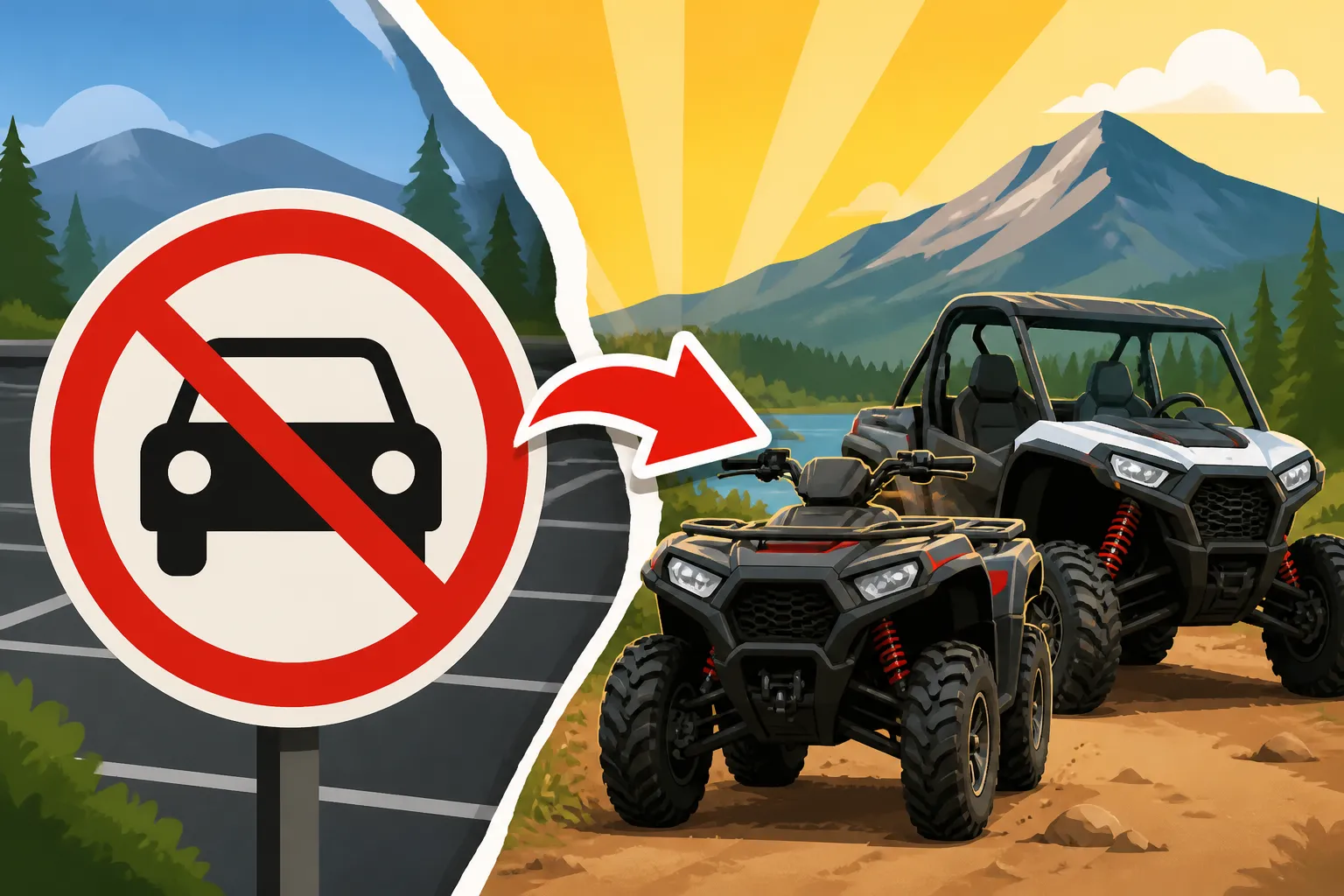
Finding a place to unload near a trail can be harder than planning the ride itself, especially when a club’s trail network appears on a map but there is no obvious public lot. The Presidential Club’s lack of public parking is a reminder that trail access and vehicle staging are separate things. This guide explains what that means and how to plan a North Country ride without guessing.
Why trail access does not guarantee public parking
A trail network and a staging lot are different facilities
A trail may cross land made available for riding without the landowner also agreeing to provide a parking area. A club can help maintain trails and coordinate access while still having no public lot where visitors may leave a truck and trailer. Trail access, parking, unloading, and overnight vehicle storage each require suitable space and permission.
That distinction can surprise riders who are used to trailheads with large, signed lots. Seeing a route associated with a club—or finding it on a map—doesn’t establish that you can park there. Even an open area near a trail entrance may be private property, a work area, or an informal pull-off that is not intended for public staging.
In the Presidential Club area, plan on confirming a designated parking location before you tow north. Ask the club or the relevant local visitor information source where riders should stage, whether trailers are allowed, and whether the location is open for the date you plan to ride. If you can’t confirm permission, don’t treat an unmarked roadside space as a substitute.
Landowner permission shapes what clubs can offer
Much of New Hampshire’s riding network depends on access across land that is not simply open for any use. Landowners may allow a trail to cross a property under specific conditions, and those conditions can be narrower than visitors expect. Permission to ride through does not automatically include permission to park, unload, camp, or leave a vehicle for several hours.
Parking also creates practical concerns that a trail corridor may not. A staging area needs enough room for trucks, trailers, turning, and safe loading. It can create noise and traffic, and a poorly placed lot may block a gate, driveway, forestry operation, or emergency access. In a rural area, a small shoulder that looks convenient from the cab can be a real obstruction for a resident or work vehicle.
This is why asking before you arrive matters. If you want to understand how land permission affects riding beyond a staging area, see [New Hampshire Landowner Permission Rules] and [What a Club Does to Keep a Landowner Onside]. Those details help explain why clubs may protect access by being precise about where riders stop and unload.
How to plan your ride when public parking is unavailable
Confirm parking before you load the trailer
Start with the specific ride date, not just a general map of the trail system. Trail conditions and access can change, and a lot that was usable during one visit may be unavailable at another time. Contact the club or an official local source and ask direct questions: Is there a public staging area for this ride? Can a truck with a trailer fit? Is overnight parking permitted? Are there separate rules for day-use visitors?
If you are considering a nearby business or lodging property, ask its owner or staff before leaving a vehicle there. A place that welcomes riders as customers may still restrict trailer parking, set time limits, or close its lot outside business hours. Get clear permission rather than assuming that a visible, empty space is available for trail use.
Keep a backup plan, too. If the approved lot is full or closed, know where you can safely wait without blocking traffic, then contact the appropriate local source for guidance. Don’t unload on a road shoulder, in front of a gate, or in a driveway while trying to solve the problem. A short delay is better than creating a hazard or risking an unwanted tow.
Check maps without treating them as permission
Digital mapping tools can help you understand the shape of the area, locate roads, and plan how you’ll get from a staging point to a ride. For example, onX Offroad can be useful for reviewing mapped routes and orienting yourself before leaving home. But a digital map should not be treated as proof that a particular parcel, road, or parking area is open for your use.
Trail status and permission are also different from a map line. A route may appear on a screen even when it is temporarily closed, subject to seasonal restrictions, or dependent on access conditions that aren’t obvious from the map. Check current club information and posted signs, and follow any closure notices you encounter. When in doubt, stop and verify instead of riding farther to see where a route goes.
Use the map as a planning aid, not the final authority. onX Offroad may help you compare possible approaches and keep track of your route, but you still need to confirm the legal access and approved parking location with the people responsible for that area. For practical preparation, see [New Hampshire Trail Maps From a Club] and [New Hampshire Trail Status Before You Ride].
| Before you go | What to confirm |
|---|---|
| Staging location | The exact public or otherwise authorized place to park and unload |
| Vehicle fit | Whether trucks, trailers, and turning movements can be accommodated |
| Parking duration | Whether day parking or overnight parking is allowed |
| Trail access | Whether the route is open and appropriate for your machine |
| Backup plan | What to do if the lot is full, closed, or unsuitable |
| Local restrictions | Signs, seasonal closures, and instructions from the club or landowner |
What to do instead of parking informally
Choose an authorized staging area
If the club has no public parking lot, that doesn’t mean you should improvise at the closest trail entrance. Ask whether a town facility, business, campground, or other authorized location accepts trail riders and trailers. These places are not automatically alternatives simply because they are nearby; each one has its own access rules, operating hours, and parking limits.
Check that the proposed location works for your whole setup. A compact car space may not fit a truck and trailer, and a lot that fits your vehicle may not have enough room to turn around. If you are traveling with several machines, confirm whether the lot can handle the group rather than assuming everyone can find a space once they arrive.
Make the parking decision before setting out, especially if your group is meeting from different directions. Share the location and its rules with every driver. That helps prevent one person from unloading at an unauthorized entrance while the rest of the group is parked elsewhere. If a site’s permission is unclear, choose another plan rather than relying on a hopeful interpretation.
Separate registration from parking rights
New Hampshire OHRV registration is an important part of riding legally, but registration does not grant permission to park on private land or use a particular road or trail. Similarly, finding an open trail does not give you permission to leave a tow vehicle at its edge. Treat each step—registration, trail access, and parking—as something to confirm on its own.
For visitors bringing a machine from another state, don’t assume the registration from home answers every New Hampshire requirement. Review [Riding New Hampshire With an Out-of-State Machine] and [Why New Hampshire Honors No Neighbor's Registration] before the trip. If you are uncertain about the machine’s registration status, resolve that separately from your staging arrangements.
The same separation applies to property around your lodging or a trail corridor. A machine can be properly registered and still be parked somewhere without permission. To avoid a frustrating start to the day, arrange an authorized place for both the machine and the towing vehicle, and make sure the trail route you intend to ride is open to that machine.
A practical arrival plan for the Presidential Club area
Make the first call before the travel day
When you contact the club or a local source, explain what you’re bringing: the number of machines, whether you have a trailer, how long you expect to park, and whether you need overnight storage. A question such as “Where can I park?” may not reveal whether a site can handle a long trailer or a group. Specific details help you get an answer that fits the actual trip.
Ask for directions to the designated place and any instructions for arrival. Confirm whether you need to check in, follow a marked entrance, or avoid a particular area. If the answer points you to a business or lodging property, verify directly with that property rather than assuming the club can authorize parking on its behalf.
Write down the plan and share it with your riding group. A simple message with the staging location, arrival expectations, and a backup contact can prevent confusion when cell service is limited. For more on planning a North Country staging point, see [Parking a Trailer at a Club Staging Lot] and [New Hampshire Trails With Cell Coverage].
Be ready to change plans without blocking access
A lot may be full, the weather may make a route unsuitable, or a closure may affect the day’s ride. Build enough flexibility into your schedule that you can pause and get updated instructions. If parking is unavailable, don’t leave your truck in a travel lane, block a gate, or unload on private property while the group debates what to do.
Keep an eye out for posted signs and barriers as you approach the trail area. They may identify a closure, restrict parking, or direct riders away from a sensitive entrance. A map or an earlier conversation does not override a sign encountered on site. If the instructions appear to conflict, stop somewhere safe and ask for clarification.
A little advance planning can make the lack of a club-owned public lot manageable. The key is to treat parking as a permission question, not as an assumed part of trail access. Confirm where to stage, make sure your vehicle fits, and be willing to use a different plan if the intended location is unavailable. That protects local access and gives your ride a much less stressful start.
Disclaimer
This article is for general informational purposes only and does not constitute professional advice. Laws, prices and regulations vary by location and change over time. Consult a qualified professional for guidance on your specific situation.