A Vermont Rider Must Register in New Hampshire
A Vermont registration may let you use your ATV or UTV at home, but it does not automatically let you ride New Hampshire trails. New Hampshire generally requires its own OHRV registration for machines used on public riding areas. Here’s how to choose a registration option, what to check before riding, and how to avoid confusing transport with permission to ride.
Why a Vermont registration is not enough
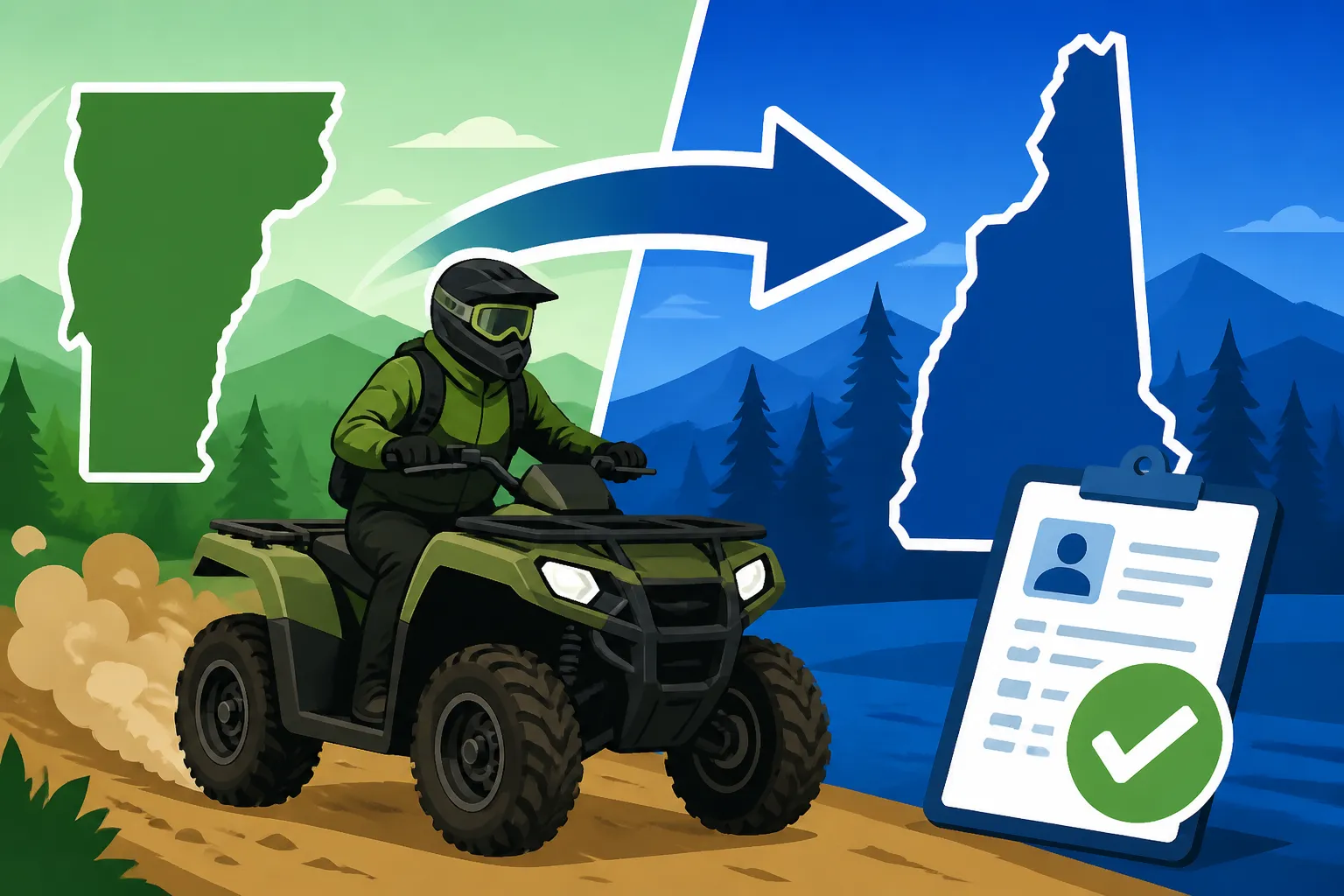
New Hampshire and Vermont have separate off-highway vehicle registration systems. If you bring a Vermont-registered ATV or UTV to New Hampshire, do not assume that your home-state registration serves as a New Hampshire trail pass. For riding on New Hampshire public property and trails, you generally need a New Hampshire OHRV registration for the machine.
That requirement applies to visiting riders as well as residents. It is tied to the machine being operated in New Hampshire, not just to where its owner lives or where it is registered at home. The practical rule is straightforward: arrange the New Hampshire registration before you ride, and check the rules for the specific land or trail system you plan to use.
The state’s policy is covered in more detail in Why New Hampshire Honors No Neighbor’s Registration. Related explanations for residents of nearby states include Does New Hampshire Honor a Vermont Registration? and A Vermont Rider Must Register in New Hampshire. A Vermont plate or other home-state paperwork may help identify the machine, but it does not replace the New Hampshire registration required for riding here.
Registration is also not the same as permission to ride anywhere. A registered machine is not automatically allowed on every trail, road, or piece of land. Trails can have seasonal closures, width limits, or local access rules, and private land requires appropriate permission. You still need to confirm that the route is open to your machine and that your planned use is allowed.
Transporting the machine is different from riding it
A Vermont rider can trailer a machine into New Hampshire without that trip itself being the same as operating the ATV or UTV on a trail. The key point is to have the required New Hampshire registration in place before riding in a location where it applies. Do not treat a trailer, a Vermont registration document, or a planned short outing as a substitute for checking the riding requirement.
If you are only passing through New Hampshire while transporting the machine, follow the normal rules for securing and transporting it. If you intend to unload and ride, sort out registration and access first. That includes a brief ride from a parking area or staging lot; a short distance does not turn a trail ride into mere transportation.
Choosing between a ten-day and a season registration
For a Vermont visitor, the main decision is usually whether to register for a short visit or for more of the riding season. New Hampshire offers a ten-day option for eligible wheeled OHRVs, as well as longer-term registration options. The ten-day option can suit a one-off trip, while a longer registration may be more practical for repeat visits. Confirm current eligibility, costs, and registration dates with an official New Hampshire registration source before buying.
| Your plans | Option to investigate | What to check |
|---|---|---|
| One short visit | Ten-day registration for a wheeled OHRV | The registration’s validity dates, eligible machine types, and whether it fits your trip |
| Several visits or a longer stay | A longer-term nonresident registration | The season dates, current fee, and whether a club-member rate applies |
| Riding different machines | Registration for each machine as required | Whether each machine has its own valid registration |
| Riding only on a particular private property | The landowner’s rules and applicable state requirements | Permission, location, and whether the public-property registration rule applies |
The ten-day registration is intended for a limited period, not as a way to cover a full season through repeated purchases. Check the current restrictions before relying on it. The details of the visitor option, including how to decide whether it fits your trip, are covered in The Ten-Day Option for a New Hampshire Visitor. For the current cost and what affects it, see New Hampshire Ten-Day Registration Cost.
If you expect to return, compare the short-term option with the nonresident season registration rather than looking only at the length of your first trip. A season registration may be a better fit for frequent visits, but the best choice depends on when you ride, how often you plan to return, and the current fees. When a Frequent Visitor Should Buy the Annual explains the trade-off.
The registration year and validity dates matter. A short visit near a season boundary may not line up with the dates you expect, and a longer registration may not last for a full twelve months. Check the current registration period before you pay. New Hampshire’s May to April Registration Year and When a New Hampshire OHRV Registration Expires explain why the registration calendar can affect trip planning.
Do not rely on an old receipt or last season’s dates as proof that the machine is currently registered. Keep the registration documents with you, and make sure the decals and certificate are valid for the ride. For a practical overview of the paperwork and proof to have available, see New Hampshire OHRV Registration Paperwork.
Getting registered before you ride
The exact process can depend on the machine, your ownership documents, and where you apply. Before traveling, check with an authorized New Hampshire registration agent about the current application process, what documents to bring, and whether the office can handle your machine’s situation. Do not assume that every location offers every registration type or that you can complete everything at the trailhead.
A useful preparation sequence is:
- Identify the machine. Confirm whether you are registering an ATV, UTV, or another wheeled OHRV. Have its identifying information available, including the frame or vehicle identification number when applicable.
- Gather ownership paperwork. Bring documents that show your connection to the machine, such as the current registration and available proof of purchase or ownership. Ask the agent what is accepted for your particular situation.
- Choose the correct registration period. Decide whether a ten-day or longer-term option fits your trip, and confirm current dates and eligibility.
- Ask about club membership. Some registration situations may qualify for a discounted rate with proof of membership in an eligible New Hampshire OHRV club. Confirm which clubs count and what documentation is required before you register. New Hampshire’s Club Member Discount explains how the discount works.
- Keep the certificate and decals together. Follow the instructions for displaying the decals and carrying the registration certificate. Do not leave the required paperwork at home just because the machine has a Vermont plate.
If you bought the machine in Vermont, are borrowing it, or do not have the usual ownership paperwork, ask an agent what to bring before making the trip. A Vermont registration alone should not be treated as proof that you have completed New Hampshire’s registration process. For information about registering an out-of-state machine, see Registering an Out-of-State Machine in New Hampshire.
Registration agents may include certain town clerks and powersports dealers, but availability can vary. Check ahead rather than assuming the nearest office can issue the option you need. The state’s official OHRV information and registration contacts are the right places to confirm current requirements. Where to Register an OHRV in New Hampshire covers the available channels.
Checking trail access and ride requirements
Once the machine is registered, verify that the specific route is open and appropriate for it. New Hampshire trail access can depend on the land manager, the trail’s status, machine width, the season, and local rules. A valid registration does not override a closed gate or make a road legal for OHRV use.
Before setting out, check the trail system’s current status and any posted signs. Confirm that the machine meets width limits for the route; limits may differ between trail systems or sections. If your trip crosses town roads, private property, or land leased for trail use, additional rules may apply. When a trail is temporarily closed, do not ride around a barrier or continue along a closed section.
A few checks help prevent common visitor mistakes:
- Confirm that your route is open. Seasonal dates and temporary closures can change access. Check the relevant club or land manager’s current trail information.
- Measure the machine if width is a concern. A UTV that fits one trail system may not fit another. Look for route-specific limits before trailering north.
- Get permission for private land. Registration is not permission to cross private property. If your route depends on private land, make sure you have the required permission and that it covers the route you intend to use.
- Check road rules separately. A trail registration does not make an ATV or UTV street legal. Towns and road types have their own restrictions, so do not assume a road is open to OHRVs because it connects two trails.
- Carry what you need during the ride. Keep required registration documentation available and follow instructions for decal placement. Check whether rider age, safety education, helmet, or equipment rules apply to you and your passengers.
For general access planning, Club Trail Access in New Hampshire explains why registration and permission to ride are separate questions. If you are considering riding on private property, read New Hampshire Written Permission Requirements before relying on verbal assumptions. Rules for younger riders and safety education are also separate from registration; consult New Hampshire Safety Education Requirements if a rider in your group may need a safety certificate.
A Vermont rider’s simplest plan is to register the machine in New Hampshire before using it on a New Hampshire trail, choose a registration period that matches the trip, and verify the route’s current access rules. Keep the certificate and decals in order, and treat registration as one part of trip preparation—not as a blanket permit for every road or trail.
Disclaimer
This article is for general informational purposes only and does not constitute professional advice. Laws, prices and regulations vary by location and change over time. Consult a qualified professional for guidance on your specific situation.