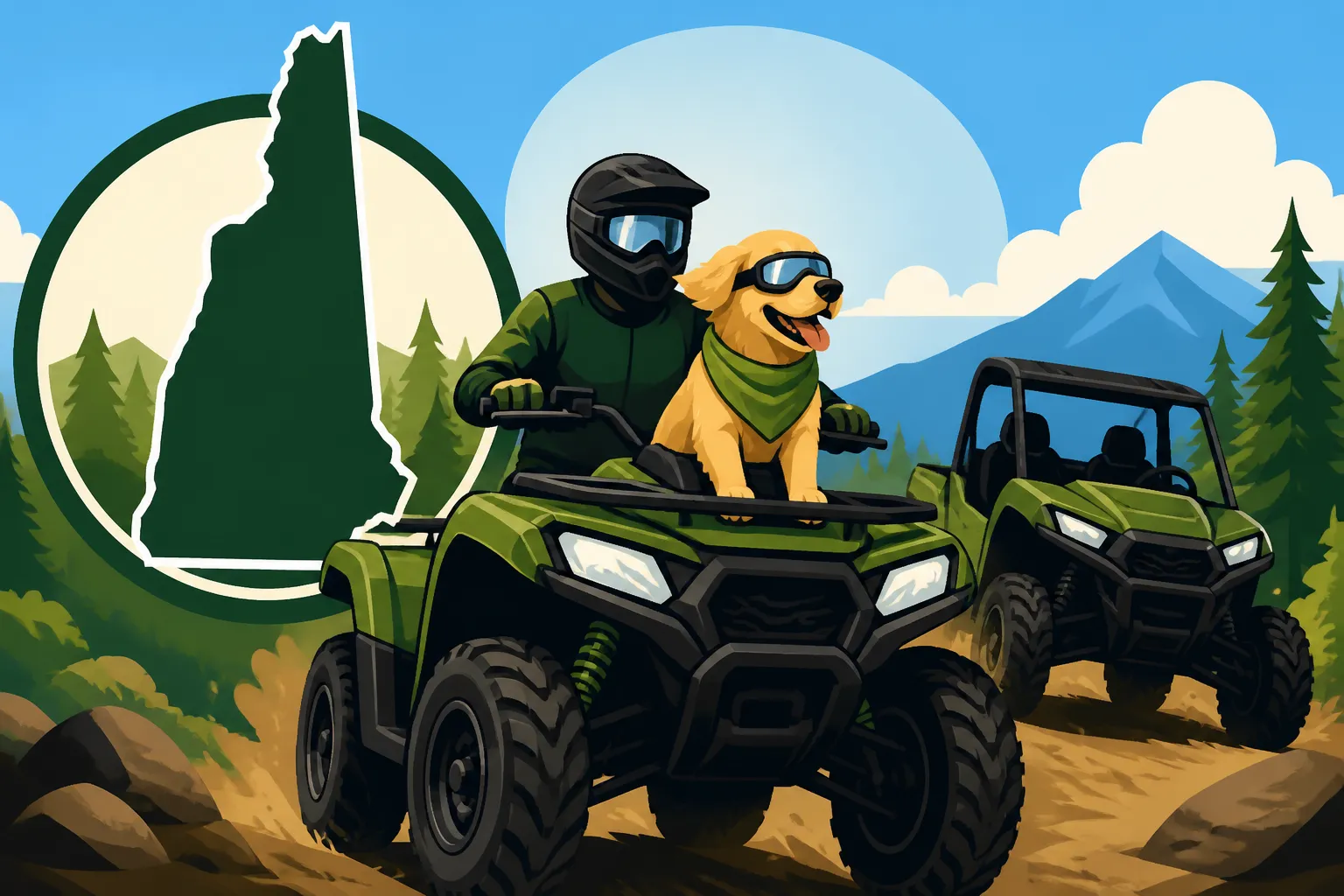
New Hampshire Rules for Riding With a Dog
It’s a natural desire, isn't it? You’re heading out for an awesome day on the trails, the sun is shining, and your best four-legged friend is looking up at you with those hopeful eyes. Why wouldn't you want to bring them along for the adventure? But before you load up your ATV or UTV and your furry co-pilot, it’s crucial to understand the unspoken (and sometimes spoken) rules and best practices for riding with a dog in New Hampshire, ensuring both their safety and a great experience for everyone on the trail. This guide will walk you through everything you need to consider to make your OHRV adventures dog-friendly.
The Heart of the Matter: No Specific OHRV Law for Dogs (But Read On!)
You might scour the New Hampshire OHRV rulebook, flipping through sections on registration, helmet laws, and age requirements, looking for a definitive "dogs on trails" section. And here's the honest truth: you won't find a dedicated chapter on canine passengers. The state's OHRV laws, as managed by New Hampshire Fish and Game, primarily focus on the machines and their operators. This lack of explicit mention can feel a bit like a free-for-all, but it absolutely isn't. It means that while there aren't direct prohibitions, you, as the responsible owner, need to apply common sense, general animal welfare laws, and trail etiquette.
This silence in the OHRV statute doesn't give you a free pass to simply strap your dog onto the back of your quad or let them run wild. Instead, it places a greater emphasis on your personal responsibility to ensure your dog's safety, the safety of others, and the preservation of the natural environment. Think of it less as a lack of rules and more as an expectation that you're a considerate and prepared individual. Every decision you make, from how you transport your dog to how you manage their behavior on a stop, falls under your purview, and it's essential to get it right to avoid problems.
General Principles for Pet Safety on Trails
Since there's no specific OHRV law detailing how your dog must ride, it falls to you to prioritize their safety above all else. This isn't just about avoiding a fine; it's about ensuring your beloved companion has a good time and stays healthy. First and foremost, consider your dog's temperament and physical condition. Is your dog generally anxious, easily spooked by loud noises, or prone to motion sickness? An OHRV adventure might not be for them. The rumble of the engine, the vibrations, the changing scenery at speed, and the presence of other machines can be overwhelming for some dogs. A gentle, short introduction to the machine while it's off, then idling, then a very short, slow ride can help you gauge their reaction.
Beyond temperament, think about physical security. A dog running loose in the bed of a UTV or bouncing around on an ATV seat is an accident waiting to happen. They could be thrown from the machine, injure themselves on a bump, or distract the driver. Just as you wouldn't let a child ride unrestrained, the same applies to your dog. Leash laws, while not always part of the OHRV code itself, are almost universally enforced in public spaces and on managed trails. Having a secure leash readily available and using it whenever your dog is out of the machine is non-negotiable. Always consider the potential for escape; even the most well-behaved dog can be spooked by a sudden noise or the appearance of wildlife, bolting into unfamiliar territory or even traffic.
Local Ordinances and Trail-Specific Rules
While New Hampshire’s statewide OHRV laws might not mention Fido, it’s crucial to remember that you’re not just riding in a legal vacuum. Different land managers and local municipalities often have their own regulations that absolutely apply to your OHRV adventure. This is where it gets a little nuanced. For example, a town that has opened its roads to OHRVs might have a separate town ordinance regarding leash laws or prohibitions on dogs in certain public areas, even if those areas are accessible by OHRV. Always check the local town clerk's office or the town's website for specific animal control ordinances before you head out.
Even more common are rules set by the entities that manage the trails themselves. If you're riding in a New Hampshire State Park, for instance, there will almost certainly be specific rules about pets, typically requiring them to be leashed at all times and often restricting them from certain areas like beaches or swimming spots. Many of the vast club trail networks in the North Country also have policies on dogs. These clubs work hard with private landowners to secure access, and respecting their rules, which often include strict leash requirements and carry-in/carry-out policies for waste, is paramount to maintaining that access for everyone. Before venturing out, always check the specific trail system's website or contact the managing club. [Riding a New Hampshire State Park] is a great resource for understanding those specific regulations. You might also want to consult [New Hampshire Landowner Permission Rules] if you find yourself on private land.
Ensuring Your Dog's Safety and Comfort on the Trail
Taking your dog on an OHRV adventure is an incredible bonding experience, but it requires meticulous planning to ensure their safety and comfort. Unlike humans who can voice their discomfort or needs, dogs rely on us to anticipate and mitigate potential hazards. The trail environment, with its varying terrain, speeds, and noises, presents unique challenges that you must address to make the experience positive for your furry friend. Neglecting these aspects can lead to stress, injury, or even a lost pet, turning an exciting outing into a nightmare.
It's not enough to simply have your dog in the machine; they need to be secure, protected, and well-provided for. Think about every aspect of the ride from their perspective: the jolts and bumps, the wind, the sun, the sounds. Each of these elements needs to be carefully managed. A comfortable and safe dog is a happy dog, and a happy dog makes for a happy owner and a much more enjoyable ride for everyone in your party. Investing time in preparation isn't just a recommendation; it's a vital part of responsible pet ownership when hitting the OHRV trails.
Proper Restraint and Gear for Your Canine Co-Pilot
Securing your dog within the OHRV is non-negotiable. A loose dog can easily be injured, fall out, or interfere with the driver, potentially causing an accident. For UTVs, the best option is often a sturdy, well-ventilated crate or kennel securely strapped into the cargo bed or passenger area. This provides a safe, enclosed space that protects them from bumps, debris, and the elements. Make sure the crate itself is strapped down so it cannot shift or tip. You can find excellent cargo management solutions, including tie-downs and anchors, from brands like SuperATV, which are designed to keep things secure even on rough terrain. If a crate isn't feasible, a dog seat belt or harness designed for vehicle travel is another option, though it offers less protection from impacts or flying debris. These harnesses attach to the vehicle's seat belt system, keeping your dog in place.
For ATVs, which offer less enclosed space, the options are more limited and generally best suited for smaller, calmer dogs. Specialty bags or baskets that attach to the racks, again, securely fastened, might work, but they must be completely enclosed or have a strong, secure top to prevent the dog from jumping or falling out. Never tie a dog to the machine by the leash or collar; a sudden stop or jolt could cause severe injury. Beyond restraint, consider other gear. Paw protection booties can shield sensitive paws from hot surfaces, sharp rocks, or abrasive terrain. Cooling vests or bandanas are excellent for hot days, while a warm blanket might be needed for cooler weather. Eye protection, like "doggles," can protect their eyes from dust, wind, and low-hanging branches, especially if they are riding with their head out or in an open area.
Here's a quick look at essential dog safety gear for OHRV adventures:
| Item | Purpose | Key Considerations |
|---|---|---|
| Secure Crate/Kennel | Maximum protection & containment for UTVs | Well-ventilated, properly sized, securely strapped down |
| Vehicle Safety Harness | Restrains dog to seat for UTVs/ATVs | Crash-tested, comfortable, fits vehicle's seatbelt |
| Paw Protection Booties | Protects paws from heat, cold, rough terrain | Durable, comfortable fit, stays on securely |
| Eye Protection (Doggles) | Shields eyes from dust, wind, debris, sun | UV protection, comfortable fit, secure straps |
| Cooling Vest/Bandana | Prevents overheating in warm weather | Lightweight, breathable, easy to wet and re-cool |
| First Aid Kit (Pet-Specific) | Addresses minor injuries or emergencies | Includes bandages, antiseptic, pain relief, tweezers |
| Travel Water Bowl & Water | Hydration on the go | Spill-proof, collapsible, sufficient supply |
| High-Visibility Gear | Makes dog visible to others, especially in low light | Reflective vest or collar, bright colors |
Essential Considerations for Their Well-being
Beyond just securing your dog, their overall well-being during the ride is critical. One of the most overlooked aspects is hydration. Riding an OHRV can be dehydrating for humans and dogs alike, especially on warm, sunny days. Always carry plenty of fresh water and a collapsible bowl. Offer water frequently during stops. Dehydration can quickly lead to heatstroke, a serious and potentially fatal condition. Similarly, consider shade and breaks. Prolonged exposure to direct sun, especially in a cargo bed, can cause overheating. Plan your route to include shaded resting spots and stop frequently to let your dog stretch their legs, drink, and relieve themselves.
Noise and vibration from the machine are also major factors. Some dogs are naturally more sensitive to sounds and continuous vibrations. Monitor your dog for signs of stress, such as excessive panting, drooling, whining, or trying to hide. If they seem distressed, the adventure might be too much for them. You might also notice their paws getting hot if they’re directly on a metal surface; use a mat or blanket to insulate them. Finally, always carry a pet-specific first aid kit. Minor cuts, scrapes, or insect bites can happen on the trail. Knowing how to clean a wound, remove a tick, or address a sprain can make a huge difference until you can reach a vet. Being prepared for any eventuality shows true dedication to your dog's welfare.
Respecting Other Riders, Wildlife, and the Environment
Taking your dog on an OHRV ride is not just about your personal enjoyment; it's also about being a good steward of the trails and a considerate member of the OHRV community. The responsibility of having your dog with you extends to how their presence impacts others sharing the trails, as well as the delicate natural environment. A single negative encounter—whether it's an uncontrolled dog bothering another rider or chasing wildlife—can jeopardize access for everyone, potentially leading to stricter rules or even trail closures.
It’s about understanding that OHRV trails are often multi-use corridors, shared with hikers, mountain bikers, equestrians, and other OHRV enthusiasts. Your dog, no matter how friendly, might not be welcomed by everyone, and their behavior needs to be impeccable. Moreover, these trails cut through vital habitats for countless animal species. Our presence, let alone that of a domestic predator, can have significant impacts. By actively managing your dog's behavior and minimizing their footprint, you help ensure that the trails remain open and enjoyable for all, and that the beautiful New Hampshire wilderness remains undisturbed.
Leash Laws and Controlling Your Dog
As we touched upon earlier, even in the absence of explicit OHRV-specific dog laws, general leash laws apply widely across New Hampshire’s public lands and many private trail systems. This isn't just a suggestion; it's often a legal requirement. When your dog is outside your OHRV, they should be on a leash, without exception. This simple rule prevents a multitude of problems. An off-leash dog, no matter how well-trained you believe them to be, can dart in front of another OHRV, bicycle, or even a vehicle if near a road. They can jump on hikers, scare horses, or instigate fights with other dogs. The potential for conflict and accidents is simply too high to risk it.
Furthermore, consider the "nuisance" factor. Not everyone loves dogs, and some people are genuinely afraid of them. An off-leash dog approaching them, even with friendly intentions, can be a source of significant anxiety or fear. Maintaining control means being able to reel your dog in quickly when passing others, ensuring they don't wander off the trail, and preventing them from jumping up or barking excessively. Good trail etiquette also extends to dog waste. Always carry waste bags and be prepared to pack out everything your dog leaves behind. "Leave No Trace" principles are essential on New Hampshire trails, and that absolutely includes pet waste. Leaving it on the trail, even if it eventually decomposes, is unsanitary, visually unappealing, and can introduce non-native bacteria into the ecosystem.
Protecting Wildlife and Fragile Ecosystems
New Hampshire's trails are teeming with wildlife, from small rodents and birds to deer, moose, and even bears. While your dog might view a squirrel as a fun chase, for the squirrel, it's a matter of life and death, disrupting its foraging or nesting activities. Letting your dog roam freely, even for a moment, can lead to the harassment of wildlife, which is not only illegal in many areas but also deeply irresponsible. Dogs can inadvertently chase and stress animals, disturb nesting birds, or even injure smaller creatures. Their scent alone can cause wildlife to abandon dens or nests, especially during critical breeding seasons.
Keeping your dog on designated trails and on a leash helps prevent them from trampling sensitive vegetation or disturbing fragile habitats off the main path. The goal is to minimize your collective impact on the natural surroundings. Be especially mindful during hunting season. While you might be enjoying a ride, hunters could be out in the woods. Having a dog, particularly one off-leash, can interfere with hunting activities and even put your dog at risk if they are mistaken for game or wander into a hunting area. During these times, consider equipping your dog with blaze orange gear for visibility. For more details, refer to [New Hampshire Rules for Riding in Hunting Season]. Respecting the environment means leaving it as pristine as you found it, and that includes ensuring your dog doesn't disturb the natural balance.
Planning Your Canine-Friendly OHRV Adventure
Successfully integrating your dog into your OHRV adventures requires more than just showing up at the trailhead. It demands thoughtful preparation and research to ensure that the trails you choose are suitable, that you have everything you need, and that you're prepared for any situation. A well-planned trip minimizes stress for both you and your dog, allowing you to fully enjoy the natural beauty and thrill of New Hampshire's OHRV trails. Rushing into an unfamiliar trail with your dog unprepared can quickly turn a fun outing into a stressful ordeal, or worse, a dangerous situation.
This final stage of planning involves combining all the previous considerations—safety, comfort, and trail etiquette—with logistical details. It's about knowing before you go, assembling the right gear, and setting realistic expectations. From scouting out dog-friendly stops to ensuring your machine is ready for a canine passenger, every detail contributes to a smoother, safer, and more enjoyable experience for everyone involved. Investing this time upfront will pay dividends in happy memories and stress-free rides.
Researching Trail Systems and Accommodations
Not all OHRV trails or trail towns are created equal when it comes to dog-friendliness. Before you even load up your machine, do your homework. Contact the specific OHRV club or land management agency that oversees the trails you plan to ride. Ask about their pet policies: are dogs allowed? Are there leash requirements? Are there any areas where dogs are explicitly prohibited? Some trails might welcome dogs with open paws, while others, perhaps due to sensitive ecosystems or specific land-use agreements, might have restrictions. It's far better to find this out beforehand than to arrive and be turned away or, worse, inadvertently violate a rule.
If your adventure involves overnight stays, research dog-friendly accommodations well in advance. Many hotels, motels, and campgrounds in OHRV-friendly areas are now accommodating to pets, but they often have specific rules, fees, or breed restrictions. Look for places that advertise themselves as pet-friendly, and always call directly to confirm their policies before booking. Some trailside lodging options might even have specific amenities for pets, like wash stations or designated relief areas. For longer trips, consider [Camping Along New Hampshire Trails] and verify their pet policies. Identifying "dog break" spots—areas where you can safely pull over, let your dog out for a walk, and allow them to relieve themselves—along your planned route is also a smart move.
What to Carry and Pre-Ride Checks
A comprehensive packing list is your best friend when riding with a dog. Beyond your usual OHRV essentials, you'll need a dedicated "dog bag." This should include:
- Plenty of water: More than you think you’ll need, especially on hot days.
- Collapsible bowl: Easy to store and use.
- Dog food/treats: Keep them fed and reward good behavior.
- Waste bags: An absolute must for every outing.
- Leash and collar with ID tags: Always have these accessible.
- Pet first aid kit: Bandages, antiseptic wipes, tweezers, any necessary medications.
- Paw protection booties: If the terrain warrants it.
- Eye protection: For dust, wind, or debris.
- A comfortable mat or blanket: To provide insulation and comfort in their travel space.
- Proof of vaccinations: In case of an incident or if required by an accommodation.
Before you even start the engine, conduct a pre-ride check focusing on your dog’s space. Is the crate or harness securely fastened? Are there any sharp edges or exposed components in their area that could cause injury? Is there adequate ventilation to prevent overheating, especially in enclosed UTV cabs? If using a cargo bed, ensure it's clear of loose items that could shift and hit your dog. Double-check the weather forecast and pack accordingly for your dog – a thin rain jacket might be necessary, or extra layers for cold weather. Finally, do one last check of the specific trail rules you'll be riding that day. Being over-prepared is always better than being caught off guard, ensuring a safe and happy adventure for both you and your beloved canine companion on New Hampshire's OHRV trails.
Disclaimer
This article is for general informational purposes only and does not constitute professional advice. Laws, prices and regulations vary by location and change over time. Consult a qualified professional for guidance on your specific situation.