New Hampshire DUI Rules for OHRV Riders
It’s a beautiful day out on the trails, the sun is shining, and the scent of pine is in the air. For many of us, a ride on our ATV or UTV is the ultimate way to unwind and connect with the incredible New Hampshire wilderness. But there's a serious misconception out there that the rules for operating an Off-Highway Recreational Vehicle (OHRV) under the influence are somehow less stringent than driving a car. This couldn't be further from the truth, and the consequences for impaired riding can be absolutely devastating, not just for you, but for everyone around you. This guide is here to cut through the confusion and lay out the uncompromising reality of New Hampshire's DUI rules for OHRV riders.
The Harsh Reality: New Hampshire's Zero Tolerance for Impaired OHRV Operation
When you decide to hop on your OHRV, whether it’s a shiny new side-by-side or a trusty old quad, you're taking on a significant responsibility. The state of New Hampshire treats operating an OHRV while impaired with the utmost seriousness, mirroring the laws for on-road vehicles. There's no "lighter" version of a DUI just because you're on a dirt trail instead of pavement. The risks of injury or fatality are just as high, if not higher, due to the challenging terrain and potential for unpredictable situations.
Understanding Impairment: Alcohol and Drugs on the Trail
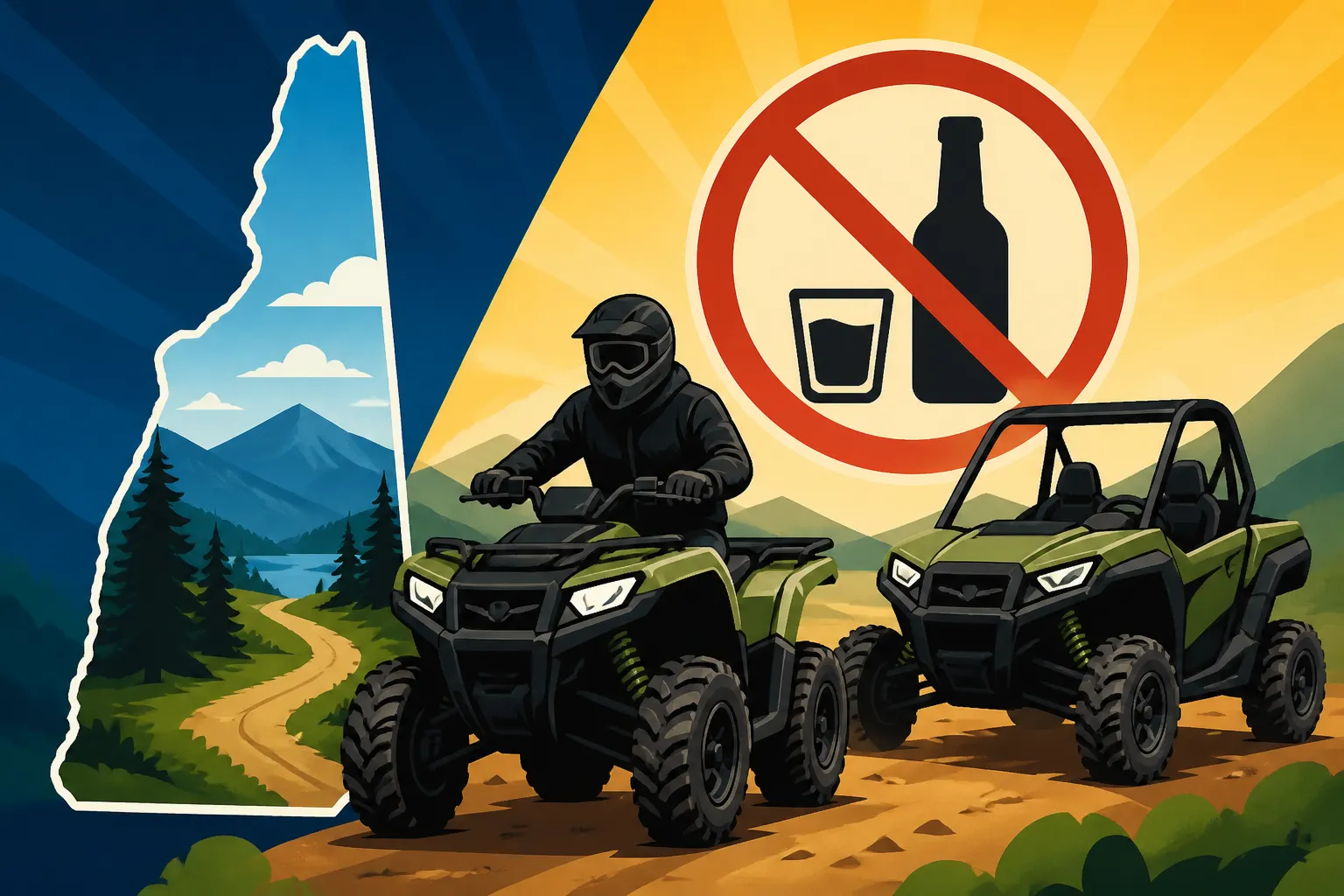
The law defines impairment as being under the influence of intoxicating liquor or any controlled drug, prescription drug, or any other chemical substance, or combination thereof, to a degree that renders you incapable of safely operating your OHRV. This isn't just about blowing over the legal blood alcohol content (BAC) limit of 0.08%; it’s about any influence that affects your judgment, coordination, or reaction time. This means even if you feel "fine" after a couple of beers or a dose of certain prescription medications, you could still be legally impaired if your ability to operate the machine safely is compromised.
Imagine you're out with friends, enjoying a leisurely ride on a beautiful summer afternoon. Someone brings along a cooler, and a few alcoholic beverages are consumed. What might start as a fun, social activity can quickly turn into a nightmare if you decide to continue riding while under the influence. Even a small amount of alcohol can dull your senses, slow your reflexes, and impair your decision-making, which are all critical for navigating challenging trails, crossing streams, or reacting to unexpected obstacles like wildlife or other riders. The law doesn't care if you're a seasoned rider; impairment is impairment, and the risks are real.
Similar Penalties, Different Vehicle
A common and dangerous misconception is that an OHRV DUI won't impact your regular driver's license. Let me be clear: this is absolutely false. New Hampshire's OHRV laws (specifically RSA 215-A) are designed to deter impaired operation, and they often cross-reference the severe penalties outlined in RSA 265-A, which governs DUIs for motor vehicles. This means that if you're convicted of operating an OHRV while impaired, the consequences can extend far beyond just losing your trail privileges.
Your ability to drive your car, truck, or motorcycle on public roads will likely be suspended or revoked, just as if you had received a DUI behind the wheel of your everyday vehicle. This can be a huge shock for many people who thought their trail machine was somehow separate from their road vehicle. The state views impaired operation as a threat to public safety, regardless of the type of vehicle. So, while you might be operating a machine designed by SuperATV for rugged off-road performance, the law applies equally, and the personal consequences are just as severe. [New Hampshire Fines for an OHRV Violation] can cover a range of offenses, but impaired operation is at the very top of the list in terms of severity.
What Happens If You're Caught: The Legal Process and Consequences
Getting pulled over or stopped by law enforcement is never a pleasant experience, but when you're suspected of impaired operation, it's a whole different ballgame. It's crucial to understand how these situations unfold and what you can expect, because being prepared can help you navigate a very difficult situation, even if the best advice is simply to avoid it altogether by never riding impaired.
Roadside Stop vs. Trailside Check
Unlike a typical roadside stop on a highway, OHRV operators can encounter law enforcement—such as the New Hampshire Fish and Game Department officers or local police—at trailheads, designated checkpoints, or even deep within the trail system. Imagine you're pulling into a popular staging area or pausing at an intersection, and an officer approaches. They might observe signs of impairment, like slurred speech, the smell of alcohol, or fumbling with your registration documents. They have the authority to ask you to perform field sobriety tests (FSTs) or to submit to a breathalyzer test.
These trailside interactions are just as serious as any encounter on a public road. A [New Hampshire Fish and Game and OHRVs] officer is highly trained to detect impaired operators and ensure the safety of everyone on the trails. Refusing a chemical test can lead to immediate license suspension, regardless of whether you're ultimately convicted of a DUI. It's a tough situation, but remember, the officer is doing their job to keep the trails safe for everyone, including families and young riders.
Penalties That Bite: Fines, License Suspension, and Jail Time
The penalties for OHRV DUI in New Hampshire are severe and escalate with each subsequent offense. These aren't just slaps on the wrist; they are designed to be a significant deterrent. For a first offense, you're looking at substantial fines, a mandatory license suspension (which applies to your regular driver's license as well as OHRV privileges), and often mandatory enrollment in an Impaired Driver Intervention Program (IDIP). If you're a repeat offender, the fines increase dramatically, the license suspension periods lengthen, and you could face significant jail time.
Here's a general overview of how penalties can differ:
| Offense | Fines (General Shape) | Driver's License Suspension | OHRV Operating Privilege Suspension | Other Consequences |
|---|---|---|---|---|
| First Offense | Substantial | Significant (e.g., 9 months to 2 years) | Significant (e.g., 9 months to 2 years) | Mandatory IDIP, may include jail time |
| Second Offense | Even more substantial | Much longer (e.g., 3 years or more) | Much longer (e.g., 3 years or more) | Mandatory IDIP, mandatory jail time, possible forfeiture |
| Third Offense+ | Extremely high | Indefinite/Permanent | Indefinite/Permanent | Mandatory IDIP, lengthy jail time, definite forfeiture |
Note: Specific figures for fines and suspension durations are not provided here as they can change. Always check current New Hampshire statutes or consult a legal professional for precise details.
Beyond these immediate legal repercussions, you'll also be responsible for various fees, court costs, and the expense of the IDIP program. The entire process is not only financially draining but also incredibly stressful and time-consuming. It’s a stark reminder that when you're considering a drink on the trail, the stakes are incredibly high.
Beyond the Immediate: Insurance, Future Employment, and Reputation
The impact of an OHRV DUI conviction doesn't stop once you've paid your fines and completed your IDIP program. The ripple effects can extend far into your personal and professional life, creating long-term challenges that most people don't consider in the moment. First, your vehicle insurance premiums will likely skyrocket, as you'll be classified as a high-risk driver. This can be a significant financial burden for years to come, affecting not just your OHRV insurance, but your car insurance as well.
Furthermore, a DUI conviction becomes part of your public record. This can create significant hurdles when it comes to future employment opportunities, especially for jobs that require driving, operating heavy machinery, or a clean background check. Some professional licenses may also be at risk. Beyond the practical implications, there's the damage to your reputation among friends, family, and the wider riding community. No one wants to be known as the person who put others at risk by operating an OHRV while impaired. It's a stain that can be difficult to erase, underscoring the importance of responsible choices every time you head out.
Staying Safe and Legal: Avoiding OHRV DUIs
The easiest and most effective way to avoid the devastating consequences of an OHRV DUI is simply not to ride while impaired. It sounds straightforward, but peer pressure, a casual attitude, or a lack of understanding can sometimes lead to poor decisions. Let's talk about practical strategies to ensure your rides are always safe and legal.
Designated Driver or No Drink Policy
The absolute best policy for OHRV riding is a "no drink, no drug, no ride" rule. If you're going to operate an OHRV, commit to staying sober. If you're riding with a group, establish a clear designated operator who will remain completely sober throughout the day. This person is responsible for everyone's safety and for ensuring the machines are operated legally. Treat it like driving a car: you wouldn't get behind the wheel after drinking, so don't do it on a quad or side-by-side either.
If you absolutely want to enjoy an alcoholic beverage after a long day of riding, make sure your machines are parked and secured for the night, and you have no intention of moving them. Many riders keep their "celebration" drinks in a separate cooler back at camp or in the truck, far from the staging area. Consider outfitting your machine with a secure storage solution, perhaps from SuperATV, for your non-alcoholic beverages and snacks, making it clear that the focus is on a safe, sober ride. Remember, [When New Hampshire Registration Applies], so does the law, no matter where you are operating.
Planning Your Ride Responsibly
Responsible riding starts long before you hit the trail. If you're planning a group ride, discuss the "no impairment" rule with everyone beforehand. Make sure everyone understands the serious legal consequences and the risks to safety. If you plan to stay overnight, choose lodging options that are trailside or easily accessible without having to operate your OHRV after consuming alcohol. Many excellent establishments in places like Pittsburg or Gorham offer fantastic amenities where you can unwind responsibly after your ride is truly over.
It's also important to remember [New Hampshire's Age and Supervision Rules]. If you have younger riders in your group, your impairment could not only endanger them directly but also lead to additional legal complications regarding their supervision. A responsible adult is crucial for guiding and overseeing minor riders, and that responsibility is completely compromised by alcohol or drugs. Plan your route, pack plenty of water and food, and keep your focus on enjoying the beauty of New Hampshire's trails safely.
What to Do if You Suspect Impairment
Sometimes, despite the best intentions, someone in your group might make a poor choice and operate their OHRV while impaired. This is a difficult situation, but your responsibility to safety and to your fellow riders must come first. If you suspect a riding buddy is impaired, you have a moral and ethical obligation to intervene. This might mean gently but firmly suggesting they stop riding, offering to drive their machine back to camp, or arranging alternative transportation.
It's far better to have an uncomfortable conversation than to witness or be involved in an accident caused by impaired operation. If the person refuses to cooperate and continues to operate unsafely, you might need to make the difficult decision to contact law enforcement to prevent a serious incident. Protecting lives and preventing injury should always be the top priority, even if it means stepping outside your comfort zone.
Common Misconceptions About OHRV DUIs in NH
Despite the clear laws and severe penalties, several persistent myths about OHRV DUIs continue to circulate. These misconceptions are dangerous because they can lead riders to make poor decisions, believing they are somehow exempt or that the consequences won't be as bad as they truly are. Let's debunk these myths once and for all.
"It's Just a Trail, Not a Road"
This is perhaps the most widespread and dangerous misconception. Many OHRV riders mistakenly believe that because they are on a dirt trail, a frozen lake, or even a logging road, the same strict DUI laws that apply to public highways don't apply to them. This is absolutely incorrect. In New Hampshire, any area designated for OHRV use, including public trails, state land, and often private land where permission has been granted, falls under the jurisdiction of the OHRV laws. This includes snowmobile trails during the OHRV season and [Frozen Lakes and New Hampshire Registration].
The law doesn't differentiate between the surface you're riding on; it focuses on the act of operating a motorized vehicle while impaired. Whether you're navigating technical terrain in Jericho Mountain State Park or cruising down a smooth rail trail, the legal standard for impairment remains the same. The notion that you're somehow "safer" or "less accountable" off-road is a perilous illusion that can lead to severe legal and personal consequences. [New Hampshire Rules for Riding Private Land] still mean you're subject to DUI laws, even if you have permission to be there.
"My Out-of-State License Won't Be Affected"
Another critical misunderstanding, especially for the many visitors who come to New Hampshire to enjoy our incredible trail systems, is the idea that an OHRV DUI in New Hampshire won't affect their driver's license back home. This is a very risky assumption. New Hampshire participates in the Interstate Driver's License Compact, an agreement among most U.S. states that facilitates the exchange of information regarding traffic violations and license suspensions.
This means that if you receive an OHRV DUI conviction in New Hampshire, the information will very likely be shared with your home state's Department of Motor Vehicles. Your home state can, and often will, take action against your driver's license, potentially suspending or revoking it based on the New Hampshire conviction. So, while you might be here [Registering an Out-of-State Machine in New Hampshire] to enjoy our trails, you are fully subject to our laws, and the consequences will follow you home.
"I'm Just Riding Slowly / Not Causing Trouble"
Some riders might believe that if they're just "taking it easy," riding slowly, or are otherwise not causing any visible trouble, they won't get caught or face the same penalties if they've had a few drinks. This is another dangerous myth. The law doesn't require an officer to observe erratic driving or dangerous behavior to establish impairment. If an officer reasonably suspects you are under the influence, they can initiate a stop and conduct field sobriety tests or request a chemical test.
Your perceived ability to handle your machine while impaired is irrelevant to the legal definition of being under the influence. The mere fact of operating an OHRV with a BAC over the legal limit, or under the influence of drugs to an incapacitating degree, is enough for a charge. It's not about how skilled you think you are while impaired; it's about the inherent danger you pose to yourself and others when your judgment and reflexes are compromised. A simple stop to check for [New Hampshire OHRV Decals and the Certificate] could quickly turn into a DUI investigation if an officer detects signs of impairment, regardless of your riding speed or perceived good behavior.
Disclaimer
This article is for general informational purposes only and does not constitute professional advice. Laws, prices and regulations vary by location and change over time. Consult a qualified professional for guidance on your specific situation.