Carrying Fuel on a New Hampshire Ride
A long New Hampshire ATV or UTV ride can leave you far from a fuel stop, but carrying spare gasoline adds fire, spill, and handling risks. The safest plan is to work out whether you need extra fuel, choose a suitable container, secure it correctly, and refuel away from hot parts and other riders.
Do you need to carry extra fuel?
Start with the route, not the gas can. Check where fuel is available, how far the planned ride runs, and whether you can reach a station before the machine’s range becomes a concern. A route that looks short on a map can use more fuel than expected if it includes steep grades, soft ground, frequent stops, heavy loads, or slow technical riding.
Use your machine’s own fuel-use history as a guide, but leave a margin. Fuel consumption varies with terrain, riding style, passenger and cargo weight, and mechanical condition. A range estimate from easy pavement or a gentle trail may not hold on a demanding loop. If you have not ridden the route before, plan conservatively rather than counting on the last portion of the tank.
Check whether the route crosses areas with different access rules or trail conditions. A closure, detour, or slow section can change the distance and time between fuel stops. New Hampshire Trail Conditions Before You Ride and New Hampshire Trail Maps From a Club can help you check the route before leaving. For a longer day, Fuel Stops Across the North Country and Planning Fuel Across Two Clubs are useful when building a plan around available services.
A practical decision looks like this:
| Situation | Sensible fuel plan |
|---|---|
| Short ride with a known fuel stop nearby | Fill before setting out and confirm the stop is open |
| Long loop with fuel available along the route | Plan a stop and allow time for a detour or delay |
| Remote route with no dependable fuel access | Consider an approved spare container, if it can be carried safely |
| Unknown range, uncertain trail status, or changing conditions | Shorten the route or identify a reliable fuel option before departure |
Carrying extra fuel is not automatically the safer choice. A loose or poorly secured container can spill, catch fire, or affect how a machine handles. If there is no safe place to carry it, change the route or arrange a fuel stop instead. The advice in Carrying Fuel on a Long Loop can also help with planning for a ride that keeps you away from services for longer.
New Hampshire registration and trail access are separate from fuel planning. Carrying spare fuel does not replace registration, landowner permission, or compliance with trail rules. Before riding, check the requirements that apply to your machine and route, including New Hampshire OHRV Permits Explained. Also confirm that each trail or property you plan to use is open to your machine; do not treat a fuel plan as permission to take an unapproved shortcut.
Choose a suitable container and carry it securely
Use a container designed for gasoline, and follow its instructions for filling, closing, venting, and transport. A container intended for water or another liquid is not a substitute, even if it appears sturdy. Fuel can damage unsuitable materials, leak through a poor seal, or create a dangerous buildup of vapour.
Whether you buy from a powersports shop, hardware store, or Amazon, check the container’s intended use and compatibility with gasoline before you purchase it. Look for clear manufacturer instructions and a secure closure. Do not use a container that is cracked, distorted, badly worn, or missing a cap or seal. If its condition is uncertain, replace it rather than risking a leak on the trail.
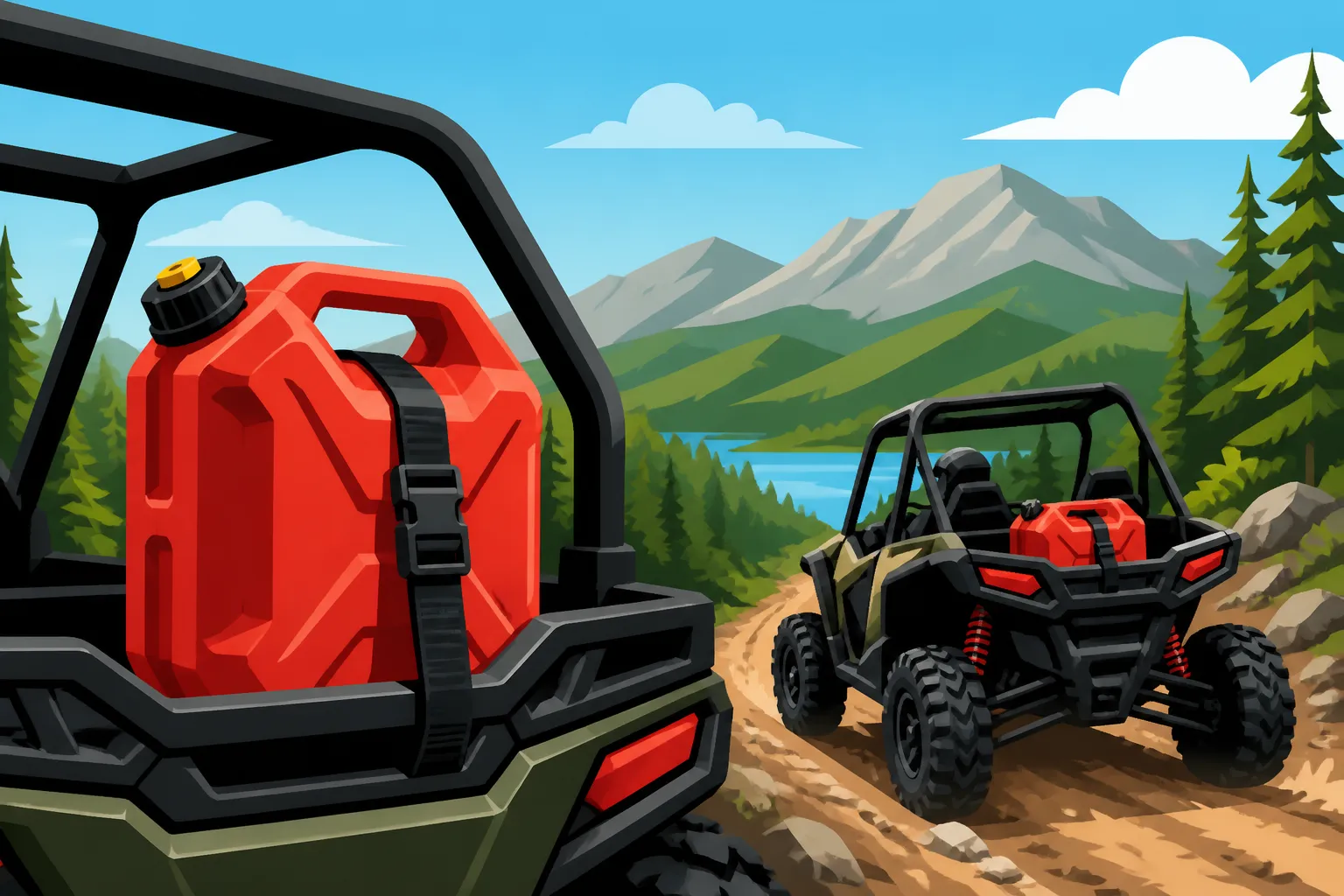
The container should be secured upright in a location intended for cargo, away from hot components and protected as much as possible from impact. Follow the machine and container manufacturers’ guidance for placement. A proper mount or cargo system is safer than wedging a can between gear, tying it loosely to a rack, or placing it where it can move during a turn or rollover.
Before the ride, check that:
- The container is approved for gasoline and in good condition.
- Its cap is closed as instructed, with no signs of seepage or fuel smell.
- The mount holds it firmly without crushing or deforming it.
- It cannot shift into a passenger area, interfere with controls, or block access to safety equipment.
- It is separated from hot surfaces, exhaust components, and other ignition sources as far as the machine’s layout allows.
- The added load does not exceed the machine’s cargo limits or make it unstable.
Do not carry a fuel container loose in a cab, on a seat, or in a place where a passenger could bump or open it. Avoid locations where the container could be struck by branches, dragged against the ground, or damaged in a minor tip-over. If the machine has no suitable way to secure the container, carrying extra gasoline may not be a responsible option for that machine.
Fuel also adds weight and can change handling. Keep the load balanced and within the manufacturer’s limits. A can attached high, far behind the rear axle, or to one side can affect steering and stability. On a UTV, do not assume that a cargo bed is safe just because it has room: consider heat, ventilation, the container’s position, and whether it can be restrained properly. Never place fuel where it could spill onto people or hot machinery.
Take a few minutes to inspect the setup after loading. Push and pull the container to check for movement, then look again after the first stretch of riding. If it shifts, leaks, or produces a strong gasoline smell, stop in a safe place and deal with the problem before continuing.
Refuel carefully on the trail
Refuel outdoors, away from flames, smoking, sparks, and other ignition sources. Keep other riders and passengers back while handling fuel. Choose a stable location away from trail traffic, dry vegetation, and places where a spill could run into a drain, stream, pond, or wetland. Avoid stopping where the machine blocks the trail or creates a hazard for other riders.
Turn off the engine and allow hot parts to cool before refueling. Exhaust and engine components can remain hot after shutdown, so do not rush just because the engine is no longer running. Keep the container and nozzle away from those parts. Follow the machine and fuel-container instructions, and do not overfill the machine’s tank. Leave room as directed by the manufacturer rather than filling to the brim.
Use a controlled pour. A suitable spout or pouring system can help, but it does not prevent every spill. Keep the container stable, avoid stretching across the machine, and do not pour while someone is holding or operating the vehicle. If conditions are unstable, such as a steep slope or strong wind, find a safer place to refuel.
A small spill still needs attention. Stop, secure the container, and keep everyone away from ignition sources. Do not restart the machine if fuel has reached hot parts or collected where it could ignite. Use appropriate absorbent material if available, and keep contaminated material contained rather than leaving it on the trail. If the spill is significant or reaches water or sensitive ground, follow applicable reporting and cleanup requirements. Do not wash fuel into the soil or a waterway.
After refueling, close the container as directed and check for leaks. Wipe fuel from the machine before restarting, then move the container back into its secure position. If gasoline is on clothing or skin, step away from the machine and deal with the exposure before riding. Do not continue with a leaking container or a persistent fuel smell.
A fire extinguisher suitable for flammable-liquid fires may be useful equipment, but it is not a substitute for careful handling or a safe route plan. Keep safety equipment accessible, not buried beneath a fuel can or packed cargo. Know how to use it before an emergency; if a fire grows beyond what can be handled immediately and safely, move away and call for emergency help.
Check the rules and prepare for problems
There is an important difference between the general safety advice for carrying gasoline and rules that apply to a specific trail, property, or event. Land managers, clubs, private landowners, and organized rides may set their own conditions for fuel containers or where refueling is allowed. Restrictions can also apply to open flames, fuel spills, or riding in a closed area. Check with the organization responsible for the route before setting out, especially if you are joining an event or crossing private land.
Do not assume that every trail permits every machine or every type of cargo. A marked route may have width limits, seasonal closures, or other conditions. If a closure forces a change in route, follow the posted direction rather than taking an unmarked road or crossing private land without permission. New Hampshire Rules for Riding a Closed Trail explains why a closure is not a route suggestion.
Before departure, make a simple plan:
- Fill the machine at a dependable source and confirm the planned route and stops.
- Estimate fuel needs using the actual terrain, expected load, and a reserve for delays.
- Decide whether spare fuel is necessary and whether the machine has a safe place to carry it.
- Check the container, cap, mount, and cargo limits.
- Tell your group where the fuel stop or turnaround point is.
- Recheck trail status and access conditions before leaving.
If the ride changes, reassess rather than pressing on. A delayed group, unexpected detour, difficult trail, or slow mechanical problem can increase fuel use. Turn around while there is still a comfortable reserve if the next fuel option is uncertain. Do not rely on another rider’s fuel unless the group has agreed on that plan and the other machine can spare it.
On a group ride, assign responsibility clearly. Each rider should know which machine carries spare fuel, where it is mounted, and what to do if there is a leak or spill. Keep the container secured during stops and do not pass it between moving machines. If a rider has to stop, get the group off the active trail where possible and make the stop visible to approaching traffic.
Finally, do not let spare fuel create a false sense of range. It does not make a closed trail legal, guarantee that a route is passable, or remove the need to ride within the machine’s limits. The best fuel plan is the one that gets everyone back without depending on an improvised stop, an unsecured can, or a risky detour.
Disclaimer
This article is for general informational purposes only and does not constitute professional advice. Laws, prices and regulations vary by location and change over time. Consult a qualified professional for guidance on your specific situation.