Riding Home in the Dark
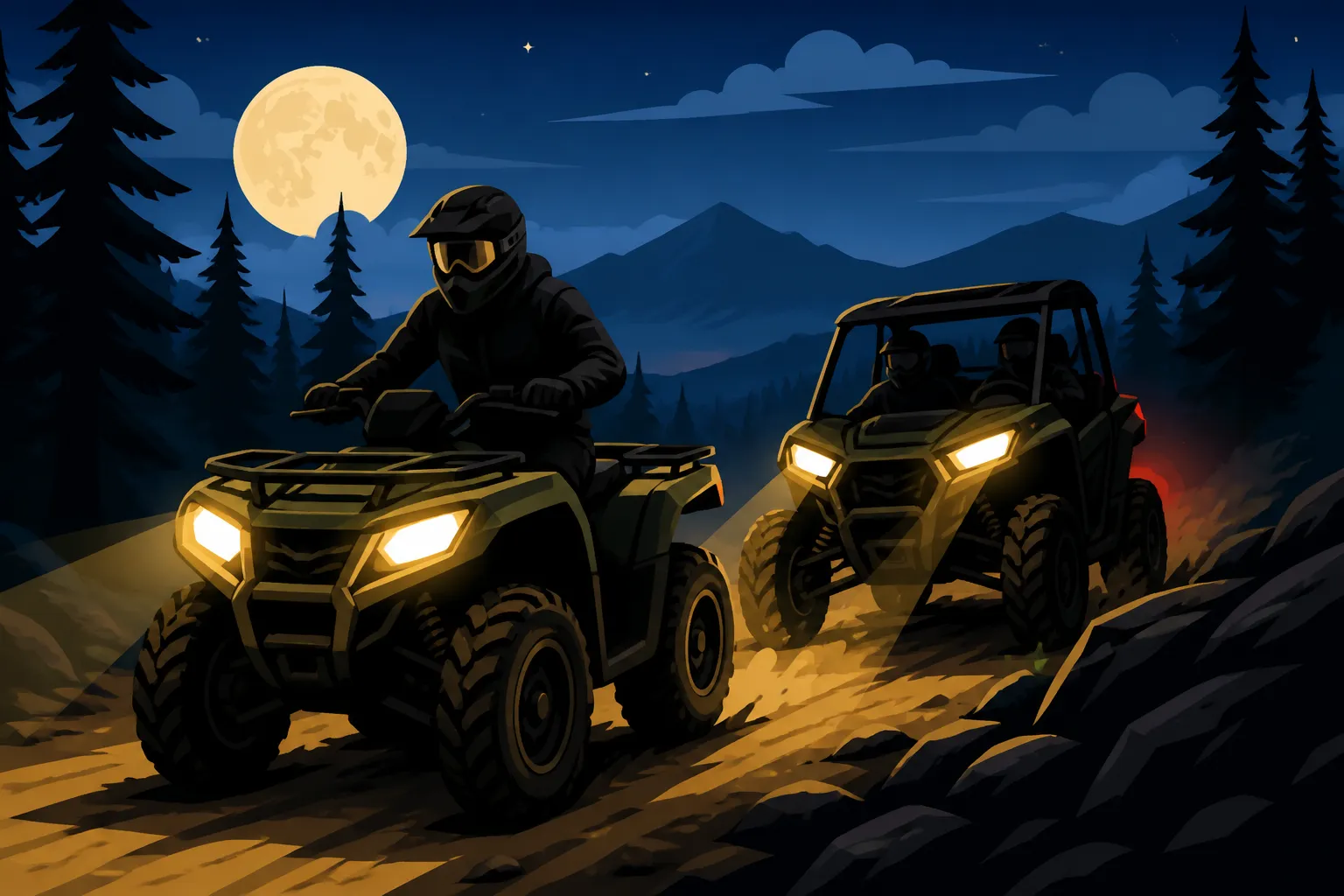
It's happened to the best of us: you're out on the trails, the sun is shining, and you're making great time. You get caught up in the moment, exploring a new spur or just soaking in the natural beauty, and then you glance at your watch. Suddenly, that golden hour light is fading fast, and you realize your "day trip" is rapidly turning into a "night ride home." Or maybe, you planned a thrilling evening adventure, eager to experience the trails under a blanket of stars. Either way, riding an ATV or UTV after dark in New Hampshire comes with its own set of rules, challenges, and incredible rewards. This guide is all about making sure your night rides are safe, legal, and as enjoyable as possible, covering everything from the necessary gear to understanding the specific regulations you need to follow.
The Realities of Riding After Sunset in New Hampshire
Riding an OHRV in New Hampshire after dark isn't just about flipping on your headlights; it's a completely different experience that demands extra vigilance and preparation. The Granite State's trails, whether winding through dense forests or open fields, transform dramatically once the sun dips below the horizon. What was once a familiar path can suddenly seem foreign, and hazards that were easily spotted in daylight become hidden dangers.
When "Daylight" Turns to "Night Riding" Legally
One of the first things to wrap your head around is when "daylight riding" officially ends and "night riding" begins from a legal standpoint. While your eyes might still perceive enough light to navigate just after sunset, state regulations often kick in much earlier. Generally, if you're riding a motorized OHRV from a half-hour after sunset to a half-hour before sunrise, you are considered to be operating at night, and specific lighting requirements apply. This is crucial because a casual evening ride can quickly become a technically illegal one if your machine isn't properly equipped for after-dark operation.
The challenge here, especially in New Hampshire's northern stretches or deep woods, is that "sunset" isn't a hard line. The light fades rapidly, especially when you're under a thick canopy of trees. What feels like twilight can, in reality, be dark enough to trigger those legal requirements and drastically reduce your visibility. Many riders have been caught off guard by how quickly the shadows lengthen and engulf the trails, turning a leisurely cruise into a scramble to get back before it's too dark to see clearly. Always check the official sunset times for your area and plan to be off the trails or fully equipped for night riding well before that half-hour mark.
Why Visibility Becomes Your Number One Concern
When you're riding at night, visibility isn't just about seeing where you're going; it's also about being seen by others, whether they're fellow riders, hikers, or even wildlife. Reduced visibility impacts every aspect of your ride. Your reaction time slows down because your brain needs more time to process less information. A rock, a rut, or a fallen branch that was obvious in the afternoon sun can become an invisible obstacle just waiting to trip you up.
Moreover, the depth perception you rely on during the day is severely compromised at night. Uneven terrain, inclines, and declines can all become disorienting. Imagine approaching a water crossing in the dark – without clear visual cues, it's incredibly difficult to judge the depth, current, or stability of the bottom. This isn't just a matter of convenience; it's a serious safety issue that can lead to accidents. Ensuring both your machine and you are highly visible is paramount to a safe and enjoyable night riding experience.
Essential Equipment for Night Riding in New Hampshire
Heading out after dark without the right gear is like trying to navigate a dense fog with no headlights – it's just asking for trouble. New Hampshire has specific requirements, but beyond the legal minimums, there are practical considerations that can make all the difference in safety and enjoyment. Preparing for a night ride involves more than just bringing a flashlight; it's about outfitting your machine and yourself with dedicated equipment designed for low-light conditions.
Lighting Up Your Machine for the Trail
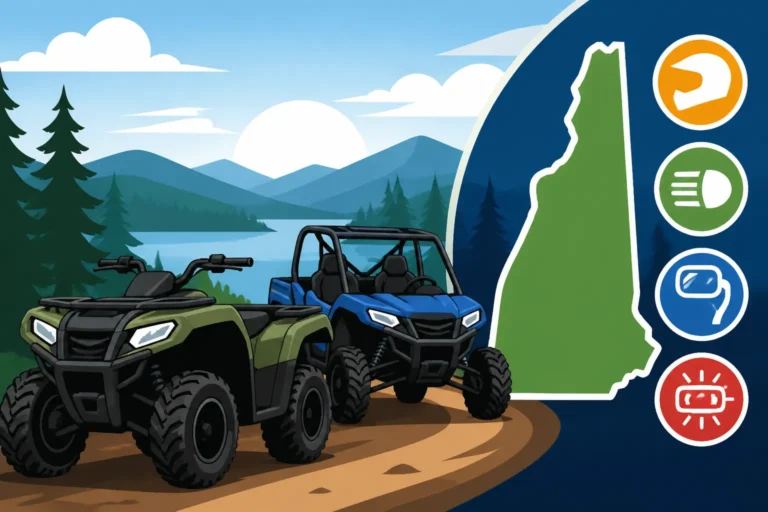
Your OHRV's lighting system is your most critical piece of equipment for night riding. The state of New Hampshire requires you to have at least one headlight and one taillight operating when riding between a half-hour after sunset and a half-hour before sunrise. But let's be realistic: your stock lights, especially on older machines, might barely illuminate twenty feet in front of you. That's simply not enough for safe trail speeds, especially on unpredictable terrain.
This is where auxiliary lighting comes into play. Many experienced riders upgrade their setups with powerful LED light bars or spot/flood combination lights. Brands like SuperATV offer a fantastic range of aftermarket lighting solutions that can turn night into day, dramatically expanding your field of vision. Think about both forward-facing lights to see obstacles ahead and side-facing lights to illuminate ditches or the edges of the trail, which can be crucial for avoiding hazards. It’s not just about brighter; it’s about a wider and deeper light pattern that helps you see what’s coming long before you're on top of it. Always ensure your auxiliary lighting is aimed properly so it doesn't blind oncoming riders. For a detailed look at what's required, check out [New Hampshire Lighting Requirements for OHRVs].
Personal Gear for Enhanced Night Vision and Safety
Beyond your machine's lights, your personal gear plays a huge role in night riding safety. First and foremost, a properly fitting helmet is always a must, as outlined in [New Hampshire Helmet Law for OHRV Riders]. For night riding, consider helmets with clear or lightly tinted visors that offer maximum light transmission, or wear clear goggles. Heavily tinted visors that are great for sunny days become dangerous light blockers at night. Some riders even invest in helmets with integrated LED lights or attach small headlamps for additional, directional light.
Reflective clothing is another non-negotiable item. Think vests, jackets, or even reflective strips on your helmet and backpack. This makes you much more visible to other riders, even if their headlights aren't directly on you. Remember, it's not just about your visibility; it's about being seen by others. A small, often overlooked item is a personal headlamp or a small, powerful flashlight. If your machine breaks down, or you need to make a trailside repair, this independent light source will be invaluable.
Tools and Contingency Gear You Can't Afford to Forget
Night riding significantly amplifies the consequences of any mechanical issue or unexpected problem. A flat tire or a broken belt in broad daylight is an annoyance; the same issue in the dark can be a serious predicament. Your tool kit should be robust and well-organized, so you don't have to fumble in the dark for the right wrench. Include essentials like tire repair kits, a small air compressor, basic hand tools, zip ties, duct tape, and a small amount of spare fuel, especially if you're on a long loop where [New Hampshire Trails With Fuel Along the Way] are sparse.
Communication is key: always carry a fully charged cell phone, but don't rely solely on it, as cell service can be spotty in remote areas of New Hampshire. Consider a satellite messenger device for true off-grid emergencies. A basic first-aid kit, a whistle, and emergency blankets are also smart additions. Lastly, don't forget an extra independent light source (or two!), like a powerful headlamp with spare batteries. These small preparations can make a monumental difference if things go sideways after dark.
Here's a quick checklist to help you prepare for a night ride:
| Category | Item | Description |
|---|---|---|
| Machine Lights | Headlight(s) | Functional, bright, proper aim. |
| Taillight(s) | Functional, clearly visible from rear. | |
| Auxiliary Light Bar/Pods | For enhanced forward and side visibility (SuperATV options). | |
| Personal Gear | Clear/Light Tint Visor/Goggles | Maximum light transmission, no heavy tints. |
| Reflective Clothing/Gear | Vest, jacket, helmet strips for being seen. | |
| Headlamp/Flashlight (personal) | Hands-free light for repairs or navigation off machine. | |
| Safety & Tools | Charged Phone/Satellite Messenger | For communication, even in dead zones. |
| First-Aid Kit | For minor injuries. | |
| Basic Tool Kit | Essentials for trailside repairs (tire kit, wrench, duct tape). | |
| Spare Fuel (small amount) | Just in case, especially on longer loops. | |
| Small Fire Extinguisher | For emergencies, particularly in dry conditions. | |
| Trail Map/GPS | Know your route, have a backup. |
Navigating New Hampshire Trails and Roads at Night
Riding in New Hampshire after dark isn't just about having the right gear; it's also about understanding the specific regulations that apply and adapting your riding style to the challenges of limited visibility. The rules can vary slightly depending on whether you're on a designated trail, a shared-use road, or crossing a paved public highway. Being aware of these nuances is crucial for both safety and legality.
Rules for Riding Public Roads and Designated Trail Sections After Dark
When the sun goes down, New Hampshire's OHRV rules for trails and roads become even more stringent, especially regarding lighting and other equipment. For any operation between a half-hour after sunset and a half-hour before sunrise, your machine must have at least one working headlight and one working taillight. Beyond this, if you're venturing onto any designated OHRV-friendly public road or crossing a highway, you'll need additional equipment.
This includes having a working brake light, a rearview mirror (mounted on the left side of the handlebar or on the machine if it's a side-by-side or UTV, as specified in [New Hampshire Mirror Requirement for Road Riding]), and your OHRV's registration decal must be clearly visible. It's not uncommon for towns like Gorham or Berlin, which allow OHRV access on certain streets, to have specific curfew times, often around 10 PM. This means even if your machine is fully lit, you might not be allowed on certain town roads after a specific hour. Always check local ordinances and stay informed about [New Hampshire Rules for Riding After Dark] and [New Hampshire Rules for Riding a Town Street] to avoid any unpleasant surprises or fines. A lot of information can be found at trailheads or on club websites under [New Hampshire Trail Conditions Before You Ride].
Adjusting Your Riding Style for Low Light Conditions
The biggest mistake a rider can make at night is trying to maintain daytime speeds. Darkness obscures obstacles, reduces depth perception, and gives you less time to react. The key to safe night riding is to significantly reduce your speed. This allows your lights to effectively illuminate the path ahead and gives you ample time to see and react to anything unexpected, whether it's a deer jumping onto the trail or a sharp turn you didn't anticipate.
Increase your following distance if you're riding with a group. Dust and exhaust can further reduce visibility in the dark, and you want enough space to react if the rider in front of you suddenly stops or encounters an obstacle. Actively scan the trail ahead, not just focusing on the immediate path of your headlights. Look for shadows, reflections from animal eyes, or any subtle changes in the terrain that might indicate a hazard. Communication within a group is also paramount; use hand signals or communication systems if you have them. Remember, patience and caution are your best allies when riding after dark.
The Importance of Knowing Your Route (and Having a Backup)
Even if you know a trail like the back of your hand during the day, it can feel completely different at night. Familiar landmarks disappear, and the trail's contours are altered by the limited light. Relying on memory alone can be a recipe for getting lost. Always carry a detailed trail map, ideally a waterproof one that's easy to read in low light, and a reliable GPS device. Make sure your GPS has the trails pre-loaded and that its battery is fully charged. Many riders also download maps to their phones as a backup, though again, don't solely rely on phone battery life or signal.
Before you head out, study your planned route and identify any potential bailout points or easy-to-miss turns. It's also wise to have a backup plan in case a trail is unexpectedly closed or becomes impassable. This might mean having an alternative route or knowing the nearest safe spot to stop and wait for daylight, if absolutely necessary. While exploring new trails is exciting, night isn't the best time for it. Stick to known, well-maintained routes when riding after dark. [New Hampshire Rules for a Group Ride] often emphasize having a lead and sweep rider, especially valuable in the dark.
Common Pitfalls and How to Avoid Them
Even with the best preparation, night riding presents unique challenges that can turn an enjoyable outing into a stressful situation. Understanding these common pitfalls and knowing how to prevent them is crucial for any rider venturing out after dark in New Hampshire. From unexpected encounters to unforeseen legal issues, proactive measures are always better than reactive solutions.
The Hidden Hazards of Darkness
Darkness itself is the primary hidden hazard. What looked like a small puddle in daylight could be a significant water crossing at night. Roots and rocks that are easily maneuvered around during the day can become formidable obstacles when only illuminated by your headlights. One of the most significant concerns in New Hampshire's vast wilderness is wildlife. Deer, moose, and even bears are more active at dawn, dusk, and throughout the night. Their eyes can reflect in your headlights, but they might not move until the last second, especially if they're used to little human activity after dark. Always be on the lookout, and significantly reduce your speed in areas known for wildlife activity.
Trail conditions can also be misleading. A section that was smooth earlier in the day might have developed fresh ruts from other machines, or a recent rainfall could have turned a dry path into a muddy mess. Without proper light, these changes are hard to assess. Another hazard is encountering other riders who might not be as prepared as you are. Their lack of proper lighting could make them almost invisible until you're dangerously close. Always assume you might encounter someone else, and be prepared to react defensively.
Avoiding Legal Trouble and Fines
Nothing puts a damper on a night ride faster than a citation from a conservation officer. New Hampshire's Fish and Game Department takes OHRV regulations seriously, and riding after dark without proper equipment or registration is a surefire way to attract their attention. The fines for OHRV violations can be significant, so it pays to be completely compliant. One of the most common issues is insufficient lighting. As mentioned, stock lights on many older machines simply aren't bright enough to meet the spirit, if not always the letter, of the law for safe night operation. Investing in quality auxiliary lighting, like the systems from SuperATV, isn't just about seeing better; it's about demonstrating your commitment to safety and compliance.
Beyond lighting, ensure your machine is properly registered and that you have your current [New Hampshire OHRV Decal Placement] and paper certificate with you. Even if you're a seasoned rider, forgetting your paperwork or having an expired registration can lead to penalties. If you're using a side-by-side on designated roads, make sure you have the required mirror. It’s also wise to ensure that any minors riding with you meet age and supervision requirements, especially for night rides, as these rules are strictly enforced. For a comprehensive overview of potential penalties, consult [New Hampshire Fines for an OHRV Violation]. Ignorance of the law is rarely an acceptable excuse, so being informed and prepared is your best defense.
Conclusion
Riding your ATV or UTV home in the dark, or embarking on a planned night adventure, offers a completely different perspective of New Hampshire's stunning landscapes. The quiet hum of your engine under a canopy of stars can be an incredibly peaceful and thrilling experience. However, that tranquility is built on a foundation of thorough preparation, adherence to safety protocols, and a deep respect for the unique challenges that darkness presents.
From outfitting your machine with robust lighting, perhaps even considering an upgrade from SuperATV to truly cut through the night, to ensuring your personal gear enhances both your vision and your visibility to others, every detail matters. Understanding New Hampshire's specific rules for night riding, adjusting your speed, and knowing your route like the back of your hand will not only keep you safe but also ensure your legal compliance. The trails of New Hampshire are a treasure, and with the right approach, you can safely enjoy them long after the sun has set.
Disclaimer
This article is for general informational purposes only and does not constitute professional advice. Laws, prices and regulations vary by location and change over time. Consult a qualified professional for guidance on your specific situation.