Registering a Machine a New Hampshire Teenager Rides
It's incredibly exciting when a teenager expresses interest in getting out on the trails with an ATV or UTV, but for many parents, the paperwork and legalities can feel like navigating a maze. Trying to figure out who needs to register, who can ride, and what certificates are necessary often leads to frustration and confusion. This comprehensive guide aims to cut through that complexity, walking you through everything you need to know about registering an OHRV that a New Hampshire teenager will ride, ensuring both safety and legal compliance.
Who Needs to Register an OHRV in New Hampshire, Regardless of Age?
One of the first and most critical pieces of information for any OHRV owner in New Hampshire, especially when a teenager is involved, is understanding when a machine needs to be registered. It's not just about who owns it; it's about where it's ridden.
The Fundamental Rule: Leaving Private Property
Let's get straight to it: if your Off-Highway Recreational Vehicle (OHRV)—which includes ATVs, UTVs, and trail bikes (dirt bikes)—is going to touch any land that isn't your own personal private property, or the private property of an immediate family member or business where you have explicit permission, it needs to be registered. This is a non-negotiable rule in New Hampshire.
Think about it this way: you might have a sprawling backyard or a large farm where your teenager can zip around all day long without needing a registration. That's perfectly fine. But the moment they roll off your property onto a public road, a designated club trail, state land, or even a neighbor's field (unless you own that field or have a direct family connection), that machine must be registered with the State of New Hampshire. It doesn't matter if it's just for a quick jaunt to a friend's house or an afternoon on a meticulously maintained trail system; registration is key.
This rule applies universally, whether the rider is an adult or a teenager. It's not about the age of the operator, but the location of the operation. This means that even if you're just trailering your machine to a public staging area to unload, and then immediately heading onto a trail, you'll need that registration. For a deeper dive into this, check out our guide on [Leaving Your Own Property in New Hampshire].
Age of the Registrant Versus Age of the Rider
Here's where a lot of parents get tripped up: there's a significant difference between who can register an OHRV and who can ride it. While your teenager might be old enough to drive a car or operate an OHRV on trails, they almost certainly can't register the machine in their own name.
In New Hampshire, the individual listed as the registrant on the OHRV's paperwork must be at least 18 years old. This means that if your sixteen-year-old is getting a brand new ATV, you, as the parent or legal guardian, will be the one registering it in your name. You'll be the one signing the application and being listed as the legal owner responsible for that machine. This rule is in place to ensure that a legally responsible adult is accountable for the OHRV, its operation, and any potential liabilities. It's a critical distinction to understand and one that's designed to add a layer of adult oversight to OHRV ownership, particularly when minors are involved. We explore this further in [Why New Hampshire Registrants Must Be Eighteen]. So, while your teen might be the primary user, the legal responsibility for the registration itself rests squarely on adult shoulders.
The Adult Registrant's Responsibilities and Requirements
When an adult registers an OHRV for a teenager, it's more than just a name on a piece of paper. It comes with real legal responsibilities and specific requirements that need to be met.
The Adult as the Legal Owner and Operator
As the adult registrant, you are stepping into the role of the legally responsible party for that OHRV. This means that any fines, violations, or legal issues related to the machine's registration status or proper display of decals would fall to you, regardless of who was riding at the time of an infraction. It's a significant responsibility, one that necessitates a clear understanding of the rules and careful oversight of the machine's use, especially when a minor is operating it.
When you go to register the machine, you'll need to provide proof of ownership. If you purchased the OHRV from a dealer, they will typically handle much of the initial paperwork and provide you with the necessary documentation. However, if you bought it privately, you'll need a properly executed bill of sale to prove you're the rightful owner. This document is absolutely vital, acting as your proof of purchase and a record of the transaction. A service like LawDepot can provide customizable bill of sale templates that ensure all the necessary legal information is included, making the private sale process smoother and more secure for both parties. Having a solid bill of sale prevents headaches down the road when you go to register. For more on what's needed, check out [New Hampshire ATV Bill of Sale Requirements].
Understanding Registration Costs and Club Membership Benefits
Registering an OHRV in New Hampshire involves a fee, and the exact amount can vary based on several factors, including whether you're a resident or nonresident, and perhaps most importantly, whether you're a member of an approved New Hampshire OHRV club.
New Hampshire actively encourages OHRV enthusiasts to join local clubs, and they offer a significant financial incentive to do so. By becoming a member of a club that belongs to the New Hampshire Off-Highway Vehicle Association (NHOHVA), you can save a considerable amount on your annual OHRV registration fee. This discount isn't just a nice perk; it's part of a system designed to support the extensive volunteer-based trail network that makes New Hampshire such a fantastic place to ride. The clubs do an immense amount of work, from trail maintenance to grooming, and your membership dues, combined with the registration fees, help fund these efforts.
Let's look at a general overview of how the costs might break down. Remember, specific figures can change, so always check the New Hampshire Fish and Game Department's website for the most current rates. This table provides a snapshot of the general cost structure for a wheeled OHRV (ATV/UTV):
| Registrant Type | Without Club Membership (Approx.) | With NHOHVA Club Membership (Approx.) |
|---|---|---|
| New Hampshire Resident | See current rates | See current rates |
| Nonresident | See current rates | See current rates |
Note: Snowmobile registrations typically have different rates and are often higher due to the costs associated with winter trail maintenance and grooming.
As you can see, joining a club can make a real difference in the cost. This is a fantastic way to not only save money but also to contribute directly to the trails your teenager will be enjoying. For more details on the financial side, including how the club discount works, refer to [New Hampshire's Club Member Discount] and [New Hampshire OHRV Registration Cost]. When you purchase your registration, make sure to have proof of your club membership (a membership card or confirmation email) ready to present to the agent.
Ensuring the Teenager Can Legally Ride the Registered OHRV
Registering the machine is one crucial step, but ensuring your teenager can legally operate it on New Hampshire trails is another equally important consideration. It's not just about age; it's about education and supervision.
New Hampshire's OHRV Safety Certificate Requirements
If your teenager is going to be riding an OHRV on public lands or trails in New Hampshire, they need to meet specific safety education requirements. Generally, any operator born after January 1, 1989, or who is 12 years of age or older and does not possess a valid motor vehicle operator's license (like a driver's license), must hold an OHRV Safety Certificate. This certificate proves that they've completed an approved safety education course, equipping them with essential knowledge about safe operation, trail etiquette, and New Hampshire's OHRV laws.
There are a couple of ways to obtain this certificate. The New Hampshire Fish and Game Department offers free classroom-based courses throughout the year, often hosted by OHRV clubs or community centers. These are excellent opportunities for hands-on learning and interaction. Alternatively, there are approved online courses available, which offer flexibility for busy schedules, though they usually come with a fee. Both options cover the same critical material. It's vital that your teenager completes one of these courses before they hit the trails if they fall within the age and license criteria. Without it, even if the OHRV is registered, they could face fines for operating without the necessary certification. For more in-depth information on what's required and how to get it, consult [New Hampshire Safety Education Requirements] and [New Hampshire ATV Safety Course Cost]. This certificate is specific to the rider, not the machine, so it's a personal responsibility for your teen.
Age and Supervision Rules for Teenage Riders
New Hampshire has very clear, age-specific rules regarding who can ride an OHRV and under what conditions. These rules are in place for safety and are strictly enforced. Understanding them is paramount for any parent of a teenage rider.
- Under 12 Years Old: Children under 12 years of age can only operate an OHRV on land owned by their parents, legal guardian, or immediate family. They are not permitted to ride on public trails or designated OHRV corridors. This is a strict limitation designed to protect very young riders.
- Ages 12 and 13: At 12 years old, with an OHRV Safety Certificate, a rider can operate an OHRV on approved OHRV trails. However, they must be under the direct supervision of a person 25 years of age or older who holds a valid motor vehicle driver's license. "Direct supervision" means the adult must be within sight and hearing distance, close enough to provide immediate assistance. This ensures an experienced adult is always on hand. Our article on [New Hampshire Rules for a Rider Aged 12] elaborates on this.
- Ages 14 and 15: These riders, with an OHRV Safety Certificate, can operate an OHRV on approved trails without direct adult supervision. However, they are still restricted from operating on public roads that have been designated for OHRV use (unless it's to cross a road or during an organized event with specific permits).
- Ages 16 and 17: If a rider holds a valid motor vehicle operator's license (meaning they are old enough to drive a car), they do not need a separate OHRV Safety Certificate. However, the same restrictions regarding public road use as 14 and 15-year-olds generally apply unless specific local ordinances allow it. If they don't have a driver's license, they still need the OHRV Safety Certificate and must follow the rules for younger riders regarding road access.
It's important to remember that these are minimum age and supervision requirements. As the adult registrant, you should always assess your teenager's skill level, maturity, and the conditions of the trails before allowing them to ride, especially unsupervised. For a complete breakdown of all the age-related regulations and supervision requirements, consult [New Hampshire Supervision Rules for Minors] and [New Hampshire's Age and Supervision Rules].
Practical Scenarios and Important Considerations
Navigating OHRV regulations for teenagers can throw up a few specific scenarios. Let's tackle some common questions and essential reminders.
What If the Teenager Is Visiting from Out of State?
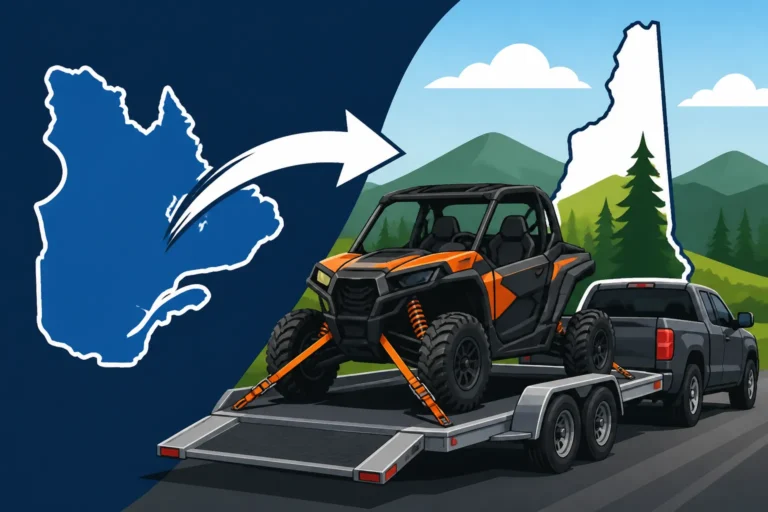
New Hampshire is a popular destination for OHRV enthusiasts, and many families bring their machines from neighboring states or even further afield. However, there's a crucial point to understand: New Hampshire does NOT honor out-of-state OHRV registrations. This often catches visitors by surprise and can lead to unnecessary fines.
If your teenager is visiting New Hampshire with an OHRV that's registered in another state, that registration is effectively invalid for use on New Hampshire's public trails and lands. You will need to obtain a separate New Hampshire OHRV registration for their machine.
You have two main options for nonresident registration:
- Annual Nonresident Registration: This is the most common option if you plan multiple visits or an extended stay. It covers the OHRV from May 1st to April 30th of the following year, just like a resident registration.
- Ten-Day Nonresident Registration: For shorter visits, New Hampshire offers a special ten-day registration option. This is perfect if you're coming for a weekend or a single week-long trip. It's a convenient, more affordable way to get legal access for a limited time. However, be aware that these ten-day registrations are generally only available for wheeled OHRVs (ATVs and UTVs), not snowmobiles, and have specific selling agents.
So, whether your teenager's machine comes from Maine, Vermont, Massachusetts, or beyond, you'll need to account for New Hampshire's unique registration requirements. Don't assume your home state's sticker is enough; it's a common mistake that can quickly turn a fun trip into a frustrating one. For more information, check out [Registering an Out-of-State Machine in New Hampshire] and [New Hampshire's Ten-Day Nonresident Registration].
Avoiding Common Pitfalls and Ensuring Compliance
As the adult registrant of an OHRV that a teenager rides, your responsibility extends beyond just the initial paperwork. Maintaining compliance means staying vigilant about several key aspects.
Firstly, always ensure the registration certificate is carried with the OHRV when it's being operated. This doesn't mean it has to be on your person; it could be in a storage compartment on the machine, but it must be readily accessible for inspection by law enforcement or Fish and Game officers. The two decals issued with the registration must also be properly affixed to the OHRV, typically on the front and rear, in a visible location. These decals expire annually, so make sure they are current. Riding with an expired registration or without properly displayed decals is an easy way to incur a fine.
Secondly, reinforce with your teenager the importance of adhering to all OHRV laws, including speed limits, trail etiquette, and the specific age and supervision rules discussed earlier. Remind them that they represent you as the registrant, and any violations they commit can ultimately reflect back on you.
Finally, while New Hampshire generally does not require OHRV insurance, it is always a wise consideration for any OHRV owner, especially when a teenager is riding. Accidents can happen, and having appropriate liability and collision coverage can protect you financially.
Should you need to document any agreements about shared use of the OHRV, or set clear rules and responsibilities between family members, especially when a minor is the primary rider, a platform like LawDepot can be incredibly useful. They offer legal document templates that can help you draft a clear, written understanding, clarifying who is responsible for what, to help mitigate future disagreements or misunderstandings. These kinds of preventative steps can save a lot of heartache.
Ignoring these details can result in significant financial penalties. Fines for operating an unregistered OHRV, or allowing an underage or uncertified rider to operate, can be substantial. For a full understanding of the consequences, take a look at [New Hampshire Fines for an Unregistered OHRV]. Staying informed and proactive is the best way to ensure your teenager has a safe, fun, and legal riding experience in the Granite State.
Disclaimer
This article is for general informational purposes only and does not constitute professional advice. Laws, prices and regulations vary by location and change over time. Consult a qualified professional for guidance on your specific situation.