Bringing a Machine From Quebec
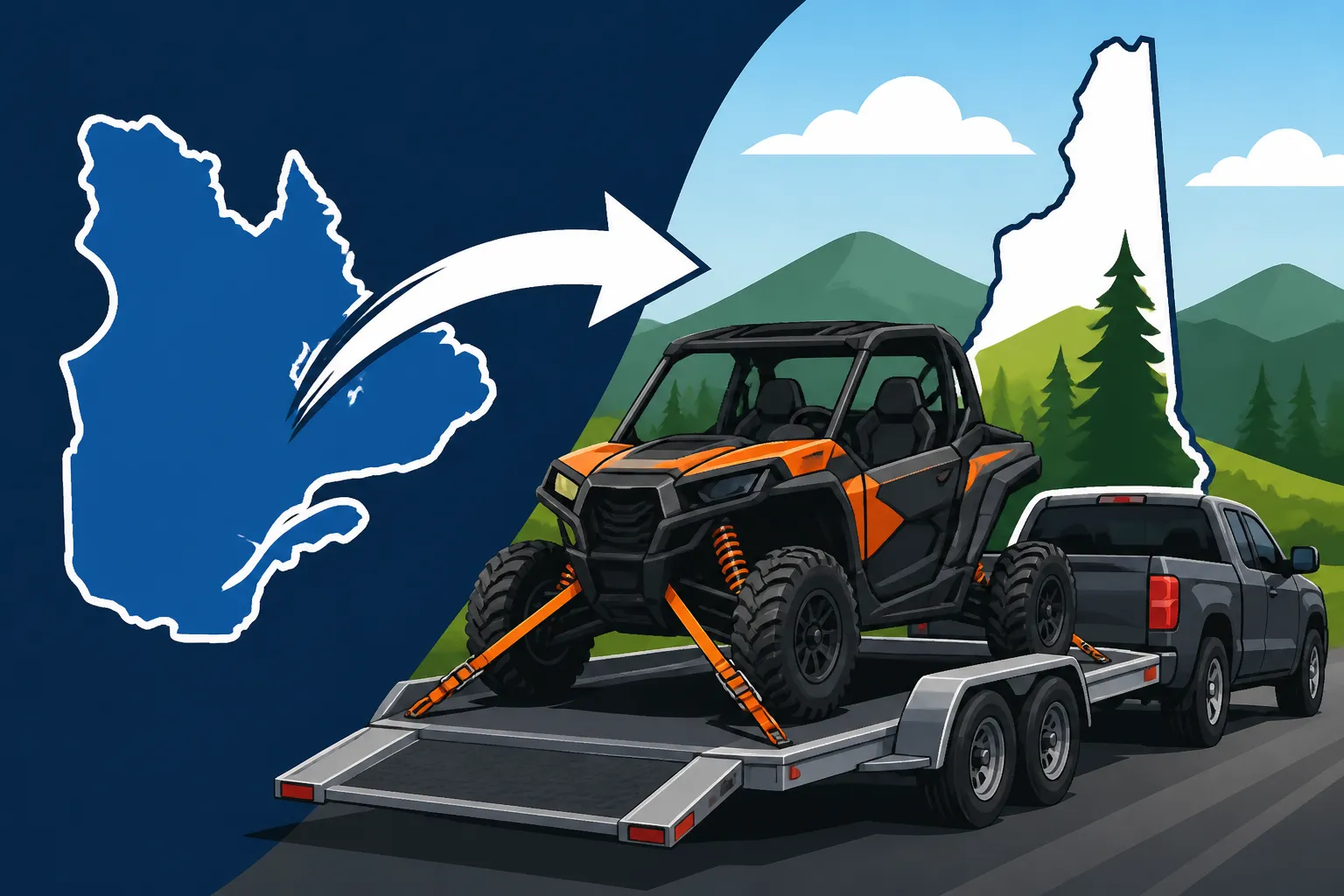
It's incredibly frustrating when you're planning an exciting ATV or UTV trip from Quebec down to the beautiful trails of New Hampshire, only to realize that your home province's registration might not be enough. You’ve got your machine registered, you’re ready to hit the dirt, and then you hear whispers that New Hampshire has its own rules. This guide is here to clear up that confusion, explaining exactly why your Quebec registration won't cut it, what you do need to bring a machine from Quebec across the border, and how to get it legally ready to explore the Granite State.
Why Your Quebec Registration Won't Cut It in New Hampshire
It’s a common misconception, and a truly understandable one, that if your Off-Highway Recreational Vehicle (OHRV) is legally registered in Quebec, it should be good to go anywhere. After all, you’ve paid your dues, you have your plates, and you're good to ride back home. However, when it comes to New Hampshire, the rules are distinctly different, and unfortunately, your Quebec registration won't be honored on New Hampshire's public OHRV trails, roads, or frozen bodies of water. This isn't out of animosity or a desire to make things difficult; it's simply how the state's OHRV funding and trail system are structured.
New Hampshire operates on a self-funded model where OHRV registration fees directly contribute to the maintenance, expansion, and administration of its extensive trail network. Every dollar from a registration helps fund trail grants for local clubs, pays for signage, bridge repairs, and the dedicated efforts of volunteers who keep the trails rideable. Because Quebec’s registration system contributes to their trail infrastructure, not New Hampshire’s, the Granite State requires all OHRVs operating on its public lands to be registered within its system. It’s a way of ensuring that everyone who benefits from the trails contributes to their upkeep. Think of it like paying a toll – you pay to use the road, regardless of where your car is registered.
This can feel like an extra hurdle, especially when you’re just visiting for a few days, but it’s a non-negotiable aspect of riding legally in New Hampshire. You might encounter an enforcement officer on the trail, and without a valid New Hampshire OHRV registration decal displayed, you could face fines and have your riding day cut short. Many riders from neighboring states like Vermont or Maine face the same reality; a [Why New Hampshire Honors No Neighbor's Registration] is a common and necessary piece of information for all visitors. The bottom line is, if you plan to leave your own private property and ride on any public or club trail in New Hampshire, you'll need to obtain a New Hampshire OHRV registration for your machine.
What You'll Need to Register Your Quebec Machine in New Hampshire
Now that we understand why you need a New Hampshire registration, let's talk about how to get one for your machine that hails from Quebec. The process isn't overly complicated, but it does require some specific documentation and attention to detail. The good news is that New Hampshire doesn't issue titles for OHRVs, which can actually simplify things a bit compared to other states that might require transferring a foreign title.
Proof of Ownership for Your Quebec OHRV
This is where many out-of-province riders sometimes hit a snag because they're used to a different system. While Quebec might have its own proof of ownership documents or even a form of vehicle registration that serves as ownership, New Hampshire needs to verify that the person registering the OHRV is indeed its rightful owner. Since New Hampshire doesn't issue OHRV titles, the state relies on other documents to establish ownership.
What does this mean for your Quebec machine? You'll need to bring an original document that clearly links you to the OHRV. The most common and accepted forms of proof of ownership include:
- Your Quebec Registration: Even though it's not valid for riding in New Hampshire, your current Quebec registration acts as excellent proof that you own the machine. It typically lists your name and the OHRV's Vehicle Identification Number (VIN), which is crucial for the New Hampshire application.
- A Bill of Sale: If you purchased the OHRV recently, especially from a private seller, a detailed bill of sale is perfect. This document should include the seller's name and signature, your name, the date of sale, the purchase price, and most importantly, the OHRV's VIN, make, model, and year. You can find generic templates for these online, and a tool like LawDepot can help you create a robust bill of sale if you ever need one for a private transaction. Having a proper bill of sale is important, especially when navigating [New Hampshire ATV Bill of Sale Requirements].
- Manufacturer's Statement of Origin (MSO) or Certificate of Origin (COO): If your machine is brand new and you're its first owner, the MSO or COO is the definitive proof of ownership.
- Sales Invoice: For machines purchased from a dealer, the original sales invoice will often suffice, provided it contains all the necessary OHRV and owner information.
Make sure these documents are originals or certified copies. A simple photograph on your phone won't cut it. The clearer the chain of ownership, the smoother your registration process will be. If you bought your machine a long time ago and your original proof of ownership is lost, you might need to contact the Quebec authorities or the original seller for assistance in obtaining duplicate documents.
Completing the New Hampshire OHRV Registration Application
Once you have your proof of ownership sorted, the next step is to fill out the New Hampshire OHRV Registration Application. This form is straightforward and collects all the necessary information about you and your OHRV. You'll need to provide:
- Your full name and address.
- The OHRV's make, model, year, and color.
- The Vehicle Identification Number (VIN). This is critical and must be accurate. Double-check it against your machine and your ownership documents.
- Your date of birth.
- Information regarding whether you are a New Hampshire resident or a non-resident.
- Details about whether you are a member of an approved New Hampshire OHRV club (more on why this matters in a moment).
You can usually pick up these forms at authorized registration agents, local town clerks, or sometimes download a printable version from the New Hampshire Fish and Game Department website. It's always a good idea to fill out as much as you can beforehand to save time at the counter. Understanding [The New Hampshire OHRV Registration Application] can help you prepare.
Paying the Fees for Your New Hampshire Registration
Ah, the cost. No one loves paying fees, but remember, this is what keeps the trails open and maintained for all of us to enjoy. The cost of registering your OHRV in New Hampshire will depend on a few factors:
- Residency: As a visitor from Quebec, you'll be paying the non-resident rate.
- Machine Type: Trail bikes, ATVs, UTVs (side-by-sides), and snowmobiles often have different fee structures. Generally, snowmobiles tend to be a bit more expensive due to their specific trail grooming needs.
- Club Membership: This is a big one for non-residents! New Hampshire offers a significant discount on OHRV registration fees if you are a member of an approved New Hampshire OHRV club. For many Quebec riders who plan to visit frequently, joining a club is a no-brainer because the savings often outweigh the cost of annual club dues. You’ll need to present proof of membership (a membership card or letter) when you register to get the discount.
While I can't give you exact figures, know that the non-resident rate without club membership is higher than if you join a club. For example, if you're riding an ATV or UTV, the non-resident non-member rate will be the highest tier. By becoming a club member, you can often save a significant amount, making it a very appealing option for frequent visitors. You can delve into the specifics of [New Hampshire OHRV Registration Cost] and [What a Nonresident Pays in New Hampshire] for more detailed current information. It’s worth doing the math to see if joining a club makes financial sense for your riding habits.
Where and How to Get Your New Hampshire Registration
Once you have your documents in order and the application filled out, it's time to physically get that coveted New Hampshire registration and those bright new decals. You have several options, each with its own advantages.
Options for Registration
Choosing where to register depends on your location and preferences.
- New Hampshire Powersports Dealers: Many authorized powersports dealers in New Hampshire can process OHRV registrations on the spot. This is incredibly convenient, especially if you've just purchased a machine from them or are visiting a region with a prominent dealer. They are familiar with the paperwork and can often guide you through the process quickly.
- New Hampshire Town Clerks: Many town clerks across New Hampshire are authorized to issue OHRV registrations. If you're staying in a town with a clerk's office, this can be a great option. Call ahead to confirm their hours and that they handle OHRV registrations, as some smaller towns might have limited services. Learning about [Registering at a New Hampshire Town Clerk] can help you understand this avenue.
- New Hampshire Fish and Game Department: The ultimate authority for OHRV registrations, the Fish and Game Department headquarters or regional offices can also process registrations. While less common for walk-in visitors compared to dealers or town clerks, they are always an option if you prefer to go directly to the source.
- Online Registration: New Hampshire does offer online renewal for existing registrations. For first-time registrations, or if you're bringing an out-of-province machine, you generally need to go in person for the initial setup to verify ownership documents. However, once you have that first registration, renewals can often be done digitally, which is a fantastic convenience for repeat visitors.
No matter where you choose to register, remember to bring all your original proof of ownership documents, your completed application, and your method of payment.
The Ten-Day Nonresident Registration Option
For Quebec riders who are just planning a short, one-time visit and don't want to commit to an annual registration or club membership, New Hampshire offers a special "Ten-Day Nonresident OHRV Registration." This option can seem very appealing, but it comes with specific limitations you need to be aware of:
- Wheeled Vehicles Only: This ten-day registration is only available for wheeled OHRVs (ATVs and UTVs). It cannot be used for snowmobiles. This is a crucial distinction, especially if you're thinking of a winter visit. You can read more about [Why the Ten-Day Is Wheeled Vehicles Only].
- Limited Season: The ten-day registration is generally valid only during the wheeled OHRV season, which typically runs from May through October. If you're visiting outside these months, this option won't work for you.
- One Per Machine Per Season: You can only purchase one ten-day registration per machine per season. This means if you visit in June for a few days and use the ten-day pass, you can't buy another one for the same machine if you decide to come back in September. For frequent visitors, the annual registration or a club membership quickly becomes more cost-effective.
- Where to Purchase: Not all registration agents sell the ten-day pass. You might need to check with specific powersports dealers or the Fish and Game Department directly.
For detailed information on this short-term solution, check out [New Hampshire's Ten-Day Nonresident Registration]. It's a useful option for a quick trip, but if you envision multiple visits, an annual registration is usually the better value.
Preparing Your Machine for New Hampshire Trails
Getting your OHRV registered is a significant step, but there are a couple more things to consider before you truly hit the trails with your Quebec machine in New Hampshire.
Decals and Certificates
Once your registration is processed, you'll receive your New Hampshire OHRV registration certificate and two decals. These aren't just pieces of paper and stickers; they are proof that your machine is legally allowed on the trails.
- Decal Placement: The two decals must be clearly displayed on your OHRV. Typically, one goes on the front of the machine and one on the rear, in a location that is visible and not easily obscured by mud or brush. The exact location can vary slightly depending on your machine type (ATV vs. UTV), but the key is visibility. For precise instructions, refer to [New Hampshire OHRV Decal Placement].
- Certificate in Hand: Your registration certificate must be carried with you whenever you are operating the OHRV off your own property. This means having it on your person or in a secure, accessible compartment on your machine. If a conservation officer stops you, they will ask to see it. While it might be tempting to leave it at the cabin, having it readily available is essential. Keep it protected from the elements! [New Hampshire OHRV Decals and the Certificate] explains this more fully.
Safety and Equipment Considerations
Beyond registration, New Hampshire has specific rules regarding OHRV operation and equipment that apply to everyone, including visitors from Quebec. While we won't go into exhaustive detail here, it's worth a quick review to ensure your machine and your riding habits comply.
- Helmets: All riders and passengers under the age of 18 are required to wear a helmet. While adults 18 and over are generally exempt from the helmet law on OHRVs, it's always a good idea to wear one for your safety. [New Hampshire Helmet Law for OHRV Riders] provides all the specifics.
- Spark Arrestor: All OHRVs must be equipped with a U.S. Forest Service approved spark arrestor. This is a critical safety feature to prevent wildfires, especially during dry conditions.
- Sound Limits: New Hampshire has a strict sound limit for OHRVs, typically 96 decibels. Aftermarket exhaust systems are often a culprit here. If your machine is particularly loud, you might want to check it. [New Hampshire's OHRV Decibel Limit] explains these regulations further.
- Other Equipment: Lights for night riding, proper brakes, and a working muffler are also standard requirements.
Always check the latest regulations from the New Hampshire Fish and Game Department before your trip. Being prepared for these details ensures a safe and enjoyable experience for everyone on the trails.
Here's a quick comparison of the key differences for your Quebec OHRV:
| Feature | Quebec Registration | New Hampshire Registration (for OHRVs) |
|---|---|---|
| Validity in NH | Not valid | Required |
| Primary Purpose | Road/trail legality in Quebec, ownership proof | Trail access in NH, contributes to trail maintenance |
| Proof of Ownership | Serves as ownership proof | Bill of Sale, MSO, or Quebec Reg (as proof) |
| Title Issued | Varies, often similar to a vehicle | No separate title issued for OHRVs |
| Contribution to Trails | Quebec trails | New Hampshire trails |
| Cost Consideration | Paid in Quebec | Separate fees, potential club discount |
| Decals/Plates | Quebec plates/stickers | New Hampshire decals (2) required |
| Short-Term Option | N/A | Ten-Day Nonresident (wheeled only, limited season) |
Bringing your OHRV from Quebec to New Hampshire to ride the trails can be an incredible experience. The Granite State offers some truly stunning scenery and diverse riding opportunities, from the vast interconnected trails of Ride the Wilds to the challenging terrain of Jericho Mountain State Park. While the extra step of registering your machine in New Hampshire might seem like a hassle at first, it's a necessary part of respecting local regulations and contributing to the upkeep of the trails we all love to ride. So, gather your documents, get that New Hampshire registration, and get ready to enjoy the ride!
Disclaimer
This article is for general informational purposes only and does not constitute professional advice. Laws, prices and regulations vary by location and change over time. Consult a qualified professional for guidance on your specific situation.