Riding a Frozen Pond and Needing a Registration
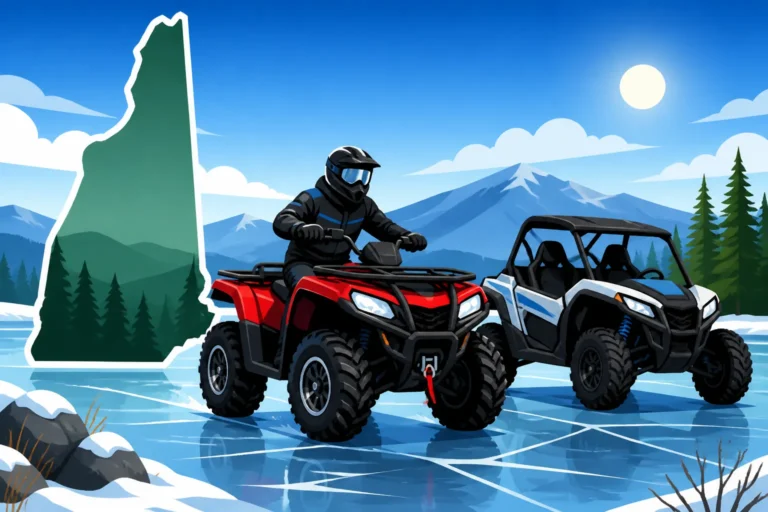
It's a classic New Hampshire winter scene: the lakes and ponds freeze over, blanketed in snow, and suddenly, that expanse of water that was off-limits for your OHRV in summer becomes a tempting, wide-open playground. But before you throttle up and carve tracks across a frozen lake, there's a crucial question many riders grapple with: do you actually need your OHRV registered to ride on a frozen pond? This guide will cut through the ice of confusion and explain New Hampshire's regulations regarding OHRV registration on frozen bodies of water, ensuring you stay legal and safe.
The Icy Truth: New Hampshire OHRV Registration on Frozen Water
The allure of a frozen lake or pond in New Hampshire is undeniable for OHRV enthusiasts. It offers vast, open spaces, a different kind of terrain, and a unique winter riding experience. However, the idea that a frozen body of water is somehow "different" from a land trail in terms of registration requirements is a common misconception that can lead to unexpected trouble. New Hampshire law is quite clear, and it largely treats frozen water as simply another surface where OHRV operation may be regulated.
When Does the Law Consider a Frozen Pond a "Trail"?
Here's where it gets a little nuanced but generally straightforward: if that frozen pond or lake is accessible from a public landing, connects to a designated OHRV or snowmobile trail system, or is generally used by the public for recreation, it's almost certainly considered part of the regulated riding environment. Think of it this way: the state's interest is in safety and resource management, whether that resource is solid ground or a frozen liquid. Just because it's ice doesn't mean it's a free-for-all. Many popular lakes become vital corridors in winter, linking trails and allowing riders to travel between towns or reach remote areas. These aren't private playgrounds; they are de facto public ways, albeit temporarily frozen. The moment you leave your own private property, even if it's onto what seems like open ice, the registration requirements typically kick in. This is directly related to the general rule about [When New Hampshire Registration Applies].
For example, imagine you're near Lake Winnipesaukee in the winter. While parts of the lake might be less trafficked, key sections are often marked as official snowmobile trails, and OHRVs often share these corridors. If you access that ice from a public boat launch or a town-maintained entry point, it's not considered "unregulated." It's just another part of the system where everyone needs to be accounted for. The state's Bureau of Trails, in conjunction with local clubs, often works to designate and maintain these frozen corridors, further solidifying their status as regulated areas.
Why a Registration is Often Required Even on Ice
The primary reason you need a registration to ride on most frozen bodies of water in New Hampshire boils down to funding, identification, and safety. Every OHRV registration fee contributes to the maintenance, development, and enforcement of the trail system – and in winter, that includes those frozen waterways that become part of the network. Without registrations, there would be no funds for trail grooming, bridge repairs, signage, or even the enforcement that keeps everyone safe. An unregistered machine on public ice makes it harder for law enforcement to identify operators in case of an accident or violation.
Consider the practical side: an OHRV without current decals is indistinguishable from a stolen machine or one operated by someone who hasn't paid their fair share to support the trails. The registration process provides a paper trail for ownership and ensures that the machine meets basic requirements for operation. It's a fundamental aspect of responsible riding in New Hampshire, extending to all public riding areas, including ice. This is precisely why the state enacted specific provisions like [New Hampshire OHRV Registration on a Frozen Pond]. It's not about singling out ice riders; it's about ensuring consistency across all riding surfaces that aren't exclusively your private land.
Understanding the Exceptions and Nuances
While the general rule is to register your OHRV for riding on frozen ponds and lakes, there are always those specific scenarios that make you wonder. New Hampshire law tries to cover most bases, but understanding the nuances can save you a headache (and a fine).
Riding on Your Own Property's Frozen Water
Here's the narrow window where you might not need a registration: if the frozen body of water is entirely contained within your private property, and you never access it from or venture onto any public land or trail, then New Hampshire's general rule about [Leaving Your Own Property in New Hampshire] would apply. This means if you have a pond that is completely surrounded by land you own, and you can ride your OHRV directly from your house to that pond without touching any road, public access point, or shared trail, then you are typically exempt from registration requirements for that specific activity.
However, this exception is far more limited than many people realize. How many of us own an entire lake? Or a pond that has no inlets or outlets connecting to other waterways? Most natural ponds and lakes, even if they border private land, often have some form of public access, whether it's a small town landing, a fishing access point, or a connection to a stream that eventually leads to public waters. The moment you leave the clear boundaries of your private land – even if it's just a few feet onto what you think is still "your" pond – the state's registration requirements can apply. It's similar to the concept of [Riding Your Own Back Field Without a Registration]; as long as you're strictly on your land, it's generally fine. But stepping off your boundary changes everything. When in doubt, it's always safer to register.
The Role of Designated Trails and Public Access
For larger lakes and ponds, especially those in the northern part of the state, these frozen expanses become crucial arteries for the OHRV and snowmobile trail networks. Local clubs, in cooperation with the Bureau of Trails and landowners, often groom and mark trails directly across these frozen surfaces. When you see trail markers, signs, or even just well-worn tracks on a frozen lake, it’s a strong indication that this is a designated riding area. And designated riding areas require registration. These aren't just for snowmobiles; OHRVs frequently share these corridors, especially early and late in the season. Familiarizing yourself with [New Hampshire Rules for Riding a Snowmobile Trail] can offer insight, as many of these principles apply to shared winter corridors.
These areas are actively managed. Clubs work to ensure safety by monitoring ice conditions (though individual rider responsibility remains paramount), marking hazards, and providing signage. Your registration fee directly supports these efforts. So, if you're planning a multi-day trip on the Ride the Wilds system in Coos County during winter, and your route crosses frozen lakes that connect trail segments, you absolutely need your machine registered. These trails are explicitly designed to link towns and services, and the frozen lakes are integral parts of that network.
Practical Considerations and What to Do
Navigating the rules for riding on frozen water might seem like a lot, but a little preparation goes a long way. Being informed and prepared ensures your winter riding adventures in New Hampshire are both enjoyable and legal.
Before You Ride: Checking Status and Safety
First and foremost, never compromise on safety. Riding on frozen bodies of water comes with inherent risks. Always, always check ice thickness and local conditions before venturing out. The New Hampshire Fish and Game Department, along with local fire departments and snowmobile clubs, often provide valuable information on ice conditions. Remember, just because one section of a pond is safe doesn't mean the entire surface is. Springs, currents, and varying depths can create dangerous thin spots. Reading up on [Ice Thickness Before You Ride] is non-negotiable.
Beyond safety, confirm the legal status of the area you intend to ride. Is it part of a designated trail? Are there local ordinances that might affect access? Local OHRV and snowmobile clubs are fantastic resources for current trail conditions and specific rules for certain lakes or ponds. Their websites, Facebook pages, or even a quick call can provide up-to-the-minute information. If you're unsure, assume registration is required and proceed with caution.
Ensuring Your Machine is Registered
The simplest way to avoid issues is to ensure your OHRV is properly registered for the New Hampshire season, which runs from May 1st to April 30th. If you're riding in winter, you'll need a current registration. Even if you're buying a used machine mid-season specifically for ice riding, you'll need to get it registered promptly. For details on how to get this done, check out [Registering an OHRV in New Hampshire] or explore options like [Where to Register an OHRV in New Hampshire], which includes registering online, at a local town clerk, or through a powersports dealer.
When buying or selling a machine, particularly in a private sale, having proper documentation is key. While New Hampshire doesn't title OHRVs, a solid bill of sale is essential for proving ownership when you go to register. Tools from services like LawDepot can help you generate a professional-looking bill of sale quickly, ensuring you have the necessary proof for the registration agent. If you're bringing a machine in from out-of-state, be aware that your home state's registration is almost never honored in New Hampshire; you'll need a New Hampshire registration to ride here. This applies just as much to frozen ponds as it does to land trails. If you're registering mid-season, such as in the heart of winter, the process remains the same, but understanding [Registering an OHRV Mid-Season in New Hampshire] can clarify any specific concerns.
What an Officer Looks For
If you're stopped by a New Hampshire Fish and Game Conservation Officer or local law enforcement while riding on a frozen pond or lake, they'll be looking for the same things they would on a land trail. This primarily includes:
- Current Registration Decals: Your OHRV must display the current year's decals clearly visible on both sides of the machine. These are your proof of registration.
- Registration Certificate: You need to carry your physical registration certificate with you. This document provides all the details about your machine and your registration.
- Safety Certificate (if applicable): If you're a younger rider or don't hold a valid driver's license, you'll need an OHRV safety certificate.
- Compliance with all other OHRV laws: This includes age restrictions, helmet requirements (for minors), and adherence to speed limits or noise restrictions.
Failing to have a current registration, or neglecting to display your decals and carry your certificate, can result in a fine. Trust me, it’s not the kind of souvenir you want from a winter ride. The consequences for riding an unregistered machine can be significant, as detailed in [New Hampshire Fines for an Unregistered OHRV]. Always make sure your [New Hampshire OHRV Decals and the Certificate] are in order before you head out.
Here's a quick summary of what you need to ride on New Hampshire's frozen waterways:
| Requirement | Description | Applies to Frozen Ponds/Lakes? |
|---|---|---|
| OHRV Registration | Annual registration with New Hampshire Fish and Game. Displays current decals. | YES (unless entirely private) |
| Registration Certificate | Physical document carried on person or machine. | YES |
| Safety Certificate | Required for riders under 18 without a valid driver's license, or any unlicensed adult rider. | YES |
| Insurance | Not legally required, but highly recommended for protection. | NO (but recommended) |
| Helmet | Required for all riders under 18, and passengers of any age. Adults 18+ may choose not to wear one. | YES (for specified ages) |
| Spark Arrester | Required for all OHRVs to prevent trail fires (even on snow/ice to prevent other hazards). | YES |
| Ice Safety Knowledge | Critical awareness of ice thickness, currents, and overall conditions. | YES (Critical for safety) |
By understanding these requirements and taking the necessary steps, you can enjoy the unique beauty and thrill of riding New Hampshire's frozen ponds and lakes with peace of mind.
Disclaimer
This article is for general informational purposes only and does not constitute professional advice. Laws, prices and regulations vary by location and change over time. Consult a qualified professional for guidance on your specific situation.