Where New Hampshire OHRV Fees Go
New Hampshire OHRV registration fees fund trail maintenance, safety programs, and the Bureau of Trails network operations.
Start here, or nothing else is legal.
Resident registration, titling and renewal, and public-use versus private-land fees — plus the age and safety-course rules that decide who may ride.
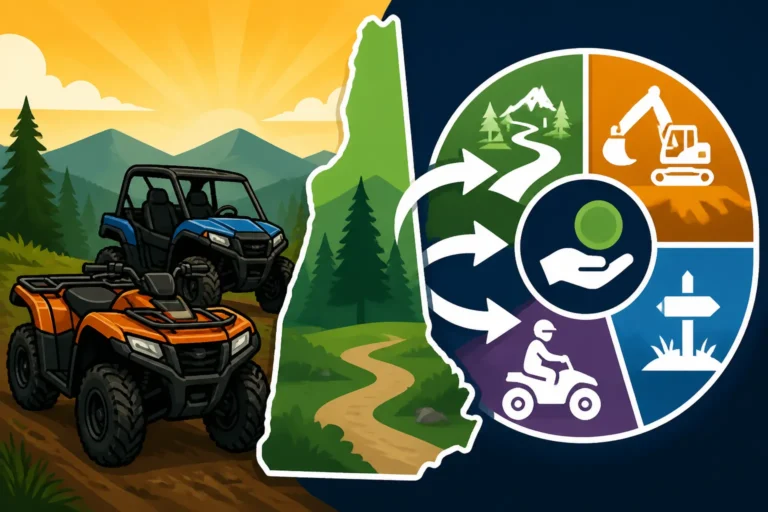
New Hampshire OHRV registration fees fund trail maintenance, safety programs, and the Bureau of Trails network operations.
New Hampshire side-by-side registration laws classify utility terrain vehicles as Off-Highway Recreational Vehicles with standard fees.
New Hampshire ownership transfer laws explain how heirs legally register an inherited off highway recreational vehicle from an estate.
Selling an OHRV in New Hampshire requires using registration certificates and detailed bills of sale instead of formal vehicle titles.

Buying a used ATV or UTV in New Hampshire involves comparing licensed dealers and private sellers, inspecting machines, and registering.
The New Hampshire OHRV registration application explains owner details, machine types, and residency statuses needed to legally ride.

New Hampshire OHRV registration at a powersports dealer lets ATV and UTV buyers avoid town clerk offices and handle paperwork on site.
New Hampshire town clerk OHRV registrations involve specific rules, processing paperwork, and collecting fees for state residents.
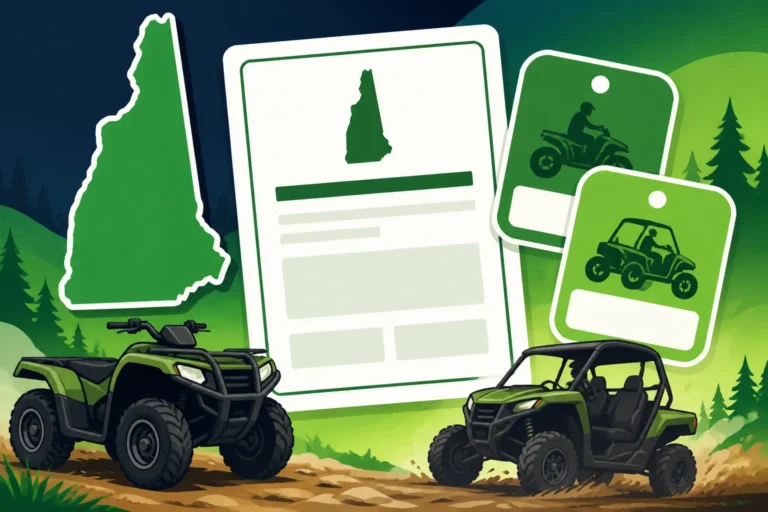
New Hampshire off-highway recreational vehicle registration documents include a printed certificate and two decals for legal trail operation.

New Hampshire OHRV registration requirements apply on frozen lakes, ensuring state enforcement and safety across all public recreational spaces.