Bringing a Machine From Maine
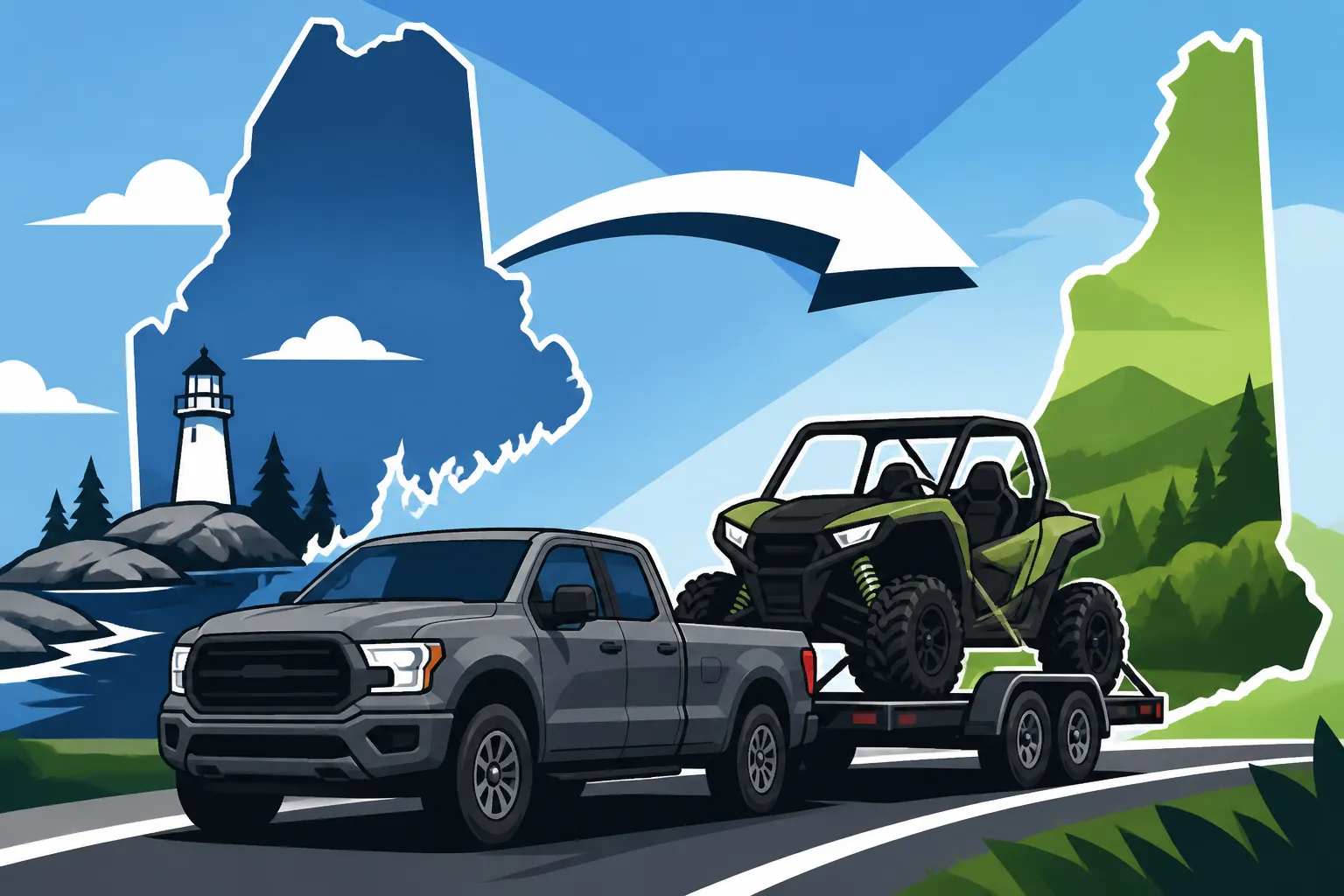
You've just moved to the beautiful Granite State, or maybe you're a seasoned rider from down east in Maine planning a regular escape to New Hampshire's expansive trail network. Either way, you're probably scratching your head, wondering why your perfectly valid Maine OHRV registration doesn't seem to cut it here. It's a common frustration, and frankly, it feels a bit redundant, doesn't it? This guide will clear up the confusion and walk you through the straightforward process of getting your ATV or UTV registered for New Hampshire's incredible trails, even if it's already registered in Maine.
Why Your Maine Registration Doesn't Translate to New Hampshire Trails
It’s easy to assume that if your machine is legally registered in one New England state, it should be good to go in another, especially with how interconnected our regions are. Unfortunately, when it comes to Off-Highway Recreational Vehicles (OHRVs) like ATVs and UTVs, that's rarely the case between states, and New Hampshire is no exception. While the spirit of regional camaraderie is strong, each state maintains its own distinct system for managing and funding its trail infrastructure, and that means separate registrations.
The Granite State's Independent Approach to OHRV Registration
New Hampshire, much like its neighbor Maine, operates on the principle that if you're going to ride on its trails, you need to contribute to the upkeep and management of those trails through its own registration system. There's no grand reciprocity agreement between New Hampshire and Maine, or most other states for that matter, when it comes to OHRV registrations. This might seem like an unnecessary hurdle, especially when you're already paying to ride in your home state. However, it's a critical component of how New Hampshire manages to offer such an extensive and well-maintained network of trails.
Think about it this way: your Maine registration helps maintain the trails in Maine. While those trails are fantastic, they don't cover the operating costs, mapping, signage, and maintenance required for the thousands of miles of OHRV trails found here in New Hampshire. Without a dedicated funding stream from all riders using the New Hampshire system, our trails simply couldn't thrive as they do. It's a system designed to be fair to everyone who enjoys our unique riding experience. If you’re a rider crossing state lines, it's important to understand [Why New Hampshire Honors No Neighbor's Registration].
Funding Our Trails, One New Hampshire Decal at a Time
Every dollar collected from OHRV registrations in New Hampshire is earmarked for the very trails you'll be riding. These funds go directly to the New Hampshire Fish and Game Department, which in turn allocates grants to local OHRV clubs. These clubs are the backbone of our trail system, volunteering countless hours to clear brush, repair washouts, build bridges, and place essential signage.
When you purchase a New Hampshire OHRV registration, you're not just getting a decal for your machine; you're directly investing in the future of the trails you love to ride. It ensures that the routes remain open, safe, and enjoyable for everyone. This localized funding model means that the state cannot simply accept a Maine registration, because that fee wouldn't flow into the New Hampshire trail system. It's a closed-loop system designed to make sure the money stays where the boots—or tires—are on the ground. Understanding [Where New Hampshire OHRV Fees Go] and [How New Hampshire Registration Money Funds Trails] really highlights the importance of this local contribution.
What You'll Need to Register Your Maine Machine in New Hampshire
Alright, so you understand why you need to register, now let's talk about the how. Gathering the right documents before you head to the registration agent can save you a ton of time and prevent frustrating second trips. Many riders arrive eager to get their decals, only to realize they've forgotten a crucial piece of paperwork. Don't be that rider!
Essential Documents to Bring to the Counter
When you're bringing your machine over from Maine, the most important thing you need to prove is ownership. Since New Hampshire doesn't typically issue titles for OHRVs, they rely heavily on other forms of documentation. This is where your Maine paperwork comes in handy.
You'll generally need:
- Proof of Ownership: This is paramount. If Maine issues a title for your specific ATV or UTV, bring that. If not, a clear and legible bill of sale from when you purchased the machine, along with its previous registration from Maine, is usually sufficient. Make sure the bill of sale includes the VIN. Without a title, the bill of sale is your primary proof. While New Hampshire doesn't title OHRVs, understanding [Do You Need a Title for an ATV in New Hampshire?] can help clarify expectations.
- Proof of Identity: A valid driver's license or state-issued ID for the person registering the machine.
- Proof of Residency (if applicable): If you're a New Hampshire resident and want to pay the resident rate, you'll need a New Hampshire driver's license or other proof of your state residency.
- OHRV Information: You'll need the make, model, year, and Vehicle Identification Number (VIN) of your machine. This information is usually on the machine itself and should match your ownership documents.
Having these documents neatly organized will make the registration process smooth and quick. The agent will typically fill out the [The New Hampshire OHRV Registration Application] with your information.
Navigating the Bill of Sale for Private Sales
If you purchased your ATV or UTV privately in Maine, especially if it was an older machine that might not have had a formal title, a well-documented bill of sale is your best friend. This document proves the change of ownership from the previous owner to you. A good bill of sale should include:
- The full names and addresses of both the buyer and seller.
- The date of sale.
- A clear description of the OHRV, including its make, model, year, and most importantly, the VIN.
- The agreed-upon purchase price.
- Signatures of both the buyer and seller.
Sometimes, when buying privately, people scribble a quick note on a piece of paper. While this might suffice for Maine, for the most straightforward New Hampshire registration, a more formal and comprehensive bill of sale is advisable. If you're unsure how to draft one, or want to ensure it covers all the bases, resources like LawDepot offer customizable bill of sale templates that can help you create a professional document. Using a reliable template ensures you haven't missed any critical information, which can prevent headaches down the road. Remember, [New Hampshire ATV Bill of Sale Requirements] are fairly standard, but a complete document leaves no room for doubt.
Here’s a quick overview of what you’ll likely need:
| Document Type | Purpose | Notes |
|---|---|---|
| Proof of Ownership | Establishes you as the legal owner | Title (if issued by Maine), Bill of Sale (detailed), Previous Maine Registration. |
| Personal ID | Verifies your identity | Valid Driver's License or State ID. |
| Residency Proof | Determines resident vs. nonresident rate | NH Driver's License or utility bill with NH address (if claiming residency). |
| OHRV Details | Identifies the machine being registered | Make, Model, Year, VIN (often found on the machine's frame or previous registration/bill of sale). |
| Club Membership ID | Qualifies for discounted registration rate | Current membership card or proof of enrollment for an approved NH OHRV club (if applicable). |
The New Hampshire Registration Process for Out-of-State Machines
Once you have all your ducks in a row with the paperwork, the actual registration process in New Hampshire is quite simple. You have a few options for where to complete the process, each with its own conveniences.
Where to Go and What to Expect
New Hampshire offers several avenues for registering your OHRV:
- Online: This is often the most convenient if you're renewing or have a straightforward case. However, for a first-time registration of an out-of-state machine, especially if you're dealing with a bill of sale as primary ownership proof, an in-person visit is usually best to ensure all documents are properly reviewed.
- Town Clerks: Many New Hampshire town clerks are authorized agents for OHRV registrations. This can be a fantastic option, especially if you live in a town that offers this service, as it means local convenience. You can walk in, present your documents, pay the fee, and often leave with your decals and certificate on the same visit. It's always a good idea to call ahead to your specific town clerk's office to confirm their hours and if they handle OHRV registrations. For details, see [Registering at a New Hampshire Town Clerk].
- Powersports Dealers: Many powersports dealerships in New Hampshire are also authorized registration agents. If you happen to be buying accessories or getting service done, this can be a one-stop shop. They are very familiar with the process and can often expedite things. Check with your local dealer to see if they offer this service. More information can be found on [Registering at a Powersports Dealer].
No matter where you go, the process involves filling out the necessary information (or having the agent do so based on your documents), presenting your ownership proof, paying the applicable fee, and then receiving your registration certificate and decals. It's usually a quick and efficient transaction once you're at the counter. Knowing [Where to Register an OHRV in New Hampshire] is the first step to a smooth experience.
Considering Club Membership for Savings
Here's a tip that can save you a bit of money and connect you with the local riding community: join an approved New Hampshire OHRV club! New Hampshire offers a significant discount on annual OHRV registrations for members of recognized clubs. This isn't just about saving money, though that's a nice perk. It's also about supporting the very clubs that maintain the trails you'll be enjoying.
The cost of an annual membership in most clubs is often less than, or very close to, the amount you save on registration. So, not only do you get a discount, but you also become part of a community that actively preserves and enhances our state's riding opportunities. When you go to register, simply present proof of your current club membership (a membership card or a receipt will usually suffice) to receive the discounted rate. This strategy is a win-win for riders and trails alike. Discover [Why Club Membership Saves $30 in New Hampshire] and learn about [The New Hampshire Club Registration Rate].
The Ten-Day Option for Occasional Visitors
For those from Maine who aren't planning frequent trips to New Hampshire but want to enjoy a specific riding weekend, there's a convenient "Ten-Day Nonresident Registration" option. This registration is specifically designed for nonresident visitors and covers your wheeled OHRV for a consecutive ten-day period. It's great if you're just popping over for a long weekend once or twice a season.
However, there are some important caveats: this ten-day registration is generally only available for wheeled vehicles (ATVs, UTVs, trail bikes, etc.), not snowmobiles. Also, you can only purchase one ten-day registration per machine per season. So, if you plan on multiple visits, an annual nonresident registration might actually be more cost-effective in the long run, especially if you factor in the club member discount. It's a fantastic option for a quick getaway, but plan your usage carefully. You can learn more about the [New Hampshire Ten-Day Registration Cost] and its limitations, like being restricted to [One Ten-Day Registration per Machine per Season].
Preparing Your Maine Machine for New Hampshire Trails
Once you've got your New Hampshire registration certificate and those fresh new decals, you're almost ready to hit the dirt! But there are a couple more practical steps and important rules to keep in mind to ensure a legal and enjoyable ride.
Decal Placement and What Your Certificate Means
When you receive your registration, you'll get a printed certificate and typically two decals. The certificate is your official proof of registration, and it's absolutely crucial that you carry it with you whenever you're operating your OHRV off your own property. Many riders keep it in a waterproof bag in a compartment on their machine or even a wallet, just in case a conservation officer asks to see it. Getting caught without it can lead to a roadside stop and potential fines, which nobody wants!
The decals are just as important for quick visual identification. You'll need to affix them clearly and visibly to your machine. For ATVs, these are usually placed on the front and rear of the machine, often on the fenders or other flat, visible surfaces. For UTVs, it's typically one on each side, or front and rear, depending on the machine's design and visibility. The key is that they should be easily seen by officials. Make sure the surface is clean and dry before applying them to ensure good adhesion, so they don't peel off mid-ride. Knowing [New Hampshire OHRV Decal Placement] will help you avoid any issues. The decals, along with your certificate, are your passport to our trails. Understanding [New Hampshire OHRV Decals and the Certificate] is key.
Safety First: NH's Rules You Need to Know
While this guide focuses on registration, it's vital to briefly touch on New Hampshire's safety regulations, as they apply to everyone riding our trails, including visitors from Maine. These rules are in place for everyone's safety and to protect our natural resources.
Key things to remember:
- Helmets: Riders and passengers under the age of 18 are required to wear a helmet. While adults 18 and over are not legally mandated to wear one in New Hampshire, it's always strongly recommended for your own protection. Check out [New Hampshire Helmet Law for OHRV Riders] for more.
- Age and Supervision: There are specific age requirements and supervision rules for younger riders on New Hampshire trails. Make sure any minors riding with you meet these requirements.
- Spark Arrestors: All OHRVs must be equipped with a U.S. Forest Service approved spark arrester to prevent wildfires. This is non-negotiable, especially during dry seasons.
- Sound Limits: New Hampshire has decibel limits for OHRVs. While most stock machines comply, aftermarket exhausts can sometimes push these limits. Be mindful of your machine's sound output. Learn more about [New Hampshire Sound Limit for OHRVs].
Always consult the official New Hampshire Fish and Game OHRV rules and regulations for the most current and comprehensive information. Being registered is one thing; riding responsibly and safely is another entirely. Following these rules ensures that our trails remain open and enjoyable for all.
Disclaimer
This article is for general informational purposes only and does not constitute professional advice. Laws, prices and regulations vary by location and change over time. Consult a qualified professional for guidance on your specific situation.