Why No Maine Registration Works in New Hampshire
A Maine registration may keep your ATV or UTV properly registered at home, but it does not automatically authorize you to ride New Hampshire trails. The two states’ registrations are not interchangeable. Here’s what that means for a Maine visitor, when you need a New Hampshire registration, and how to avoid reaching a trailhead only to find you’re not ready to ride.
The short answer: Maine registration does not replace New Hampshire registration
If you bring a Maine-registered ATV or UTV to ride in New Hampshire, plan on getting a New Hampshire OHRV registration before using trails where New Hampshire registration is required. New Hampshire does not treat a Maine registration as a substitute for its own. The same principle applies to machines registered in other neighboring states; having a valid home-state registration does not, by itself, give you permission to ride New Hampshire’s trail system.
That can surprise visitors. It feels reasonable to expect a registration issued by one state to be accepted in another, especially when the machine is properly registered and the rider is only visiting for a weekend. But registration rules are set by the state where you ride. New Hampshire’s requirements apply to visitors as well as residents.
This is about authorization to operate the machine in New Hampshire, not whether the Maine registration is valid at home. You may still need to keep your Maine registration current for riding in Maine or meeting requirements that apply to your machine there. A New Hampshire registration does not necessarily replace those home-state obligations either. Think of the registrations as separate requirements for separate places, not as one document that travels with you everywhere.
The distinction is important when planning a ride. If you are crossing from Maine into New Hampshire on a connected trail network, do not assume that a route, a club map, or a valid Maine decal means you can keep riding without meeting New Hampshire’s rules. Check the route and registration requirements before leaving. For the state’s broader visitor rules, see [New Hampshire Rules for a Visiting Rider]. For the Maine-specific registration question, Does New Hampshire Honor a Maine Registration? addresses the issue directly.
What a New Hampshire registration does for a visiting rider
New Hampshire registration is more than a state-issued sticker for your machine. On routes where registration is required, it is part of what makes your ride lawful and helps support the system of maintained trails. New Hampshire does not use a separate general trail pass in the way some riders might expect. In practice, the registration is a key part of your trail access. That is why a valid registration from another state does not simply transfer over. You can read more in Why New Hampshire Has No Separate Trail Pass and Why Your Registration Is the Access.
Registration does not mean that every trail, road, or parcel of land is open to you. It does not grant a right to cross private property, override a closure, or make a route legal if machines are not allowed there. You still need to follow posted signs, trail-width limits, seasonal restrictions, and any local rules that apply. A registration is one part of riding legally, not blanket permission to ride anywhere.
It also helps to separate registration from ownership paperwork. Riders sometimes assume that if they need a New Hampshire registration, the state must issue a title or replace the machine’s existing documents. Those are different issues. New Hampshire’s OHRV registration process is not the same as obtaining a title, and a registration does not prove every detail of ownership in the way a purchase document might. If you are bringing a machine bought in Maine or another state, ask the registration agent what proof they need for the application. The guide to Registering an Out-of-State Machine in New Hampshire explains the paperwork issue in more detail.
Before heading north, check that you can show the required registration documents and display the decals as directed. Keep the certificate with you while riding, and make sure the decals are attached to the machine in the correct locations. A registration that is in your truck or back at the motel may not be much help if an officer or agent needs to verify that the machine is registered. For document and decal details, see New Hampshire OHRV Registration Paperwork.
Which New Hampshire registration option fits your visit
Visitors generally need to decide between a registration covering a longer riding period and a short-term option, if the machine and trip qualify. The right choice depends on how often you expect to ride, what type of machine you have, when you plan to visit, and where you will buy the registration.
A longer registration for repeat or extended visits
If you make several trips to New Hampshire, stay for an extended period, or plan a substantial riding vacation, compare the annual registration option with the short-term option. The annual registration follows New Hampshire’s registration year rather than simply giving every rider twelve months from the day of purchase. That means timing matters: buying near the beginning of the registration cycle may provide a much longer riding window than buying near its end. Check the current cycle and expiration details before paying. New Hampshire’s May to April Registration Year explains why the calendar can affect your decision.
A longer registration may be simpler if you expect to return more than once, but do not choose it solely because you think the Maine registration can be ignored after purchase. Keep up with requirements in both states if you ride in both. The Maine registration and the New Hampshire registration serve different purposes.
A short-term option for a brief visit
A short-term New Hampshire registration may suit a visitor coming for a limited trip. Its availability and terms depend on the machine and current rules, so confirm that your ATV or UTV qualifies before relying on it. New Hampshire’s short-term option is for wheeled OHRVs; do not assume that a snowmobile can use the same option. The details are covered in The Ten-Day Option for a New Hampshire Visitor.
The important planning point is to get the correct registration for the machine you are actually bringing. If you have a side-by-side, trail bike, or other less common setup, explain that clearly to the registration agent rather than assuming the same category applies to every off-highway vehicle. For a wheeled machine, also verify how the short-term period works for your intended dates. Avoid waiting until the trailhead to find out that the registration type you expected is unavailable there.
Where to buy and what to bring
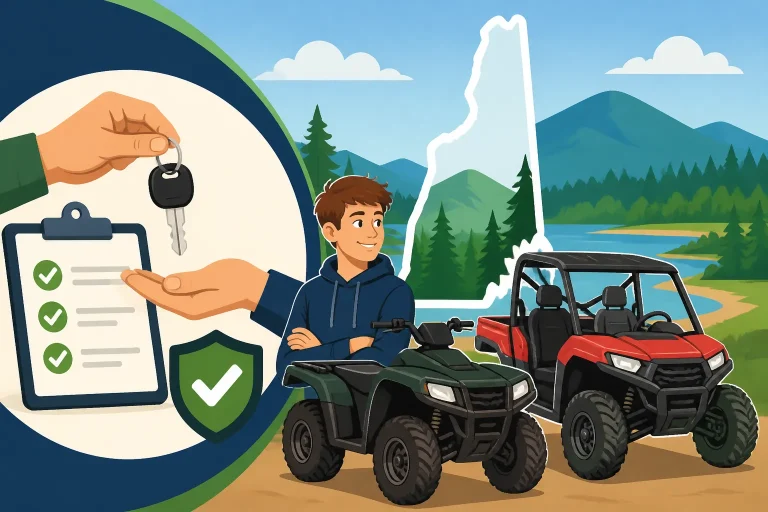
Registration is available through authorized New Hampshire agents. Depending on the circumstances, that may include certain town clerks or powersports dealers. Not every location necessarily handles every registration type, so call ahead and ask whether the agent can process a nonresident registration for your machine. Where to Buy a New Hampshire OHRV Registration can help you think through where to go.
Bring the information and proof the agent requests. That may include details identifying the machine, ownership or purchase documents, and information needed to complete the application. Requirements can depend on how you acquired the machine and what records you have. If you bought the ATV privately, for example, bring the documents you received from the seller and ask the agent what else is needed. The application overview is in New Hampshire OHRV Registration Paperwork.
| Your visit or machine situation | What to check before riding |
|---|---|
| A weekend trip on a Maine-registered ATV | Obtain the New Hampshire registration required for the route and machine |
| Several New Hampshire trips during the season | Compare the short-term option with a longer registration and check the expiration cycle |
| A side-by-side or other wheeled OHRV | Confirm the correct registration category and any applicable limits |
| A snowmobile trip | Do not assume the wheeled-vehicle short-term option applies |
| A machine recently purchased in Maine | Ask an authorized agent what ownership or purchase documents are needed |
| A ride that crosses state lines | Check each state’s registration rules and verify the legality of the full route |
The table is a planning aid, not a substitute for checking current requirements with an authorized agent or the appropriate state office. Registration choices, agent availability, and rules for particular machines can change.
Prepare before you cross into New Hampshire
A little preparation saves the most time when your machine is on the trailer and your group is ready to ride. Use this checklist before you leave Maine.
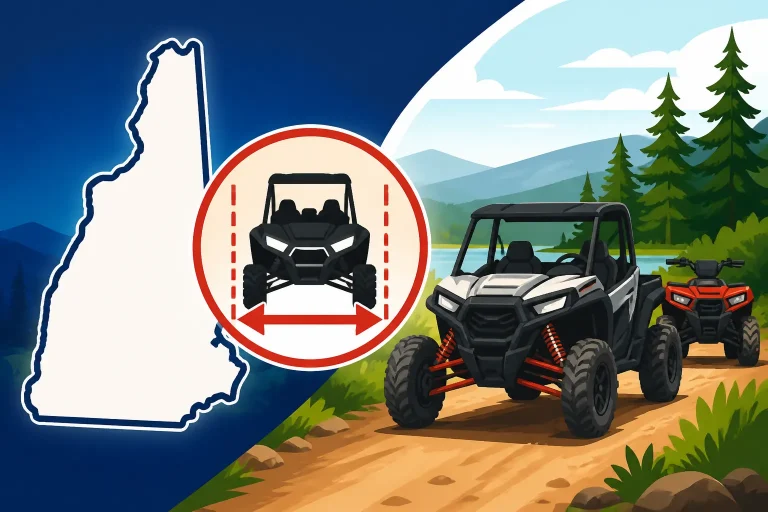
- Identify the machine and the route. Confirm whether you are bringing an ATV, UTV, trail bike, or another type of OHRV. Then check that the trails or corridors you plan to use allow that machine. A route that appears connected on a map may include a closure, a width restriction, a road segment with separate rules, or a section where your machine is not permitted.
- Choose the New Hampshire registration that matches your trip. Decide whether a short-term or longer registration makes sense, and confirm eligibility for your machine. Check the registration period and expiration information rather than assuming the sticker will cover a full year from the purchase date.
- Call the registration agent. Ask whether the agent can process nonresident registrations and what documents to bring. If the machine was bought privately or its paperwork is incomplete, explain that before making the trip.
- Complete the registration before riding. Do not treat reaching the trail system as a reason to start riding while you sort out the paperwork. The Maine registration does not fill in for the New Hampshire requirement.
- Attach the decals and carry the certificate. Follow the instructions provided with the registration. Keep the certificate accessible while riding, not buried in a bag or left at your lodging.
- Check trail access and current conditions. Registration does not open a closed trail or authorize a route that is otherwise off limits. Review local club information and restrictions shortly before you ride.
- Carry basic ride gear and keep documents dry. A small waterproof pouch can help protect registration papers from rain, mud, and trail spray. If you need one, Amazon and local outdoor or powersports shops are possible places to look. Store the paperwork so it is accessible without leaving it exposed.
For the actual trip across the border, consider the whole route rather than just the destination. A machine can be properly registered in both states and still be on an illegal road segment, closed trail, or private parcel without permission. Check your route from the staging area to the trail network, including any links between towns or trail systems. If a trail map is unclear, contact the club or land manager responsible for that section before riding.
If your group relies on digital maps, download them before entering areas where service may be limited. Keep the New Hampshire registration certificate separate from a phone that could lose power or signal. A second dry copy of key trip details can help, but it does not replace any required original registration document.
Common Maine-to-New-Hampshire riding situations
Riding a connected trail system across the state line
A connected route can make it seem as if the trail system is one continuous jurisdiction. It is not. The state line still matters, and a registration accepted on one side does not automatically satisfy the other state’s rules. Before a cross-border ride, confirm what registration you need on both sides and whether the connecting trail is open to your machine.
This matters even if you begin in Maine, ride only a short distance in New Hampshire, and then return. Do not assume there is an informal visitor exception because the New Hampshire portion is brief. If you intend to ride in New Hampshire, get clear confirmation of the applicable registration requirement before you set out. The broader process for a machine coming from another state is covered in Registering an Out-of-State Machine in New Hampshire.
Keeping the ATV at a camp or second home
A machine stored in Maine part of the year and New Hampshire part of the year may need to meet the rules where it is operated, not merely where it is parked. Leaving a machine at a camp does not make a Maine registration usable on New Hampshire trails. If you keep an ATV or UTV in New Hampshire, decide how you will handle registration before your next ride, and confirm whether the chosen registration covers your intended use period.
Also check access from the camp to the trail. A short ride along an unmarked path or across neighboring land still requires permission and a legal route. Registration is not a substitute for a landowner’s consent. For the land-use distinction, see New Hampshire Rules for Riding Private Land.
Riding only on private property
The rules may differ when a machine stays on land where you have permission and does not enter public trails or other places where registration is required. But do not infer that “private property” means any nearby field or woods is open to riding. You need the landowner’s permission, and a route may pass through land with different ownership or restrictions.
A ride can also leave private property without it being obvious. For example, a rider may follow a path out of a back field, cross a road, or join a club trail. Once you leave the area where you have permission, the rules for the next place apply. If you plan to use New Hampshire trails at any point, resolve the registration question before starting the ride rather than relying on the private-land exception as a general workaround.
Renting in New Hampshire instead of bringing your own machine
If you rent an ATV or UTV from a New Hampshire business, ask the rental company what registration is included and what rules you remain responsible for as the rider. A rental may already be registered to the business, but you should verify that before riding rather than assume it. You may still have to follow age, supervision, safety, trail-access, and equipment rules. A rental operator can explain which routes its machines are authorized to use and whether the business supplies the registration documents.
If you are choosing between bringing your own machine and renting, compare the work involved as well as the cost. Bringing your own means planning for New Hampshire registration, transporting the machine, and checking your paperwork. Renting can simplify the registration step, but it does not remove the need to stay on permitted trails or follow local rules.
Getting stopped while riding
If an officer or other authorized person checks your machine, be prepared to show the New Hampshire registration documents and follow any instructions. A Maine registration may show that the machine is registered at home, but it does not prove that you have met New Hampshire’s registration requirement. Keep the required certificate with you and the decals visible as instructed.
If you believe you have received conflicting information, stay calm and ask what requirement applies to your situation. Later, you can contact the relevant registration office or agency to clarify the rule. Do not assume that a verbal comment from a friend, seller, or online group overrides the instructions from an authorized agent. Rules can also differ by machine type and where you are riding.
A simple rule for planning the ride
For a Maine rider, the safest practical rule is straightforward: if you plan to operate your ATV or UTV on New Hampshire trails where registration is required, arrange the New Hampshire registration before riding. Keep your Maine registration current for the places where it applies, but do not treat it as a New Hampshire trail permit.
Then check the rest of the trip separately. Confirm that your machine fits the trail, the route is open, you have permission for any private land, and your documents and decals are in order. If your trip is short, look into the visitor registration option and confirm that your machine qualifies. If you expect to ride repeatedly, compare it with a longer registration and pay attention to the registration-year dates.
A few calls before loading the trailer are easier than sorting out a registration problem after you arrive. Ask an authorized New Hampshire agent what they need, verify the current rules with an appropriate state source, and check trail information close to your ride date. That gives you a much better chance of spending the day riding rather than retracing your steps to find paperwork.
Disclaimer
This article is for general informational purposes only and does not constitute professional advice. Laws, prices and regulations vary by location and change over time. Consult a qualified professional for guidance on your specific situation.