Riding the Far Right of a Town Road
It's incredibly frustrating, isn't it? You've got your ATV or UTV all prepped, maybe even with some awesome upgrades from a company like SuperATV, and you're ready to hit the trails – but then you remember that crucial stretch of town road you need to navigate to get there. The rules for riding off-highway recreational vehicles (OHRVs) on New Hampshire's town roads can feel like a tangled web, especially when it comes to the specific instruction of "riding the far right." This guide is here to untangle that web, helping you understand precisely what riding the far right means, why it’s so important, and how to do it legally and safely on New Hampshire's designated town roads.
Understanding New Hampshire's Default Road Closures for OHRVs
Let's be real, many of us just want to get from Point A to Point B, and sometimes a short hop on a town road seems like the most logical path. But in New Hampshire, it's not quite that simple. The Granite State has a very specific framework for OHRV access, and it's designed with safety and local control at its core.
Why Most New Hampshire Roads Are Closed by Default
It's a common point of confusion for riders, particularly those new to the state or visiting from areas with different regulations: why can't I just ride my OHRV on any public road? The simple, and often frustrating, answer is that in New Hampshire, almost all public roads are closed by default to OHRVs. This isn't an arbitrary rule; it's rooted in a desire to maintain public safety, manage potential noise and environmental impacts, and respect the rights of property owners along those roadways.
Think of it this way: the state's vast network of OHRV trails, like the incredible Ride the Wilds system, is designed for off-highway use. These trails are specifically constructed, maintained, and signed for OHRVs. Public roads, on the other hand, are primarily for conventional motor vehicles – cars, trucks, motorcycles. Mixing these two types of traffic without explicit regulation could lead to dangerous situations. So, the default stance is "no OHRVs allowed" unless a specific exception is made. This often means that if you're not on a designated OHRV trail, you need to be acutely aware of where you are and whether that particular stretch of pavement or gravel is legally accessible. It's a fundamental concept that can feel restrictive, but it sets the stage for how and where OHRVs can operate on public ways. For a deeper dive into this, you might want to read [Why New Hampshire Roads Are Closed by Default].
How a Town Opens Its Roads to OHRVs
While the default is "closed," there's a clear pathway for OHRVs to gain access to specific town roads. It's not a state-mandated blanket opening, but rather a decision made at the local level. Each town in New Hampshire has the authority to open its roads to OHRV use, but it's a process, not a given. Typically, this involves a vote by the town's selectboard, which is usually preceded by a public hearing. During these hearings, residents, landowners, and OHRV enthusiasts all have a chance to voice their opinions.
This local control is a double-edged sword: it means that OHRV access can vary significantly from one town to the next. What's perfectly legal in Gorham or Berlin might be strictly prohibited just a few miles down the road in a neighboring town. The decision-making process often weighs the economic benefits of OHRV tourism against concerns about noise, dust, safety, and property values. These designated roads are usually connectors, allowing riders to get from a trail system to a gas station, restaurant, or another trail section. They are rarely intended for joyriding through residential areas. Riders need to stay informed about which towns have opened their roads and, more importantly, which specific roads within those towns are open. This information is usually available on town websites or through local OHRV clubs. Understanding this process highlights the importance of respecting local rules and supporting the clubs that often advocate for these access points. Learn more about the local process by checking out [How a New Hampshire Town Opens Its Roads].
The Critical "Far Right" Rule and Its Implications
So, you've found a town road that's legitimately open to OHRVs. Fantastic! But your responsibilities don't end there. New Hampshire law is very specific about how you must operate your OHRV on these shared roadways, and the "far right" rule is paramount.
Defining "Far Right" for OHRV Operators
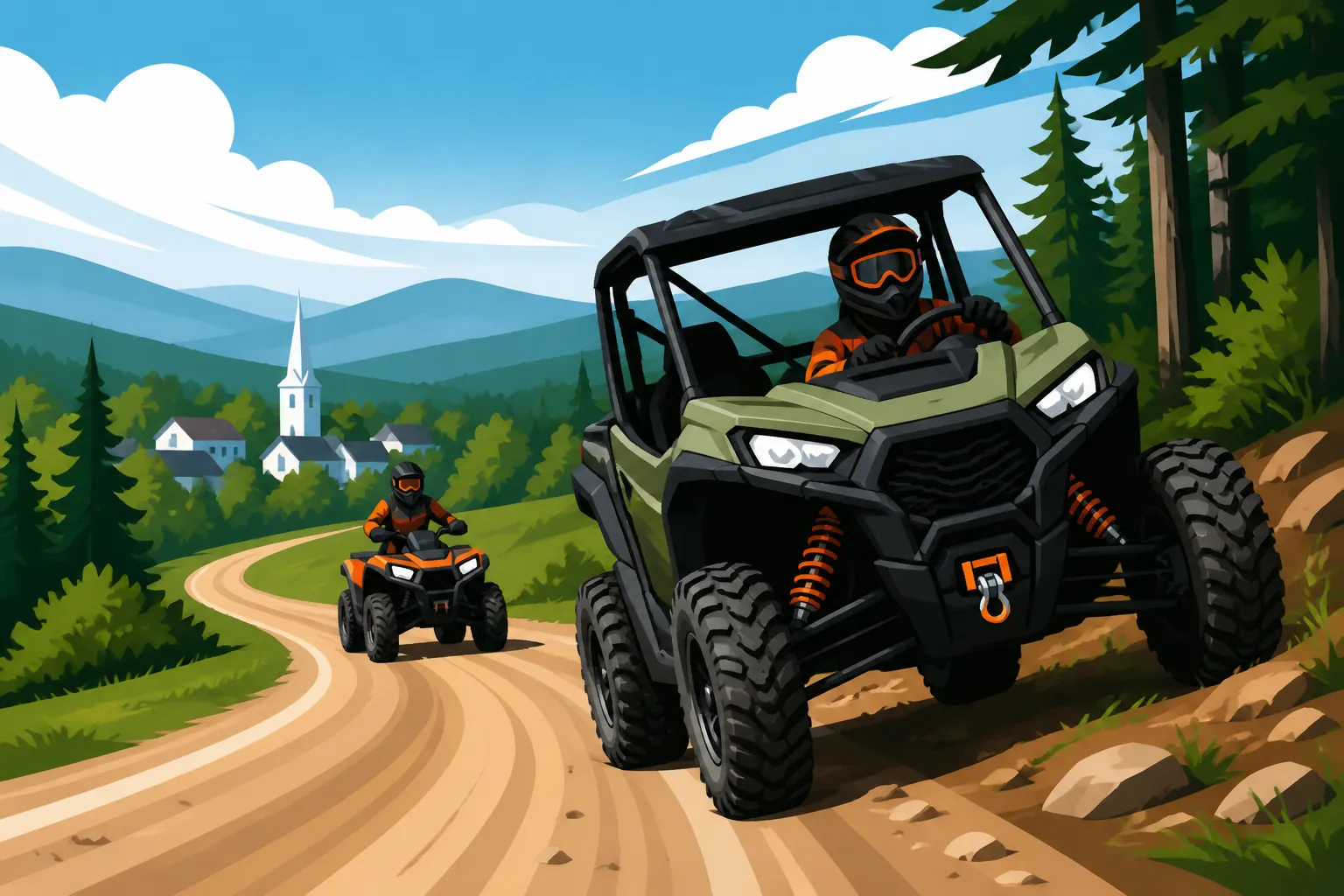
When the law says OHRVs must ride on the "far right" of the travel lane, it's not just a suggestion; it's a critical safety directive. For OHRV operators, "far right" means precisely what it implies: you must operate your machine as close to the right edge of the paved or gravel surface as is safely possible. This isn't like driving a car where you're typically expected to stay centered within your lane or, on a two-lane road, might drift a bit towards the center to avoid potholes. For an OHRV, you are expected to hug that shoulder.
This instruction serves several vital purposes. Primarily, it maximizes the space available for conventional vehicles, reducing the risk of a collision. It acknowledges that OHRVs, with their different handling characteristics and open-air design, are not the same as cars or trucks. By staying to the far right, you make yourself as unobtrusive as possible to other road users. It also helps with sightlines for oncoming traffic and for you to see what's ahead. Imagine a logging truck coming around a bend – by being as far right as possible, you’re giving that massive vehicle the widest berth. This requires constant vigilance and often means riding in areas that might be less smooth than the center of the lane. Always prioritize safety over comfort when interpreting "far right." For more details on this specific directive, refer to [Riding the Far Right of a Town Road].
Yielding to Conventional Traffic and Pedestrians
Operating an OHRV on an open town road in New Hampshire comes with a non-negotiable responsibility: you must yield to every conventional vehicle and pedestrian. This isn't just about common courtesy; it's a legal requirement designed to ensure that OHRVs, which are sharing a space not originally intended for them, do so with minimal disruption and maximum safety for others.
What does this look like in practice? If you encounter an oncoming car, truck, or motorcycle, you should slow down significantly and be prepared to move further to the right, or even stop completely if necessary, to allow them to pass safely and without feeling rushed. The same goes for pedestrians or cyclists; they have the right of way. You are effectively the guest on these roads. Think of it like this: your presence should not require a conventional vehicle to alter its course or speed in a significant way. If you see someone approaching from behind who wants to pass, signal safely if you can, and make every effort to facilitate their safe passage. This might mean pulling off to the side of the road if there's a safe shoulder available, especially on narrower roads. This unwavering commitment to yielding is fundamental to maintaining positive relations with local communities and ensuring continued access to these vital connecting routes. It's truly about sharing the road responsibly. You can read more about this in [Yielding to Every Conventional Vehicle].
Equipment Considerations for Road Riding
When you're taking your OHRV onto a New Hampshire town road, whether it's a short hop or a longer connector, your machine needs to be properly equipped. This isn't just about registration and decals; it's about making your OHRV visible and safe for use alongside conventional vehicles. The state has specific requirements for OHRVs when they are operated on public ways.
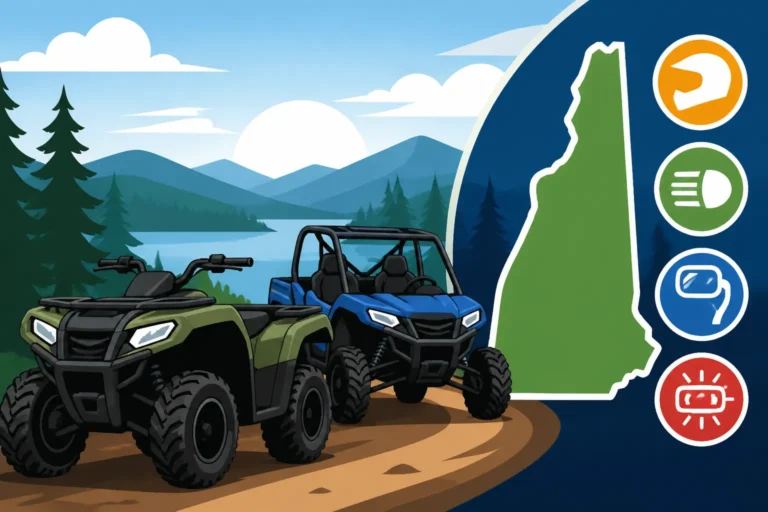
First and foremost, you need proper lighting. This means a functional headlight and taillight, which are crucial for visibility, especially during dawn, dusk, or in inclement weather. Many stock OHRVs come with these, but if you've done aftermarket modifications, ensure they still meet the legal standard for brightness and visibility. Second, a rear-view mirror is mandatory. This allows you to monitor traffic behind you, which is essential when sharing the road and needing to yield. Accessories from brands like SuperATV can be incredibly useful here, offering a wide range of robust mirrors, from universal clamp-on designs to specific roll cage mirrors, ensuring you have clear visibility. Third, your OHRV must meet sound limits. Excessive noise is a major concern for residents and can lead to road closures. A spark arrester is also required, especially crucial for preventing wildfires, particularly on dry trails and dusty roads. Before you ever leave the trail to hop on a town road, double-check that your machine is compliant with all these requirements. A quick pre-ride inspection of your lights, mirror, and exhaust can save you from a potential citation and, more importantly, ensure your safety and the safety of others. Understanding these details is part of being a responsible rider. For a comprehensive look at what your machine needs, check out [New Hampshire Equipment Rules for Road Riding].
Practical Navigation and Safety on Open Town Roads
Riding on designated town roads is a privilege that comes with specific safety protocols. It's not just about knowing the rules, but about applying them intelligently and defensively.
Navigating Intersections and Road Crossings
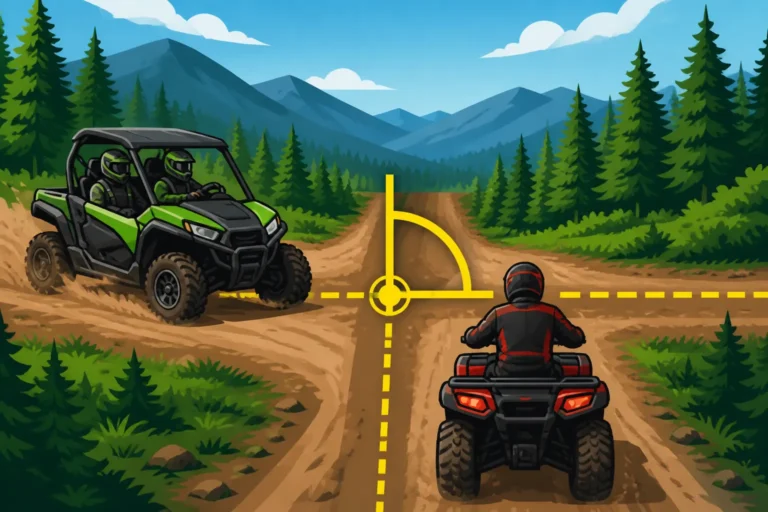
Intersections and road crossings present some of the most critical safety challenges for OHRV riders on New Hampshire's open town roads. When you encounter a paved road that isn't designated as an OHRV route, you cannot just drive across it as if it were another part of the trail. The law is very clear: you must come to a complete stop, look both ways, and only proceed when it is safe to do so. Crucially, you must cross at as close to a ninety-degree angle as possible. This minimizes the time your OHRV is exposed to traffic lanes and makes your path predictable for other drivers.
Imagine you're on a gravel OHRV-permitted road, approaching a busy state highway. You'll need to stop at the edge of the pavement, just as a car would at a stop sign. Before moving, you must have clear sightlines and ensure there's absolutely no oncoming traffic that would be impacted by your crossing. This moment requires intense focus. OHRVs accelerate and brake differently than cars, and their lower profile can make them harder for drivers of conventional vehicles to spot, especially at a distance. If you're riding a wider side-by-side, consider how much of the road you'll occupy during the crossing. Don't assume other drivers see you; make eye contact if possible, and wait until you are absolutely sure it's safe to cross. Rushing this step is a recipe for disaster. This isn't just a suggestion; it's a legal requirement that protects both you and other road users. For more information on safely navigating these tricky spots, be sure to read [Crossing a Road on an OHRV in New Hampshire].
Speed Limits and Safe Operation
While the "far right" rule dictates where you ride, speed limits dictate how fast you ride, and both are equally important for safe operation on New Hampshire's open town roads. It's a common misconception that because you're on an OHRV, standard road speed limits don't apply, or that you can cruise at trail speeds. That's simply not true. When you're on an open town road, you are subject to the posted speed limits for that road, just like any other vehicle. However, here's the crucial nuance: even if the posted limit is 35 MPH, it doesn't mean it's always safe or appropriate for your OHRV to travel that fast.
OHRVs handle differently on pavement or hard-packed gravel than they do on dirt trails. Their suspension, tires, and steering are optimized for off-road conditions, not high-speed road travel. Combine this with the "far right" rule, which often places you closer to uneven shoulders or debris, and excessive speed becomes even more dangerous. Many towns, even those that open roads to OHRVs, may have specific ordinances that set lower OHRV-specific speed limits, especially in congested areas or near residential zones. For instance, some towns might enforce a 10 or 15 mph limit within village centers, regardless of the higher posted limit for cars. The key is responsible operation: always ride defensively, at a speed that allows you to react safely to road conditions, traffic, and unexpected obstacles. Remember, your primary goal is to seamlessly integrate with, and not disrupt, conventional traffic flow while ensuring your own safety. This respectful approach helps maintain the privilege of road access for all OHRV riders. Sometimes, [Riding Through Town at Walking Pace] is the safest and most courteous option.
Staying on Designated Routes and Avoiding Private Land
One of the most critical aspects of responsible OHRV riding on New Hampshire's town roads is the absolute necessity to stay only on the routes explicitly opened to OHRVs. It can be incredibly tempting to cut across a corner of someone's field, or take a shortcut through a gravel driveway, especially if it looks like it leads back to the trail. But doing so is not just disrespectful; it's illegal trespassing. Every landowner in New Hampshire, whether their land is posted or not, has the right to privacy and to control who accesses their property.
When a town opens a road, that permission extends only to the public right-of-way of that specific road. It does not grant permission to deviate from it onto adjacent private property. This is where good navigation and planning come into play. Always consult detailed OHRV maps, often provided by local clubs or the state Bureau of Trails, to clearly identify the designated routes. Consider using a GPS device loaded with OHRV-specific maps. Accessories from companies like SuperATV can provide excellent solutions for mounting your GPS or smartphone securely, ensuring you can easily see your route and stay on track without fumbling. If you are unsure if a path is part of the designated OHRV route, assume it is private property and do not proceed. Getting lost or mistakenly trespassing can quickly lead to fines, damage to the OHRV community's reputation, and even the closure of valuable connecting routes. Always err on the side of caution and respect. For comprehensive rules on this, check out [New Hampshire Rules for Riding Private Land].
Common Misconceptions and Best Practices
Navigating OHRV rules can be complex, and there are several common misunderstandings that riders often encounter. Clarifying these can help you ride smarter and stay compliant.
The Difference Between Class VI Roads and Open Town Roads
Here's where it gets a little nuanced and often trips up new riders: the distinction between a "Class VI" road and a standard town road that has been opened to OHRVs. In New Hampshire, roads are classified from Class I (state highways) to Class VI. Class VI roads are generally unmaintained, often impassable for conventional vehicles, and can sometimes be open to OHRVs by default, or with minimal local approval, because they are essentially wilder, undeveloped public ways. They might be old logging roads or barely-there paths.
However, a Class IV or V town road – the typical paved or well-maintained gravel road you think of when you say "town road" – is not open by default. These are the roads that require a specific selectboard vote and public hearing process to allow OHRVs. The critical difference is their maintenance status and their primary intended use. Riding a Class VI road often feels more like trail riding, requiring off-road skills, while riding a designated Class IV or V town road means sharing space with cars, trucks, and often pedestrians, demanding adherence to the "far right" rule and yielding. It's crucial not to confuse these two. Just because you can legally be on a Class VI road in one part of town doesn't mean you can hop onto any paved Class V road without checking its specific designation. Always know the classification and status of the road you're on. For a closer look at these unique public ways, review [New Hampshire Rules for Riding a Class VI Road].
The Importance of Club Membership
While joining an OHRV club might seem like an extra step that isn't directly related to riding on town roads, it plays an incredibly vital, if indirect, role in maintaining and expanding your access. Many of the town roads that are open to OHRVs serve as crucial connectors between larger trail systems. Without these road sections, many of the extensive loops and multi-town rides that New Hampshire is famous for simply wouldn't be possible.
Local OHRV clubs are the boots on the ground. They are the ones who often go to town selectboard meetings, advocate for road openings, and work with landowners to secure access for trails that connect to these road segments. They also perform countless hours of trail maintenance, ensuring that the paths leading to and from these public ways are safe and enjoyable. Your club membership fees, along with a portion of your OHRV registration fees, contribute directly to these efforts. By joining a club, you're not just getting potential discounts on your registration; you're supporting the very infrastructure that makes riding in New Hampshire so exceptional. It’s an investment in the future of the sport and a way to show local communities that OHRV riders are responsible and engaged citizens. So, while you're meticulously planning your road navigation, remember that a club membership helps keep those roads (and the trails they connect to) open for everyone. Consider learning more about [Joining a New Hampshire OHVA Club] and how your support makes a difference.
Always Check Local Ordinances and Trail Status
This point cannot be stressed enough: the rules for OHRV access on town roads in New Hampshire are dynamic. They can change, and they absolutely vary from town to town, and even from season to season. What was open last year might be closed this year, or a specific road might have new time restrictions. Relying on outdated information or hearsay is a risky game that can lead to fines, frustrating detours, or even the loss of riding privileges for everyone.
Before any ride that involves town road travel, make it a non-negotiable step to check the most current local ordinances for the towns you plan to traverse. Many towns that permit OHRVs will post their specific rules and designated routes on their official websites. Even better, consult the websites of the local OHRV clubs in the area you intend to ride. These clubs are often the first to know about changes, closures, or new openings, and they frequently maintain up-to-date trail maps and status reports. Remember the "mud season" closures in the spring, or temporary closures due to logging operations or special events. A quick check can save you a lot of grief and ensure you have a smooth, legal, and enjoyable ride. Just as you'd check your tire pressure or fuel levels, checking the current status of roads and trails is an essential part of responsible trip planning. For the most current information, always look up [New Hampshire Trail Status Before You Ride] before you head out.
| Road Class | Maintenance Status | Default OHRV Access | How OHRV Access is Gained | Key Riding Rule |
|---|---|---|---|---|
| Class I-III | State & Primary Highways | Closed | Never | Not Permitted |
| Class IV-V | Town Roads, Maintained | Closed | Selectboard Vote, Public Hearing | Far Right, Yield to Traffic |
| Class VI | Town Roads, Unmaintained | Often Open | Varies by Town, Check Status | Extreme Caution, Far Right |
| Private Roads | Varies | Closed | Written Landowner Permission | Only with Permission |
Disclaimer
This article is for general informational purposes only and does not constitute professional advice. Laws, prices and regulations vary by location and change over time. Consult a qualified professional for guidance on your specific situation.