New Hampshire Equipment Rules for Road Riding
It's an exciting prospect, isn't it? The thought of leaving the trailer behind, firing up your ATV or UTV right from your camp, and riding straight onto the trails, maybe even stopping for lunch in a trail-friendly town. But that dream can quickly turn into a headache – or worse, a ticket – if you haven't properly prepared your machine for the specific demands and legalities of road riding in New Hampshire. The rules for OHRVs on public roads aren't just about getting from point A to point B; they're about safety, visibility, and being a responsible member of the road-sharing community. This guide will walk you through exactly what equipment your OHRV needs to be compliant and safe when you hit those designated stretches of pavement in the Granite State.
The Fundamental Challenge of Street Legal OHRVs in New Hampshire
Navigating the world of OHRVs on public roads in New Hampshire can feel like trying to solve a riddle wrapped in an enigma. Many riders come from states where "street legal" means a full suite of car-like modifications, or they assume that if a trail town opens its roads, anything goes. Neither of these assumptions quite aligns with the reality here in the Granite State, and understanding this core distinction is the first step to a hassle-free ride.
Why "Street Legal" Isn't a Simple Yes or No
In New Hampshire, the term "street legal" for an OHRV isn't quite the same as it is for a motorcycle or a car. Our state's default position is that OHRVs are not allowed on public roads. This means that if you see a road and there isn't a clear sign or ordinance explicitly allowing OHRVs, you cannot ride there. Period. The magic happens when a town, through a specific process involving public hearings and selectboard votes, decides to designate certain roads or sections of roads for OHRV use. This is why you'll find places like Gorham, Berlin, and Pittsburg that have embraced OHRV travel on their local streets, while other towns remain completely closed.
Even on these designated roads, your OHRV isn't suddenly transformed into a passenger vehicle in the eyes of the law. You're still operating an Off-Highway Recreational Vehicle, and while you gain the privilege of road access, it comes with a specific set of responsibilities and equipment requirements tailored to OHRVs. It’s not about turning your quad into a car, but about ensuring it meets essential safety standards for sharing the road with other traffic, even for short stretches.
The Distinction Between Trail and Road Equipment Needs
Think about how you typically set up your machine for the trails. You prioritize ground clearance, aggressive tires for mud and rocks, perhaps a winch for recoveries, and robust protection like skid plates and bumpers. These are all fantastic for tackling the rugged New Hampshire backcountry, but they aren't always what you need – or what's legally required – when you're traversing a paved main street in a small town.
When you transition from a remote forest trail to a designated town road, the safety calculus changes dramatically. Now, you're interacting with cars, trucks, pedestrians, and cyclists. Your ability to be seen, to communicate your intentions, and to react safely becomes paramount. This is where the specific equipment rules for road riding come into play. It’s about ensuring your machine is adequately lit, can signal, and provides the rider with sufficient awareness to merge safely into a multi-use environment. Neglecting these details could not only land you a fine but, more importantly, put you and others at risk.
Essential Lighting and Visibility Requirements for Road Use
When you pull onto a public road, whether it's for a quick crossing or a designated connector route, visibility is no longer just a courtesy; it's a legal mandate and a critical safety feature. Your OHRV, often smaller and less conspicuous than a typical vehicle, needs to stand out, especially during low-light conditions or inclement weather. New Hampshire's regulations are very clear about what needs to be illuminated and functional.
Headlights and Taillights: Seeing and Being Seen
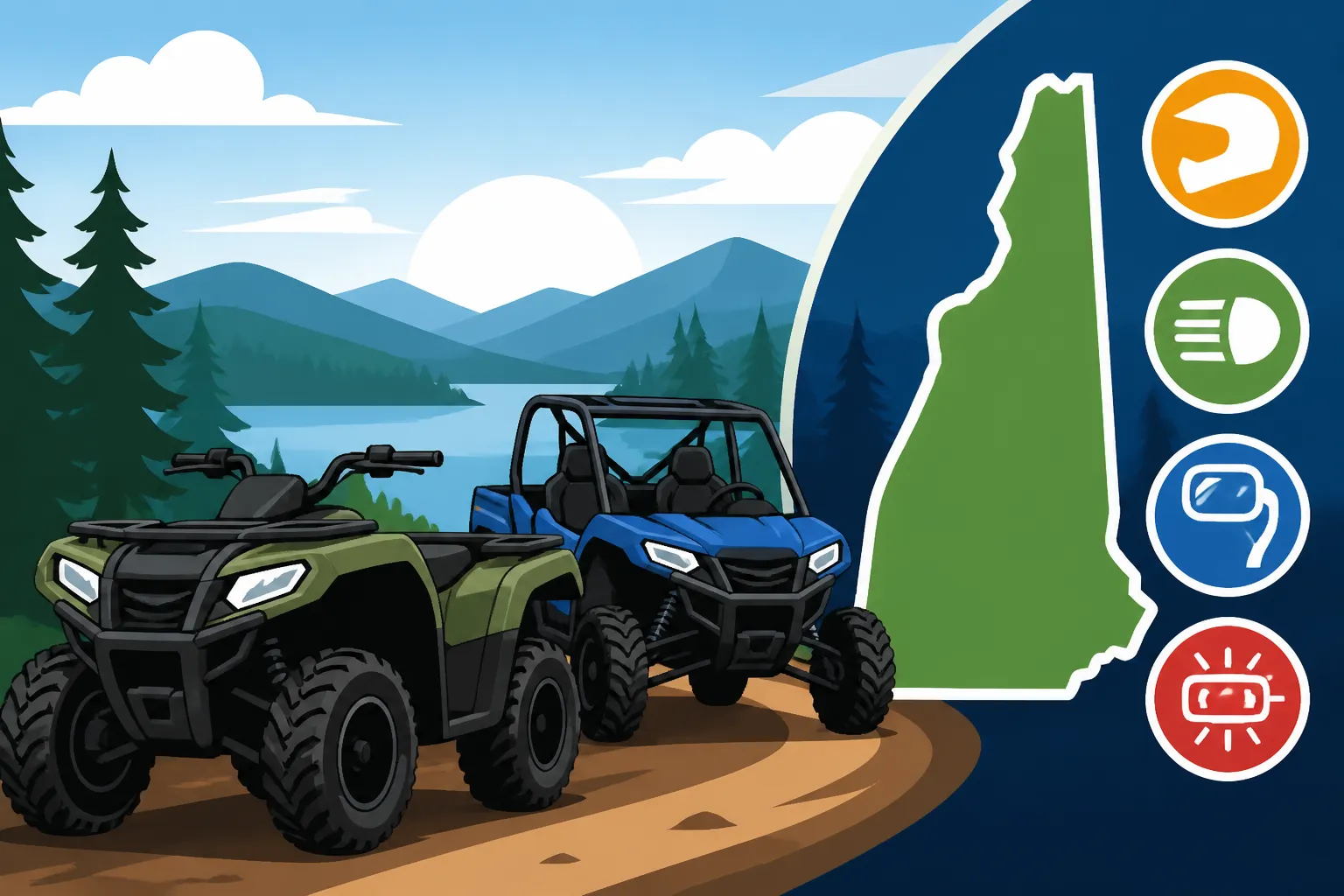
For any OHRV operating on a designated public road in New Hampshire, you absolutely must have a working white headlight and a red taillight. This isn't just about being able to see where you're going; it's equally, if not more, about ensuring that other drivers, cyclists, and pedestrians can see you. Imagine coming around a bend on a paved road, and a car doesn't register your presence because your lights aren't working. It's a terrifying scenario that proper lighting is designed to prevent.
Your headlight needs to cast a sufficient beam to illuminate the road ahead, making hazards visible. The taillight, on the other hand, is your primary identifier to anyone approaching from behind. Both must be clearly visible from a reasonable distance, both day and night. For those early morning starts or late evening returns from the trails, fully functional lights are non-negotiable. If you've been doing a lot of hard riding, it's wise to give your lights a quick check before venturing onto a road, as vibrations and impacts can sometimes loosen connections or burn out bulbs. You don't want to find yourself without proper lighting when a conservation officer pulls you over, or worse, when you're caught in a dicey situation with another vehicle.
Brake Lights and Reflectors: Communicating Your Intentions
Beyond just having static lights, your OHRV needs to be able to communicate when you're slowing down or stopping. This is where a fully functional brake light comes in. When you apply your brakes, that red light at the rear needs to illuminate brightly, signaling your deceleration to anyone behind you. Without a working brake light, drivers following you have no immediate visual cue that you're hitting the binders, significantly increasing the risk of a rear-end collision, especially if they're not expecting an OHRV to slow down like a conventional vehicle.
In addition to active lighting, passive visibility is enhanced by reflectors. While not typically a primary light source, reflectors on the rear and sides of your machine can catch and reflect light from other vehicles, adding another layer of visibility, particularly in situations where your active lights might be temporarily obscured or during daylight hours when lights aren't as noticeable. Think of it as an extra measure of safety, a backup system that ensures you have some form of presence even when your active lighting isn't the dominant factor. Checking these regularly, along with your lights, is a simple but crucial part of road readiness.
Mirrors and Horns: Situational Awareness and Warning
Riding on trails often means focusing intently on what's directly in front of and beneath your wheels. On the road, however, your field of awareness needs to expand dramatically. You need to be acutely aware of what's happening behind you and to your sides, and you need a way to warn others of your presence or a potential hazard. This is where a properly placed mirror and a functioning horn become indispensable.
The Mandatory Rear-View Mirror
New Hampshire law requires an OHRV to be equipped with at least one rear-view mirror, mounted on the left side of the machine, when operating on a public way. This isn't just a suggestion; it's a legal necessity. Your ability to see traffic approaching from behind is critical for safe road operation. Imagine you're riding along a designated town road, and you need to adjust your position slightly to avoid a pothole or to make a turn. Without a mirror, you'd have to physically turn your head, taking your eyes off the road ahead, which is a dangerous maneuver, especially on a machine that can be less stable than a car.
A good mirror provides a quick, safe glance at what's coming up behind you. Many aftermarket accessories, including those from brands like SuperATV, offer robust and adjustable mirrors designed to withstand the rigors of off-road use while still providing clear visibility for road sections. Make sure your mirror is securely mounted, provides a clear view, and is free from cracks or obstructions. A quick check of your mirror before you hit the road can literally be a lifesaver, allowing you to maintain better situational awareness and make safer decisions in traffic.
The Signaling Power of a Horn
Another often-overlooked but absolutely mandatory piece of equipment for road riding in New Hampshire is an audible warning device, commonly known as a horn. On the trails, a quick yell might suffice to get a fellow rider's attention, but on a busy road, you need something much more effective. Your horn is your immediate tool for alerting others to your presence or warning them of a potential danger.
Consider a scenario where a pedestrian steps out unexpectedly near a crosswalk, or a car starts to merge into your lane without seeing you. A quick blast of your horn can prevent an accident. It needs to be loud enough to be heard by other road users over the ambient noise of traffic and your machine. Make sure it's easily accessible while you're riding, so you don't have to fumble for it in an emergency. If your OHRV's factory horn has seen better days or has stopped working, replacing it with a reliable aftermarket option is a crucial step towards ensuring your machine is truly road-ready and compliant.
Safety Gear and Machine Integrity: Beyond the Basics
While lights, mirrors, and horns are about being seen and heard, other equipment requirements focus on protecting the rider and ensuring the machine itself is operating responsibly within a shared environment. These rules reflect a commitment to both individual safety and communal well-being, addressing concerns from rider protection to noise pollution.
Helmets and Eye Protection: Rider Safety on Pavement
When it comes to personal protective equipment, New Hampshire law is specific, especially for younger riders. If you are under the age of 18, wearing an approved helmet is absolutely mandatory when operating an OHRV on any public way. This rule is in place for a very good reason: helmets dramatically reduce the risk of head injury in the event of a crash. Even if you're an experienced rider, the unpredictable nature of road traffic means you're at a higher risk of collision compared to many trail scenarios.
Beyond helmets, eye protection is also a critical component of rider safety. Whether you're 16 or 60, you need to wear eye protection – usually goggles or a face shield – unless your OHRV is equipped with a windshield that meets certain standards. This prevents debris, insects, or even wind and rain from impairing your vision, which can be disastrous at road speeds. While adults over 18 are not legally required to wear a helmet on an OHRV in New Hampshire, it is always a wise choice for safety, particularly when venturing onto paved surfaces shared with cars. Don't let the freedom of the trails make you complacent about these vital safety measures when you hit the roads. [New Hampshire Helmet Law for OHRV Riders]
Exhaust Systems and Sound Limits: Being a Good Neighbor
One of the most common points of contention, and a frequent target for law enforcement, is an OHRV's exhaust system. New Hampshire has a strict sound limit for OHRVs: 96 decibels (dBA) at maximum RPM. This rule exists not just to prevent noise pollution, but also to mitigate the impact of OHRV use on the communities through which you ride. Many aftermarket exhaust systems, while offering performance benefits for trail riding, can easily exceed this limit, making them illegal for use on public roads and even some trails.
It's a genuine frustration for many riders who want to customize their machines, but the reality is that excessive noise contributes to negative public perception and can lead to trail closures. Beyond the decibel limit, your OHRV must also be equipped with a spark arrester. This is a safety device designed to prevent hot carbon particles from exiting the exhaust system and potentially igniting dry vegetation, a very real concern in our forests. Before taking your machine onto any road, or even many trails, ensure your exhaust is compliant. [New Hampshire OHRV Decibel Limit] Companies like SuperATV offer exhaust options and accessories that aim to be compliant while still providing good performance.
Tires and Fenders: Road-Appropriate Components
While those aggressive, knobby tires are fantastic for gripping mud, rocks, and loose dirt on the trails, they aren't always the best or safest choice for paved roads. Off-road tires can wear out incredibly fast on asphalt, and their larger, deeper treads can make for a rougher, less stable ride on hard surfaces. While New Hampshire doesn't explicitly mandate "street-legal" tires for OHRVs on designated roads, common sense dictates that you should use tires that are in good condition and reasonably suitable for the surface. Worn-out, severely knobby tires can reduce traction on wet pavement and make handling more unpredictable.
Fenders also play a crucial role, though they're often overlooked. These are designed to contain mud, water, and other debris that your tires kick up. When you're on a public road, splashing mud or rocks onto other vehicles or pedestrians isn't just rude; it can be dangerous and could lead to complaints or even legal issues. Ensure your OHRV's fenders are intact and provide adequate coverage, especially if you've modified your machine with wider wheels or tires. Keeping your machine reasonably clean for road sections also goes a long way in showing respect for the communities you're passing through.
Additional Equipment and Considerations for Road-Legal OHRVs
Beyond the core mandatory items, there are several other practical and legal considerations that riders often overlook when preparing their OHRV for road use in New Hampshire. These range from how your machine is identified to additional features that can significantly enhance your safety and the riding experience.
Displaying Registration and Decals Correctly
It might seem obvious, but having your OHRV properly registered with the State of New Hampshire is non-negotiable for riding on any public land or designated public road. What's often forgotten, however, is the correct display of your registration decals. These decals are not just decorative; they are official proof that your machine is legally allowed to operate. New Hampshire law requires two decals, which must be affixed to the right and left sides of the OHRV, clearly visible, and free from obstruction. [New Hampshire OHRV Decal Placement]
Imagine being pulled over by a conservation officer or local police. One of the first things they'll look for is your decals. If they're missing, obscured by mud, or incorrectly placed, it can lead to a citation even if you have your physical registration certificate. Always double-check that your current decals are securely attached and easily readable. This simple act can save you a lot of hassle and potential fines, allowing your ride to continue smoothly without unnecessary stops.
Windshields and Turn Signals: Enhancing Road Readiness
While New Hampshire's OHRV road rules don't typically mandate turn signals for standard OHRV operation on designated public ways, nor are windshields universally required, considering them can significantly enhance your riding experience and safety on the road. A windshield, for instance, offers protection from wind, rain, and road debris, making longer road sections more comfortable and reducing rider fatigue. For those early spring or late fall rides, a windshield can make a huge difference in staying warm and dry.
As for turn signals, while not legally required in most cases for OHRVs riding on designated roads, if your machine does have them (perhaps it's a side-by-side with more amenities, or you've installed an aftermarket kit), they absolutely must be functional if you intend to use them. Even if not mandated, clearly signaling your turns to other motorists is a practice that can prevent confusion and accidents. Some riders choose to add aftermarket turn signal kits, and if you do, ensure they are properly installed and wired. While not a strict requirement, these additions demonstrate a commitment to safety and courtesy on shared roadways.
Insurance and Other Paperwork
Here's a point of common confusion: New Hampshire does not require OHRV owners to carry liability insurance for their machines. This is different from automobiles, and it means that if you're involved in an accident, you are personally responsible for any damages or injuries you cause. While not legally mandated, purchasing OHRV insurance is always a wise decision. It provides a financial safety net and peace of mind, protecting you from potentially ruinous costs in the event of an incident on the trails or on a designated road. [Does New Hampshire Require OHRV Insurance?]
Regardless of insurance, you absolutely must carry your physical OHRV registration certificate with you whenever you're operating your machine off your own property, and especially when on public roads. This document proves ownership and legal registration. Some riders tuck it into a waterproof bag under the seat, or in a secure compartment. A clear, legible copy is acceptable as long as it's easily accessible. An officer may ask to see this at any time, and not having it can lead to a fine or delay. Ensuring you have all your essential paperwork readily available is just as important as having the right equipment on your machine.
The Broader Context: Where and How These Rules Apply
Understanding the specific equipment requirements is only one piece of the puzzle. You also need to comprehend where and how these rules are enforced, and how your OHRV fits into the larger tapestry of New Hampshire's road network. It's about respecting the system that allows OHRVs on public ways in the first place.
Navigating Designated OHRV Roads and Crossings
When you're riding your OHRV on a designated public road in New Hampshire, you are required to keep to the extreme right side of the paved surface. This isn't just a suggestion for politeness; it's a legal requirement designed to ensure you remain as far out of the way of conventional vehicle traffic as possible. [Why New Hampshire Riders Keep to the Extreme Right] You must always yield to all conventional vehicles, giving them the right of way. This means being prepared to slow down, pull over, or even stop if necessary, to allow cars and trucks to pass safely.
Crossings are another critical area where strict rules apply. If you need to cross a state highway, a Class I or Class II road, or any road that isn't designated for OHRV use, you must come to a complete stop, look both ways, and proceed only when it is safe to do so. You should cross at as close to a ninety-degree angle as possible, and you must proceed directly across without stopping or riding along the shoulder. [Crossing a Road on an OHRV in New Hampshire] These rules are in place to minimize your exposure to faster-moving traffic and reduce the risk of collisions at intersections. Familiarizing yourself with these operational protocols is just as important as having the right equipment.
Town Ordinances and Their Impact on Equipment
While the New Hampshire Fish and Game Department sets statewide OHRV rules, individual towns have the authority to designate their roads for OHRV use and, importantly, can add their own restrictions. This means that while state law outlines baseline equipment, a town might impose additional requirements or specific operational hours that directly impact your ride. For example, some towns might have stricter speed limits on their designated OHRV roads than what state law might generally allow for OHRVs on trails. [New Hampshire Towns That Allow OHRVs on Roads]
The key takeaway here is that you can't assume that what's legal in Gorham is automatically legal in Pittsburg or Berlin. Each town's selectboard votes to open roads and can tailor ordinances to fit local conditions and community concerns. Before you head out on a ride that involves town roads, especially in an area you're unfamiliar with, it's always a good idea to check the local town's website for their specific OHRV ordinances, or consult with a local OHRV club. These clubs often have the most up-to-date information on trail status and town rules, as they are actively involved in maintaining relationships with landowners and local authorities.
Common Misconceptions and Proactive Steps for Riders
It’s easy to get caught up in the excitement of a ride and overlook the finer points of regulation. However, a little foresight and understanding can prevent a lot of headaches, fines, and potentially dangerous situations. Addressing common misconceptions and taking proactive steps ensures a safer and more enjoyable experience for everyone.
The Illusion of "Off-Road Only" Equipment on Public Ways
One of the most persistent misconceptions among OHRV riders is that if a town opens its roads, then an "off-road only" machine is perfectly fine for use on those roads. This simply isn't true. The state's baseline equipment requirements for OHRVs on public ways apply regardless of a town's designation. That loud exhaust that's great for the power band on the trails? It's still subject to the 96-decibel limit on the road. Those aggressive tires? While not explicitly outlawed, they contribute to faster wear and potentially less stable handling on pavement.
The reasoning behind enforcing these rules is twofold: safety and public perception. Safety is paramount when you're sharing roads with conventional vehicles. An OHRV with inadequate lighting, no mirror, or a non-functioning horn is a hazard. From a public perception standpoint, excessive noise, dangerous driving, or machines that appear unsafe can quickly turn public opinion against OHRV access, potentially leading to road closures or stricter regulations down the line. It's a delicate balance, and responsible riders understand that adhering to equipment rules helps preserve the privilege of road access for everyone.
Doing Your Homework: Ensuring Your Machine is Compliant
The best defense against a citation or, more importantly, an accident, is a well-prepared machine. Before every ride that involves public roads, make it a habit to do a quick check of your OHRV's essential equipment. Are your headlights and taillights working? Do your brake lights illuminate when you press the pedal? Is your horn loud and clear? Is your rear-view mirror securely attached and providing a clear view? Are your registration decals clearly visible?
It's also a good practice to regularly inspect your exhaust system to ensure the spark arrester is intact and that it’s not excessively loud. Many resources are available to help you. The New Hampshire Fish and Game Department website has detailed OHRV handbooks, and local OHRV clubs are fantastic sources of information and can often point you to reputable service shops or aftermarket parts providers. Companies like SuperATV also offer a wide range of accessories that can help you upgrade your machine to meet safety and compliance standards for road use, ensuring you're ready for whatever the trail, or the road, throws at you. [New Hampshire OHRV Registration Paperwork]
The Consequences of Non-Compliance
Riding an OHRV on a New Hampshire public road without the required equipment can lead to a range of unpleasant consequences, starting with fines. A conservation officer or local police officer has the authority to issue citations for equipment violations. These fines can add up quickly, turning a fun day on the trails into a costly mistake. [New Hampshire Fines for an OHRV Violation] Beyond monetary penalties, an officer may even deem your machine unsafe for continued operation, potentially forcing you to trailer it home. [What a New Hampshire Officer Checks Roadside]
More importantly, non-compliance carries significant safety risks. A missing brake light could lead to a rear-end collision. A broken mirror could prevent you from seeing a car merging into your lane. An inoperative horn could prevent you from warning a pedestrian. These aren't just minor infractions; they are failures that directly contribute to increased danger on shared roadways. Responsible riding in New Hampshire means respecting the rules, ensuring your machine is properly equipped, and being a visible, audible, and predictable presence when you venture onto public ways. It's about protecting yourself, your passengers, and everyone else who uses our beautiful New Hampshire roads and trails.
Disclaimer
This article is for general informational purposes only and does not constitute professional advice. Laws, prices and regulations vary by location and change over time. Consult a qualified professional for guidance on your specific situation.