New Hampshire Supervision Rules for Minors
Navigating the rules and regulations for riding ATVs and UTVs in New Hampshire can feel like a maze, especially when you're trying to figure out what's allowed for the younger riders in your family. It's frustrating to want to share the joy of the trails with your kids, only to be bogged down by complex age restrictions and supervision requirements. This guide is here to untangle those knots, explaining New Hampshire's specific supervision rules for minors, so you can confidently hit the trails safely and legally with your family.
Why New Hampshire Has Specific Rules for Minor Riders
When you're out on the trails, whether it's the sprawling [Ride the Wilds] network or the challenging terrain of [Jericho Mountain State Park at Berlin], you see riders of all ages. It’s natural to want your children or grandchildren to experience the same thrill and freedom. However, the Granite State, like most places, has put in place very specific regulations regarding minors operating Off-Highway Recreational Vehicles (OHRVs) for a good reason: safety.
These rules aren't designed to be a barrier to family fun; rather, they're meant to protect young riders, their passengers, and everyone else who shares the trails. Imagine the potential for an accident if an inexperienced child, without proper training or supervision, encounters a challenging section of trail, another rider, or even wildlife. The consequences could be severe. New Hampshire's regulations take into account the varying levels of judgment, physical capability, and experience that come with different ages, aiming to minimize risks. It's a balance between encouraging responsible outdoor recreation and ensuring the well-being of our most vulnerable riders. While it can sometimes feel like an extra hoop to jump through, understanding that these rules stem from a place of care can make them easier to accept and follow.
Age-Specific Requirements for Young ATV and UTV Operators
New Hampshire's OHRV laws are quite clear about who can ride, where they can ride, and who needs to be watching them. The requirements shift significantly depending on a minor's age, and it’s critical to understand these distinctions before you even load up the trailer. Misinterpreting these rules can lead to fines, trail closures, or, worst of all, an unsafe situation.
Riders Under Twelve Years Old
This is the most straightforward age group because the rules are very strict: if a child is under 12 years old, they cannot operate an OHRV on public land in New Hampshire. This includes all state-owned trails, club trails, rail trails, and any road or property open to the public for OHRV use. There are no exceptions for safety certificates, adult supervision, or anything else when it comes to public access.
However, there's a small window for private property. A child under 12 can operate an OHRV on private land, but only if they have the explicit written permission of the landowner. Even then, an adult (typically a parent or guardian) should be present and actively supervising to ensure safety. The spirit of this rule is that while families can practice riding skills on their own land or the land of a willing friend, the public trail system is reserved for older, more experienced, and regulated operators. It's a hard rule to swallow for some eager young riders, but it's fundamentally about protecting them in environments that are less controlled than a private backyard. For more details, check out [New Hampshire Rules for a Rider Under 12].
Riders Twelve and Thirteen Years Old
For children aged 12 and 13, the landscape of possibilities opens up a bit, but with very specific and non-negotiable requirements. A 12 or 13-year-old can operate an OHRV on approved public trails in New Hampshire, but only if two crucial conditions are met:
First, they must possess a valid New Hampshire OHRV Safety Certificate. This isn't just a suggestion; it's a mandatory document proving they've completed an approved safety course. This course teaches vital skills, trail etiquette, and the rules of the road (or trail, as it were). Without this certificate, they're not legally allowed on public trails, regardless of supervision.
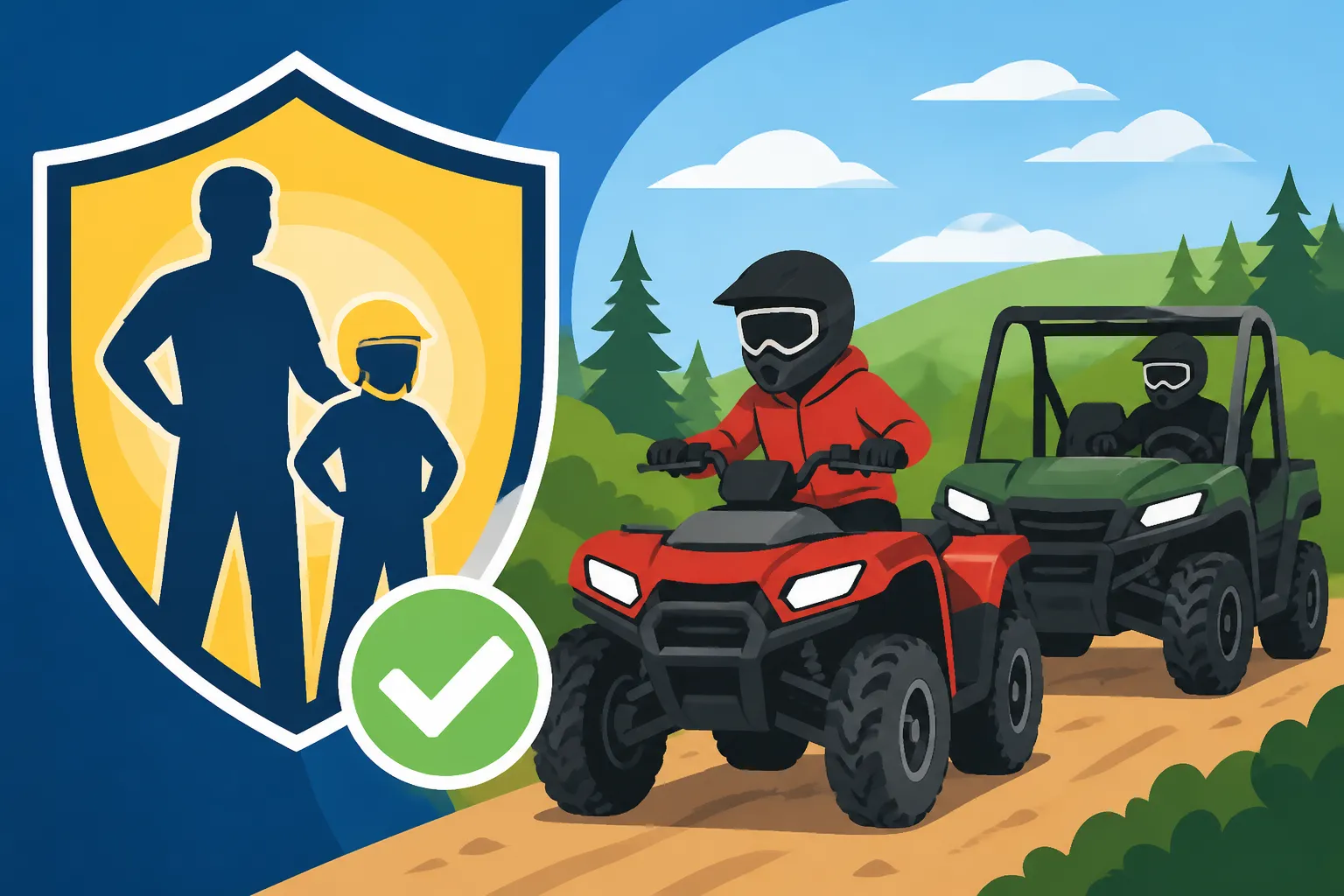
Second, and equally important, they must be "accompanied by" a person who is at least 25 years old and holds a valid motor vehicle driver's license. This isn't just about having an adult in the general vicinity; it means direct supervision. The supervising adult must be capable of providing immediate assistance and guidance. This adult doesn't necessarily have to be on a separate OHRV; they could be a passenger on the minor's machine if it's designed for multiple riders and all other safety requirements are met (e.g., proper seating, helmets for all). This ensures that a mature, licensed individual is always on hand to make critical decisions and respond to unforeseen circumstances. For more in-depth information, refer to [New Hampshire Rules for a Rider Aged 12] and [New Hampshire Rules for a Rider Aged 13].
Riders Fourteen and Fifteen Years Old
As riders get a little older, the supervision rules become slightly more nuanced for the 14 and 15-year-old age group. Just like their younger counterparts, these riders must possess a valid New Hampshire OHRV Safety Certificate to operate on public trails. This is a foundational requirement that doesn't change based on age up to 16.
The key difference for 14 and 15-year-olds lies in the supervision aspect. If a 14 or 15-year-old also holds a valid motor vehicle driver's license (which, in New Hampshire, might be a learner's permit with specific restrictions, or a youth operator's license), they can operate an OHRV on public trails without the direct, constant accompaniment of a 25-year-old licensed adult. However, if they do not possess a valid motor vehicle driver's license, then the same supervision rule applies as for 12 and 13-year-olds: they must be accompanied by a person who is at least 25 years old and holds a valid motor vehicle driver's license. This distinction recognizes the additional training and responsibility that comes with obtaining a driver's license, even if it's not for a conventional vehicle. It's a critical point often overlooked, so always confirm your minor's licensing status. You can find more specific information on [New Hampshire Rules for a Rider Aged 14] and [New Hampshire Rules for a Rider Aged 15].
Riders Sixteen and Seventeen Years Old
For minors who are 16 or 17 years old, the supervision rules relax considerably, especially if they hold a driver's license. If a 16 or 17-year-old possesses a valid motor vehicle driver's license (from any state), they are generally treated as an adult rider in terms of supervision requirements on New Hampshire's public OHRV trails. This means they can ride independently, without the need for an accompanying adult. The assumption here is that the process of obtaining a driver's license instills a level of responsibility and knowledge that makes direct supervision unnecessary.
However, if a 16 or 17-year-old does not possess a valid motor vehicle driver's license, they are still required to hold a New Hampshire OHRV Safety Certificate. While the statute primarily focuses on ages 12-15 for explicit supervision, the underlying principle is that a minor without a standard driver's license benefits from additional safeguards. Therefore, while not always explicitly stated as needing a 25-year-old companion in the same way as younger minors, it’s always best practice for any rider under 18 without a driver's license to ride with a responsible adult who understands the risks and rules. Always consult the official New Hampshire Fish and Game OHRV manual for the most current and precise interpretation for this age group, or check [New Hampshire's Age and Supervision Rules].
Here's a handy table to summarize these age-specific requirements:
| Age Group | OHRV Safety Certificate Required | Minor's Driver's License Required | Supervising Adult Required (25+ & licensed) | Notes |
|---|---|---|---|---|
| Under 12 | No (Not allowed on public trails) | No | Only on private land with permission | Cannot operate on public OHRV trails. |
| 12-13 Years | Yes | No | Yes (always) | Adult must accompany them. |
| 14-15 Years | Yes | Yes (to ride unsupervised) | Yes (if no driver's license) | May ride unsupervised if they possess a valid motor vehicle driver's license. |
| 16-17 Years | Yes (if no driver's license) | Yes (to ride unsupervised) | No (if they have a driver's license) | Driver's license typically waives supervision. |
The Pivotal Role of Safety Certificates and Driver's Licenses
Beyond just the age of a minor, two documents play an absolutely critical role in determining whether and how they can operate an OHRV in New Hampshire: the OHRV Safety Certificate and a valid motor vehicle driver's license. Understanding the nuances of each is key to staying compliant and ensuring a safe ride.
The New Hampshire OHRV Safety Certificate
The OHRV Safety Certificate is more than just a piece of paper; it's proof that a rider has undergone formal education on safe OHRV operation, trail ethics, and New Hampshire's specific laws. For most minors (ages 12-17) who want to ride on public trails, this certificate is non-negotiable. It's designed to equip young riders with the foundational knowledge they need to make smart decisions and react appropriately on the trail, reducing the risk of accidents.
You have a couple of options for obtaining this certificate. There are free classroom courses often offered by the New Hampshire Fish and Game Department or local OHRV clubs. These are fantastic because they often include hands-on components and allow for direct interaction with experienced instructors. However, scheduling can sometimes be a challenge. Alternatively, there are online OHRV safety courses available. These offer flexibility, allowing your minor to complete the training at their own pace from home. While there's a cost associated with the online version, it's a small investment for the peace of mind and legal compliance it provides. Regardless of the method, the goal is the same: to ensure the rider understands their responsibilities. For information on where to find these courses and what they entail, you can look up [New Hampshire ATV Safety Certificate Requirements] and [Where to Take a New Hampshire ATV Safety Course]. It's worth noting that the [New Hampshire ATV Safety Course Cost] will vary depending on the chosen method.
When a Driver's License Can Substitute
Here's where things can get a little confusing for some parents. For riders aged 16 and older, New Hampshire law offers an alternative to the OHRV Safety Certificate: a valid motor vehicle driver's license. If your 16 or 17-year-old already holds a driver's license (from New Hampshire or any other state), they are generally exempt from the requirement to obtain a separate OHRV Safety Certificate. The reasoning is that the process of earning a driver's license already demonstrates a certain level of maturity, knowledge of traffic laws, and safe operation principles that are transferable to OHRV riding.
However, it's crucial to understand that this substitution only applies to the safety certificate requirement. It does not negate the need for adult supervision for younger minors (like those aged 12-15) who might also possess a learner's permit or youth operator's license. For those younger ages, both the safety certificate and the appropriate adult supervision are still required. Always double-check [Does a Driver's License Replace the Certificate in New Hampshire?] to confirm the specifics for your minor's age and licensing situation.
Carrying Your Documents
Once your minor has the necessary certificate or driver's license, the next crucial step is ensuring they carry it with them whenever they're operating an OHRV on public land. Just like with a car, law enforcement officers or New Hampshire Fish and Game Conservation Officers can and do conduct trailside checks. Not having proof of your certificate or license, or the machine's registration, can lead to fines and a ruined ride. I've heard too many stories from folks who were caught off guard. It's not enough to have it at home; it needs to be on their person or in the machine's storage compartment. It’s a simple rule, but one that’s easy to forget in the excitement of hitting the trails.
Practical Strategies for Supervising Minors on New Hampshire Trails
So, you've got the lowdown on the rules, your minor has their safety certificate, and you understand the supervision requirements. Now comes the fun part: actually riding! But even with all the legal boxes checked, effective, real-world supervision is about more than just being present. It’s about active engagement, teaching, and being prepared.
Pre-Ride Checks and Ongoing Education
Before your minor even swings a leg over their machine, a thorough pre-ride check is essential. This isn't just about the machine; it's about checking in with the rider too. Are they feeling well? Are they wearing the appropriate gear? New Hampshire has clear rules about helmets for riders under 18, and eye protection is required for everyone unless the machine has a windshield. Make sure they're geared up correctly with a properly fitting helmet (like those from SuperATV or similar brands), goggles, gloves, long pants, and sturdy boots. These aren't just suggestions; they are crucial for safety.
Use every ride as a teaching opportunity. Talk about trail etiquette, respecting other riders (snowmobilers in winter, hikers/bikers on multi-use trails), and environmental responsibility. Remind them about speed limits in certain areas, particularly near trailheads or developed sections of towns like Gorham or Berlin. Reinforce safe riding habits, like always staying on marked trails, understanding hand signals, and maintaining a safe following distance. The more they know and practice, the more confident and safe they'll become.
Effective On-Trail Supervision Strategies
When you're out on the trail, "accompanying" a minor means being engaged and attentive. For younger supervised riders, this usually means riding directly behind them, or having them ride between two adults. The goal is to be close enough to offer immediate verbal guidance or to intervene if necessary. You need to be able to see them, and they need to be able to see you.
Choose trails appropriate for their skill level. Don't throw a novice 12-year-old onto a highly technical, rocky trail system. Start with easier, wider trails, like some of the maintained rail trails, and gradually progress as their skills and confidence grow. Always carry a map and know your route. Cell service can be spotty in the more remote parts of the Great North Woods, so don't rely solely on your phone for navigation or emergencies. Consider investing in a communication system so you can talk to each other while riding, which can be invaluable for real-time coaching and warnings.
Regular stops are also important. Take breaks, rehydrate, and check in. Ask them about how they're feeling, if anything felt difficult, or if they have any questions. This builds confidence and creates an open dialogue, making them more likely to speak up if they encounter a problem or are feeling uncomfortable.
Preparing for the Unexpected: Incident Preparedness
Despite all precautions, incidents can happen. Being prepared can make a significant difference. Always carry a basic first-aid kit, a small tool kit for minor repairs, and know how to contact emergency services in the area you’re riding. Program important numbers into your phone. Before you head out, tell someone your planned route and estimated return time, especially if you're venturing into remote areas.
If an OHRV breaks down, or if a minor has a minor spill, remain calm. Assess the situation, attend to any injuries, and then figure out the next steps. For mechanical issues, having some basic tools and knowledge of your machine (and your minor's) can be a lifesaver. For more serious situations, knowing exactly where you are and how to describe it to emergency responders is crucial. Remember, the goal of supervision is not just to prevent incidents, but to manage them effectively if they occur, keeping everyone safe and minimizing stress. You might even consider having a recovery plan for your machines, looking at robust winches or recovery gear, some of which are offered by brands like SuperATV, so you're not stranded if a machine gets stuck or breaks down far from the staging area.
Disclaimer
This article is for general informational purposes only and does not constitute professional advice. Laws, prices and regulations vary by location and change over time. Consult a qualified professional for guidance on your specific situation.