Why You Must Stop Before Every Road Crossing
We all know the rush of hitting the trails in New Hampshire, the wind in our faces, the engine humming. But that feeling can turn to anxiety when you see the pavement approaching, especially when you know you need to cross a public road. It's a moment that often leaves riders scratching their heads, wondering exactly what's required to navigate these intersections safely and legally. This comprehensive guide will walk you through the absolute necessity of coming to a complete stop before every road crossing, why this rule is so vital, and how to execute it perfectly to ensure a safe and enjoyable ride for everyone.
The Critical Importance of Stopping at Every Road Crossing
The thrill of New Hampshire's expansive OHRV trail system is undeniable, but it's important to remember that these trails often intersect with paved public roads. Many riders, especially those new to the Granite State's regulations, might be tempted to roll through these crossings or assume quick glance is enough. However, the law is very clear, and for good reason: a full, complete stop is not just a suggestion; it's a critical safety measure and a legal requirement. Ignoring this could lead to serious consequences, not just for you but for everyone else sharing the road.
Understanding New Hampshire's Default Position on OHRV Road Access
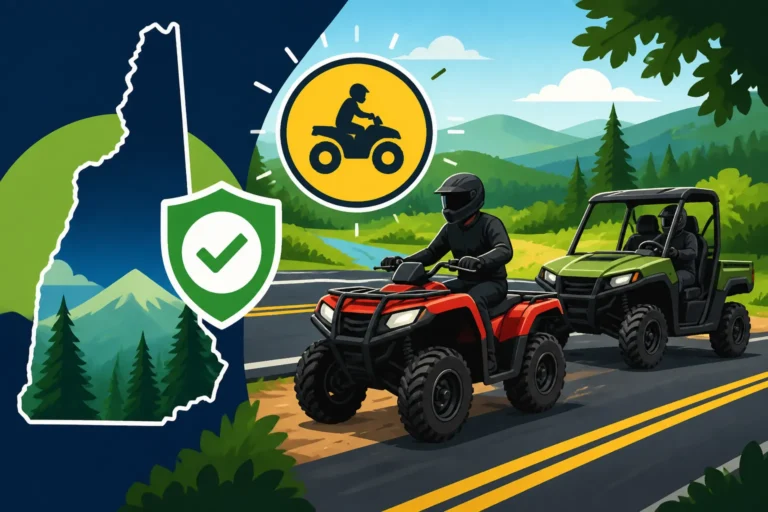
In New Hampshire, the default legal position is that OHRVs are not permitted on public roads. This might come as a surprise to some, especially when you see trails that clearly lead right up to or across town streets. However, any permission for OHRVs to use or cross a public road is an exception to the rule, granted by local selectboards or the state, not a given right. This distinction is crucial because it immediately places the onus of caution and deference squarely on the OHRV operator. When you approach a paved road, you are essentially transitioning from a permitted off-highway environment to an area where your machine is generally prohibited unless specific conditions are met, and even then, extreme care is mandated. This understanding sets the foundation for why a full stop is non-negotiable.
Think about it from the perspective of a motorist on that road. They aren't expecting an ATV or UTV to suddenly appear. Their mental model of the road assumes only conventional vehicles. Therefore, your approach needs to be incredibly deliberate and clearly signal your intention to observe all traffic laws. The responsibility rests with the OHRV operator to ensure the safety of the crossing, and that begins with acknowledging the road's primary purpose. Even in towns that have [New Hampshire Towns That Allow OHRVs on Roads], the basic rules of the road, and specific OHRV crossing rules, still apply with full force.
The Legal Mandate for a Full Stop
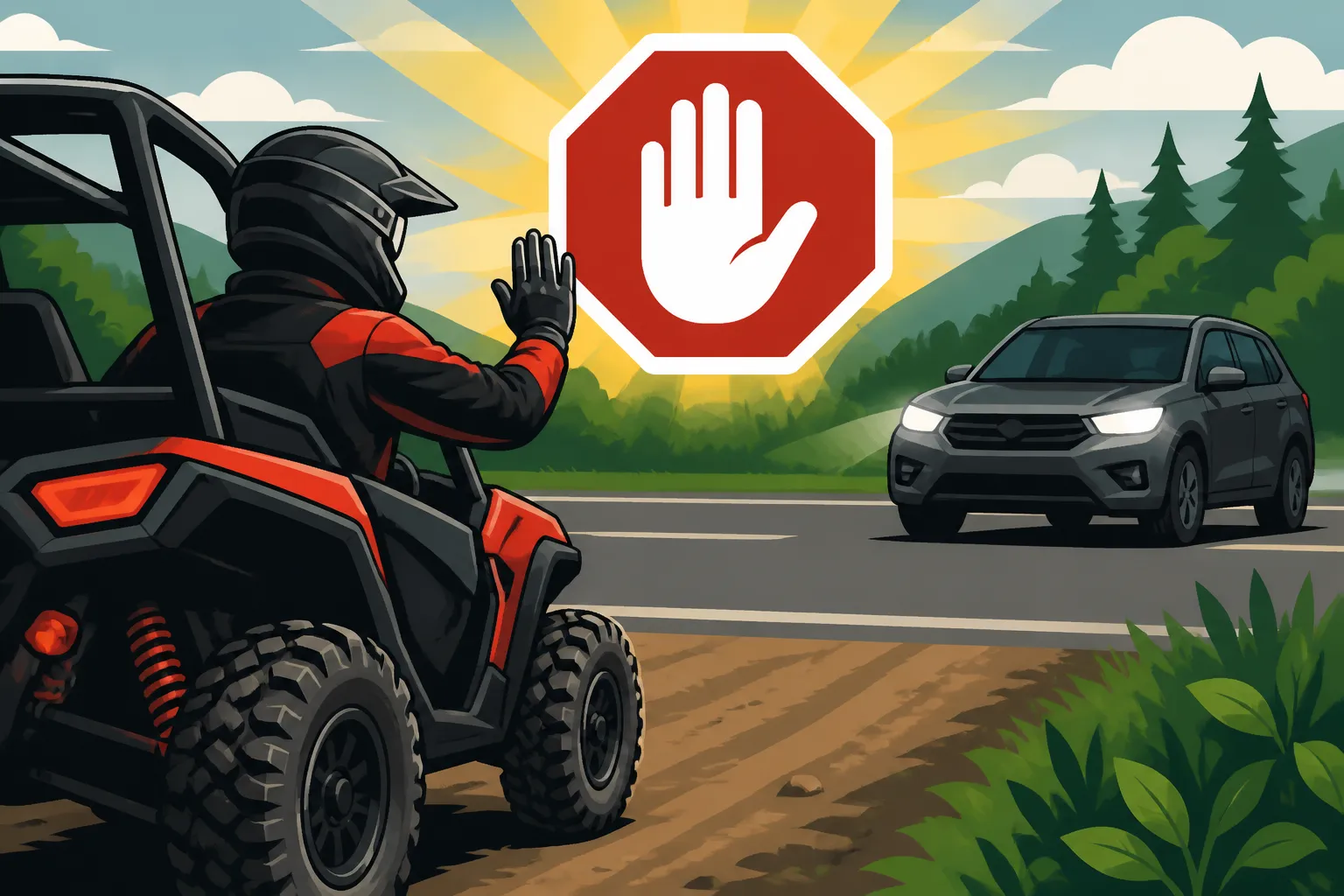
New Hampshire law is explicit: OHRV operators must come to a full and complete stop before crossing any public way. This isn't about slowing down to five miles an hour, or checking for traffic while still rolling forward. It means bringing your machine to a complete standstill, no forward motion whatsoever, just as if you were approaching a stop sign in your car. This requirement is enshrined in the state's OHRV statutes and is strictly enforced by conservation officers and local law enforcement alike.
When we talk about a "full stop," we're not talking about a gray area. Your tires should cease all rotation, even for a split second, before you proceed. This strict interpretation is vital because it maximizes your opportunity to fully assess the situation. It forces you to pause, shift your focus from the trail ahead to the immediate road environment, and make a conscious decision to proceed only when it's genuinely safe. Skipping this crucial step, even inadvertently, is a direct violation of the law and puts you at significant risk of a citation and, more importantly, a dangerous accident. This is a fundamental part of [What New Hampshire Requires to Cross a Road] safely and legally.
Why This Rule Exists: Safety First, Always
It might seem like a minor inconvenience to come to a dead stop when you can see a mile down the road. But this rule isn't about making your ride harder; it's about paramount safety. OHRVs and conventional vehicles operate under very different assumptions, and mixing these environments, even for a brief crossing, requires a robust set of safety protocols. The full stop is the cornerstone of these protocols, designed to prevent collisions and protect everyone involved.
Mitigating Collision Risks with Conventional Vehicles
One of the primary reasons for the mandatory full stop is to mitigate the inherent collision risks between OHRVs and conventional vehicles. Let's face it: ATVs and UTVs are smaller, often harder to see, and much quieter than a car or truck might expect on a road. A driver cruising down a paved road, especially one not designated for OHRV use, is simply not looking for an off-highway vehicle to emerge from the treeline or a trail opening. This lack of expectation creates a dangerous blind spot, both literally and figuratively.
By stopping completely, you give both yourself and any approaching motorists the maximum possible time to react. You gain precious seconds to scan the road for traffic that might be out of sight or approaching rapidly. Conversely, a motorist might be more likely to spot a stationary OHRV patiently waiting at the edge of the pavement than one that's constantly in motion, darting across. This pause allows for a moment of mutual recognition, which is critical when a large, fast-moving vehicle like a pickup truck meets a smaller, slower-accelerating OHRV. The consequences of such a collision are almost always catastrophic for the OHRV operator and passenger, highlighting why this simple stop is so profoundly important.
Ensuring Clear Sight Lines and Assessing Traffic
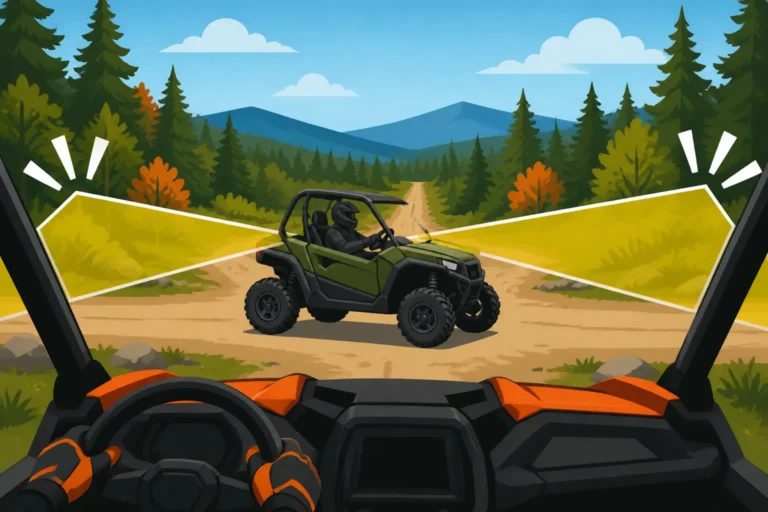
Coming to a full stop also gives you the absolute best chance to establish clear sight lines and thoroughly assess the traffic situation. Trails often emerge from wooded areas, over small rises, or around bends, which can severely limit your visibility until you are right at the edge of the road. A rolling stop means you are still moving into potentially unseen traffic, reacting to what you just saw, rather than what you can see from a static, safe position.
When you stop, you can physically lean forward or turn your head more effectively to check for oncoming vehicles, pedestrians, or cyclists from all directions. This is particularly crucial when dealing with blind corners, crests of hills, or dense foliage at the road's edge. It's about giving yourself the clearest, unobstructed view possible before committing to crossing. This diligent assessment of traffic, combined with a full stop, significantly reduces the likelihood of entering the path of an unseen vehicle. Remember, even if you don't see anyone, that doesn't mean someone isn't coming. A moment of patience can prevent a lifetime of regret.
Protecting Pedestrians, Bicyclists, and Other Trail Users
While much of the focus is often on vehicle-to-vehicle collisions, the full stop also plays a crucial role in protecting vulnerable road users like pedestrians and bicyclists. Many OHRV trails, especially the [New Hampshire Trails That Link Towns], connect to or run alongside paths used by walkers, joggers, and cyclists. These individuals are even less equipped to handle an unexpected encounter with an OHRV. They might be listening to music, talking, or simply not paying attention to a potential trail crossing.
By stopping completely, you not only protect yourself from cars but also ensure you don't inadvertently surprise or endanger a pedestrian or cyclist who might be using the road shoulder or a connecting path. It's a fundamental aspect of sharing the outdoor space responsibly. This courtesy and caution extends to other OHRV users too. A sudden, unexpected crossing could cause another OHRV to swerve or react poorly, especially in areas where multiple trails converge near a road. This rule is a foundational principle of responsible riding and underscores the importance of every OHRV operator being a good ambassador for the sport.
How to Execute a Proper Road Crossing in New Hampshire
Knowing why you need to stop is one thing, but knowing how to do it correctly is equally important. A proper road crossing in New Hampshire is a deliberate, multi-step process that prioritizes safety and adherence to the law. It's not just about slamming on the brakes; it's about anticipation, observation, and precise execution. Get this routine down, and you'll navigate road crossings with confidence and minimize risk.
Approaching the Roadway Safely and Preparing to Stop
The moment you see that "Road Crossing Ahead" sign or the distinct change in terrain indicating pavement, it's time to shift your focus. Start by reducing your speed significantly. This isn't the place for trail speeds; you need to be in full control and ready to stop quickly. Look ahead for any signs, such as stop signs, yield signs, or OHRV-specific crossing signs. Even if there isn't a physical stop sign, the law still mandates a full stop at a public way.
As you slow down, assess the immediate area at the edge of the trail. Is there gravel, mud, or a steep drop-off? Position your machine so that you can come to a full stop on stable ground, ideally right at the edge of the pavement, but not on it. Ensure you have a clear line of sight in both directions without encroaching into traffic lanes. This preparatory phase is about minimizing surprises and setting yourself up for a successful stop and safe crossing.
Performing the Full Stop and Checking for Traffic
Once you've reached the edge of the public way, bring your OHRV to a complete and undeniable stop. This means zero forward motion. Your machine should be entirely off the paved surface, positioned so you can see clearly without obstructing traffic. Take this moment seriously. This isn't a quick glance; this is a thorough scan. Look left, then right, then left again. Pay attention to any sounds of approaching vehicles – engines, tires on pavement, horns.
Don't assume that because the road looks clear in one direction, it's clear in the other, or that vehicles won't suddenly appear from a hidden driveway or side street. If you're riding a UTV or side-by-side, ensure both you and your passenger are actively looking. If your machine is equipped with mirrors (and for many, particularly those using SuperATV aftermarket accessories for enhanced visibility, they are), use them, but always supplement with direct head checks. Wait for a clear, substantial gap in traffic before you even think about moving. Never try to beat an oncoming car.
Crossing the Road at a Ninety-Degree Angle
Once you've confirmed the road is absolutely clear, proceed to cross at a ninety-degree (perpendicular) angle to the roadway. This means going straight across, not at a diagonal. The reason for this rule is simple: it minimizes the amount of time your OHRV spends on the paved surface, and it presents the most predictable path for any unexpected traffic that might appear. The goal is to get from one side of the trail to the other as efficiently and safely as possible.
Accelerate smoothly but quickly enough to clear the roadway without hesitation. Don't linger. Once you are across and safely back on the trail, you can resume your trail speed. This perpendicular crossing is a key component of [Crossing at Ninety Degrees in New Hampshire] and is designed to reduce the exposure time of your OHRV to potential road hazards. It's a quick, direct, and controlled maneuver that, when combined with a full stop and proper traffic assessment, forms the safest method for navigating these necessary intersections.
Consequences of Failing to Stop: Fines, Hazards, and Liability
Ignoring the simple, yet critical, rule of stopping before every road crossing isn't just a minor infraction; it carries significant legal, financial, and personal consequences. New Hampshire takes OHRV safety seriously, and failing to adhere to these fundamental rules can lead to citations, dangerous accidents, and even jeopardize the future of trail access for everyone. It's an issue that impacts not only your individual ride but the entire OHRV community.
Legal Penalties and Citations for Violations
First and foremost, failing to come to a full stop before crossing a public way is a violation of New Hampshire law. Conservation officers and local police are actively patrolling and observing OHRV activity, especially around road crossings, precisely because they are known high-risk areas. If you are caught performing a rolling stop or, worse, failing to stop at all, you will almost certainly be issued a citation.
These citations come with fines, which can add up quickly. It's not just a slap on the wrist; it's a financial penalty that could easily overshadow the cost of your day's ride. More importantly, accumulating violations can lead to more serious consequences, such as temporary suspension of your OHRV registration privileges or even more substantial legal action. For those unfamiliar with the specific penalties, understanding [New Hampshire Fines for an OHRV Violation] can be a real eye-opener. It's simply not worth the risk of a ticket, let alone the potential for injury.
Increased Risk of Accidents and Injury
Beyond the legal ramifications, the most severe consequence of failing to stop is the dramatically increased risk of an accident. As discussed, conventional motorists are not expecting OHRVs on the road, and the speed and mass differential between an ATV/UTV and a car or truck can lead to devastating outcomes. A split-second misjudgment or a rolling stop where you fail to see an oncoming vehicle can result in a collision that leads to serious injury or even fatalities.
An accident at a road crossing often involves high impact forces, given the relative speeds. For OHRV riders, who have minimal protection compared to being inside a vehicle, the risk of broken bones, head injuries, or worse is exceptionally high. Such incidents can lead to extensive medical bills, long recovery times, and profound personal suffering. Furthermore, if you are found to be at fault for an accident because you failed to stop, your liability could be enormous, potentially impacting your finances for years to come. This is a scenario no rider ever wants to face, underscoring why the full stop is a life-saving measure.
Impact on Trail Access and Landowner Relations
Every time an OHRV operator rides irresponsibly or disregards the rules, it has a ripple effect on the entire OHRV community and the future of trail access in New Hampshire. A severe accident or a pattern of violations at road crossings can quickly erode public trust and sour relationships with landowners, town officials, and even other trail users. When residents or town selectboards see dangerous behavior, they are much less likely to support existing trail networks or approve new ones.
Local communities and landowners are critical partners in maintaining and expanding New Hampshire's vast OHRV trail system. Many trails cross private land with the permission of generous landowners. If these landowners see riders disrespecting the rules and creating hazards, they may withdraw their permission, leading to trail closures and reroutes. This means that one rider's careless decision to skip a full stop could result in reduced riding opportunities for everyone else. By consistently following the rules, including [New Hampshire Rules for Riding a Town Street] and making a full stop at every road crossing, we collectively demonstrate responsible stewardship and help preserve the trails for future generations.
Beyond the Stop: Other Critical Road Crossing Rules
While coming to a complete stop is arguably the most crucial rule for road crossings, it's not the only one. New Hampshire's OHRV regulations are designed to ensure safety at all points of interaction between off-highway vehicles and public ways. Understanding these additional rules, from yielding right-of-way to specific equipment requirements, provides a comprehensive framework for safe and legal operation, further reducing the risks inherent in these transitions.
Yielding to All Conventional Traffic
Once you've made your full stop, the next critical step before proceeding is to yield to all conventional traffic. This isn't a suggestion; it's a fundamental principle of road use. As an OHRV operator, you are always the one who must yield the right-of-way to cars, trucks, motorcycles, bicycles, and pedestrians. Even if you believe you have ample time to cross, if a conventional vehicle is approaching, you must wait until they have passed or it is absolutely clear that they are yielding to you (which they are not legally obligated to do).
This rule emphasizes that OHRVs are guests on public roads, even for brief crossings. You cannot assume that a motorist sees you or understands your intention. Therefore, the burden of avoiding a collision rests squarely on your shoulders. A moment of patience to let a vehicle pass is always safer than trying to rush across. This concept is thoroughly covered in [Yielding to Every Conventional Vehicle] and is a cornerstone of responsible OHRV operation on or near public ways.
Speed Limits and Right-of-Way on Designated Roads
While most road crossings are momentary transitions, some New Hampshire towns have designated specific roads or sections of roads where OHRVs are permitted to ride for short distances, often as connectors between trail sections. Even on these "open" roads, specific rules apply, and OHRV operators are typically subject to lower speed limits than conventional vehicles. For example, [Gorham's 25 mph Trail Limit] might apply when riding on a designated town road that connects trails within the town's OHRV network. You cannot drive at the posted car speed limit if a lower OHRV-specific limit is in place.
Furthermore, even on designated roads, OHRVs are usually required to keep to the extreme right side of the travel lane and be prepared to pull over and stop to allow conventional traffic to pass. You must operate as if you are always deferring to cars and trucks, ensuring you do not impede their flow or create a hazard. Always be on the lookout for signage indicating specific OHRV rules for that particular road, and if in doubt, err on the side of caution.
Equipment Requirements for Road-Legal Crossings
To legally cross or briefly operate on a public road in New Hampshire, your OHRV needs to meet certain equipment requirements. These aren't just for convenience; they are vital for visibility and safety, especially when interacting with faster-moving road traffic. One of the most common requirements is a rear-view mirror. While many ATVs and UTVs come with mirrors, some older models or highly customized machines might not. If your machine doesn't have one, adding an aftermarket mirror (perhaps from a brand like SuperATV) is a smart and often necessary investment for road crossings.
Additionally, if you find yourself needing to cross a road during low light conditions or after dark, your OHRV must have a working headlight and taillight. This is not just a polite suggestion; it's a legal mandate to ensure your machine is visible to others on the road. Many OHRVs are equipped with these as standard, but it's essential to check that they are functional before you head out, especially if there's any chance your ride will extend into dusk or nighttime hours. These requirements are outlined in [New Hampshire Equipment Rules for Road Riding] and are non-negotiable for safe and legal road interactions. Ensuring your machine is properly equipped means you're not only adhering to the law but significantly enhancing your safety and the safety of others.
| Rule Category | Key Action | Why It Matters |
|---|---|---|
| Full Stop | Bring machine to complete standstill. | Maximizes visibility, reaction time, and compliance with law. |
| Yielding Traffic | Wait for all conventional vehicles to pass. | OHRVs always defer to cars/trucks; prevents collisions. |
| Crossing Angle | Proceed straight across (90 degrees). | Minimizes time on pavement, predictable path for other road users. |
| Speed Control | Reduce speed approaching and during crossing. | Allows for quick stops, better control, and adheres to OHRV-specific limits. |
| Visibility | Use lights at dusk/night, have a mirror. | Ensures you are seen by motorists, especially critical for smaller OHRVs. |
| Observation | Look left, right, then left again. | Crucial for identifying fast-approaching or hidden traffic. |
| Off Pavement Stop | Stop before tires touch the paved surface. | Prevents obstructing traffic and gives a stable position for observation. |
Disclaimer
This article is for general informational purposes only and does not constitute professional advice. Laws, prices and regulations vary by location and change over time. Consult a qualified professional for guidance on your specific situation.