Riding Your Own Back Field Without a Registration
It's a common scenario, isn't it? You've got your ATV or UTV, a beautiful expanse of your own land, and a burning desire to just hop on and ride without the hassle of paperwork. Many folks assume that if the wheels are only touching their own dirt, registration isn't even a blip on the radar. But New Hampshire's OHRV laws have some nuances that are really important to understand, especially when it comes to riding strictly on your private property. This guide will help clarify when you absolutely need that registration, and when you truly don't, ensuring you stay within the bounds of the law and avoid any unexpected fines.
The Core Rule: When Registration Applies in New Hampshire
Let's cut right to the chase, because this is where a lot of confusion, and sometimes frustration, comes in. New Hampshire's Off-Highway Recreational Vehicle (OHRV) laws are pretty clear about when a machine needs to be registered. It all boils down to whether or not you're leaving your own property. This isn't just a suggestion; it's the bedrock of the registration requirement.
Leaving Your Own Property
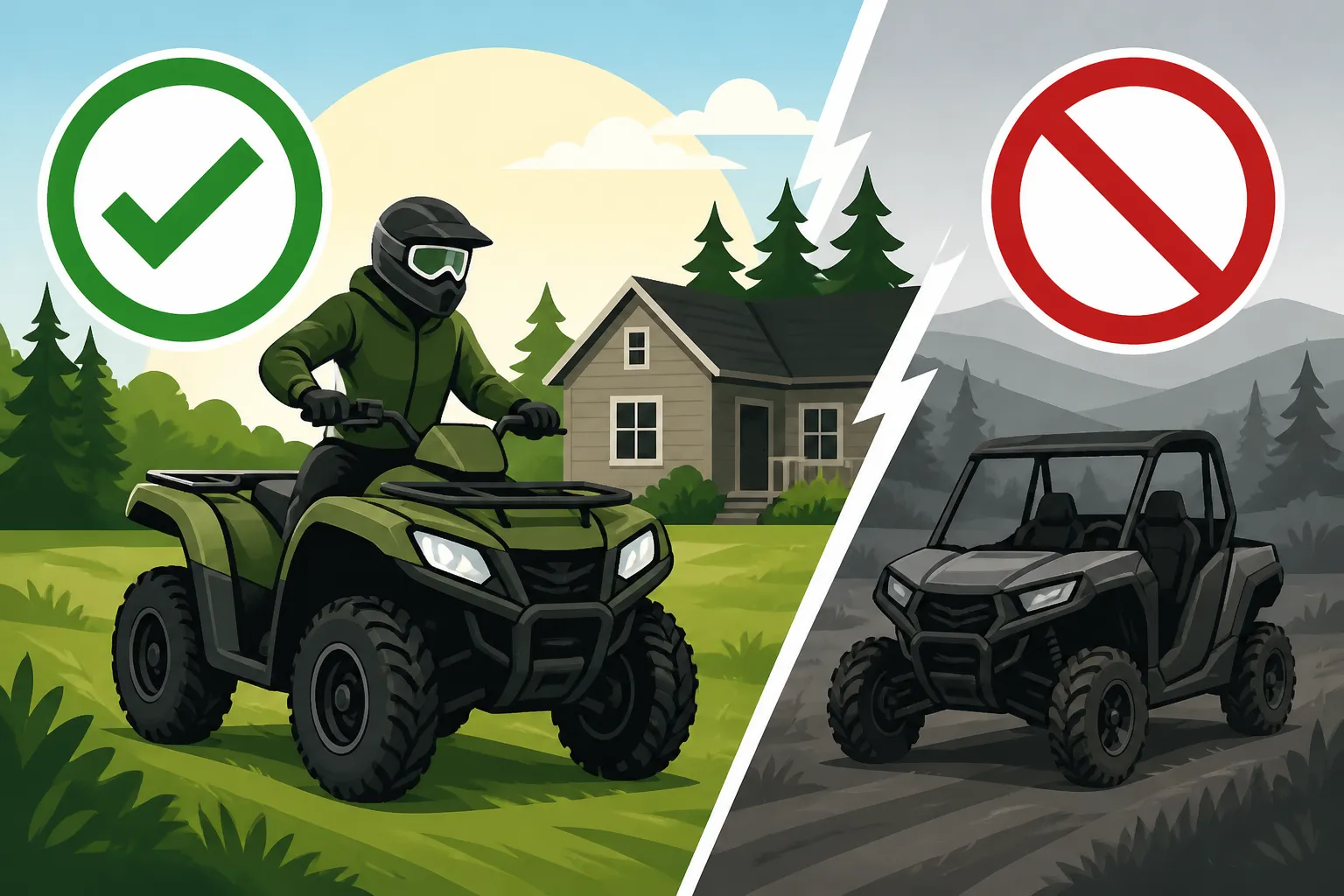
The critical distinction in New Hampshire is straightforward: if your OHRV is going to touch any ground that isn't legally your private property, it needs to be registered. This means if you ride your ATV in circles in your sprawling backyard, never once crossing a property line, a public road, or even a shared driveway, then, by the letter of the law, you generally do not need to register it. It's essentially considered a private recreational activity on your own domain.
However, the moment one tire rolls onto a town road, a state highway, a club trail, or even a neighbor's field (even with their verbal permission!), that unregistered machine becomes illegal. Imagine you have a fantastic network of trails on your 50 acres. You could ride all day long there, legally, without a registration. But if one of those trails happens to clip the corner of a utility easement that's technically public access, or if you decide to take a shortcut across your neighbor's undeveloped land to get to another part of your property, you've just ventured into registered-machine-only territory. This is where people often get caught, because what seems like a harmless shortcut or an accidental stray can lead to a ticket. This is precisely why the first piece of advice for any OHRV owner in New Hampshire is to understand [When New Hampshire Registration Applies].
What "Your Own Property" Truly Means
Okay, so "your own property" sounds simple enough, right? It's the land you own. But it's actually a bit more specific than that, and it's where misunderstandings can crop up. "Your own property" refers to land that you hold the deed to, or that is otherwise under your exclusive legal control. It generally doesn't extend to land you're leasing without specific OHRV rights, or land you're simply borrowing from a friend or family member for the day, even if they've given you permission. If you're on someone else's property, even with permission, the machine itself still needs to be registered if it's not your owned land.
Consider a common scenario: you own a beautiful patch of woods, but the only access is via a shared dirt road that's maintained by a homeowners' association or is actually a town-designated Class VI road. Even if you consider it "your" access, the moment you put a tire on that shared road, you're off your private, exclusive property. The same goes for easements, rights-of-way, or even certain drainage areas that might run through what you perceive as your land but are technically public access points. It's crucial to know your property lines, understand any public access points or easements on your land, and confirm that every inch of ground you intend to ride is truly and exclusively yours. When in doubt, it's always safer to register the machine, because ignoring this distinction can quickly turn a fun ride into a costly lesson.
Why New Hampshire Registration Exists (Even if You Don't Think You Need It)
While it might seem like just another bureaucratic hurdle, New Hampshire's OHRV registration system serves a vital purpose for the entire riding community and the state itself. It's not just about collecting fees; it's about building and maintaining the infrastructure that makes New Hampshire one of the best places to ride.
Funding Trails and Safety
The fees collected from OHRV registrations in New Hampshire aren't just squirreled away somewhere. They are directly reinvested into the OHRV system, primarily through the state's Bureau of Trails and its partnership with numerous volunteer OHRV clubs. These funds are absolutely essential for the creation, maintenance, and grooming of the vast network of trails that crisscross the state. Think about it: bridges need repair, culverts get washed out, signs need to be replaced, and trails constantly need clearing of brush and fallen trees. This work is expensive, and it’s labor-intensive.
Your registration dollars contribute directly to these efforts. They help pay for things like heavy equipment rentals for trail maintenance, materials for bridges, and even some of the administrative costs associated with coordinating these activities. Without this funding, the trails we all enjoy, from the expansive [Ride the Wilds in Coos County] to local connector routes, simply wouldn't exist or would quickly fall into disrepair. So, even if you primarily ride your own back field, if you ever dream of venturing out onto a club trail or a state-managed route, your registration helps ensure those opportunities are there when you're ready. To learn more about how your money contributes, check out [Where New Hampshire OHRV Fees Go] and [How New Hampshire Registration Money Funds Trails]. It truly is a community effort powered by these fees.
Avoiding Legal Headaches and Fines
Let's be realistic: even the most careful rider can make a mistake. You might misjudge a property line, or an unmarked trail might lead you briefly onto land that isn't yours. If you're riding an unregistered OHRV and you happen to cross that invisible line, you're suddenly in violation of the law. A conservation officer, a local police officer, or even a concerned landowner could spot you, and you could be facing a fine. These aren't just minor slaps on the wrist; [New Hampshire Fines for an Unregistered OHRV] can be quite substantial, definitely enough to make you wish you'd just registered your machine in the first place.
Beyond the fines, there's the inconvenience and stress of dealing with law enforcement, potential impoundment of your machine, and possibly even court appearances. It's a headache no one wants. Imagine you're riding your unregistered quad on what you believe is your land, but unbeknownst to you, a corner of a town easement crosses it. An officer observes you, and suddenly your fun afternoon turns into a legal ordeal. The peace of mind that comes with knowing your machine is properly registered allows you to explore without constantly worrying about legal repercussions. It removes the ambiguity and lets you focus on the joy of the ride.
Riding Safely and Legally Beyond Your Backyard
For many of us, the lure of New Hampshire's vast trail network is too strong to resist. While riding your own property is a great start, the true adventure often begins when you venture out. But this means understanding the rules for riding on land that isn't your own, even if it's private.
The Importance of Landowner Permission
If you plan to ride on someone else's private property – say, a friend's hunting land, a neighbor's extensive woodlot, or even a large tract of paper company land – verbal permission might feel sufficient, but it's rarely enough to protect you or the landowner. New Hampshire law explicitly stresses [New Hampshire Landowner Permission Rules]. The ideal scenario is always to have written permission. This document should clearly state who has permission to ride, on what dates, on which specific areas of the property, and what types of machines are allowed. It protects both parties by setting clear boundaries and expectations.
Think about it this way: your neighbor, good-hearted as they are, might verbally say, "Sure, ride wherever you like!" But if they sell their property next year, or if there's an incident and they forget the details of your conversation, a verbal agreement offers no proof. A written permission form, however, is concrete. You can even find templates for such agreements from legal document services like LawDepot, which can help you create a formal, clear document without too much fuss. Having a signed, dated form in your possession provides irrefutable evidence that you have the landowner's consent, which can be invaluable if a conservation officer questions your presence on the land.
Connecting to the Greater Trail Network
The real magic of OHRV riding in New Hampshire is undoubtedly its incredible, interconnected trail system. Areas like the famed [Ride the Wilds in Coos County] offer hundreds of miles of diverse terrain, allowing riders to travel between towns, visit local businesses, and experience the stunning beauty of the North Country. But to tap into this extensive network, your OHRV absolutely must be registered.
These trails are maintained by dedicated volunteer clubs and supported by state funds, all of which are reliant on registration fees. When you register your machine, you're not just getting a decal; you're buying into a system that provides and preserves these amazing riding opportunities. Many riders find that joining one of the many OHRV clubs throughout the state is a fantastic way to enhance their riding experience. Not only do clubs often provide detailed maps, local knowledge, and organize group rides, but New Hampshire also offers a [New Hampshire's Club Member Discount] on registration fees. This discount effectively makes joining a club a win-win: you save money on your registration, and your club dues further support the trails you love to ride. It’s a great way to ensure you can legally access all the adventure New Hampshire has to offer.
Practical Steps for Every New Hampshire OHRV Owner
Understanding the rules is one thing, but knowing the practical steps to ensure you're always riding legally and responsibly is just as important. Whether you're a seasoned rider or new to the sport, a few key pieces of information can make all the difference.
When to Get Registered
It's always best practice to get your OHRV registered before you even think about venturing off your own private property. Don't wait until the last minute before a big ride or until the trails are officially open for the season. New Hampshire operates on a [New Hampshire's May to April Registration Year], meaning registrations are valid from May 1st through April 30th of the following year. This annual cycle means that if you buy a registration in October, it will still expire on April 30th, just like one bought in May.
Many riders choose to register online through the New Hampshire Fish and Game Department's website, which is often the quickest and most convenient method. You can also register in person at a Fish and Game agent, or often directly through a powersports dealer when you purchase a new machine. It's a fairly straightforward process, and having that registration in hand removes any doubt about your machine's legality. Getting it done early allows you to focus on planning your next adventure rather than worrying about paperwork. For a complete guide, consider reviewing [Registering an OHRV in New Hampshire]. If you've just bought a used machine, there are specific steps to follow for [Registering a Machine Bought Privately in New Hampshire].
Understanding Your OHRV's Decals and Certificate
Once your OHRV is registered, you'll receive a printed Certificate of Registration and two numbered decals. These aren't just decorative stickers; they are proof that your machine is legally allowed on public trails and approved roads. The decals must be affixed in a clearly visible location on the front and rear of your OHRV, usually on the fenders or side panels. This is crucial for easy identification by law enforcement and trail wardens.
Beyond the decals, the physical Certificate of Registration is equally important. [New Hampshire OHRV Decals and the Certificate] clarifies that you must carry this certificate with you whenever you're operating your OHRV off your private property. This can be the original document or a clear copy. Think of it like your driver's license or car registration; it's proof of ownership and compliance. If you're ever stopped on a trail or road, an officer will ask to see it. Keeping it in a waterproof bag or a secure compartment on your machine is a smart move. In the unfortunate event that your decals become lost or damaged, or your certificate goes missing, there's a process for [Replacing Lost New Hampshire Decals] to ensure you remain compliant and can continue riding without interruption. Don't let a missing piece of paper or a faded decal sideline your riding plans!
Disclaimer
This article is for general informational purposes only and does not constitute professional advice. Laws, prices and regulations vary by location and change over time. Consult a qualified professional for guidance on your specific situation.