When Leaving Your Own Property Requires a Registration
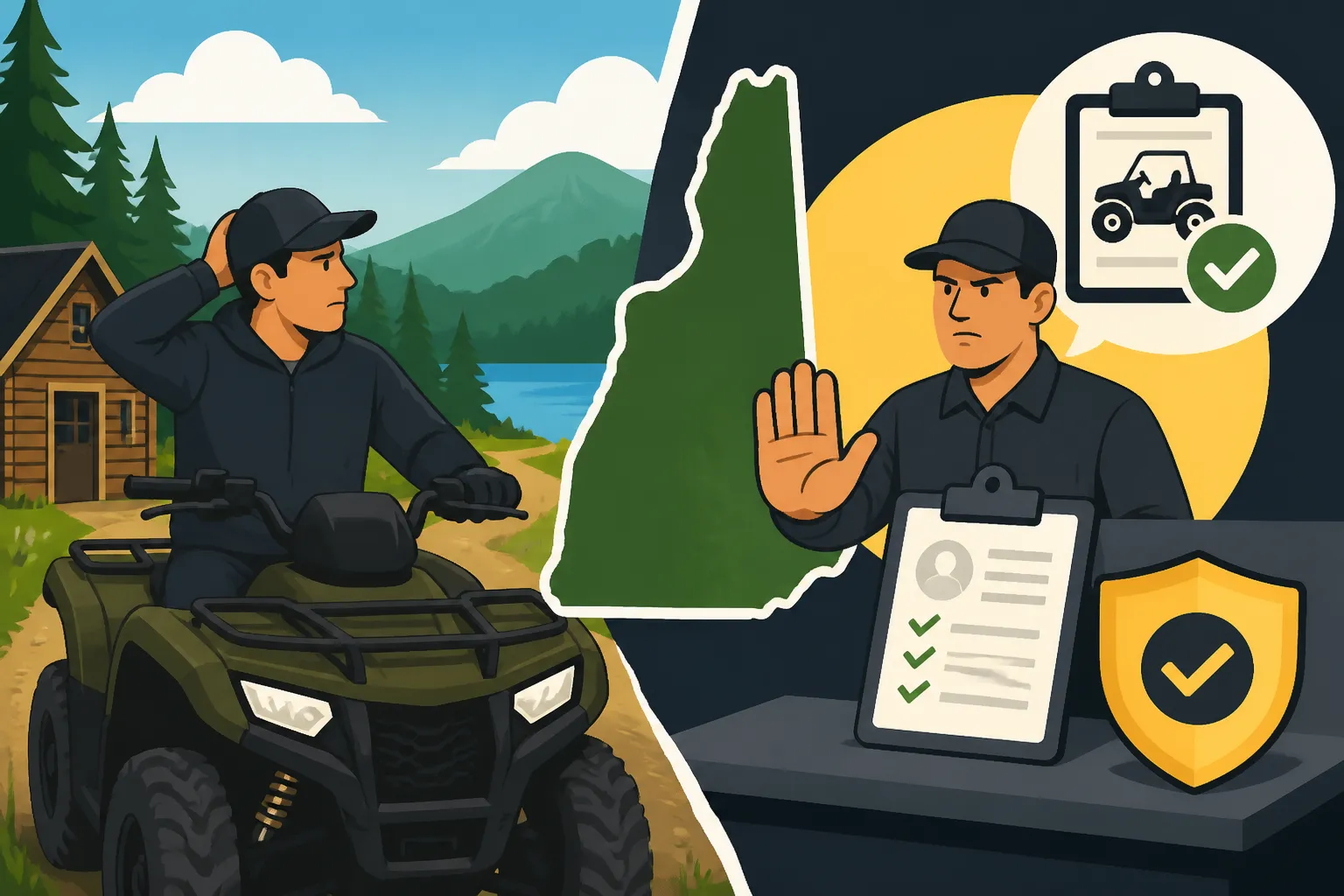
It's a common question, and frankly, a confusing one for many OHRV owners in New Hampshire: "Do I really need to register my ATV or UTV if I'm just riding it around my own property?" The answer, like many things in life, isn't always a simple yes or no, but it hinges entirely on what "your own property" truly entails and whether a single wheel ever strays beyond its bounds. This guide will cut through the confusion, explaining precisely when that New Hampshire OHRV registration becomes a non-negotiable requirement the moment you consider venturing off your personal acreage.
The Core Rule: Private Property vs. Public Access
Let's start with the most fundamental principle in New Hampshire when it comes to OHRV registration. It boils down to a clear distinction between riding on land you privately own and riding on anything else. Ignoring this distinction can lead to headaches, fines, and even losing your riding privileges, which nobody wants when they're out trying to enjoy the beautiful New Hampshire landscape.
Riding Exclusively on Your Own Land
If you are fortunate enough to own a sprawling piece of land, perhaps a large farm, a multi-acre woodlot, or a private estate with its own network of trails, you might believe you're exempt from registration. And for the most part, you'd be right! If your OHRV (Off-Highway Recreational Vehicle) never, ever leaves the confines of your own property, and crucially, your property doesn't contain any land open to public access, then New Hampshire generally doesn't require you to register that machine.
Think of it like this: if you could spend an entire day riding loops, crossing fields, and navigating wooded paths, all without ever crossing a property line, a public road, or even a utility easement that grants public access, then your machine can remain unregistered. This scenario is ideal for someone who has a dedicated riding area completely isolated from any public thoroughfare. However, this is where the definition of "your own land" becomes critical. It's not just about the deeded acreage; it's about whether any part of it is considered public right-of-way, even if it feels like part of your yard.
The Moment You Touch Public or Other Private Land
Here's where the rubber meets the road—literally. The very instant one of your OHRV's tires touches any land that isn't exclusively yours and entirely private, a registration is required. This isn't just about clearly marked public trails or busy highways. It encompasses a vast array of scenarios that might surprise you.
For example, imagine your property borders a class VI road—a town road that might be unmaintained and looks like a dirt path. To you, it might feel like an extension of your driveway. But legally, it's a public way. The moment you drive onto it, even for a few feet, your OHRV needs to be registered. The same applies to state-owned land, whether it's a state forest, park, or even a small strip of land along a river. Rail trails, which are incredibly popular for OHRV riding in New Hampshire, are another classic example of public land where registration is always mandatory. Many riders assume that if land is "unposted" it's fair game, but in New Hampshire, [New Hampshire Landowner Permission Rules] dictate that even unposted private land is off-limits without explicit permission, and riding it without registration is still a violation.
The penalties for riding an unregistered OHRV on public land or without permission on private land can be significant, ranging from fines to potential impoundment of your machine. It's a risk that far outweighs the cost and convenience of simply getting your machine registered. For details on these consequences, you might want to look into [New Hampshire Fines for an Unregistered OHRV].
Navigating the Grey Areas and Common Misconceptions
The rules can feel a bit like a minefield if you're not fully aware of the specifics, especially when dealing with property boundaries that might not be as clear-cut as you'd hope. Let's tackle some of those tricky situations.
Crossing a Road or a Neighbor's Property
One of the most common misconceptions is the "quick hop" scenario. You know the one: "My buddy lives right across the paved town road, and I just need to cross it to get to his place." Or perhaps, "The trail picks up again just on the other side of this little patch of woods owned by my neighbor." In New Hampshire, there's no allowance for a "quick hop" over public land, no matter how brief.
Even if you're only crossing a town road to get from one section of your property to another, or to access a trail on the other side, that machine must be registered. The road itself, its shoulder, and often the ditch on the side are all considered public right-of-way. The same goes for crossing a neighbor's property: you'll need not only their explicit written permission, but if you access their property via any public way, your OHRV still needs to be registered. It's a layer of complexity that often frustrates riders, but it's the law. For specific rules about navigating public roadways, check out [Crossing a Road on an OHRV in New Hampshire]. It's crucial to understand that even momentarily engaging with public infrastructure triggers the registration requirement.
Frozen Lakes, Ponds, and Other "Unmarked" Areas
Winter riding brings its own set of unique circumstances and often leads to more confusion. "It's just a frozen lake, how can that be public land?" you might ask. Well, in New Hampshire, pretty much any public body of water, once frozen, is still considered accessible and often falls under regulations that require OHRV registration if you're riding on it.
Riding on a frozen lake, pond, or river usually means you are on public property, and therefore your OHRV needs to be registered. This is especially true if you are accessing these frozen surfaces from a public launch or property. Additionally, many of these frozen surfaces connect to established snowmobile trail networks, which are explicitly public access and require registration. Safety is also a huge factor here; registered machines can be identified in emergencies. Understanding the specifics of [Frozen Lakes and New Hampshire Registration] can save you a lot of trouble. Don't assume that because there are no paved roads or clear trails, you're exempt.
The Role of Written Permission
While written permission is absolutely essential if you plan to ride on private land that you don't own, it's important to understand what it doesn't do. Having a signed permission slip from your neighbor allowing you to ride across their back forty is fantastic, and highly recommended. Forms for this, such as those available from LawDepot, can formalize the agreement and protect both parties. However, that permission does not override the state's registration requirement if you need to use any public land to get to your neighbor's property.
Let's clarify: If your neighbor's property is landlocked by public roads or other private properties where you don't have permission to cross, you'll need to use a public way to get there. The moment you do, your OHRV needs to be registered. Written permission grants you the right to ride on that specific private land, but it doesn't give you a free pass on public access points or connecting roads. Always prioritize securing both the necessary permission and the correct state registration for comprehensive legal protection.
Why Registration Matters Beyond Just Legal Access
Beyond the immediate legal requirements, getting your OHRV registered in New Hampshire serves several vital functions that benefit all riders and the integrity of the trail system itself. It's not just a hoop to jump through; it's an investment in the sport you love.
Funding and Trail Maintenance
Perhaps one of the most significant reasons to register your OHRV is that your registration fees directly fuel the maintenance and expansion of New Hampshire's incredible trail network. A portion of every registration fee goes into a dedicated fund managed by the New Hampshire Fish and Game Department. This fund, in turn, provides grants to volunteer OHRV clubs across the state. These clubs are the backbone of the trail system, tirelessly working to clear trails, build bridges, install signage, and keep the routes safe and enjoyable for everyone.
Without these registration dollars, the trails we all love to ride wouldn't exist in their current form. So, when you pay your registration fee, you're not just buying a sticker; you're contributing to the very infrastructure that makes New Hampshire an OHRV rider's paradise. Understanding [Where New Hampshire OHRV Fees Go] really highlights the community aspect of OHRV riding in the state.
Safety and Accountability
Registration also plays a crucial role in safety and accountability. Every registered OHRV receives decals and a certificate that uniquely identifies the machine and its owner. In the unfortunate event of an accident, a machine breakdown, or even theft, this registration information is vital for law enforcement and emergency services. It helps them quickly identify the machine and contact the owner, ensuring proper procedures are followed and assistance can be rendered efficiently.
The visible decals are not just for show; they signal to trail monitors and law enforcement that the machine is legally allowed on public trails. For more on these important identifiers, check out [New Hampshire OHRV Decals and the Certificate]. It's a simple system that brings a layer of order and responsibility to the trail.
Avoiding Penalties and Hassles
Let's be blunt: riding an unregistered OHRV where registration is required is simply not worth the risk. New Hampshire Fish and Game conservation officers are highly active on the trails and roads, ensuring compliance. Being caught riding an unregistered machine can result in substantial fines, which often far exceed the annual cost of registration. Furthermore, your machine could be impounded, leading to additional towing and storage fees, not to mention the immense hassle and stress of retrieving it.
Imagine having your riding day cut short, facing a hefty fine, and then having to figure out how to get your UTV back. It's a scenario that's entirely avoidable. Investing in a valid registration is a small price to pay for peace of mind, uninterrupted riding, and knowing you're fully compliant with state law.
When Is Registration Required? A Quick Reference
To help clarify the scenarios, here's a quick table summarizing when you generally need to register your OHRV in New Hampshire:
| Scenario | Registration Required? | Explanation |
|---|---|---|
| Riding exclusively on your own private land with no public access | No | If your OHRV never leaves your private property and there are no public easements or rights-of-way. |
| Riding on any public road (paved, dirt, class VI) | Yes | Even crossing a road, or riding on its shoulder or ditch, is considered using a public way. |
| Riding on designated OHRV trails (club trails, state trails) | Yes | All official OHRV trail systems are public access and require current registration. |
| Riding on any state-owned land (forests, parks) | Yes | Unless explicitly stated otherwise, state lands require registration for OHRV use. |
| Riding on unposted private land | Yes | Even if land isn't posted "No Trespassing," you need landowner permission and registration if accessing via public land. |
| Crossing a neighbor's land | Yes | You need their written permission, and if you access their land via public ways, your machine needs to be registered. |
| Riding on a frozen public lake or pond | Yes | Public waterways, even when frozen, typically require OHRV registration for use. |
| Transporting your OHRV to a trail or private land on a trailer | No | The machine itself does not need to be registered while being trailered. Registration applies when it's being operated off-highway. |
Ultimately, if you have any doubt at all, the safest and most responsible approach is to register your OHRV. It ensures you're riding legally, contributing to the upkeep of the trails, and can enjoy the beautiful New Hampshire outdoors without fear of penalty.
Disclaimer
This article is for general informational purposes only and does not constitute professional advice. Laws, prices and regulations vary by location and change over time. Consult a qualified professional for guidance on your specific situation.