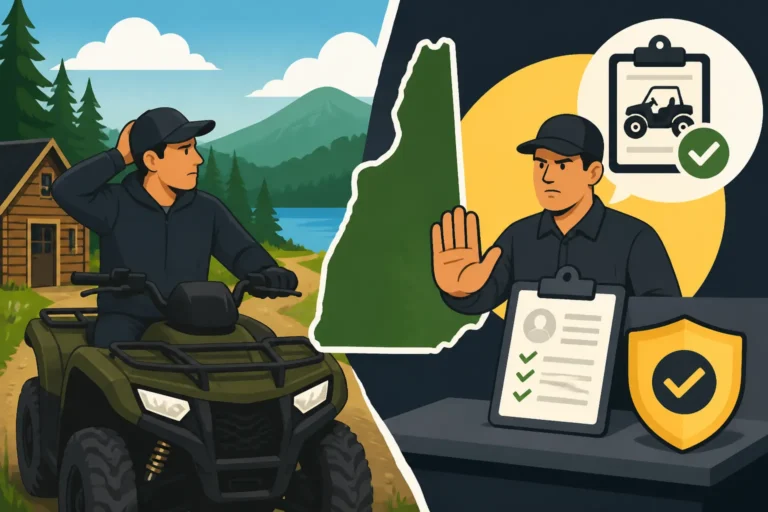
New Hampshire Antiques Twenty-Five Years and Older
Many of us have a soft spot for classic machines, whether it's a vintage quad we inherited or a rugged, old-school side-by-side we painstakingly restored. But when it comes to hitting the trails in New Hampshire, navigating the registration process for these older, cherished OHRVs can feel a bit like trying to find parts for a forgotten model – confusing and not always straightforward. This guide is here to cut through that confusion, offering a comprehensive look at how to properly register your antique off-highway recreational vehicle in the Granite State, ensuring your classic can legally enjoy the scenic beauty of our trails.
What Exactly Qualifies as an Antique OHRV in New Hampshire?
Before you even think about decals and paperwork, the very first question on most folks' minds is, "Does my old machine even count as an antique?" It's a fair question, and thankfully, New Hampshire has a pretty clear definition. It’s not just about how it looks or how many years you’ve had it; there’s a specific age requirement that unlocks the special antique registration category.
The Twenty-Five Year Rule and Why It Matters
In New Hampshire, an OHRV earns its antique stripes when it reaches a specific age: twenty-five years or older. This isn't just a number pulled out of thin air; it’s a threshold that often signifies a machine moving from simply "used" to "vintage" or "collectible." Think about it: a quad from the late 90s, while perhaps still running strong, is a very different beast from a machine built in the 1970s or early 80s. That twenty-five-year mark is where the state acknowledges its historical significance and, frankly, its likely different usage patterns. [When a Quad Turns Twenty-Five and Counts as Antique]
This age requirement is crucial because it's the gateway to a different kind of registration – one that comes with unique benefits and fewer ongoing obligations. Without meeting this age criterion, your cherished older machine would simply fall under the standard OHRV registration rules, requiring annual renewals and different fee structures. So, before you get too excited, grab that VIN and check the manufacturing date!
The "why it matters" aspect extends beyond just the age of the machine. It speaks to a recognition within the state that these older vehicles often aren't used for high-speed, aggressive trail riding in the same way a brand-new performance UTV might be. Instead, they might be enjoyed for leisurely cruises, historical displays, or simply as a nostalgic way to experience the trails. The twenty-five-year rule helps to categorize these machines appropriately within the broader OHRV framework.
Beyond Age: Originality and Purpose of Use
While age is the primary qualifier, the spirit of "antique" also implies a certain level of originality and a particular purpose of use. We're generally talking about machines that largely retain their factory configuration, or have been restored to that condition. If you've taken a 30-year-old ATV and dropped in a custom engine, added a long-travel suspension, and turned it into a completely unrecognizable modern-performance machine, it might stretch the definition of an "antique" in the eyes of the registration agents. The idea is to celebrate the machine for what it was, not necessarily what it could be transformed into.
These antique OHRVs are often seen at local events, parades, or enjoyed on gentler trails where speed isn't the primary goal. They're part of a growing interest in preserving the history of off-roading, and their use often reflects that appreciation for simpler times and mechanical heritage. This isn't to say you can't ride them on any legal trail; it's more about the typical context in which these machines are cherished.
For example, an early 1980s three-wheeler, meticulously restored to its original condition, would be a prime candidate for antique registration. The owner likely isn't planning to race it through rugged terrain, but rather to enjoy its unique character and perhaps show it off at an OHRV club gathering. This blend of age, originality, and respectful use really defines what an antique OHRV represents in New Hampshire.
The Unique Perks of Antique OHRV Registration
Once your machine qualifies as an antique, you unlock a suite of benefits that make owning and registering these classic rides in New Hampshire particularly appealing. The state recognizes the unique nature of these vehicles and has tailored the registration process to reflect that. It’s a way of celebrating the history of off-roading without burdening owners with the same ongoing requirements as newer machines.
A Permanent Registration for Your Timeless Machine
This is, without a doubt, one of the biggest draws for registering an antique OHRV: the registration is permanent. Let that sink in for a moment. No more scrambling to renew every year, no more keeping track of expiry dates, and no more recurring fees. Once you've completed the initial antique registration process, your machine is registered for as long as you own it. [A Permanent Antique Registration for $54.50]
Think about the sheer convenience this offers. For those of us who forget important dates or simply dread administrative tasks, this permanent status is a huge relief. It means you can focus more on enjoying your vintage ride and less on jumping through bureaucratic hoops. This single-time registration acknowledges that these machines are often passion projects, not daily drivers, and rewards their owners for preserving a piece of OHRV history. It's truly a "set it and forget it" solution for your classic. [Buying a Registration You Never Have To Renew]
Comparing this to standard OHRV registration, which requires annual renewal and typically expires on April 30th each year, the permanent nature of the antique registration offers significant peace of mind. You’re covered indefinitely, as long as the machine remains in your possession, making it an excellent option for collectors and long-term enthusiasts.
Simplified Fees and What They Cover
Along with the permanent status comes a simplified fee structure. Instead of paying an annual fee that can fluctuate or accumulates over years, antique OHRV registration involves a single, one-time payment. This upfront cost covers the administrative work and ensures your machine is entered into the state’s system for good, eliminating future financial obligations for registration.
While I can't give you exact figures (those can change, so always check the official New Hampshire Fish and Game website!), the shape of the cost is straightforward: it's a single fee. This one-time payment contributes to the overall OHRV fund, which is vital for maintaining and expanding the trail systems we all enjoy. This fund supports everything from trail grants for volunteer clubs to enforcement efforts, ensuring that New Hampshire remains a premier destination for off-road enthusiasts. [What an Antique Registration Costs]
In the long run, this single fee can be a real money-saver, especially if you plan to keep your antique OHRV for many years. While the initial outlay might seem a bit higher than a single year's standard registration, it quickly pays for itself when you consider the cumulative cost of renewing a standard registration year after year. It's an investment in your machine's lasting legal status and a testament to its enduring appeal.
Preserving History on New Hampshire Trails
Registering your antique OHRV isn't just about legal compliance; it's also about being part of a larger community that values the history and evolution of off-highway riding. When you bring your vintage machine to the trails, you're not just riding; you're showcasing a piece of history, sparking conversations, and educating newer generations about the origins of their sport.
Imagine pulling up to a trailhead on a perfectly restored vintage quad – you're almost guaranteed to draw a crowd and share stories. These machines represent the roots of off-roading, and keeping them operational and legally registered helps to preserve that heritage for everyone. It’s a tangible link to the past, reminding us of how far OHRV technology has come, and the enduring fun these machines provide.
Many OHRV clubs across New Hampshire appreciate and sometimes even organize events around these classic vehicles. Your registered antique OHRV contributes to the vibrant tapestry of the state's riding culture, demonstrating that old machines still have plenty of life and adventure left in them. It's a way to connect with fellow enthusiasts who share a passion for mechanical history and the great outdoors.
Navigating the Antique OHRV Registration Process
Alright, you've got a classic OHRV that meets the age requirement, and you're excited about the permanent registration. Now, let's talk about the nitty-gritty: the actual process of getting your antique registered. While it might seem a bit different from a modern machine, it's largely straightforward if you know what documents to gather and where to go.
Required Documentation for Your Vintage Ride
The key to a smooth antique registration is having all your ducks in a row when it comes to paperwork. For any vehicle, proof of ownership is paramount, and with older machines, this can sometimes be the trickiest part. Ideally, you’ll have a clear bill of sale from the previous owner, detailing the machine's VIN, make, model, and the date of sale. If you're buying a used ATV in New Hampshire, ensure you get a robust bill of sale. [New Hampshire ATV Bill of Sale Requirements]
However, if your machine has been in the family for ages, or you acquired it under less formal circumstances, you might need to get creative. A notarized affidavit of ownership, stating how and when you came into possession of the OHRV, can sometimes be accepted. While New Hampshire doesn't issue titles for OHRVs, which simplifies things in some ways, it also means a clear chain of ownership documentation, like a bill of sale, becomes even more important. [Why New Hampshire Issues No OHRV Title]
Beyond ownership, you’ll need proof of the machine’s age. The VIN is usually the best way to determine the manufacturing year, and sometimes an older registration certificate or even a manufacturer's statement can help. Don't forget your personal identification, such as a valid driver's license, as you’ll need that when you visit the registration agent. If any of your ownership documents are missing or unclear for a very old machine, a tool like LawDepot can be incredibly helpful for creating a legally sound bill of sale or an affidavit of lost documentation, which might be accepted, although always confirm specific requirements with New Hampshire Fish and Game first. Having these documents ready makes the process much smoother.
Where to Submit Your Application
Unlike some standard OHRV registrations that might offer online options, antique OHRV registration typically requires an in-person visit. You'll want to head to a designated OHRV registration agent. This could be certain powersports dealers who offer registration services, or often, the New Hampshire Fish and Game Department headquarters or one of their regional offices. Some town clerks are authorized to process OHRV registrations, but it’s always a good idea to call ahead and confirm they handle antique registrations, as not all agents are equipped for every type of transaction. [Where to Register an OHRV in New Hampshire]
When you go, make sure you have the completed New Hampshire OHRV Registration Application form. This form asks for all the pertinent details about you and your machine, and filling it out accurately beforehand will save you time at the counter. Double-check all the information, especially the VIN, to avoid any delays or issues. [The New Hampshire OHRV Registration Application] The staff there will review your documents, verify the machine’s eligibility, and process your one-time fee. It's a hands-on process that ensures everything is correctly recorded for a permanent status.
It's really important to confirm that the agent you choose is authorized to process antique OHRV registrations. While many places can handle standard renewals, the antique process sometimes requires a bit more expertise or specific state-level approval. A quick phone call can save you a wasted trip.
Receiving Your Decals and Certificate
Once your application is approved and the fee is paid, you'll walk away with a very important package: your permanent antique OHRV registration certificate and a set of specific antique decals. The certificate is your official proof of registration and needs to be carried with you whenever you're operating the machine off your own property. It’s not just a piece of paper; it’s your legal pass to the trails. [New Hampshire's Printed Certificate and Two Decals]
The decals are equally important. These aren't the standard annual decals; they're unique to antique OHRVs and signify its special status. They typically have a distinct design or marking to differentiate them. Make sure to apply them correctly to your machine as specified by the New Hampshire Fish and Game Department. Proper placement ensures they are visible to enforcement officers, preventing any unnecessary stops or questions while you're out enjoying your ride. [New Hampshire OHRV Decal Placement] Take your time applying them to a clean, dry surface for maximum adherence and longevity, ensuring your machine is clearly identified as a legally registered antique.
Remember, even though the registration is permanent, you still need to keep the certificate safe and the decals visible. If you ever lose your decals or they become damaged, there's a process for replacing them, though it's much less frequent than with annual renewals.
Important Considerations for Antique OHRV Owners
Owning and riding an antique OHRV in New Hampshire comes with its own set of unique joys and responsibilities. While the permanent registration simplifies things significantly, there are still a few key considerations to keep in mind to ensure your vintage adventures are safe, legal, and enjoyable for years to come.
Trail Access and Restrictions for Antique Machines
Generally speaking, a properly registered antique OHRV has the same access rights to New Hampshire's vast trail network as any modern machine. This means you can explore designated OHRV trails, club trails (if you're a member of a supporting club), and any roads that towns have legally opened to OHRV traffic. However, there are still universal rules that apply, regardless of your machine's age. For instance, specific rail trails or state park areas might have width restrictions, often capping machines at 50 inches. If your antique side-by-side or a particularly wide vintage quad exceeds this, you'll need to be mindful of those limitations. [New Hampshire Trails With a 50-Inch Limit]
It's also worth noting that while your machine might be an antique, the operator still needs to comply with all standard OHRV laws. This includes age requirements for riders and the necessity of having an OHRV safety certificate if you're under a certain age and don't possess a valid driver's license. [New Hampshire OHRV Registration Age Requirement] [New Hampshire Safety Education Requirements] The state's focus is on safe riding practices for all operators, irrespective of what they're riding. The spirit of antique riding often leans towards more leisurely paces, which naturally aligns with safe trail use, but always adhere to posted speed limits and trail etiquette.
Therefore, before you head out on a new trail, it's always a good practice to check with the local club or the New Hampshire Fish and Game website for any specific trail restrictions, especially regarding width or any temporary closures. Just because your machine is a classic doesn't mean it's exempt from general trail rules.
Maintenance and Safety on Older Machines
Let's be realistic: an antique OHRV, by its very nature, might require a bit more TLC than a brand-new machine. Parts can be harder to find, and components that have seen decades of use will naturally have more wear and tear. This means that pre-ride checks become even more critical for antique owners. Before every outing, thoroughly inspect your tires, brakes, lights, and steering components. A small issue on a new machine might be a minor inconvenience, but on an older one, it could quickly become a more significant problem.
Safety equipment is non-negotiable, regardless of your OHRV’s age. While your classic quad might not have all the advanced safety features of modern machines, your personal protective gear certainly should. Always wear a helmet, especially if you're under 18 or riding on public land. [New Hampshire Helmet Law for OHRV Riders] Eye protection is also crucial, even if your machine has a small windshield. Dressing appropriately for the weather and terrain, and knowing your machine's limits – and your own – will ensure a safe and enjoyable ride.
Embrace the journey of maintaining your antique. It's part of the charm! Finding original parts, or carefully fabricating new ones, can be a rewarding aspect of antique OHRV ownership. Just make sure that all repairs and maintenance prioritize safety and reliability, ensuring your timeless machine is always trail-ready.
Selling Your Antique OHRV: Transferring the Permanent Registration
One of the great advantages of New Hampshire's permanent antique OHRV registration is that it transfers with the machine when you sell it. This means the registration isn't tied solely to you as the owner; it's tied to the vehicle itself. When you pass your cherished antique on to a new enthusiast, they won't have to go through the entire initial registration process from scratch.
To facilitate the transfer, the new owner simply needs to submit the appropriate paperwork to the New Hampshire Fish and Game Department, along with a transfer fee. This process updates the ownership records in the state's system, essentially transferring the permanent registration from your name to theirs. [New Hampshire's $25.50 OHRV Transfer Fee] It’s a clean and efficient way to ensure the machine remains legally registered without requiring a brand-new registration for the new owner.
As with any vehicle sale, a proper bill of sale is essential. This document proves the transfer of ownership and is vital for the new owner to complete the registration transfer. Make sure your bill of sale includes all necessary details: the date of sale, the purchase price, the VIN of the OHRV, and the names and signatures of both buyer and seller. Tools like LawDepot can assist in generating a professional and comprehensive bill of sale, ensuring all the legal bases are covered for a smooth transfer of your antique OHRV. [Selling an OHRV in New Hampshire] This protects both parties and makes the transition seamless for the machine's continued enjoyment on New Hampshire trails.
Antique OHRV Registration Comparison
To give you a clearer picture of how antique registration stands apart from a standard annual registration, here's a quick comparison. This table highlights the key differences that might influence your decision, or simply clarify the benefits of having a certified antique.
| Feature | Standard Annual OHRV Registration | Antique OHRV Registration |
|---|---|---|
| Eligibility | Any OHRV meeting state safety and equipment requirements. | OHRV 25 years or older as determined by manufacturing date. |
| Renewal | Annually, typically expiring April 30th. | Permanent, no annual renewal required as long as you own it. |
| Fee Structure | Annual fee (variable based on residency/club membership). | Single, one-time fee upon initial registration. |
| Certificate | Annual registration certificate. | Permanent antique registration certificate. |
| Decal Type | Annually issued decals (color changes each year). | Unique, permanent antique decals. |
| Transferability | Requires new owner to complete a new standard registration/transfer. | Permanent registration transfers with machine; new owner completes transfer of ownership. |
| Purpose | General recreational use, daily trail riding, utility. | Often for historical preservation, limited recreational use, show. |
Disclaimer
This article is for general informational purposes only and does not constitute professional advice. Laws, prices and regulations vary by location and change over time. Consult a qualified professional for guidance on your specific situation.