Blaze Orange on a Club Trail
Blaze orange can feel out of place on an ATV or UTV trail, but during New Hampshire’s firearms deer season it helps hunters see riders and riders spot hunting activity. The key is knowing when orange is required, how to wear it so it stays visible, and why club-trail access does not cancel hunting-season precautions.
When blaze orange matters on a New Hampshire club trail
New Hampshire’s blaze-orange requirement applies to OHRV operators and passengers riding during the firearms season for deer. A club trail does not create an exception: if it is open to OHRVs during the applicable hunting period, riders still need to follow the safety rule. The requirement is about visibility around hunting activity, not whether a trail belongs to a club.
The season dates can change, and access conditions vary from one trail system to another. Before riding, check the current hunting rules with New Hampshire Fish and Game and confirm the trail is open with the club or land manager. Start with New Hampshire Rules for Riding in Hunting Season and New Hampshire Trail Status Before You Ride. A trail shown on a map may have a temporary closure or a seasonal restriction that affects your plans.
Keep in mind that “hunting season” is not one continuous period with the same rules everywhere. Different game seasons and hunting methods can have different dates. The blaze-orange rule discussed here concerns the firearms season for deer; do not assume that dates for another hunting season set the requirement. Confirm the current dates and clothing standard through an official source before you head out.
| Before the ride | What to check |
|---|---|
| Hunting calendar | Whether the firearms deer season is open on the day you plan to ride |
| Trail status | Whether the club trail is open and whether there are hunting-related restrictions |
| Clothing | Whether each rider has enough blaze orange to meet the current rule and remain visible |
| Route | Whether the trail passes through active hunting areas or shared access land |
| Machine and papers | Whether your OHRV is registered and you have the required documents |
Blaze orange is a practical precaution even when a rider is not certain whether hunters are nearby. Club systems often cross land used for several purposes, and hunters may be approaching from a different access point than the one riders use. A bright garment makes a rider easier to identify as a person, especially in wooded terrain, changing light, or vegetation that hides the machine.
The orange requirement is only one part of riding responsibly during the season. Follow posted signs and trail closures, stay on the marked route, and give hunters space. If you encounter a hunting party or see a vehicle parked at a trail entrance, slow down and proceed carefully. For more on sharing the corridor, see Sharing a New Hampshire Trail With Hunters.
How to wear blaze orange so it stays visible
Choose clothing that is clearly fluorescent orange, rather than a muted orange, red, or camouflage pattern with a little orange mixed in. The point is to create an unmistakable patch of color that a person can recognize through trees and brush. Check the current state standard for how much orange is required and how it must be visible; do not rely on an old garment or a retailer’s general description as proof that it meets the rule.
A vest or jacket is often a straightforward option because it can be worn over riding layers and is visible from several directions. A bright hat can add visibility, but it should not be treated as a substitute for whatever amount of clothing the current rule requires. Riders should consider visibility from the front, sides, and back, not just from behind while standing beside a parked machine.
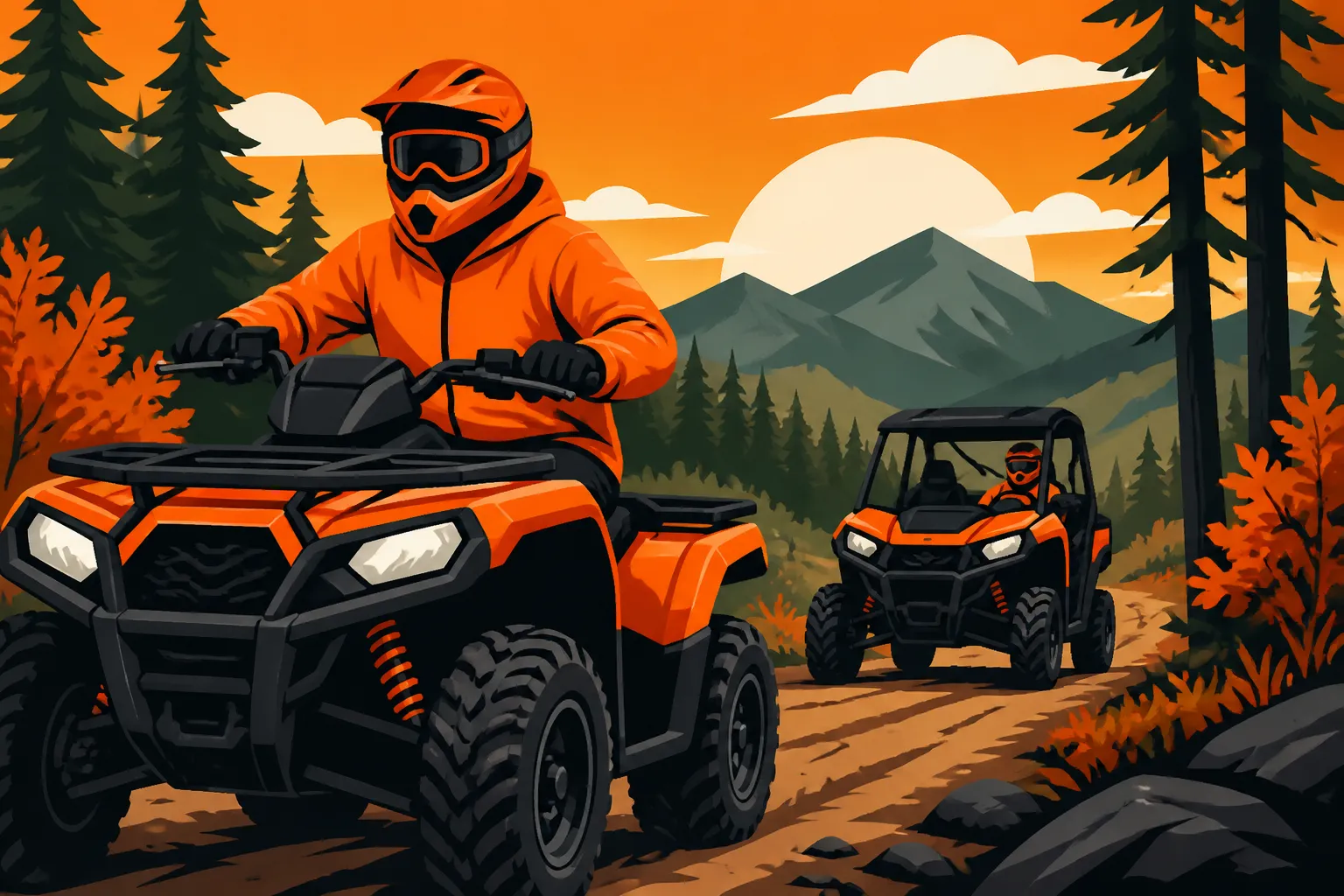
For a UTV, do not assume that the roof, windshield, doors, or bright body panels take the place of clothing. The requirement applies to people riding the machine. A rider partly hidden by a cab, helmet, or seat may be less visible than someone standing in the open, so wear orange on the body where it can be seen. Passengers need to think about their own clothing too; one person’s vest does not cover everyone in the vehicle.
A few practical checks help prevent the garment from becoming ineffective once the ride starts:
- Put the orange layer on before leaving the staging area, not after reaching a trail junction.
- Make sure a backpack, hydration pack, jacket, or UTV harness does not cover most of the bright area.
- Keep the fabric clean enough to remain vivid and replace it if it is badly faded, torn, or heavily obscured.
- Check that the orange remains visible while seated on the machine and while wearing your helmet and other protective gear.
- Carry a spare layer if a group member may arrive without suitable clothing.
Avoid fastening loose fabric where it could catch in a wheel, belt, or other moving part. A vest or jacket should fit securely and allow normal movement. On a UTV, passengers should be able to wear the orange layer without interfering with seat belts or safe entry and exit.
You can find blaze-orange riding layers through outdoor retailers, local sporting-goods stores, or online marketplaces such as Amazon. The seller or product title is not enough to establish that an item meets New Hampshire’s current requirement. Check the garment’s description and construction, and verify the legal standard with the state before relying on it.
Riding a club trail during hunting season
A club trail is a shared route, not a guarantee that no hunting is taking place nearby. The trail may cross private land, leased land, or a corridor where the landowner allows more than one lawful use. Respect signs and barriers even if the trail appeared open the last time you rode it. For related guidance, see New Hampshire Rules on Leased Trail Land and New Hampshire Rules for Riding a Closed Trail.
Plan for reduced visibility and unexpected activity. Forest cover can make it difficult to see around a bend, and a hunter may be positioned well away from the trail itself. Ride at a pace that lets you stop safely, especially near trail intersections, gates, stream crossings, and areas where vehicles are parked. Keep your group together and avoid unnecessary noise or sudden stops that could confuse other trail users.
If you see hunters, give them room and do not ride toward a person, a hunting stand, or a spot where you hear activity. Pause in a safe place, communicate calmly if needed, and follow any posted direction. Never leave the trail to go around a closure or investigate activity in the woods. A detour across private property can create a trespass problem as well as a safety risk. If you are unsure whether you may proceed, turn around or contact the relevant club or land manager.
A club’s trail map and current status notices are useful, but they cannot tell you exactly where every hunter is located. Check updates shortly before departure, and be prepared to change plans if conditions have changed. The broader access rules in New Hampshire Rules for Riding Private Land are also relevant: permission and designated trail access matter, and an unmarked path is not an invitation to ride wherever you choose.
Blaze orange does not make every situation safe. It improves visibility, but it does not replace careful riding, awareness, or communication. Keep a safe following distance, avoid blocking trail entrances, and make sure every rider in the group understands the route and the plan if the group becomes separated. If a trail is closed, orange clothing does not make it permissible to ride there.
A simple pre-ride checklist
Before setting out, confirm the date falls within the current blaze-orange requirement and check the latest official clothing standard. Then verify that the trail system is open, inspect each rider’s orange layer, and review the route for closures or access notes. These steps take little time and help avoid arriving at a trailhead unprepared.
For a group ride, make one person responsible for checking the hunting dates and trail notices, but have each rider check their own gear. A passenger may need the same attention as the operator, and a child’s small vest can be hidden under a jacket or backpack. Do a quick visual check while everyone is dressed to ride.
Keep the distinction clear: blaze orange is about being seen during the applicable deer firearms season, while registration, trail access, and other riding rules apply separately. Orange clothing does not replace registration decals or required documents. If you need to review the registration side of a trip, see New Hampshire OHRV Decals and the Certificate.
A last-minute change in weather or trail conditions may also affect what is practical to wear. Use orange that remains visible over insulating layers, and avoid covering it with a dark outer shell. If a garment gets wet, muddy, or folded beneath a pack, check that enough bright color is still exposed. When in doubt about whether your clothing meets the rule, confirm before riding rather than guessing at the trailhead.
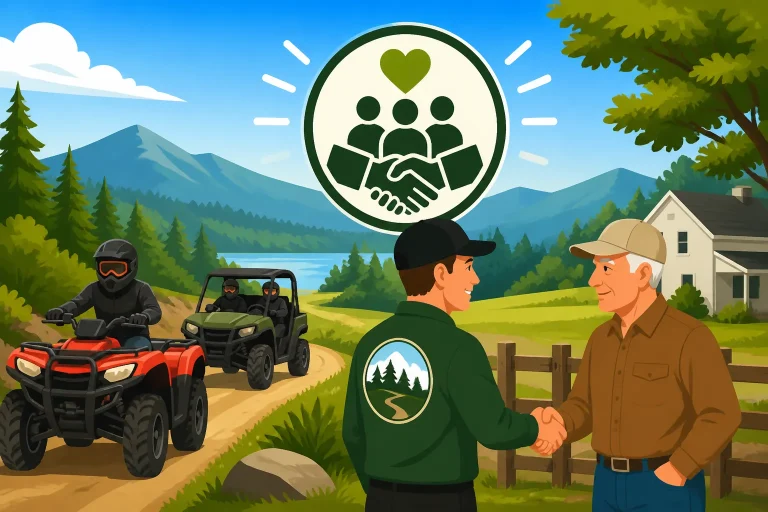
Most importantly, treat the trail as shared space. Wear the required orange, ride within your visibility and stopping limits, respect hunters and landowners, and turn back when access is unclear. A responsible ride protects you, the people hunting nearby, and the club relationships that keep trail corridors available.
Disclaimer
This article is for general informational purposes only and does not constitute professional advice. Laws, prices and regulations vary by location and change over time. Consult a qualified professional for guidance on your specific situation.