Why a Rail Trail Caps Machines at 50 Inches
There’s nothing quite like the freedom of exploring New Hampshire’s trails on your ATV or UTV, but if you’ve ever tried to plan a ride on a rail trail, you might have hit a snag: the dreaded 50-inch width restriction. This isn't just a random number; it's a specific limit that can feel incredibly frustrating when your machine measures just a few inches over, leaving you wondering why some trails feel so exclusive. This guide will walk you through the practical reasons behind this common restriction on many of New Hampshire’s beautiful rail trails, helping you understand the rules and how to plan your rides accordingly.
The Journey from Rails to Trails: Why Width Matters
Rail trails are truly special corridors, offering a unique glimpse into New Hampshire's history while providing recreational access for today's adventurers. But their very origin as old railroad beds inherently shapes how they can be used, and this is where the 50-inch width restriction often comes into play.
From Railroad Corridors to Recreational Pathways
Imagine those grand old trains, rumbling down the tracks, carrying goods and passengers across the state. When the age of rail waned, many of these vital transportation arteries sat dormant, slowly being reclaimed by nature. Thankfully, visionary planners and dedicated volunteers saw an opportunity to transform these disused lines into something new and wonderful: multi-use trails. These trails often follow the original railroad grade, which means they are generally quite flat and straight, making them ideal for a wide range of activities.
However, the conversion isn't just about pulling up tracks and laying down gravel. The original infrastructure – bridges, culverts, and retaining walls – were all built to accommodate a very specific type of traffic: trains. While remarkably sturdy, they weren't necessarily designed for the wide, powerful off-highway recreational vehicles (OHRVs) we have today. When these trails are designated for shared use, particularly in more populated or environmentally sensitive areas, the "lowest common denominator" often becomes the benchmark for accessibility. The goal is to allow as many different user groups as possible to enjoy the trail safely and with minimal impact.
The Vision of Shared Use: More Than Just OHRVs
One of the beautiful things about many rail trails is their commitment to multi-use. You’ll often find hikers out for a peaceful stroll, families enjoying a bike ride, and sometimes even horseback riders. These trails are designed to be a common ground, where different forms of recreation can coexist. This shared-use philosophy is at the heart of why width restrictions are so common. If you picture a narrow trail with a hiker coming one way, a cyclist the other, and a wide side-by-side attempting to navigate between them, you can quickly see the potential for conflict and safety concerns.
The 50-inch limit is often a carefully considered compromise to allow OHRV access while still preserving the trail experience for everyone else. It ensures that there’s enough room for safe passing, maintains clear sightlines, and reduces the likelihood of larger, more intimidating vehicles overwhelming other users. It's about creating a harmonious environment where a variety of recreational pursuits can thrive side-by-side, even if not literally at the same time on the exact same narrow strip of trail. The trail's infrastructure, its environment, and its community of users all play a role in shaping these rules.
Prioritizing Safety and Preserving the Environment
Beyond the historical context of the railway beds themselves, the 50-inch restriction on New Hampshire rail trails is heavily influenced by critical considerations for safety and environmental protection. These aren't arbitrary rules; they're designed to keep everyone safe and preserve the natural beauty we all cherish.
Ensuring the Safety of All Trail Users
Imagine yourself on a leisurely bike ride with your family down a scenic rail trail. Suddenly, a wide side-by-side machine approaches from the other direction. On a narrow trail, this can create a genuinely precarious situation. Wider OHRVs, especially those exceeding 50 inches, take up significantly more trail space. This reduces the margin for error when passing other users – be they pedestrians, cyclists, or even equestrians. Less space means a higher risk of accidental contact, startling other users, or forcing them off the trail entirely.
Visibility is another huge factor. On winding sections or through wooded areas, a wider machine can block the view more effectively, making it harder for operators to see approaching foot or bike traffic, and vice-versa. This is particularly true for younger riders on smaller bikes or children walking with their families. The 50-inch limit acts as a crucial buffer, ensuring that even on the narrower sections, there's a reasonable amount of space for all trail users to navigate safely and comfortably. It's about mitigating the risks of collision and creating a more relaxed, less intimidating atmosphere for everyone sharing the path. No one wants to feel unsafe or rushed on a recreational trail, and these width limits help prevent that.
Minimizing Environmental Impact and Trail Degradation
New Hampshire's natural landscapes are beautiful and, in many places, quite fragile. Rail trails, while robust, are still susceptible to environmental impacts, especially from wider and heavier vehicles. When a machine exceeds 50 inches in width, it typically has a larger footprint, which can lead to increased erosion, particularly on corners or sloped sections. The edges of the trail, where vegetation often grows, are especially vulnerable. Wider tires can chew into these shoulders, damaging plants and widening the trail inadvertently, encroaching on the surrounding habitat.
Furthermore, heavier and wider machines can accelerate the degradation of the trail surface itself. This leads to more ruts, washboarding, and potholes, which not only make the trail less enjoyable but also increase maintenance costs for the clubs and organizations that work tirelessly to keep these trails open and safe. The 50-inch limit helps manage this impact by ensuring that OHRVs adhere to a size that the trail's construction and surrounding environment can more sustainably support. It's a balance between providing access and preserving the integrity of the trail and its adjacent ecosystems for generations to come.
Comparing OHRV Widths and Trail Compatibility
To give you a clearer picture, let's look at how typical OHRV widths stack up against the 50-inch limit.
| OHRV Type | Typical Width Range (Approx.) | Compatible with 50-inch Rail Trails? | Notes |
|---|---|---|---|
| Utility ATV | 45-50 inches | Often Yes | Many older or smaller utility ATVs fit. Check your model! |
| Sport ATV | 45-50 inches | Often Yes | Similar to utility ATVs, many older sport quads are 50" or less. |
| Trail UTV (e.g., Polaris RZR 570, Can-Am Maverick Trail) | 50 inches | Yes | Specifically designed for 50-inch restricted trails. |
| Sport UTV (e.g., Polaris RZR XP 1000) | 60-72+ inches | No | Significantly wider, requires wider trail systems. |
| Utility UTV (e.g., Polaris Ranger XP 1000) | 60-65+ inches | No | Designed for work and wider trails/roads, not 50-inch limited trails. |
| Dirt Bike | ~30 inches | Yes | Trail bikes are well within limits, but may have other restrictions. |
As you can see, the vast majority of modern sport and utility UTVs are simply too wide for these 50-inch restricted trails. This is why it's so critical to know your machine's exact dimensions before heading out.
New Hampshire's Specific Regulations and Enforcement
Navigating OHRV regulations in New Hampshire can sometimes feel like solving a puzzle, especially with varying rules for different trail types. When it comes to rail trails, the 50-inch limit isn't just a suggestion; it's a specific requirement often backed by law and actively enforced.
New Hampshire's Approach to OHRV Access on Rail Trails
The Granite State boasts a fantastic network of trails, thanks in large part to the dedicated efforts of clubs and the New Hampshire Bureau of Trails. However, it's crucial to understand that not all rail trails are open to OHRVs. Some are strictly for non-motorized use, while others welcome OHRVs with specific stipulations. Those that do permit OHRVs often impose the 50-inch width restriction. This isn't unique to New Hampshire; it's a common regulation across many states that have adopted the "rails-to-trails" model, particularly in areas where shared use with hikers and cyclists is prevalent, or where the original railroad infrastructure limits wider machines.
It’s important to distinguish these rail trails from the expansive, purpose-built OHRV trail systems like parts of [Ride the Wilds in Coos County] or [Jericho Mountain State Park at Berlin], which often accommodate much wider machines. The rules for these specific rail trails are often a product of local ordinances, state legislation, and agreements with landowners or land management agencies. They reflect a desire to maintain the trail's character and protect the experience for all users. So, before you load up your machine, always double-check the specific rules for the rail trail you intend to ride. You can often find this information on the New Hampshire Fish and Game Department's website or through local trail club resources. For more on specific trails, you might want to check out resources on [New Hampshire Trails That Take Machines] or [New Hampshire Trails With a 50-Inch Limit].
The 50-Inch Limit in Practice: What the Law Says
In New Hampshire, the 50-inch limit on designated rail trails is not just a polite request – it's often enshrined in the state's statutes and administrative rules governing OHRV use. This means that an OHRV that exceeds 50 inches in width is, quite simply, not permitted on these specific trails. The measurement is typically taken from the outermost points of the machine, including tires, axles, and any permanently attached accessories. So, if you've added wider tires or aftermarket components from, say, SuperATV, you need to measure carefully!
The reason for this strict adherence lies in the state's responsibility to manage public and leased lands safely and sustainably. The law provides a clear, objective standard that minimizes ambiguity and helps trail managers maintain consistency. This legal framework is what gives enforcement officers the authority to issue citations for non-compliance. It's not about being punitive; it's about upholding the rules that protect the trails and everyone who uses them. Understanding [New Hampshire Rules for a Machine Over 50 Inches] is key to staying out of trouble.
Consequences of Non-Compliance on New Hampshire Rail Trails
Riding a machine that exceeds the 50-inch width limit on a restricted New Hampshire rail trail can lead to more than just a stern talking-to. The consequences can include significant financial penalties. Conservation Officers with the New Hampshire Fish and Game Department, as well as local law enforcement, actively patrol these areas. If you're found operating an oversized machine on a restricted trail, you could be issued a citation. These fines can be costly, and they are designed to deter riders from violating rules that are in place for safety and environmental protection. For details on potential penalties, it's worth reviewing [New Hampshire Fines for an OHRV Violation].
Beyond the immediate financial hit, there are broader consequences. Repeated violations by a few riders can lead to stricter regulations for everyone, or even the closure of certain trails to OHRVs altogether. This is a real concern for the OHRV community, as trail access is a privilege, not a right, and it relies heavily on responsible riding. Landowners who permit trails to cross their property often do so with the understanding that rules will be followed; consistent violations could lead them to revoke access, impacting entire trail systems. So, while it might seem like just a few inches, adhering to the 50-inch rule is crucial for maintaining positive relationships with landowners and ensuring the longevity of OHRV access on these unique shared-use corridors.
Navigating the 50-Inch Rule: What it Means for Riders
So, you're ready to hit the trails, but you're a bit confused about this 50-inch rule. Don't worry, it's a common challenge, especially with the wide variety of machines out there. Understanding what it means for your ride is the first step to a hassle-free adventure.
Measuring Your Machine: Don't Guess!
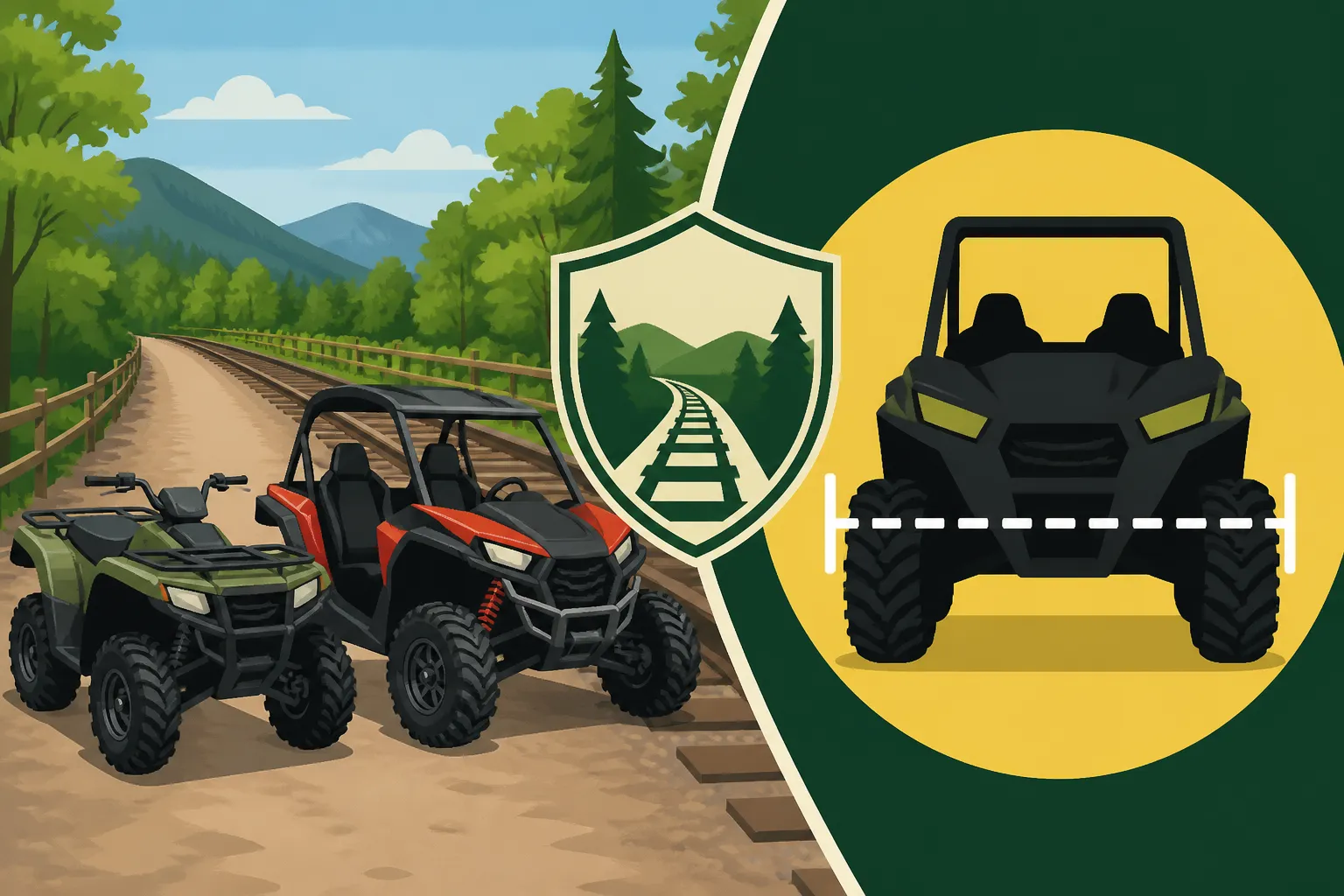
This is probably the most critical step. Many riders assume their ATV or UTV is 50 inches or less, only to find out it's actually wider, especially with aftermarket additions. The 50-inch measurement is taken from the widest point of your machine. This generally means the outside edge of your tires, but it could also include things like fender flares, wheel spacers, or even aftermarket A-arms. If you've upgraded your suspension or added wider wheels, like some popular options from SuperATV, you absolutely need to re-measure.
Here’s how to do it accurately:
- Park on a flat surface: Ensure your machine is level.
- Use a long straightedge: A 2×4 or a long level works well. Hold it against the widest part of one tire (or fender flare, if wider) and extend it out.
- Measure across: Take a tape measure from the outer edge of the straightedge on one side to the outer edge of the straightedge on the other side.
- Consider all accessories: Don't forget any parts that extend beyond the main body, such as rock sliders, wider tires, or any other modifications.
It sounds simple, but a half-inch here or there can make all the difference. Get an accurate measurement before you head out. It’s better to know for sure at home than to find out you're too wide at a trailhead gate or, worse, from a Conservation Officer. This is directly related to [Measuring Up to a 50-Inch Trailhead Gate].
Finding Compliant Trails: Planning Your Ride
Once you know your machine's width, the next step is to find trails where it's welcome. New Hampshire has a fantastic network of trails, but they aren't all uniform.
- Check Official Sources: The New Hampshire Fish and Game Department website is your best friend. They often have maps and listings that indicate which trails are open to OHRVs and what their specific width restrictions are.
- Consult Trail Club Websites: Many local OHRV clubs maintain their sections of the statewide trail system. Their websites are invaluable resources for up-to-date information on trail status, closures, and specific regulations, including width limits. Look for information about [New Hampshire Trail Status Before You Ride].
- Look for 50-Inch Specific Trails: Some manufacturers, knowing this is a common restriction, design specific "trail" models that are 50 inches wide. If you have one of these, you're usually good to go on these restricted trails.
- Don't Assume: Just because a trail is open to OHRVs doesn't mean it accommodates all widths. A rail trail is a classic example of a place where a general OHRV registration might not be enough if your machine is too wide.
Planning your route with knowledge of your machine's width and the trail's regulations will ensure you have a fun and legal ride. This is especially true for [Riding a Rail Trail in New Hampshire] where these restrictions are prevalent. Remember, there are also trails with wider limits, such as [New Hampshire Trails With a 65 Inch Limit], so if your machine is wider, seek out those systems!
Equipment Modifications and Their Impact
It's natural to want to customize your machine. Aftermarket parts can improve performance, aesthetics, or add functionality. However, when it comes to width, modifications can quickly change your machine's eligibility for certain trails.
- Wider Tires: Upgrading to larger, wider tires is a common modification, but they can easily push your overall width past the 50-inch mark.
- Wheel Spacers: These are often added to improve stability or change the look of a machine, but they directly increase track width.
- A-Arm Kits/Long Travel Kits: Performance suspension upgrades, even from reputable brands like SuperATV, can significantly increase the width of your machine.
- Fender Flares: While sometimes necessary to keep mud off, larger flares can add an inch or two to your measurement.
Before making any modifications, especially those that affect your machine's width, consider where you primarily ride. If access to 50-inch restricted rail trails is important to you, then you'll need to choose your modifications carefully. It’s a trade-off: increased capability or comfort in some areas might mean restricted access in others. There are plenty of fantastic trails that don't have this restriction, but if you love the unique experience of a rail trail, a narrower machine is often the way to go.
Disclaimer
This article is for general informational purposes only and does not constitute professional advice. Laws, prices and regulations vary by location and change over time. Consult a qualified professional for guidance on your specific situation.