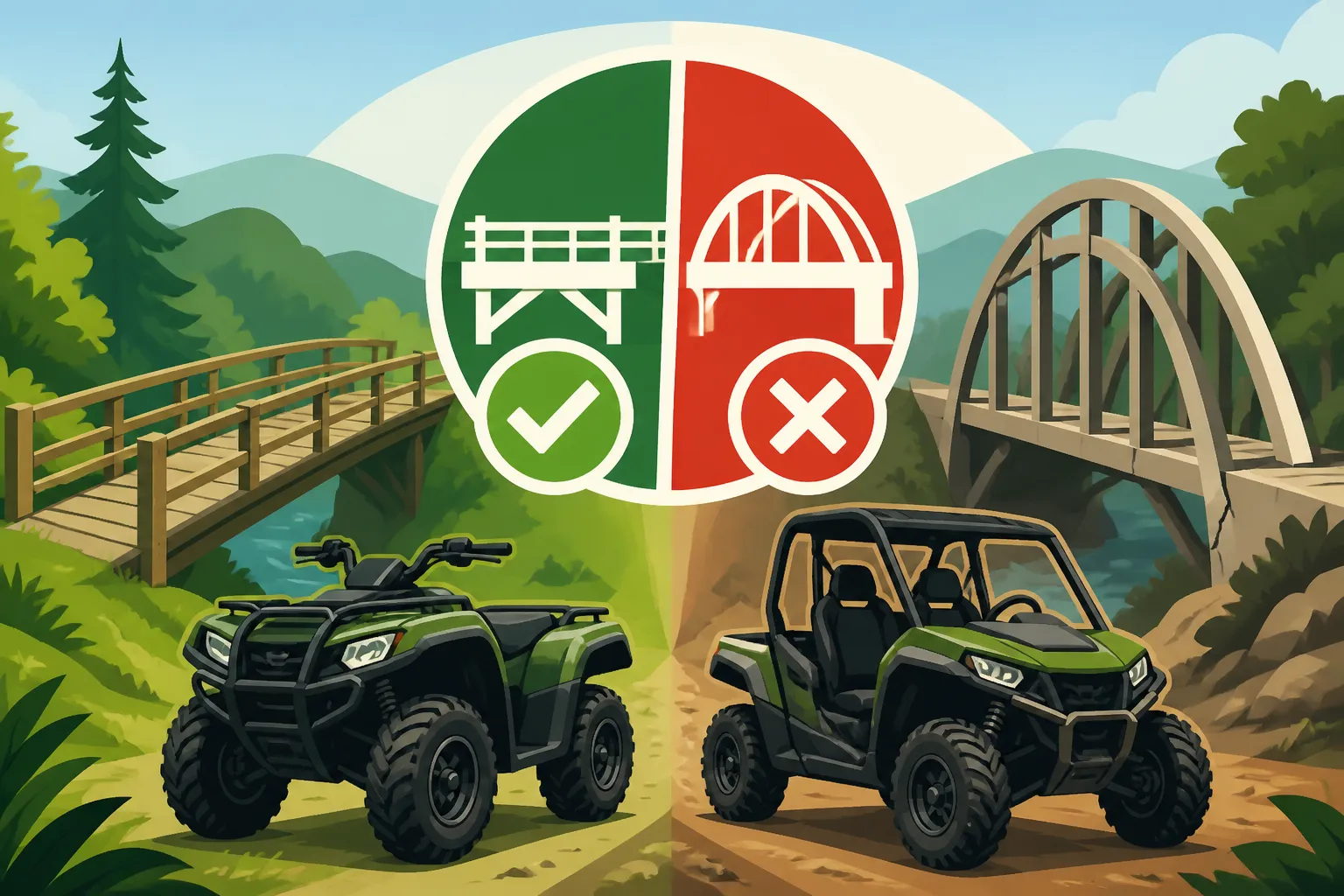
Which Bridges a Machine May Legally Cross
One of the most common head-scratchers for us OHRV enthusiasts in New Hampshire is figuring out exactly where we can and can't ride, especially when it comes to bridges. It's not always as simple as seeing a bridge and assuming it's fair game, and riding where you shouldn't can lead to hefty fines or even trail closures. This guide will walk you through the various types of bridges you'll encounter on New Hampshire's extensive trail network and what you need to know to cross them legally and safely, helping you navigate the Granite State's rules with confidence.
The Nuances of Bridge Crossings for OHRVs in New Hampshire
You're out on the trails, the sun is shining, and you come to a beautiful bridge spanning a bubbling stream or a quiet river. Your instinct might be to just keep rolling, but in New Hampshire, the legality of crossing that bridge with your ATV or UTV isn't always cut and dried. It’s a maze of state laws, local ordinances, and landowner permissions that can be incredibly frustrating to decipher on the fly. Many riders have found themselves scratching their heads, wondering if this particular crossing is sanctioned or if they're about to venture into restricted territory.
The challenge lies in the diverse nature of New Hampshire's trail system. We have everything from old rail beds converted into multi-use trails to dedicated OHRV trails carved through state forests, and then there are the town roads that some communities have opened up. Each type of trail, and the bridges within them, can have its own set of rules. This complexity means that relying on assumptions is a recipe for trouble, and a keen eye for signage and a bit of pre-ride research are your best friends. [Where New Hampshire Allows OHRVs on Roads] is a great resource to understand the broader context.
Understanding Trail Designations and Bridge Access
New Hampshire's OHRV trails are often a patchwork of different land ownerships and management entities. You might be riding on state land, then cross into private property where a local club has secured an easement, and then momentarily hit a town road that’s been opened for OHRV use. Each segment comes with its own conditions, and bridges are often key transition points between these different zones. If a bridge is part of a designated OHRV trail, it's generally open for use, assuming it's structurally sound and hasn't been closed for maintenance.
However, the "designated OHRV trail" part is critical. Just because a bridge looks like it could handle an ATV doesn't mean it's legally part of the trail network. Many old logging roads or access paths have bridges that are technically on private land or are not maintained for public OHRV use. Without proper designation and signage, crossing these bridges could be considered trespassing, even if you’re momentarily leaving a recognized trail. It’s a subtle but significant distinction that can make or break your ride.
The Difference Between Trail Bridges and Road Bridges
It's important to differentiate between bridges that are part of an off-highway trail system and those that are part of the conventional road infrastructure. Trail bridges are specifically built or designated for OHRV (and often snowmobile) traffic, and they'll typically be signed as such. These are the bridges where you can generally ride without worry, as long as you adhere to any posted speed limits or other rules. They are integral to the flow of the trail.
Road bridges, on the other hand, are designed for cars and trucks and fall under different legal jurisdiction. Unless a town has specifically opened a road (and by extension, its bridges) to OHRVs, you generally cannot ride on or across a road bridge. This is a common point of confusion. You might be riding a perfectly legal trail, see a road bridge just ahead, and think it's a quick way to connect to another section. But without explicit permission and signage, that road bridge is often off-limits. Understanding [New Hampshire Rules for Riding a Town Street] is crucial here, as bridge crossings are often tied to these permissions.
Navigating Specific Bridge Scenarios
Knowing the general rules is one thing, but understanding how they apply to specific types of bridges you'll encounter on your New Hampshire adventures is where the rubber meets the trail – or in this case, the tires meet the bridge deck. Each type of bridge presents its own set of rules and potential pitfalls.
Rail Trail Bridges: Often Open, But Check Limits
New Hampshire boasts a fantastic network of rail trails, many of which are open to OHRVs. These old railway lines often feature sturdy, historic bridges that once carried trains and now provide scenic crossings for multi-use recreation. For many riders, these rail trail bridges are a highlight, offering smooth passages over rivers and ravines. Generally, if you're on a rail trail that explicitly allows OHRVs, the bridges along that trail are also fair game. [New Hampshire Rules for Riding a Rail Trail] outlines the specifics for these corridors.
However, it's never a bad idea to double-check for specific restrictions. Some rail trails might have width limits for machines, often 50 inches, which means a wider side-by-side or a heavily modified ATV with aftermarket suspension or portals from a company like SuperATV might not be permitted. You might also encounter weight limits, although these are less common for OHRVs. Always keep an eye out for signs at the entrance to these bridges or at the trailheads that indicate any specific rules.
Town and State Road Bridges: The Default "No" Unless Posted Otherwise
This is perhaps the trickiest category. As a general rule, OHRVs are not allowed on paved town or state roads, and by extension, not on the bridges that are part of those roads. The default is "closed" unless a specific town or the state has explicitly designated a section of road, including its bridges, for OHRV use. This designation usually involves a formal vote by the town's selectboard and clear signage indicating that OHRVs are permitted.
When you're riding a club trail, it's common to have short sections where the trail uses a town road or crosses a state highway. In these instances, the bridge will be part of that designated crossing or road segment, and you'll usually see signs indicating OHRV access. If you don't see such signs, assume the bridge is off-limits. A bridge with a "Closed" sign for OHRVs, or a general lack of OHRV signage, means you need to find an alternative route or turn back. [What a Closed Sign on a Bridge Means] can save you from a lot of trouble.
Private Land Bridges and Landowner Permission
Many OHRV trails in New Hampshire cross private land, thanks to generous landowners who grant permission to clubs or the state. Bridges on these private lands are accessible only if that permission specifically includes OHRV use across those structures. It’s usually covered as part of the broader trail easement agreement. The key here is that if you're on a recognized, marked trail, and that trail crosses a bridge, then the landowner has likely granted permission for that specific crossing.
The danger comes if you veer off a marked trail onto an unmarked path, perhaps one that leads to a tantalizing-looking bridge. Even if it looks like a shortcut or an interesting detour, if it's not part of the official trail system, you could be trespassing. Always stick to marked trails. The goodwill of private landowners is the backbone of much of New Hampshire's trail network, and respecting their property, including bridges, is paramount to keeping these trails open for everyone. For more on this, check out [New Hampshire Landowner Permission Rules].
Important Considerations for Safe and Legal Bridge Crossings
Beyond just knowing if you can cross a bridge, there are vital practical considerations for how you cross them. Safety, legality, and maintaining positive relationships with landowners and fellow trail users are all part of responsible riding. Ignoring these can not only put you in danger but also jeopardize access for the entire OHRV community.
Always Check Local Ordinances and Trail Maps
This cannot be stressed enough: always check the latest trail maps and local ordinances before you head out. Trail conditions and access can change. A bridge that was open last season might be closed for repairs this year, or a town might have voted to open or close a particular road, affecting bridge access. Reputable clubs and the New Hampshire Bureau of Trails often provide up-to-date maps and trail status updates online.
Don't rely solely on old maps or word-of-mouth. A quick check of the relevant club website or the state's OHRV trail status page before your ride can prevent an illegal crossing or a frustrating dead end. This is especially true if you're planning a multi-day trip that spans different towns or club jurisdictions. Each area might have its own specific rules regarding local connectors, including the bridges they encompass. [New Hampshire Trail Status Before You Ride] should be your first stop.
Reading Signs and Understanding Width Restrictions
Signs are your best friends on the trail. They're there to guide you, inform you of rules, and keep you safe. When approaching a bridge, look for signs indicating OHRV access, speed limits, or any special conditions. Pay particular attention to width restriction signs. Many trail bridges, especially on rail trails or older club trails, have physical barriers or clearly posted limits, often 50 inches, to prevent wider machines from passing.
If your UTV or a modified ATV (perhaps with a lift kit and wide A-arms or massive tires, even from a reputable brand like SuperATV) exceeds these limits, you absolutely cannot attempt to squeeze through. Doing so can damage the bridge, your machine, or even injure you. Plus, it's a surefire way to incur a fine. Know your machine's width and respect these crucial signs. For those with wider machines, consider [New Hampshire Trails for a Wide Machine] as a reference for where you can ride.
Bridge Integrity and Safety
Even if a bridge is legally open for OHRV use, always exercise caution. Approach bridges at a reduced speed. Look for any signs of structural damage, such as missing planks, rotten wood, or undermined supports. While trail clubs and the state do their best to maintain bridges, natural events like floods or heavy snows can cause damage quickly. If a bridge looks unsafe, do not attempt to cross it. Turn back and report the issue to the local club or the New Hampshire Bureau of Trails.
When crossing, maintain a steady, slow speed and avoid sudden turns or braking. Be mindful of wet or icy conditions, as bridge decks can become very slick. If the bridge is shared with other users – hikers, bikers, or even snowmobilers in the colder months – yield to them and cross courteously. Remember, responsible riding helps ensure these precious bridge crossings remain open and safe for all to enjoy.
Here's a quick summary table to help keep things straight:
| Bridge Type | General OHRV Access | Key Considerations | Where to Check |
|---|---|---|---|
| Dedicated OHRV Trail | Yes, usually | Part of marked trail; check for specific signs. | Club maps, NH Bureau of Trails, trail signage |
| Rail Trail | Often, but check | Common for OHRVs; often 50-inch width limit; watch for signs. | Rail trail specific rules, club maps, local ordinances |
| Town Road | No, by default | Only if town votes to open road; look for specific OHRV signs. | Town selectboard minutes, local OHRV ordinances, trail maps |
| State Highway | No, by default | Only for designated crossings; approach with extreme caution. | NH DOT, NH Bureau of Trails, trail maps |
| Private Land (unmarked) | No, by default | Trespassing unless explicit permission obtained. | Landowner, written permission [New Hampshire Landowner Permission Rules] |
| Private Land (on marked trail) | Yes, usually | Permission granted by landowner as part of trail easement. | Club maps, trail signage |
Crossing bridges in New Hampshire on your ATV or UTV can be a fantastic part of the riding experience, offering stunning views and crucial connections between trail segments. But it’s a privilege that comes with the responsibility of knowing and respecting the rules. By taking the time to understand trail designations, scrutinize signage, and be aware of your surroundings, you'll ensure your rides are not only thrilling but also legal and safe for everyone on the trail. So, gear up, check your maps, and enjoy the incredible trails the Granite State has to offer!
Disclaimer
This article is for general informational purposes only and does not constitute professional advice. Laws, prices and regulations vary by location and change over time. Consult a qualified professional for guidance on your specific situation.