What a Quebec Rider Needs at the Border
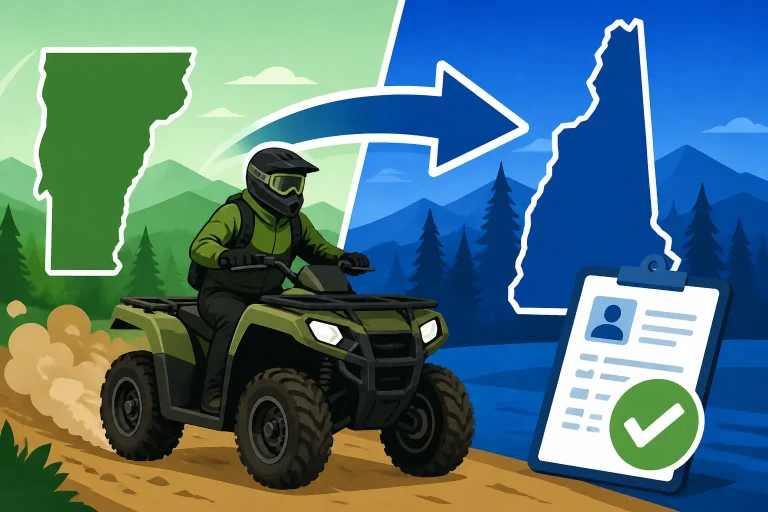
A Quebec registration may establish that your ATV or UTV is registered at home, but it does not automatically let you ride New Hampshire trails. Before leaving for the border, sort out two separate things: permission to bring the machine into the United States and the New Hampshire registration required to ride it here.
Before you reach the border
Treat the international crossing and New Hampshire trail access as separate checkpoints. U.S. border requirements concern entering the country with your machine; New Hampshire’s OHRV rules concern riding it once you arrive. Meeting one set of requirements does not replace the other.
Confirm what you need to bring the machine into the United States
If you are trailering your ATV or UTV from Quebec, check current entry requirements with U.S. Customs and Border Protection and Canada Border Services Agency before you travel. Ask specifically about taking a privately owned off-highway vehicle across for temporary recreational use, what documents to carry, and whether any declarations or vehicle-compliance requirements apply to your situation. Requirements can depend on how you are transporting the machine and your circumstances, so do not rely on another rider’s experience as a substitute for checking.
Keep your ownership and identification documents accessible, along with any paperwork those agencies tell you to carry. If the vehicle is financed, borrowed, leased, or owned by someone else, check what authorization or supporting documents are expected before departure. Having a Quebec registration or ownership document with you can help identify the machine and show its status at home, but do not assume it alone satisfies every border requirement.
A routine land crossing is not the same as riding an ATV across the international boundary. Use an authorized border crossing and follow the directions of border officials. A trail connection, logging road, or open-looking route does not give you permission to bypass a port of entry or cross the line away from one.
If your trip includes riding near the boundary, check the route carefully. A map may show trails close to the border without showing that riders may legally cross it. Confirm that your planned route stays on authorized trails and that any connection into another jurisdiction is actually open to OHRVs. New Hampshire trail access does not authorize travel in Quebec, and Quebec access does not authorize riding in New Hampshire.
Pack the documents you will want at a roadside stop
Keep your border paperwork separate from your New Hampshire OHRV registration. Once you begin riding, you should be able to produce the New Hampshire registration certificate and show the required decals on the machine. Carry your Quebec registration or ownership documents too, especially if the machine’s identity or ownership could be questioned. A driver’s licence is not a substitute for the machine’s New Hampshire registration.
Before traveling, make sure the machine’s identifying information is easy to find. Check that the frame or vehicle identification number is legible and matches your papers. If documents show different owners or identifying details, resolve that issue before you try to register the machine or ride.
Get New Hampshire registration before riding
A Quebec registration does not, by itself, grant access to New Hampshire OHRV trails. New Hampshire requires an out-of-state visitor’s machine to have the appropriate New Hampshire registration for riding here. That is the key step many visiting riders miss: the home registration and New Hampshire registration serve different purposes.
The practical rule is simple: do not unload the ATV or UTV for a New Hampshire trail ride until you have confirmed the machine is properly registered for New Hampshire use. More on the general rule is covered in Riding New Hampshire With an Out-of-State Machine and Why New Hampshire Honors No Neighbor’s Registration.
Choose an annual registration or a short-term option
Visitors generally need to decide whether an annual nonresident registration or a short-term registration fits the trip. A short stay may make the ten-day option worth checking; repeated visits or a longer riding season may make an annual registration more practical. The short-term option is for wheeled machines, so confirm that the machine and your intended use qualify before relying on it.
| Your plan | What to check | Practical consideration |
|---|---|---|
| One brief visit | Whether the ten-day nonresident registration is available and suitable for your machine | Confirm its validity dates and where it can be purchased |
| Several visits or a long stay | The annual nonresident registration and its registration period | Compare the coverage with your expected riding dates |
| More than one machine | Whether each machine needs its own registration | Do not assume one registration covers an ATV and a UTV |
| Riding only on private property | Whether the location and activity fall within an applicable exception | Permission from a landowner does not automatically settle every registration question |
New Hampshire’s registration year does not necessarily match the dates of your vacation or Quebec’s registration cycle. A registration bought partway through the New Hampshire year may not cover the same amount of riding time as one bought near the start. Check the current validity period and options before choosing. For help weighing the short-term and annual choices, see The Ten-Day Option for a New Hampshire Visitor and Ten Days or the Whole Season.
Do not assume that the ten-day option can be purchased repeatedly for the same machine. Check the current terms with an authorized registration agent before building your trip around it. Also confirm where the option is sold; not every place that handles OHRV registrations necessarily offers every registration type.
Know what to have ready for registration
The registration process may require information about the machine, its owner, and its identifying number. Bring the documents that establish ownership or registration in Quebec, and be prepared to provide the machine’s make, model, and vehicle identification information. Requirements can differ if the machine is borrowed, recently purchased, or registered to someone other than the person presenting it.
For a practical list of items to prepare, use New Hampshire OHRV Registration Paperwork. If you are unsure whether a Quebec document is sufficient for a particular ownership situation, contact the registration agent before making the trip. An agent can tell you what they need to see for the transaction; border authorities can answer questions about crossing into the United States.
When you complete the New Hampshire registration, check that the certificate and machine details are accurate before you leave. Place the decals as directed and keep the certificate available while riding. A receipt or a photo of the certificate is useful as a backup, but do not assume it replaces the required certificate or decal. See New Hampshire OHRV Decals and the Certificate for the difference between the registration document and the decals attached to the machine.
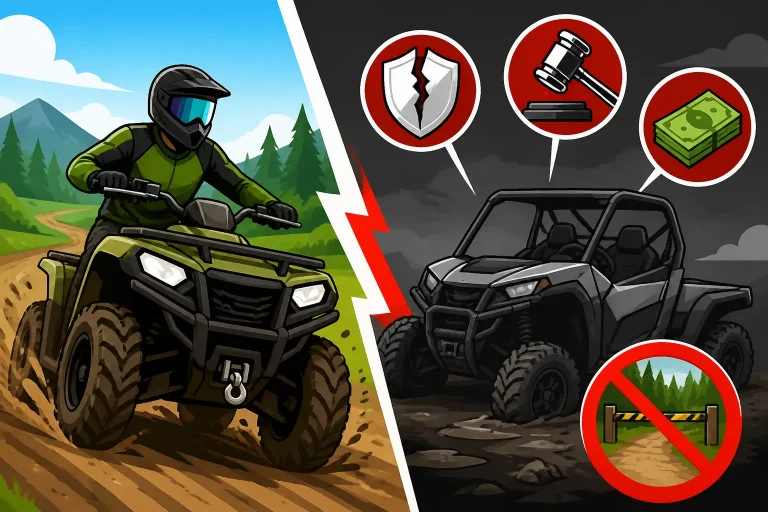
Registration also does not mean every trail is open or appropriate for your machine. Check the trail status, route restrictions, and width limits for the areas you plan to ride. A valid registration cannot make a closed trail legal to use, and a trail that is open to one kind of machine may have restrictions that affect another.
Plan the trip around the rules, not just the route
A successful border-to-trail plan has three parts: lawful entry into the United States with the machine, valid New Hampshire registration, and a route that is open to your vehicle. Work through them in that order. Buying a registration does not resolve a border-document issue, while clearing the border does not satisfy New Hampshire’s registration requirement.
Before leaving Quebec
- Confirm current U.S. entry requirements for the machine with U.S. Customs and Border Protection, and check any relevant departure requirements with Canada Border Services Agency.
- Gather ownership, registration, and authorization documents that apply to the machine and the people traveling with it.
- Check that the vehicle identification number and the details on the paperwork agree.
- Decide whether the annual nonresident registration or a short-term registration fits your trip, and confirm current terms with an authorized New Hampshire agent.
- Verify the route, trail opening status, width limits, and any local restrictions for the places you intend to ride.
- Plan where you will obtain registration if you do not arrange it before reaching the trail area. Do not set out on a public trail expecting to fix a registration problem later.
At the registration counter
Have the machine information and ownership documents ready. Tell the agent that the machine is registered in Quebec and explain whether you own it, are borrowing it, or recently bought it. Ask if the paperwork is enough for the specific transaction and what else is required. If you are registering more than one machine, confirm the requirements for each one rather than treating the group as a single registration.
Check the completed certificate and decals before leaving the counter. Make sure the registration is for the correct machine and that you understand its validity period. Keep the certificate where it can be reached during the ride, not buried in luggage that stays at your lodging.
For a visitor planning only a short trip, compare the available registration periods before purchase. For someone who expects to return during the same season, compare the total cost and coverage of the options with the provider; fees and terms can change. The relevant details are discussed in New Hampshire OHRV Registration Cost and New Hampshire Ten-Day Registration Cost.
On the trail
Carry your registration certificate and follow the rules for the trail and machine type. Ride only where OHRVs are allowed, respect gates and closures, and do not treat a private road or an unsigned route as public access. Where a trail approaches the border, stay on the authorized route and turn around rather than assuming the trail continues legally into Quebec.
If a machine is borrowed or rented, sort out registration responsibility before the ride. A visitor should not assume that a machine’s Quebec paperwork, a rental agreement, or another person’s New Hampshire registration automatically covers the vehicle being operated. Ask the owner or rental provider to confirm that the specific machine is registered for New Hampshire use and that the planned route is permitted. New Hampshire Rules for a Visiting Rider covers other practical issues for people riding here from outside the state.
The simplest preparation is to keep two checklists. One is for entering the United States with the machine, which you confirm with the border agencies. The other is for New Hampshire riding: the correct state registration, certificate and decals, and a legal route. With both covered before departure, a Quebec registration can serve as useful supporting paperwork without being mistaken for a New Hampshire trail permit.
Disclaimer
This article is for general informational purposes only and does not constitute professional advice. Laws, prices and regulations vary by location and change over time. Consult a qualified professional for guidance on your specific situation.