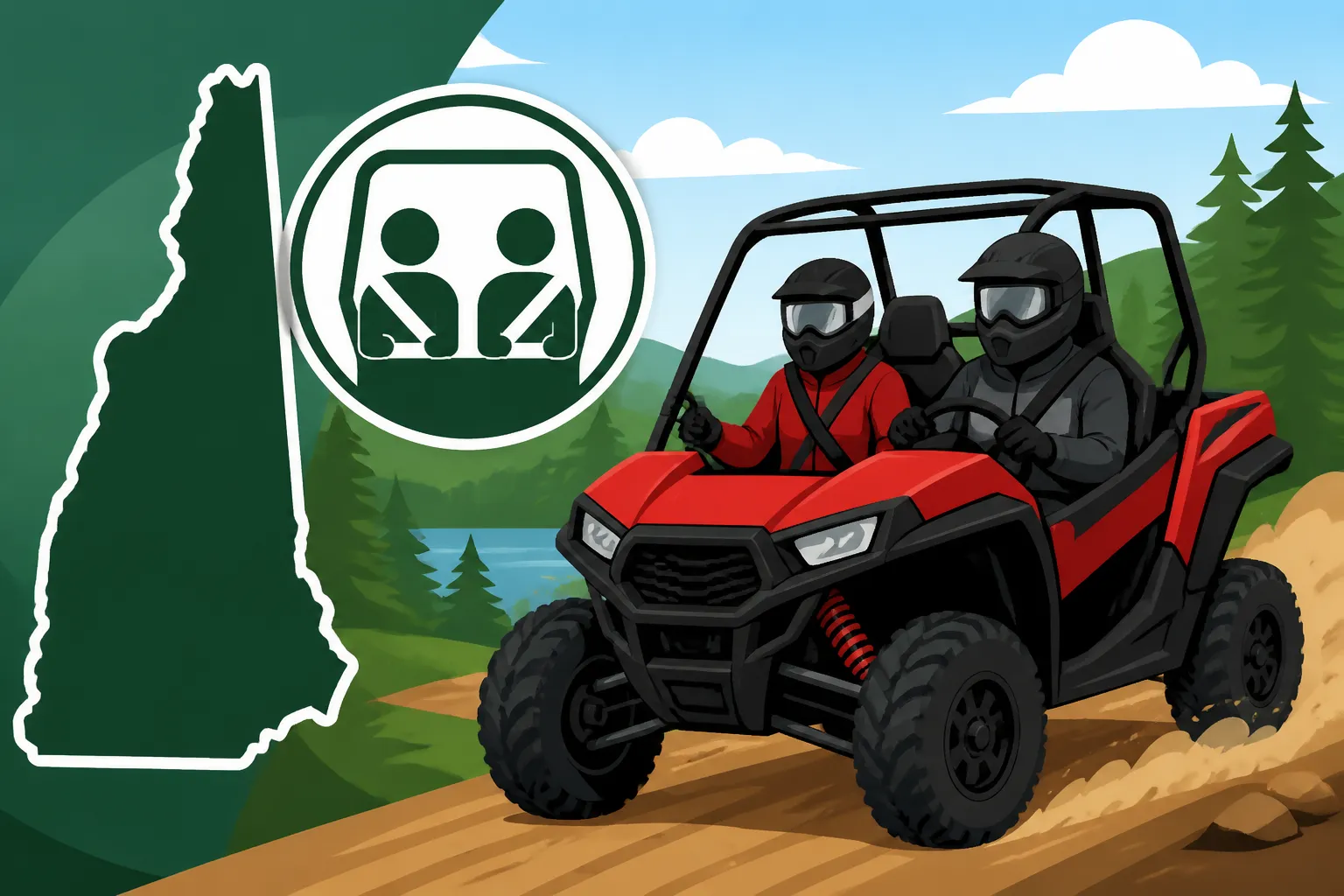
New Hampshire Rules for Carrying a Passenger
There's nothing quite like the open air and the thrill of exploring New Hampshire's stunning trails on your ATV or UTV. But when you want to share that experience with a friend or family member, a lot of folks get tangled up in the rules about carrying passengers. It's not as simple as just hopping on and going, and ignoring the specifics can lead to fines or, worse, a serious accident. This guide is here to walk you through all the ins and outs of New Hampshire's OHRV passenger regulations, making sure your ride is legal, safe, and enjoyable for everyone on board.
Understanding New Hampshire's Fundamental Rules for OHRV Passengers
When you're out on the trails or navigating a town-approved road, it's absolutely crucial to understand who can ride with you and how. New Hampshire's rules aren't just about formality; they're designed to keep everyone safe. Many riders assume that if there's space, it's fair game, but that's often not the case.
Why Passenger Capacity Isn't Just a Suggestion
The biggest mistake many riders make is thinking that if there's enough room on the seat, or if they can rig up some kind of makeshift bench, they can carry an extra person. This is a huge no-no. Your OHRV, whether it's an ATV or a UTV, is specifically designed by the manufacturer to carry a certain number of people, and that capacity is non-negotiable in the eyes of New Hampshire law. Exceeding this limit throws off the machine's balance, impacts its handling, and drastically increases the risk of tipping, especially on uneven terrain or around sharp corners. Imagine trying to navigate a rocky uphill climb or a narrow, winding trail with someone precariously perched on a luggage rack – it’s a recipe for disaster. The machine simply isn't engineered for that kind of stress or weight distribution.
The Critical Role of Manufacturer Design
When you bought your machine, whether new or used, it came with a clear indication of its designed capacity. An ATV is generally built for a single operator. Unless it is explicitly designed and manufactured by the original equipment manufacturer (OEM) for two or more riders, it's considered a single-rider machine. That means no passengers, no exceptions, even if your friend is tiny or you're just going a short distance. Side-by-sides (UTVs), on the other hand, are typically designed with multiple seats, ranging from two-seaters to larger four- or even six-seat configurations. These machines are built with the necessary stability, suspension, and safety features like seatbelts to accommodate passengers safely. Always check your owner's manual or the vehicle's labeling for its designated passenger capacity. If your ATV isn't a "two-up" model, it simply isn't legal to carry a passenger on it. You might find a single-rider ATV feels unstable enough on its own in certain situations; adding another person dramatically amplifies that instability.
Age and Supervision Laws for Young Riders
New Hampshire is very particular about who can ride and who can be a passenger, especially when it comes to children. If you're planning a family outing, you need to be acutely aware of these age requirements. Generally, a passenger under the age of 18 must meet specific criteria. For instance, children who are old enough to operate a machine themselves (typically 12 and older with a [New Hampshire Safety Certificate Minimum Age] and adult supervision, depending on their exact age) might be allowed as a passenger on a multi-passenger UTV, provided all other rules are met. Younger children, however, have stricter guidelines. The law focuses heavily on ensuring that any child passenger can safely reach the handholds and footrests provided by the manufacturer. If their feet dangle, or they can't firmly grasp the handholds, they are not safely seated. This isn't just a comfort issue; it's a safety requirement to ensure they can maintain their position during bumps and turns. For detailed rules on who can ride, it's good to understand [New Hampshire Minimum Age to Ride an OHRV].
Equipping Your OHRV and Your Passengers for a Safe Ride
Beyond just understanding the legal limits, preparing your machine and your passengers with the right gear and setup is essential for a safe and enjoyable experience on New Hampshire's trails.
Required Safety Gear for Every Passenger
Just like the operator, any passenger on an OHRV in New Hampshire needs to be properly equipped. The most critical piece of safety gear is a helmet. For passengers under the age of 18, a helmet is absolutely mandatory, no exceptions. This helmet must be properly fitted, securely fastened, and meet safety standards. While adults aged 18 and over are not legally required to wear a helmet as operators, it is still highly recommended for passengers of all ages for their own protection. Beyond helmets, eye protection is crucial. Goggles or a face shield on a helmet can prevent debris, dust, or low-hanging branches from causing injury. A passenger’s eyes are just as exposed as the operator’s. Sturdy footwear, long pants, and long sleeves are also highly advisable to protect against scrapes, impacts, and environmental elements. Don't overlook these details; they can make a huge difference in preventing injuries, even in minor incidents. You can find specific details on [New Hampshire Helmet Law for Passengers].
Ensuring Proper Seating and Footrests
This ties directly back to the manufacturer's design. For a passenger to be carried legally and safely, they must have a designated seat designed for their use. This means a securely mounted seat with proper cushioning and, most importantly, dedicated footrests. If your passenger's feet are dangling, or they're sharing your footrests, they're not secure. This lack of stability can cause them to shift, lose balance, or even fall off the machine, especially during sudden stops or turns. For UTVs, which are designed for multiple passengers, this means ensuring that every seat belt is properly fastened for each occupant. Never try to squeeze an extra person into a seat designed for fewer, or have someone sit on the floor of a UTV. The safety systems, like seatbelts and roll cages, are designed for the specific seating positions provided.
Adapting Your Machine for Passenger Safety
Sometimes, riders want to enhance their machine's safety or comfort for passengers. If you're going to make any modifications to your UTV that affect passenger seating or safety, it's paramount that these are done correctly and don't compromise the vehicle's integrity. For instance, if you're adding a rear bench seat to a UTV that originally came with bucket seats, ensure it's professionally installed, rated for the weight, and that it includes proper seatbelts and access to handholds. Aftermarket accessories, like those from companies such as SuperATV, can offer solutions for storage or comfort, but any modification related to seating capacity or passenger safety needs careful consideration and professional installation. Always double-check that any changes comply with New Hampshire's OHRV laws. Remember, the goal is to enhance safety, not diminish it.
Navigating the Trails and Roads with Company
Riding with a passenger introduces new dynamics and responsibilities, especially when traversing different types of terrain and designated riding areas. The rules can vary slightly depending on the age of your passenger and where you're riding.
Specific Rules for Child Passengers on New Hampshire Trails
Taking a child out on the trails can be a wonderful experience, but it comes with strict guidelines. As mentioned, the child must be able to reach handholds and footrests. Beyond that, the operator has a heightened responsibility to ensure the ride is appropriate for the child's skill level and comfort. This means no aggressive riding, no tackling overly challenging terrain, and constantly monitoring the child's well-being. If a child is a passenger on a UTV, they must wear a helmet if under 18, and all seatbelts must be used. For detailed rules regarding specific age groups and supervision requirements, it's wise to review [New Hampshire Rules for a Child Passenger] and [New Hampshire Supervision Rules for Minors]. Remember, the trails can be unpredictable, and a child's reaction time and physical resilience are different from an adult's.
Adult Passengers: What You Need to Know
While adult passengers don't have the same helmet mandate as minors, the core rules of manufacturer-designed capacity, proper seating, and footrests still apply. If your ATV is a single-rider model, an adult passenger is still illegal. On a UTV, ensure all adults are seated in designated seats, have their seatbelts fastened, and have access to handholds. Communication is key when riding with an adult passenger; make sure they understand how to brace themselves for bumps and turns, and that they know to keep their arms and legs inside the vehicle at all times. Riding with an adult passenger also means you'll feel a significant difference in the machine's weight distribution and handling, particularly at higher speeds or on steep inclines. You may need to adjust your riding style accordingly, taking corners wider and slowing down for rough sections.
When Riding Public Roads or Crossing Highways with Passengers
New Hampshire does allow OHRVs on certain designated town roads and for crossing highways, but these situations often come with additional rules. When operating on any designated public road, all passenger rules about capacity and proper seating remain in effect. Furthermore, if the road section or crossing involves higher speeds or more traffic, the importance of all occupants being safely secured and helmeted (especially minors) increases exponentially. For instance, if you're riding through a town like Gorham or Berlin on an approved street, and you have passengers, you must adhere to not only the OHRV passenger laws but also any town-specific speed limits or curfews. When crossing a paved highway, all occupants must remain seated and secured. It's a quick dash, but safety is paramount. Check [New Hampshire Rules for Riding a Class V Road] and [New Hampshire Equipment Rules for Road Riding] for additional details on what's required for road travel.
Common Pitfalls and the Consequences of Non-Compliance
It's easy to fall into traps of misunderstanding or convenience when it comes to OHRV passenger rules. However, the consequences for not following them can be serious, affecting your wallet, your safety, and potentially your legal standing.
Debunking the "Extra Rider" Myth
One of the most persistent myths is that it's okay to have an "extra" rider if they're small, or if you're "just going down the road." This is incorrect. New Hampshire law is quite clear: an OHRV may not carry more passengers than it was designed for by the manufacturer. If your ATV is a single-rider model, one rider is the limit. No child on the tank, no friend on the back fender, no matter how short the distance. This rule exists because the balance, suspension, and braking systems of a single-rider ATV are calibrated for one person. Adding another person drastically alters these dynamics, making the machine unpredictably dangerous. You might think you have excellent control, but one unexpected bump or sudden maneuver could lead to a loss of control.
Legal Repercussions and Safety Hazards
Ignoring New Hampshire's passenger laws can lead to significant consequences. If a Fish and Game Conservation Officer or local law enforcement stops you, you could face fines for illegal operation. These fines can add up quickly, especially if you're also found to be in violation of other rules, such as not having proper registration or your passenger lacking a helmet if required. Beyond the legal penalties, the safety hazards are the most critical concern. Carrying too many passengers, or passengers improperly, increases the risk of accidents: rollovers, ejections, and collisions. In the event of an accident, an improperly seated passenger is far more likely to sustain serious injury. The machine itself might suffer damage from being overloaded or improperly balanced. It's simply not worth the risk to save a second trip or to squeeze everyone onto one machine.
Liability and Insurance: Protecting Yourself and Your Passengers
This is an area many riders unfortunately overlook until it's too late. While New Hampshire does not mandate OHRV insurance, it is highly, highly recommended. If you're involved in an accident while carrying a passenger, especially if that passenger is injured, and you were operating in violation of the state's passenger laws (e.g., carrying an extra person on a single-rider ATV), your liability could be substantial. Your insurance company might even deny a claim if it's found you were operating the OHRV outside of legal parameters or manufacturer specifications. This means you could be personally responsible for medical bills, property damage, and legal fees. Think about the long-term financial and emotional consequences of an accident that could have been avoided by simply following the rules. Carrying a passenger adds a layer of responsibility, and ensuring you're compliant with all laws is the best way to protect both yourself and anyone riding with you.
Here's a quick overview of New Hampshire's passenger requirements:
| Feature/Category | ATV (Single Rider) | ATV (Two-Up) | UTV (Side-by-Side) |
|---|---|---|---|
| Max Passengers | 0 (Single operator only) | 1 (Plus operator) | As per manufacturer design (e.g., 2, 3, 4, 6) |
| Dedicated Seating | N/A (Only operator seat) | Yes (Integrated passenger seat) | Yes (Integrated seats for all occupants) |
| Dedicated Footrests | N/A (Only operator footrests) | Yes (For passenger) | Yes (For all occupants) |
| Helmets (Under 18) | N/A (Not permitted as passenger) | Mandatory | Mandatory |
| Helmets (18+) | N/A (Not permitted as passenger) | Recommended (Not legally required for operator) | Recommended (Not legally required for operator/passenger) |
| Seatbelts | N/A | N/A (Generally not on ATVs) | Mandatory for all designated seating positions |
| Operator Age Req. | See [New Hampshire Rules for Carrying a Passenger] | See [New Hampshire Rules for Carrying a Passenger] | See [New Hampshire Rules for Carrying a Passenger] |
| Child Passenger Req. | N/A (Not permitted) | Must reach footrests/handholds, helmet mandatory | Must reach footrests/handholds, helmet mandatory |
Disclaimer
This article is for general informational purposes only and does not constitute professional advice. Laws, prices and regulations vary by location and change over time. Consult a qualified professional for guidance on your specific situation.