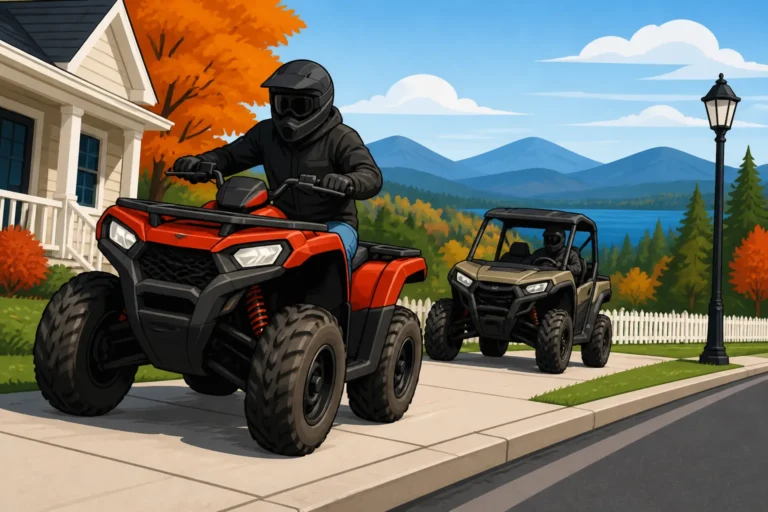
New Hampshire Rules for a Rider Aged 12
It's incredibly exciting to see your 12-year-old discover the thrill of off-highway recreational vehicles (OHRVs) in New Hampshire. You want them to experience the joy of the trails, but you're also probably feeling a bit overwhelmed by the rules and regulations, wondering exactly what's required to keep them safe and legal. This comprehensive guide will clear up all the confusion surrounding New Hampshire's specific rules for 12-year-old OHRV riders, ensuring you can hit the trails with confidence and peace of mind.
The Absolute Must-Have: New Hampshire's OHRV Safety Certificate
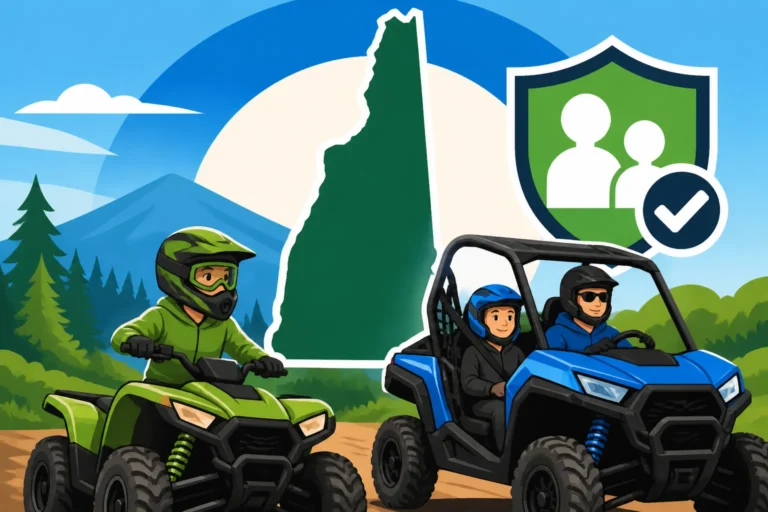
Parents often ask, "My child has been riding since they could walk, do they really need a certificate?" The answer, unequivocally, is yes. For any rider under the age of 18 operating an OHRV on public land in New Hampshire, an approved safety certificate is not just recommended; it's a legal mandate. This requirement isn't about questioning your child's natural ability, but about ensuring every young rider understands the specific laws, safety protocols, and trail etiquette unique to New Hampshire.
Why Certification is the First Step for a 12-Year-Old
Think of the safety certificate as their passport to the trails. Without it, even the most skilled young rider is operating illegally on public land, which could lead to fines and a quick end to your family's adventure. The certificate instills a crucial understanding of not just how to operate the machine safely, but also where to ride, who has the right of way, and how to protect the environment we all enjoy. It covers essential topics like yielding to hikers, respecting private property boundaries, and minimizing impact on wildlife.
For example, your 12-year-old might be a whiz at handling their quad in your backyard or on a relative's farm. They might know how to navigate obstacles and control speed. But do they understand why you must always slow down to 10 mph at a trail entrance, or how to properly cross a public road? Do they know about the proper hand signals to use when riding in a group? These are the kinds of vital lessons embedded in the safety course. It’s about more than just mechanical skill; it’s about responsible recreation. You can learn more about the specific requirements in [New Hampshire Safety Education Requirements].
Navigating the Safety Course Options for Your Young Rider
New Hampshire offers a couple of pathways to obtain this all-important safety certificate, giving families some flexibility. There are both online and in-person options, each with its own benefits. The online course offers the convenience of learning at your own pace from home, fitting around school schedules and other activities. While there is a fee associated with the online version, it can be worth it for the flexibility it provides. These courses are typically interactive, with quizzes and modules designed to hold a young person's attention.
Alternatively, the New Hampshire Fish and Game Department often hosts free classroom courses. These in-person sessions can be a fantastic way for your child to learn in a structured environment, interact with instructors, and ask questions directly. They also provide a sense of community, allowing young riders to meet peers who share their passion. Whichever option you choose, the curriculum is designed to cover the same critical safety and regulatory information. The goal is a uniform understanding of safe OHRV operation across all young riders. Before signing up, you might want to look into [New Hampshire ATV Safety Course Cost] and [Where to Take a New Hampshire ATV Safety Course].
Understanding Supervision: Who, What, and Where
Once your 12-year-old has their safety certificate, the next crucial piece of the puzzle is supervision. New Hampshire law is very clear about the adult presence required for young riders, and it's not a rule to take lightly. This isn't just about having an adult nearby; it's about having a qualified adult within immediate reach and sight.
The 'Qualified Adult' Definition for a 12-Year-Old Rider
When it comes to supervising a 12-year-old on an OHRV in New Hampshire, the law isn't vague. The supervising adult must be at least 25 years old. This is a higher age requirement than for supervising a licensed driver, emphasizing the greater responsibility involved with OHRV operation. Furthermore, this adult isn't just a passenger; they must also possess a valid motor vehicle driver's license or an OHRV safety certificate themselves. This ensures the supervisor understands the rules and dangers as well.
Imagine a scenario where your 18-year-old son, who's a fantastic rider, wants to take his 12-year-old sister out on the trails. While his intentions are good and he might be very responsible, he simply doesn't meet the legal age requirement for supervision in New Hampshire. The same applies if a younger aunt or uncle, despite being an experienced rider, is under 25. It's a hard and fast rule designed to ensure a certain level of maturity and legal accountability in the supervising party. Understanding these specific age requirements is key, as laid out in [New Hampshire Supervision Rules for Minors]. You can also see why the state takes this seriously by checking out [Why Your Riding Companion Has to Be Twenty-Five].
What "Direct Visual Supervision" Means on the Trail System
The term "direct visual supervision" means exactly what it sounds like: the supervising adult must be able to see the 12-year-old rider at all times while they are operating the OHRV. This isn't just about being on the same trail system or even generally in the same group. It means the adult must be close enough to communicate instructions, observe the child's riding, and, most importantly, intervene immediately if a problem arises.
This rule has practical implications for your ride planning. You can't let your 12-year-old speed ahead around a bend and disappear from sight, assuming they'll be fine. If you're on a particularly winding trail, or if dust is kicked up, you may need to adjust your speed or position to maintain constant visual contact. This might mean the adult rides slightly behind or alongside the child, or that the group as a whole travels at a pace comfortable for the youngest rider. It's about proactive supervision, not just reactive. Failing to maintain direct visual supervision can result in legal consequences, even if no incident occurs. The rules are slightly different for other age groups, so it’s good to understand the nuance, particularly compared to [New Hampshire Rules for a Rider Aged 13].
Navigating New Hampshire's Trails and Roads
New Hampshire boasts an incredible network of OHRV trails, especially in the northern part of the state. It's a fantastic place to ride, but understanding where your 12-year-old can legally operate their machine is just as important as knowing the supervision rules.
Permissible Riding Areas for a 12-Year-Old
With their safety certificate and proper supervision, your 12-year-old can enjoy most of New Hampshire's designated OHRV trails. This includes the extensive club trail networks, such as those that make up the vast "Ride the Wilds" system in Coos County, and specific state parks like Jericho Mountain State Park. These trails are generally well-marked and maintained, offering a variety of terrain suitable for different skill levels. However, it's crucial to always check trail maps and local regulations before heading out. Some trails, particularly those on shared corridors or in more environmentally sensitive areas, may have specific restrictions, such as width limits.
For example, while many trails are generous in width, certain sections or bridges might have gates or natural features that restrict machines over 50 or 65 inches wide. If your family rides a wider side-by-side, it's imperative to measure your machine and confirm it meets the trail's requirements. Sometimes, aftermarket modifications from companies like SuperATV can slightly alter your machine's dimensions, so always double-check the specs against published trail rules. The goal is to ensure a safe and respectful experience for all trail users and to protect the trails themselves. Resources like [Where to Ride an ATV in New Hampshire] and [New Hampshire Rules for Riding State Land] are excellent starting points for planning your adventure. For an immersive experience, consider visiting [Jericho Mountain State Park at Berlin].
Understanding Road Crossings and Private Land Use
This is where things can get a little tricky, and it's an area where many misunderstandings occur. In New Hampshire, a 12-year-old rider, even with a certificate and supervision, is generally not allowed to ride along public roads, even in towns where OHRVs are otherwise permitted on certain streets. Their use of roads is typically restricted to crossing at designated points. These crossings must be done safely and legally:
- You must come to a complete stop before entering the paved portion of the road.
- You must yield to all vehicular traffic.
- The crossing must be made at a 90-degree angle to the road.
- Once across, you must immediately return to the trail.
You cannot ride on sidewalks, public parking lots (unless specifically designated for OHRV staging), or along the shoulder of a road. These rules are in place for everyone's safety, particularly that of young riders.
When it comes to private land, the rule is simple and unwavering: always obtain written permission from the landowner before riding. Even if land appears unposted, or if it's "just a shortcut" between two public trails, you cannot assume permission. Trespassing is a serious offense and can lead to property owners revoking access for everyone. Landowners are the lifeblood of New Hampshire's trail system, and respecting their property is paramount. Always consult [New Hampshire Rules for Crossing a Highway] and [New Hampshire Landowner Permission Rules] for detailed guidance.
Safety Gear, Machine Suitability, and Avoiding Pitfalls
Beyond the legalities of certificates and supervision, ensuring your 12-year-old has the right equipment and that their machine is suitable for them is crucial for a safe and enjoyable experience. Ignoring these aspects can quickly turn a fun day into a dangerous situation.
Essential Equipment and Choosing the Right Machine Size
First and foremost, a helmet is absolutely mandatory for any OHRV rider under the age of 18 in New Hampshire. There are no exceptions to this rule. The helmet must be properly fitted and DOT-approved. Eye protection, such as goggles or a face shield, is also required to protect against debris, dust, and insects. Beyond these legal requirements, it's highly recommended that your 12-year-old wears sturdy over-the-ankle boots, long pants, long-sleeved shirts, and gloves. This protective layering can significantly reduce injuries in case of a fall. For more on helmet rules, check [New Hampshire Helmet Law for OHRV Riders] and [New Hampshire Eye Protection Requirement].
Just as important as the gear is the machine itself. A 12-year-old should ride an OHRV that is appropriate for their age, size, and skill level. Putting a small child on an oversized, high-horsepower machine is a recipe for disaster. They need to be able to comfortably reach and operate all controls, have a good center of gravity, and be able to effectively use their body to steer and balance the machine. Many manufacturers offer youth-specific models that are appropriately sized and power-limited. When considering any accessories or modifications, from robust winches to wider A-arms, always ensure any parts from manufacturers like SuperATV maintain the machine's safety profile and don't compromise the young rider's control. While aftermarket exhaust systems can give a machine a throaty growl, ensure they still comply with New Hampshire's decibel limits and are equipped with a spark arrester, which is legally required to prevent wildfires.
Registration, Decals, and Common Violations to Sidestep
Even if your 12-year-old is certified and supervised, the OHRV they are riding must be properly registered in New Hampshire. This applies to all machines operating on public trails, regardless of where the owner resides. There's no reciprocal agreement with neighboring states like Maine, Vermont, or Massachusetts for OHRV registration; if you're riding in New Hampshire, you need a New Hampshire registration. Once registered, the machine will receive decals that must be prominently displayed as instructed, and the paper certificate should be carried with the operator (or supervising adult) while riding. [Registering an OHRV in New Hampshire] explains this process in detail, and [New Hampshire OHRV Decal Placement] covers where to put those stickers.
One of the most common pitfalls for families visiting New Hampshire is assuming their out-of-state registration is sufficient, or letting a child ride unsupervised "just for a minute." These seemingly small deviations from the rules can lead to significant consequences. New Hampshire Fish and Game officers and local law enforcement actively patrol the trails. Getting caught with an unregistered machine, an unsupervised minor, or a rider without a certificate can result in substantial fines, and your OHRV could even be impounded. It’s simply not worth the risk. Understanding [New Hampshire Fines for an Unregistered OHRV] will give you a clear picture of the potential penalties. Stick to the rules, and your 12-year-old will have a safe, legal, and truly memorable time exploring the beautiful trails of the Granite State.
Disclaimer
This article is for general informational purposes only and does not constitute professional advice. Laws, prices and regulations vary by location and change over time. Consult a qualified professional for guidance on your specific situation.