Joining a New Hampshire OHVA Club
Joining a New Hampshire OHVA club can lower your OHRV registration cost and connect you with people who know the local trails. But membership is not a trail pass, and not every club or membership works the same way. Here’s how to choose a club, make sure your membership qualifies for the registration discount, and understand what you’re supporting.
What joining a club does and does not do
A club membership can give you a connection to a local trail community and may qualify you for a lower New Hampshire OHRV registration rate. Clubs also organize volunteers, maintain trails, communicate with landowners, and help keep riding areas open. What you receive beyond those basics depends on the club.
The key distinction is that club membership and OHRV registration are separate things. Joining a club does not register your ATV, UTV, or trail bike, and it does not automatically authorize you to ride any trail you find. You still need the registration that applies to your machine and situation, and you must follow trail rules and closures. New Hampshire does not generally require a separate statewide trail pass in addition to registration, but some locations or activities may have their own requirements or fees. See New Hampshire’s Club Membership and Access for the difference between membership, registration, and access.
A club may also offer a more personal kind of help: advice on staging areas, trail conditions, equipment, events, and routes. A local group can tell you what a map cannot, such as whether a particular lot fills early or whether a trail section is a poor fit for a wide machine. That information is useful, but it is not a substitute for checking current conditions and respecting posted signs.
| What you’re considering | What it can provide | What it does not replace |
|---|---|---|
| Club membership | Local connection, club information, and potentially a registration discount | Your OHRV registration |
| OHRV registration | The required registration for riding where it applies | Landowner permission or permission to use a closed trail |
| Trail information from a club | Local knowledge, maps, updates, and guidance | Checking current conditions before a ride |
| A volunteer day | A way to support trails and meet members | Membership or registration, unless the club specifically says otherwise |
Joining is optional for many riders, but it can be worthwhile even if you do not expect to volunteer often. Just be realistic about what you want. If your main goal is a registration discount, focus first on whether the club qualifies and how membership proof works. If you want a local community or a chance to help maintain trails, look for a club active in the area where you ride.
How to choose a New Hampshire club
Start with where you actually plan to ride. A club serving the area you visit most often may be more useful than one that happens to have a convenient sign-up page. Local clubs usually know the routes, land access arrangements, staging areas, seasonal conditions, and volunteer needs in their territory.
That does not mean you must join the club closest to home. Some riders travel to the North Country for most of their riding, while others want a club closer to a camp or regular destination. Think about where you ride now and where you expect to ride over the next season. Then look at clubs connected to those areas and compare what they offer.
Before paying, check a few details:
- Does the club count for the registration discount? Confirm that the specific club and membership type qualify. Do not assume every organization using “ATV,” “OHRV,” or “off-highway” in its name qualifies. The current qualifying-club information and registration rules are more important than an old flyer or an informal recommendation.
- What does membership include? Ask whether you receive trail updates, maps, event notices, meetings, or access to member communications. The answer varies by club. What a New Hampshire Club Membership Buys covers the kinds of benefits to ask about.
- What area does the club serve? A club may focus on a particular town, trail network, or region. Ask whether its updates and activities line up with where you ride.
- Is membership individual, household, or another type? Read the current membership terms. If more than one person in your household rides, check whether the club offers a household option and who it covers.
- Are there volunteer expectations? Some clubs actively invite members to trail workdays and events; joining does not necessarily mean every member must take a regular shift. Ask what the club expects and what help is most needed.
- How do you prove membership? Find out whether you receive a confirmation, card, email, or other documentation and whether you need to bring it to an agent. Requirements can differ, so check before you register.
If you are undecided, contact the club directly with a simple question: “I ride mostly near this area, and I’m joining to support local trails and possibly receive the member registration rate. Is this the right membership for me?” That can reveal whether the club is a good fit faster than browsing a list of benefits.
It is also reasonable to ask how the club communicates when trails close or conditions change. A club newsletter or social page can be helpful, but it may not be updated as quickly as a current trail-status notice. Treat club information as one part of your planning, not the only source. For more about the value of a membership, see What a Club Does With Your Dues.
Using a club membership for the registration discount
The member registration rate is a common reason riders join. The savings can be meaningful, particularly for people registering more than one machine or riding regularly. But compare the current membership cost with the current registration discount before assuming that joining will save you money. Both amounts and qualifying details can change, so check the current information with the club and the registration agent. New Hampshire’s Club Member Discount explains the basic idea, while Whether Club Dues Cost Less Than the Discount is useful if you are weighing the numbers.
The practical sequence matters. If you want to use the member rate, it is usually sensible to confirm the club qualifies and complete the membership before you go to register. Keep the membership confirmation available, and ask the club what proof it provides. Then check with the agent where you plan to register about what they will accept. A membership that is still pending or cannot be verified may slow down the transaction or keep you from receiving the rate you expected.
A good checklist is:
- Find the current list or confirmation of clubs that qualify for the discounted registration rate.
- Choose the correct membership type and complete the club’s joining process.
- Save the receipt, confirmation email, card, or other proof the club issues.
- Contact the registration agent if you are unsure which proof is accepted.
- Register the machine and confirm the final rate before completing the transaction.
If you are registering at a town clerk’s office or powersports dealer, do not rely on a vague statement like “I’m a member.” Bring proof that identifies the club and shows your membership is active, if the club provides that information. The process is explained in Joining a Club Before You Register and Proof of Membership at the Counter.
Joining a club does not necessarily mean the club processes your registration. Membership and registration may be handled by different organizations, and the club might not issue decals or a registration certificate. You can learn more about the registration process in Where to Register an OHRV in New Hampshire and The New Hampshire OHRV Registration Application.
If you have already registered at the non-member rate, do not assume that joining afterward will automatically adjust the registration. Ask the registration agent or the relevant state office whether any change is possible and what process applies. Refunds or corrections are not something to count on without confirmation. It is usually easier to have the membership details settled before the registration transaction.
The same caution applies if you are registering several machines. Ask whether the club membership and discount can be used for each machine and whether any machine-specific rules apply. The answer may depend on the current registration categories and the membership arrangement. Get the details before budgeting around a discount.
What clubs do with membership and volunteer support
A club is more than a route to a lower registration rate. Local clubs help keep trail systems usable by coordinating trail work, checking problem areas, communicating with landowners, and working with other groups involved in access and maintenance. Volunteer work may include clearing branches, repairing signs, checking drainage, reporting washouts, or helping prepare for a season.
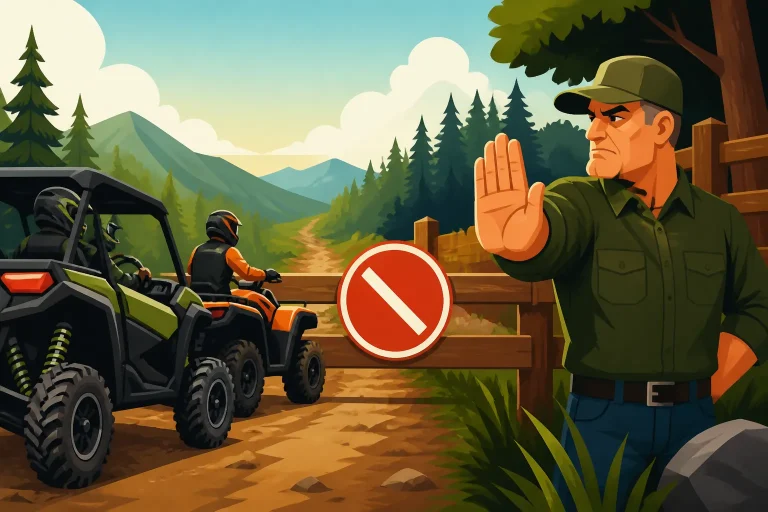
Trail access often depends on relationships with landowners. A trail may cross private or leased land, and permission can be conditional. Clubs can play a practical role by helping riders understand where to go and by reminding members that reckless or unauthorized riding can put access at risk for everyone. The club’s local knowledge is valuable, but it is not permission to ride somewhere outside an open, designated route.
You do not have to be mechanically skilled or experienced with trail construction to be helpful. Clubs may need people to assist at events, share trail updates, attend meetings, organize communications, or help with straightforward cleanup. If you are interested, ask what tasks are appropriate for a new volunteer and what safety instructions apply. Do not enter a work area or use tools on a trail unless the club has arranged and approved the work.
Some clubs may request dues in addition to the registration fee. Dues are club support, not a substitute for registration. Ask how the club uses the money, whether membership comes with any specific benefits, and whether volunteer help is needed more than financial support. Clubs differ in size and priorities, so a clear answer is more useful than assuming all dues go toward the same costs.
For riders who do not live near the club, joining can still be a way to support the system they use. You may not make every meeting or workday, but you can follow club guidance, report a hazard through the right channel, and ride responsibly. If you want to understand how local clubs fit into trail funding and maintenance, read [New Hampshire Grants for Club Trail Work].
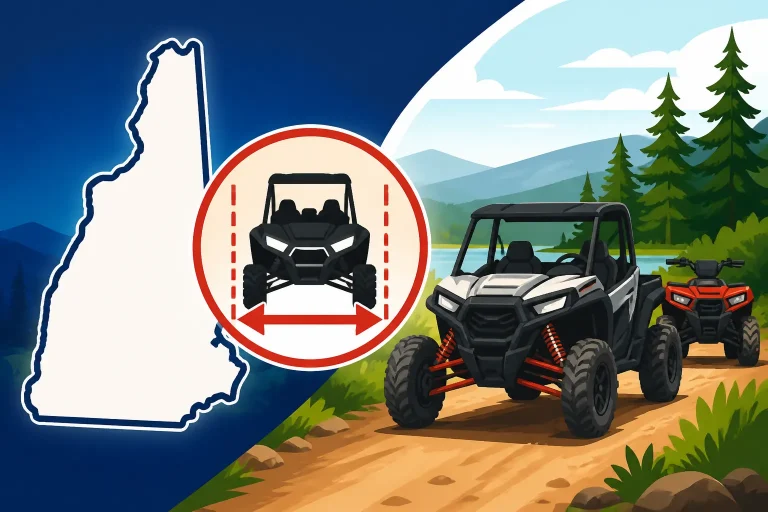
A membership is also a chance to learn the local etiquette before you arrive. Ask about where to stage, how to avoid blocking access roads, whether there are machine-width restrictions, and how trail conditions are reported. Then verify any time-sensitive details before traveling. A club map or message can be helpful, but open status can change because of weather, landowner decisions, maintenance, or seasonal rules.
Joining and getting ready to ride
The joining process is usually simple, but follow the club’s current instructions rather than relying on an old paper form or a post shared by another rider. Clubs may accept membership applications through different channels, and they may update membership categories or payment methods. Use the club’s own current information and save the confirmation after you submit your application.
After joining, keep the information you need in a place you can access. Save the confirmation email, note the club’s contact details, and find out where its current trail updates are posted. If you receive a membership card or other proof, keep it with your registration documents. A small waterproof document pouch can help protect paper items in wet riding conditions; Amazon is one possible place to look for a basic pouch, though any suitable local option works.
Before your first ride in a new area, make sure the machine is registered and that its decals and certificate are in order. A club membership alone does not meet those requirements. Review the rules for the specific trails, check the current status, and confirm that your machine fits any width or equipment limits. If you are riding a machine registered outside New Hampshire, verify the state’s requirements rather than assuming your home registration is accepted. Riding New Hampshire With an Out-of-State Machine explains that issue.
Use the club as a source of local context, not as a reason to skip basic preparation. Check your route, fuel range, weather, and any access restrictions. Ask about staging and parking before you unload. Carry the documents and safety equipment required for your ride, and follow directions on signs even if a club map appears to show a route continuing.
If you want to volunteer, ask what a new member can do safely and whether the club has a scheduled workday. Bring only tools or equipment the organizer requests. For basic personal preparation, sturdy work gloves and eye protection can be useful for approved cleanup tasks; Amazon may be one source, but choose gear suited to the task and follow the organizer’s safety guidance. Do not assume ordinary riding gear is appropriate for every trail-work job.
For carrying a paper map, membership details, or a route note, a waterproof map sleeve can be handy. Amazon is another possible source for that kind of simple accessory, but the important part is that the map stays readable and you still know how to check for current closures. Digital information can be useful, too, but do not rely on a phone alone in areas with weak service.
Ultimately, a good club membership should make your riding more informed and help sustain the places you enjoy. It may reduce your registration cost, connect you with local riders, and give you a way to contribute. Confirm the discount, understand what the membership includes, and remember that registration and trail permissions remain separate responsibilities.
Disclaimer
This article is for general informational purposes only and does not constitute professional advice. Laws, prices and regulations vary by location and change over time. Consult a qualified professional for guidance on your specific situation.