Lights for an Early Morning Ride
There's nothing quite like hitting the trails in New Hampshire as the first hint of dawn paints the sky, or riding home as the stars begin to pop out. But if you’re planning on those early morning departures or late evening returns, especially if you’re touching pavement, understanding the lighting requirements for your ATV or UTV isn't just a good idea – it's absolutely crucial for your safety and to keep you on the right side of the law. This guide is all about shedding light on exactly what you need to know to illuminate your ride effectively and legally in the Granite State.
Understanding New Hampshire's Basic OHRV Lighting Requirements
Navigating the vast network of New Hampshire's OHRV trails and, increasingly, town roads, means you need to be seen and see where you're going, especially when natural light isn't abundant. The state has clear expectations for lighting on your Off-Highway Recreational Vehicle, whether it’s an ATV, UTV, or trail bike. These aren't just arbitrary rules; they're in place to prevent accidents, help you spot hazards, and ensure that other trail users or motorists can see you coming.
When Lights Are Required on the Trails
Even if you're planning a "daytime" ride, New Hampshire law is pretty specific about when your lights need to be on. It's not just about the absolute darkness after sunset or before sunrise. Any time visibility is low, your machine needs to be lit up. Think about those classic New England conditions: a thick fog rolling in on a mountain trail, a sudden downpour that turns the woods gloomy, or even just the deep shadows of a dense forest canopy on an overcast day. In these situations, your headlights and taillights aren't just for seeing; they're primarily for being seen. A conservation officer might be out and about, and they’re not just looking for registration decals; they’re also checking for proper equipment like functioning lights. If you're out there and it's getting dim, or the weather's closing in, flip those lights on! You'll often see specific requirements in play when you're riding [New Hampshire Rules for Riding After Dark].
Essential Lighting Components for Every OHRV
Every ATV and UTV needs to be equipped with certain basic lights, regardless of whether you're strictly on trails or venturing onto designated roads. This typically includes a functional headlight and a taillight. The headlight needs to cast a beam far enough forward to illuminate obstacles and the path ahead, giving you ample time to react. The taillight, on the other hand, is all about rear visibility. It lets other riders know you're there and helps them maintain a safe following distance, especially in dusty conditions or at dusk. It’s also crucial to have a working brake light. When you hit the brakes, that light needs to shine brighter, signaling to anyone behind you that you're slowing down or stopping. This seems like common sense, but a broken brake light can lead to a rear-end collision, and nobody wants that. Ensuring these basic lights are in good working order before every ride is non-negotiable.
Specific Lighting for Road Riding in New Hampshire
Now, if you're one of the many riders who enjoys the freedom of connecting trails by using open town roads in places like Gorham or Berlin, the stakes get a little higher, and the lighting requirements become even more stringent. When you transition from the relative isolation of a forest trail to a shared public road, you're entering the world of cars, trucks, and other conventional vehicles. This means your OHRV needs to meet certain "street legal" lighting standards to ensure you're as visible as possible and don't pose a hazard to other traffic.
Headlight and Taillight Standards for Pavement Use
When you're legally riding your OHRV on a New Hampshire road, your headlight and taillight aren't just for show. They need to be bright enough to be seen from a significant distance, both day and night, in all weather conditions. While New Hampshire's OHRV laws don't always explicitly demand DOT-approved lights for off-road use, when you're sharing the pavement with vehicles that do have DOT lights, it's wise to ensure your lighting is robust. Your headlight should provide clear illumination of the road ahead, allowing you to react to potholes, wildlife, or other unexpected hazards. Simultaneously, your taillight must be clearly visible from the rear, often from a distance of at least 500 feet, to give following drivers plenty of warning of your presence. This is particularly important on those winding, sometimes dark, rural roads where OHRVs are often permitted. Always ensure your [Headlight and Taillight on a New Hampshire Road] are functioning perfectly before you even think about hitting the asphalt.
The Importance of Brake Lights and Turn Signals on Roads
Beyond just headlights and taillights, navigating roads requires signaling your intentions to other drivers. A functional brake light, as mentioned, is paramount. It’s your primary way of communicating that you’re slowing down. But what about turns? While many ATVs and UTVs don't come stock with turn signals, if you're riding on roads, having them can significantly increase your safety and reduce ambiguity for other drivers. The law generally states that if a vehicle is designed to be operated on public ways, it needs to signal turns. While OHRVs have some exemptions, for the sake of safety and avoiding potential confusion or incidents, adding aftermarket turn signals is a smart upgrade for any road-going machine. Many riders opt for universal kits that are relatively easy to install. Remember, a New Hampshire officer checking roadside will be looking at all your equipment, especially if you're on a public way.
Reflectors and Side Visibility
Another often-overlooked aspect of road riding visibility is side marking. Most OHRVs come with some reflectors, but adding more, especially on the sides of your machine, can dramatically improve how well you’re seen by traffic approaching from perpendicular directions – think about intersections or driveways. Bright orange or red reflectors on the sides of your machine can make a huge difference, particularly at dawn, dusk, or in foggy conditions when ambient light is low. This might not be a direct legal requirement for all OHRVs, but it's a vital safety enhancement when sharing space with cars. These reflective surfaces catch and bounce back light from other vehicles, making your OHRV a more visible target.
Choosing and Maintaining Your OHRV Lighting System
Having the right lights is only half the battle; ensuring they work properly and are well-maintained is equally critical. From choosing the right brightness to regularly checking connections, a little proactive effort goes a long way in guaranteeing a safe and legal ride, especially during those low-light hours.
Upgrading Your Lighting for Enhanced Safety
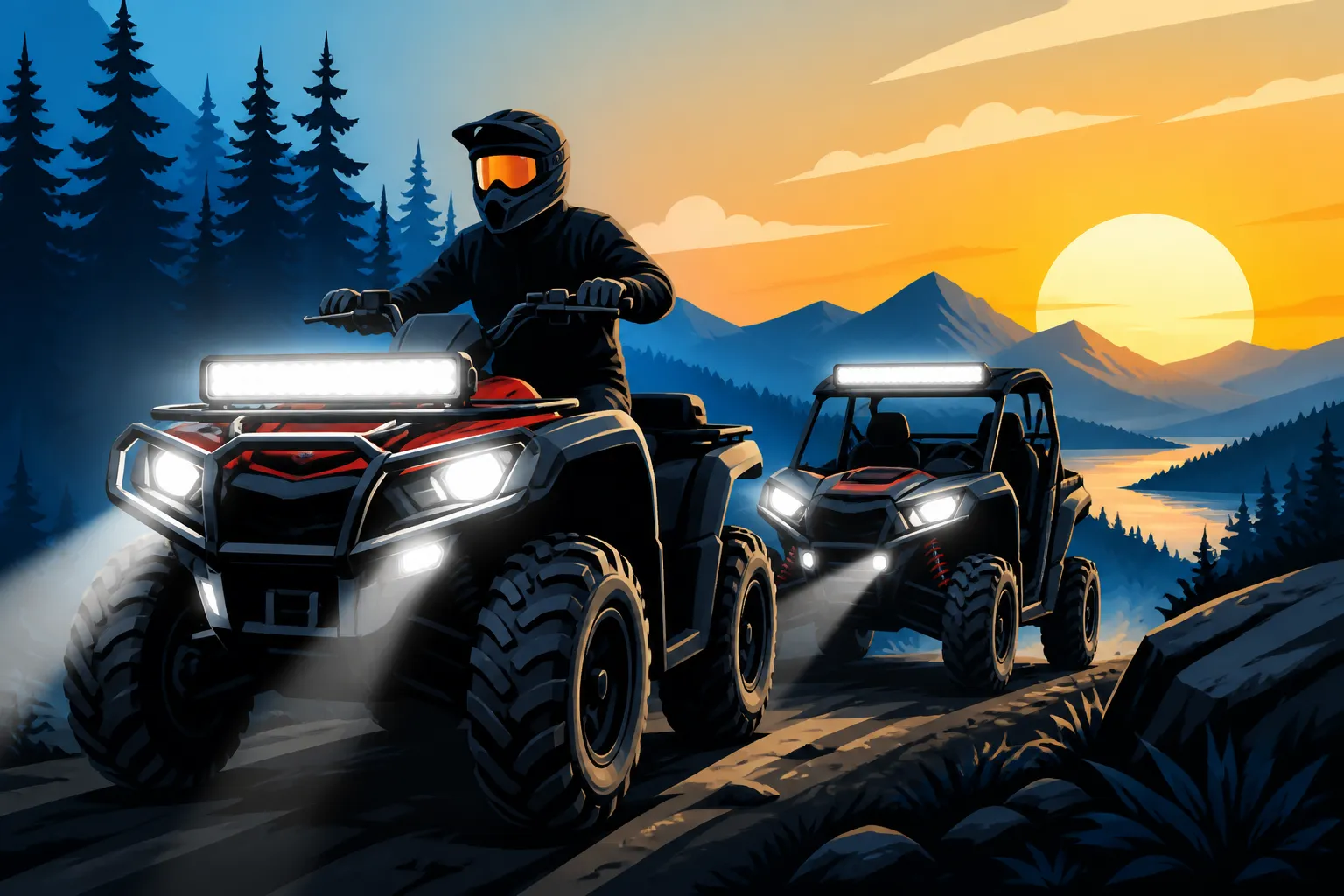
Many stock OHRV lighting systems are designed for basic trail use and might not be robust enough for frequent early morning road riding or more aggressive night riding. This is where aftermarket upgrades come into play. LED lights are a popular choice, offering superior brightness, lower power consumption, and a longer lifespan compared to traditional halogen bulbs. You can find everything from brighter LED replacement bulbs for your existing headlight housings to full LED light bars that provide an incredible spread of light, ideal for navigating dark trails or poorly lit rural roads. Brands like SuperATV offer a wide range of aftermarket lighting solutions, from powerful LED headlights and taillights to auxiliary light bars that can really cut through the darkness. For those venturing onto logging roads midweek or planning a [New Hampshire Rules for Night Riding on a Trail], upgrading your lighting can turn a precarious ride into a confident exploration.
Comparison of OHRV Lighting Options for New Hampshire Riding
| Light Type | Purpose / Use Case | Pros | Cons | Road-Legal Considerations |
|---|---|---|---|---|
| Stock Halogen | Basic trail riding, minimal road use | Inexpensive, easy to replace | Lower brightness, shorter lifespan, high power draw | May meet minimum for roads, but often insufficient for safety. |
| LED Headlights/Taillights | General trail & road riding, increased visibility | Brighter, longer lifespan, lower power draw | Higher initial cost | Generally acceptable and often superior for road use. |
| LED Light Bars | Off-road night riding, auxiliary illumination | Extreme brightness, wide light spread | Can be overpowering for oncoming traffic, high initial cost | Not for road use when oncoming traffic is present; cover when on pavement. |
| Auxiliary Spot/Flood | Targeted illumination for specific needs (e.g., rock crawling, work light) | Focused beam (spot) or wide area light (flood) | Can be cumbersome to mount | Same as light bars – strictly off-road or when stationary. |
| Turn Signals | Road riding, signaling intentions | Significantly enhances safety on roads | Not always stock, requires aftermarket installation | Highly recommended for all road-going OHRVs, improves communication. |
| Reflectors | Passive side visibility | Inexpensive, no power required, always on | Does not actively illuminate | Essential for side visibility on roads. |
Routine Maintenance for Optimal Performance
Even the best lights are useless if they don't work. Before every ride, especially if you're planning an early morning or late evening excursion, take a few minutes to do a quick check:
- Test all lights: Headlight (high and low beam if applicable), taillight, and brake light. If you have aftermarket turn signals, test those too.
- Inspect bulbs/LEDs: Look for cracks, moisture inside the housing, or dimness.
- Clean lenses: Mud, dust, and grime can drastically reduce light output. Use a soft cloth and appropriate cleaner.
- Check wiring: Give the visible wiring a quick once-over for any signs of fraying, loose connections, or corrosion. A loose wire can cause intermittent failure, which is the last thing you want on a dark trail.
- Battery check: Ensure your battery is charged, especially if you have upgraded to multiple auxiliary lights. While LED lights are efficient, running many accessories can still drain a weaker battery.
Regular maintenance ensures your lights are always ready for action, protecting you and helping you avoid potential fines for equipment violations.
Consequences of Inadequate Lighting in New Hampshire
Riding with inadequate or non-functioning lighting isn't just a minor inconvenience; it carries significant risks and potential legal repercussions in New Hampshire. Nobody wants their fun day out to end with an accident or a ticket, but both are very real possibilities if you neglect your OHRV's lighting.
Safety Hazards of Poor Lighting
The most immediate and severe consequence of poor lighting is the heightened risk of an accident. When you can't see properly, you might miss a sudden dip in the trail, a hidden rock, a fallen tree, or even an animal crossing your path. This can lead to serious injuries for you and your passengers, not to mention damage to your machine. Equally important is being seen by others. On a dark trail, another rider might not see your unlit machine until it's too late. On a town road, the danger is amplified exponentially. A car might not spot your taillight in time to avoid a collision, leading to potentially catastrophic outcomes. Your ability to ride safely, especially at dawn, dusk, or night, hinges almost entirely on your lighting system. It's a critical safety feature that should never be compromised.
Fines and Penalties for Lighting Violations
New Hampshire law is quite clear about equipment requirements for OHRVs, and lighting is no exception. Operating a machine with inadequate or non-functioning lights during periods when they are required can result in a citation. While I can't give specific dollar amounts (prices vary and can change), rest assured that these fines can put a damper on your wallet. Beyond the direct financial penalty, getting pulled over can cut short your ride and lead to inconvenient paperwork. Conservation officers and local law enforcement are vigilant about ensuring compliance, especially in areas where OHRVs share roads or are known to ride in low-light conditions. Ignorance of the law is rarely an excuse that will get you out of a ticket. For example, if you're riding a Class V or [New Hampshire Rules for Riding a Class VI Road] after dark without proper illumination, you're inviting trouble. Always be prepared for [What a New Hampshire Officer Checks Roadside] to ensure you meet all requirements.
Liability and Insurance Implications
In the unfortunate event of an accident involving an OHRV with insufficient lighting, you could face significant liability issues. If it's determined that your inadequate lighting contributed to the accident, you might be held responsible for damages, medical costs, and other related expenses. Your insurance company might also take this into account, potentially denying claims or increasing your premiums if you were found to be operating unsafely or in violation of state law. This is a sobering thought, but it underscores why adherence to lighting regulations isn't just about avoiding a ticket – it's about protecting your financial well-being and preventing legal headaches down the road. Using high-quality aftermarket lights, perhaps from a reputable provider like SuperATV, helps ensure you have the best visibility and a stronger defense in case of an incident. It’s a small investment for peace of mind and safety.
Disclaimer
This article is for general informational purposes only and does not constitute professional advice. Laws, prices and regulations vary by location and change over time. Consult a qualified professional for guidance on your specific situation.