Why the Limit Drops to 10 mph at a Gate
Ever been enjoying a smooth, exhilarating ride on a New Hampshire OHRV trail, feeling the freedom of the open path, when suddenly you arrive at a gate or a designated access point and see a sign demanding you drop your speed to a mere 10 mph? It can feel like a real buzzkill, almost arbitrary, and might even make you wonder why such a strict limit is necessary after you've been cruising at a higher speed. But trust me, these aren't just random rules; there's a lot of thought behind them. This guide is here to shed light on exactly why that limit drops, what it protects, and how understanding it helps ensure the trails we love remain open for everyone.
The Purpose Behind Speed Limits on OHRV Trails and Gates
It's easy to dismiss a speed limit sign as just another piece of bureaucratic red tape, especially when you're geared up for adventure. However, every speed limit posted on a New Hampshire OHRV trail, particularly the drastic drop you see at gates, is there for a critical reason. These limits are carefully determined by the clubs, landowners, and the Bureau of Trails to ensure safety, protect the environment, and foster positive relationships within the communities that host our beloved trail systems.
Safety First: Protecting Riders and Others
The most immediate and paramount reason for reduced speed limits, especially at gates and trail access points, is safety. These locations are often bottlenecks, where multiple factors converge to create potential hazards. You might have other riders entering or exiting, families with young children crossing, or even non-OHRV users like hikers and cyclists sharing a brief section of the path. Blind corners, limited sightlines, and uneven terrain can compound these risks.
Imagine approaching a gate at 25 mph. Your reaction time to an unexpected child stepping onto the trail or another machine pulling out from behind a parked vehicle is severely diminished. Dropping to 10 mph provides a crucial buffer. It allows you significantly more time to see, react, and safely brake, preventing potential collisions and serious injuries. This isn't just about protecting you as the rider; it's about safeguarding everyone who uses or interacts with the trail, ensuring a safer experience for all. These lower limits are a proactive measure to prevent accidents before they ever have a chance to occur, making the entry and exit points of our trail network much safer spaces.
Protecting Infrastructure and Environment
Beyond human safety, lower speeds also play a vital role in preserving the trails themselves, as well as the surrounding natural environment and trail infrastructure. OHRVs, especially heavier side-by-sides, can exert significant force on the ground. High speeds, particularly when braking hard or accelerating rapidly, can lead to increased trail erosion, especially in softer or wetter sections. This erosion can quickly degrade the trail surface, creating ruts, washouts, and making conditions more challenging and less enjoyable for everyone.
Gates, signage, bridges, and culverts are all part of the extensive infrastructure built and maintained by volunteer clubs and [New Hampshire Trail Grants From Registration]. Approaching these structures at high speeds increases the risk of accidental damage. A momentary lapse in judgment or a loss of control could mean a costly repair for a gate post or a bridge railing. Furthermore, lower speeds help control dust in drier conditions, which is not only more pleasant for riders but also reduces the environmental impact on nearby vegetation and air quality.
Maintaining Good Neighbor Relations
Many of New Hampshire's extensive OHRV trail networks traverse a patchwork of private land, often facilitated by agreements with generous landowners, as well as town and state properties. The continued access to these lands is a privilege, not a right, and it hinges entirely on maintaining good relationships with the surrounding communities and property owners. Noise, dust, and perceived recklessness are major concerns for residents who live near trail access points.
High speeds generate more noise and kick up more dust. Imagine living next to a trail entrance where machines are constantly roaring by at high speeds. It would quickly become an unbearable nuisance, leading to complaints and, ultimately, potentially the revocation of trail access. The 10 mph limit at gates and other sensitive areas is a deliberate effort to minimize disruption. It shows respect for the residents and landowners, demonstrating that riders are committed to being responsible and considerate users of the land. This careful management of noise and dust at critical junctures helps secure the future of our trail system by preserving those crucial good neighbor relationships. [What a Club Does to Keep a Landowner Onside] is truly vital, and respecting speed limits is a big part of it.
Specific Speed Limit Scenarios in New Hampshire
New Hampshire's OHRV trail system is incredibly diverse, winding through forests, across old rail beds, and sometimes even briefly along designated town roads. This variety means that speed limits aren't a one-size-fits-all rule, but rather a dynamic set of guidelines designed for specific situations. Understanding these different scenarios helps you ride safely and legally, avoiding common pitfalls.
The 10 mph Rule at Gates and Designated Access Points
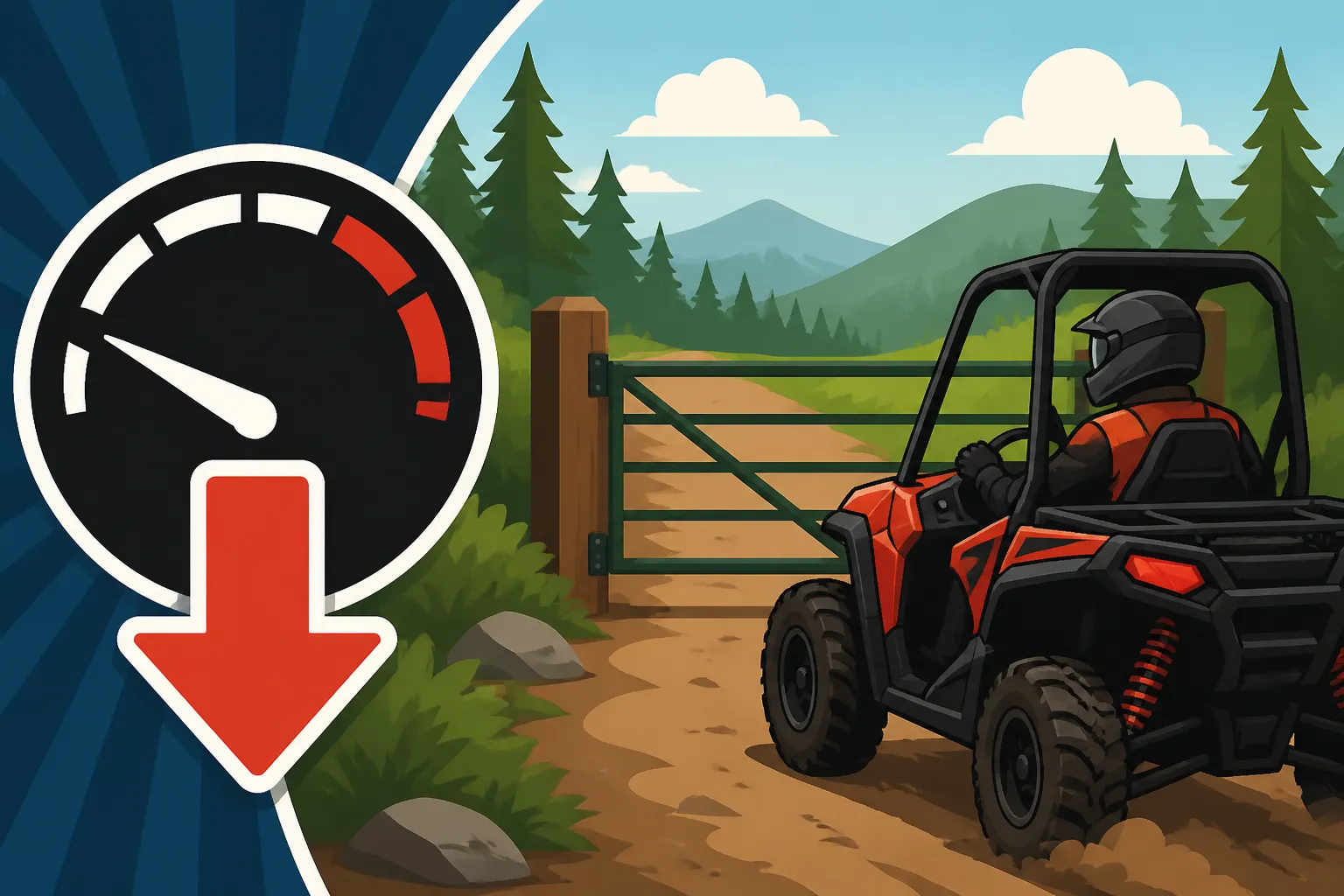
The 10 mph rule at gates is probably the most commonly encountered and sometimes most perplexing speed reduction for riders. But it's far from arbitrary. Gates and trail access points are inherently high-risk areas. These are the places where people often congregate, where vehicles might be parked for staging, and where riders are transitioning from public roads or parking areas onto the designated trail. Visibility can be limited, and the potential for unexpected obstacles – be it another machine, a pedestrian, or wildlife – is at its highest.
The 10 mph limit provides a critical safety margin. At this speed, you have a much shorter stopping distance, giving you precious extra seconds to react to a sudden hazard. It also significantly reduces the risk of noise and dust impacting nearby homes, which as we discussed, is crucial for maintaining landowner goodwill. When you see that 10 mph sign, whether it's at the entrance to a major trail network or a smaller feeder trail, it's a clear signal to slow down, be extra vigilant, and prepare for potential interactions. Conservation Officers frequently patrol these areas, and non-compliance with these posted limits can easily lead to a citation for reckless operation or exceeding a posted speed.
Varying Limits on Different Trail Types
While the 10 mph limit is common at gates, you'll encounter a range of speed limits as you navigate the broader New Hampshire trail system. The maximum speed on many open, unimproved trails might be 25 mph or occasionally higher where conditions allow, but this can change rapidly depending on the terrain and proximity to other users or sensitive areas. For example, some sections of rail trails, which are shared with hikers and cyclists, might have different limits to ensure multi-user safety.
Trail systems that pass through or near towns also have specific regulations. In places like Gorham, for instance, you'll find [Gorham's 25 mph Trail Limit] clearly posted within the town's designated OHRV routes. These limits are often part of a specific town ordinance designed to balance OHRV access with the quality of life for its residents. It's not uncommon to encounter 15 mph or even slower limits when traveling through a village or along a connector trail that parallels a residential street. Always keep an eye out for posted signs, as these can change frequently, and local regulations will always supersede general trail guidelines in those specific areas.
How to Adhere to Speed Limits and Ride Responsibly
Riding an OHRV in New Hampshire is an incredible experience, but it comes with a responsibility to ride safely and respectfully. Adhering to speed limits, especially those critical 10 mph reductions at gates, isn't just about avoiding a ticket; it's about ensuring a sustainable and enjoyable future for the sport. Responsible riding builds trust with landowners, supports the volunteer clubs, and keeps everyone safe on the trails.
Reading and Respecting Signage
The most fundamental step to adhering to speed limits is simply to pay attention to the signs. New Hampshire's OHRV clubs and the Bureau of Trails put a lot of effort into clear, consistent signage. When you approach a gate, a trail intersection, or an area with specific hazards, you'll almost always find a clearly posted speed limit sign. These aren't decorative; they're essential instructions for your safety and the safety of others.
Make it a habit to scan ahead for signs as you ride. They often appear well in advance of the actual speed change, giving you time to gradually reduce your speed. If a sign indicates a lower limit, it's because there's a reason – whether it's a blind curve, a potential crossing, or proximity to private property. Respecting this signage shows that you're a considerate rider who understands the importance of shared access. Ignoring a sign, even if you think the area looks clear, undermines the system and puts everyone at risk.
Equipping Your Machine for Control
While a responsible rider is the most important component of safe operation, having a machine that's well-equipped and maintained for optimal control can make a big difference, especially when you need to quickly adjust your speed. This isn't about making your machine faster; it's about making it more predictable and responsive. Ensure your brakes are in excellent working order, your tires have appropriate tread for the terrain, and your suspension is properly adjusted.
For those looking to enhance their machine's handling and stability, especially for navigating varied trail conditions and tight access points, aftermarket components can offer tangible benefits. Companies like SuperATV produce a range of products, from high-quality control arms that improve suspension geometry to upgraded braking systems and power steering kits. While these don't replace your need to ride responsibly, they can certainly make it easier to maintain precise control at all speeds, including those crucial 10 mph zones, helping you react more effectively to unforeseen circumstances and ensure a smoother, safer ride.
The Role of Club Membership and Trail Etiquette
The vast majority of New Hampshire's OHRV trails are managed and maintained by dedicated volunteer clubs. These clubs work tirelessly to build and maintain trails, negotiate access with landowners, and educate riders. Joining a club is not just about getting a discounted registration rate, like [The New Hampshire Club Registration Rate]; it's about supporting the very infrastructure you enjoy.
Beyond membership, practicing good trail etiquette is paramount. This includes yielding to slower traffic, giving way to oncoming machines on narrow sections, and always being mindful of your speed, especially around others. Minimizing noise and dust, particularly when passing through residential areas or near trailheads, goes a long way in demonstrating respect. These actions collectively contribute to a positive perception of OHRV riders, which is essential for preserving access to the trails we all cherish. Clubs often have specific guidelines for how to ride responsibly, and following them helps everyone.
Consequences of Ignoring Speed Limits
Ignoring posted speed limits on New Hampshire OHRV trails, especially the crucial 10 mph limits at gates, isn't just a minor infraction; it carries significant risks and consequences. These can range from personal safety hazards to legal penalties and, ultimately, can jeopardize the future of OHRV riding access for everyone. Understanding these repercussions is key to promoting responsible riding.
Safety Risks and Accident Prevention
The most immediate and severe consequence of disregarding speed limits is the increased risk of accidents and serious injury. Speed limits are not arbitrary; they are calculated based on factors like sightlines, terrain, potential for encounters with other users (pedestrians, cyclists, other OHRVs), and proximity to hazards. When you exceed these limits, you drastically reduce your reaction time and increase your stopping distance.
A sudden obstacle – whether it's a fallen tree, an animal darting across the trail, or another rider emerging from a blind spot – becomes far more dangerous at higher speeds. Collisions can lead to severe injuries, not just for you but for any passengers or other individuals involved. Even a simple loss of control can result in a rollover or being thrown from the machine, with potentially life-altering consequences. Riding within the posted limits is the most effective way to protect yourself and everyone else sharing the trails.
Fines and Legal Ramifications
Beyond the immediate safety risks, exceeding posted speed limits can lead to significant legal penalties in New Hampshire. Conservation Officers, who patrol the state's vast OHRV network, take these violations very seriously. If you're caught operating an OHRV above a posted speed limit, especially in a clearly marked 10 mph zone, you could face a citation and substantial fines.
These fines can quickly add up and put a serious dent in your wallet. A ticket for a speed violation is not just a slap on the wrist; it's a formal acknowledgment that you've endangered yourself and others. Repeated offenses can lead to more severe penalties, including potential suspension of your riding privileges. The New Hampshire Fish and Game Department, which oversees OHRV enforcement, has the authority to issue various [New Hampshire Fines for an OHRV Violation], and they are not hesitant to do so when safety rules are ignored. It's always better to arrive at your destination a few minutes late than to face the legal and financial repercussions of speeding.
Impact on Trail Access and Future Opportunities
Perhaps the most far-reaching consequence of widespread non-compliance with speed limits is the potential loss of trail access itself. As mentioned, much of New Hampshire's OHRV trail system relies on agreements with private landowners and the goodwill of local communities. When riders consistently ignore rules, particularly those designed to minimize noise, dust, and safety risks, it erodes trust.
Landowners who feel their property is being disrespected or that riders are creating a nuisance are far less likely to renew their agreements for trail access. Similarly, towns that have opened their roads or designated areas for OHRV use can rescind these privileges if residents complain about reckless or noisy operation. Every time a rider speeds through a 10 mph zone, they risk not just their own fun, but the opportunities for countless others to enjoy the trails in the future. Responsible riding is a collective responsibility, and it's what ensures that organizations and clubs can continue to expand and maintain the fantastic OHRV network we currently enjoy.
Disclaimer
This article is for general informational purposes only and does not constitute professional advice. Laws, prices and regulations vary by location and change over time. Consult a qualified professional for guidance on your specific situation.