New Hampshire Rules for Night Riding on a Trail
There’s something undeniably magical about hitting the trails after the sun goes down. The air gets cooler, the sounds of the forest change, and your headlights cut through the darkness, revealing a whole new world. But as exhilarating as night riding can be, it comes with its own set of challenges and, crucially, specific rules, especially here in New Hampshire. This guide is dedicated to helping you understand the regulations, best practices, and essential gear you need to safely and legally enjoy the unique experience of riding your ATV or UTV on New Hampshire trails after dark.
The Allure and Risks of Night Riding on New Hampshire Trails
For many of us who love the thrill of OHRV riding, the idea of venturing out under the stars holds a special appeal. It's a completely different vibe than a daytime ride, but it also means stepping into a world where familiar paths become new challenges.
Why Riders Seek the Night Trails
The reasons riders are drawn to night operations are as varied as the trails themselves. One of the biggest draws is the sheer sense of adventure and tranquility. The trails, which might be bustling during the day, often become quiet and serene at night. You might hear the rustle of nocturnal animals, feel a cool breeze that's a welcome relief from the summer sun, and see the woods in a completely different light – literally. It's a chance to escape the crowds, enjoy cooler temperatures, and perhaps spot some wildlife you wouldn't typically encounter during daylight hours. For some, it's about pushing their skills in a more challenging environment, relying more on their lights and intuition. It can be a truly immersive experience, making you feel more connected to the wilderness around you.
Inherent Dangers and Visibility Challenges
However, with that allure comes a significant increase in inherent dangers. The most obvious challenge is dramatically reduced visibility. While your headlights are powerful, they can only illuminate so much, and your peripheral vision is severely hampered. Obstacles like rocks, roots, fallen branches, or sudden dips and rises in the trail become far harder to spot until you're right upon them. Dust kicked up by other riders (or even yourself) can hang in the air, creating a blinding haze in your lights.
Wildlife encounters also become more precarious. A deer or moose that you might easily see and avoid during the day can suddenly appear in your light beam, giving you precious little time to react. Getting lost is another real concern; familiar landmarks vanish in the dark, and trail markers can be missed more easily. Even something as simple as reading a map or checking your GPS can become a struggle. Fatigue can set in faster at night due to the increased concentration required, potentially leading to impaired judgment. It's not just about seeing; it's about being seen, too. Other riders, or even emergency personnel, might have a harder time locating you if you run into trouble. This is why understanding and adhering to [New Hampshire Rules for Riding After Dark] is so important.
Official New Hampshire Regulations for Night Riding
New Hampshire takes OHRV safety seriously, and that extends to riding after sunset. While the state embraces OHRV tourism, the rules are in place to ensure everyone's safety and to minimize disruption to residents and wildlife. It's not just about having lights; it's about having the right lights and understanding when you're allowed to use them.
Lighting Requirements for OHRVs After Dark
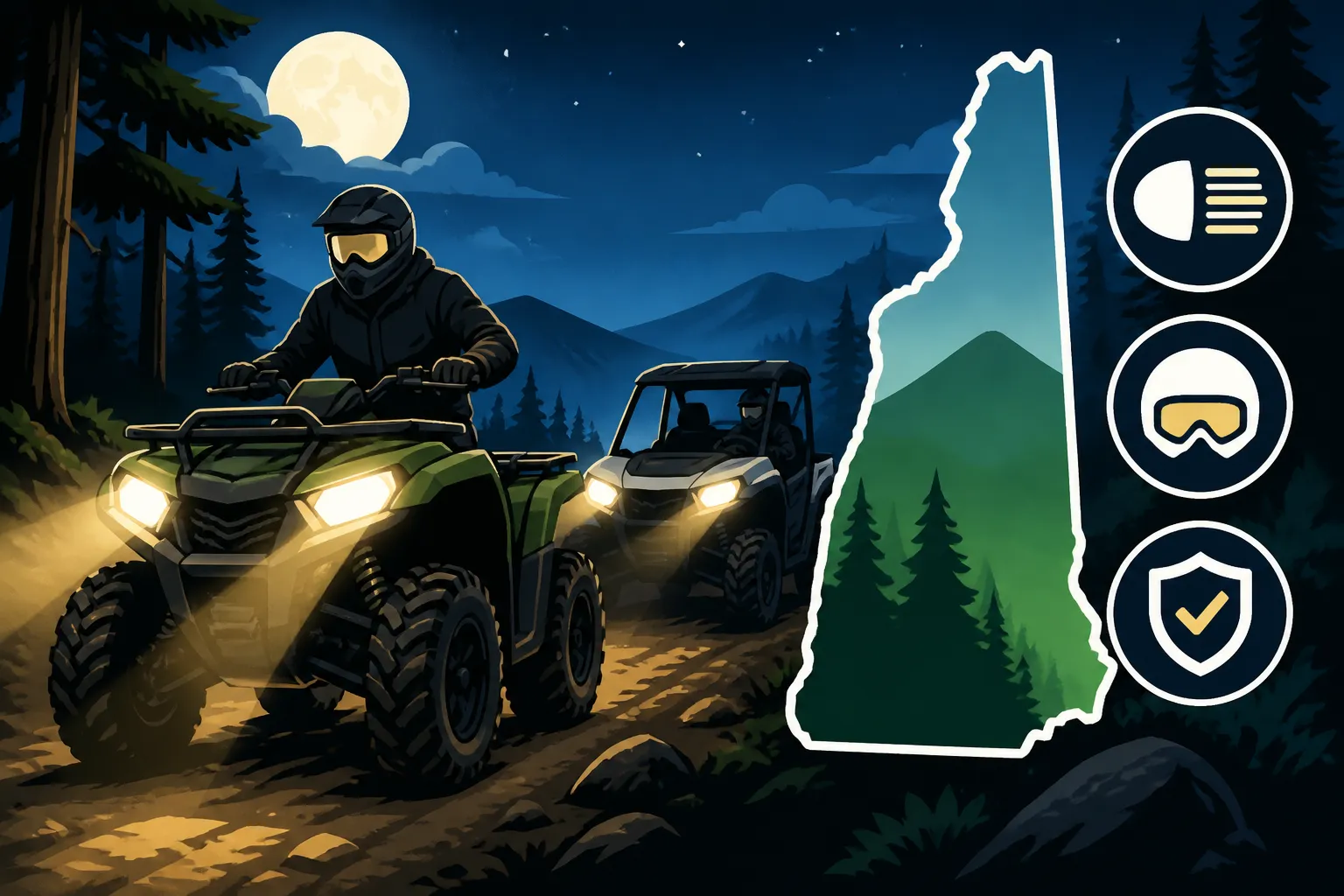
When it comes to night riding in New Hampshire, adequate lighting isn't just a suggestion – it's a legal requirement. Every OHRV operated from one-half hour after sunset to one-half hour before sunrise, or at any time when visibility is less than 200 feet, must be equipped with specific lighting. You absolutely need a working headlight that emits a white light, visible from a distance of at least 150 feet in front of the machine. This isn't just for you to see; it's so others can see you coming. Equally important is a taillight, which must emit a red light, visible from at least 150 feet to the rear.
These aren't optional accessories; they're critical safety features. Imagine coming around a blind corner on a trail in the dark and suddenly facing an unlit machine. It's a recipe for disaster. So, before you even think about heading out after dark, make sure your factory lights are in perfect working order, and consider upgrades if your stock lights feel inadequate for the terrain you plan to cover. Checking and maintaining these regularly is part of responsible riding. You can read more about the general requirements in [New Hampshire Lighting Requirements for OHRVs].
Operating Hours and Curfews on Designated Trails
This is where many riders can get tripped up, and it’s a crucial point to understand. While your machine might be legally equipped for night riding, it doesn't mean you can ride any trail at any time after dark. The vast majority of OHRV trails in New Hampshire, especially those maintained by volunteer clubs and located on private or leased land, have explicit operating hours. These hours often end at dusk, or at a specific time like 8 PM or 10 PM.
These curfews are put in place for several reasons: to reduce noise pollution for nearby residents, to protect wildlife that becomes more active at night, and for safety reasons, as clubs generally don't patrol or maintain trails in the dark. For example, some trail systems linking towns might have specific town-by-town rules regarding access duration. You'll often find these hours clearly posted at trailheads, on club websites, or on official state trail maps. Ignoring these posted hours can lead to significant fines and jeopardize the hard-won access that OHRV clubs have negotiated with landowners. It's always best to check the specific rules for the trail system you intend to ride before you head out, especially if you're planning a sunset cruise. [New Hampshire Fines for an OHRV Violation] can be steep for operating on closed trails.
Sound Limits and Respecting Neighbors
Night brings a different kind of quiet, and with it, an increased sensitivity to noise. New Hampshire has a strict decibel limit for OHRVs, usually set at 96 decibels. While this rule applies 24/7, its importance is amplified after dark. What might be acceptable engine noise during the day can become a significant disturbance to residents living near trails at night.
Using aftermarket exhausts that exceed the legal sound limit is always a bad idea, but it’s particularly problematic when night riding. Local towns and landowners are far more likely to revoke trail access if OHRV noise becomes a persistent issue, especially late at night. Responsible night riding means being extra mindful of your speed and throttle input, particularly when passing through residential areas or near trailside homes. It's about being a good neighbor and preserving the privilege of trail access for everyone. Understanding and adhering to [New Hampshire Sound Limit for OHRVs] is crucial for the longevity of our trail systems.
Essential Gear and Best Practices for Safe Night Riding
Riding at night isn't just about turning on your headlights. It requires a different mindset and a specific approach to gear and preparation. Thinking ahead can turn a potentially dangerous situation into an unforgettable adventure.
Beyond Basic Lighting: Enhancing Your Visibility
While the state requires a headlight and taillight, these are often just the bare minimum for truly safe and effective night riding. Many experienced night riders invest in auxiliary lighting to vastly improve their field of vision and illuminate potential hazards. This could include powerful LED light bars mounted on the front of your machine, or smaller, focused pod lights to fill in dark spots or provide side illumination. Brands like SuperATV offer a range of high-performance light bars and pods that can dramatically increase your visibility and confidence after dark, turning night into a much clearer experience.
Additionally, consider a helmet-mounted light. This allows your light to follow your line of sight, which is incredibly useful when turning your head to look around corners or scan for wildlife off to the sides. Reflective decals on your machine and helmet, or even reflective vest or jacket, can also make you more visible to other riders or rescuers, should the need arise. It’s about creating a personal bubble of illumination and conspicuity.
Personal Safety Equipment and Preparation
Beyond lighting, your personal preparation for night riding should be more thorough than for a daytime excursion. Always ride with a buddy or in a group; never ride alone at night. If something goes wrong, having someone else there can make all the difference. Carry a fully charged cell phone (though be aware that cell service can be spotty in many parts of the New Hampshire wilderness, so don't rely on it entirely). A satellite messenger or personal locator beacon (PLB) is a wise investment for remote areas, allowing you to call for help even without cell service.
A well-stocked first-aid kit is essential, as injuries can be harder to assess and treat in the dark. Bring extra layers of clothing, even on what seems like a warm evening, as temperatures can drop quickly after sunset. Pack plenty of water and some high-energy snacks. Finally, know your route. Study maps during the day, and consider loading your intended path onto a GPS device. Even better, use a GPS with pre-loaded trail maps, as paper maps are difficult to read in the dark. Preparing for the unexpected is key to a safe night out.
Understanding Trail Conditions in the Dark
The trail you know like the back of your hand during the day can feel completely different once darkness falls. What seemed like a minor puddle can appear as an endless black void. A small rock might look like a huge boulder, or vice-versa. Water crossings, mud pits, and rocky climbs all present heightened challenges. Depth perception is significantly reduced, making it hard to judge terrain changes, particularly when climbing or descending.
Proceed with extreme caution and reduce your speed significantly. Look for reflections in puddles that might indicate standing water, and be extra vigilant for sudden changes in trail surface. Pay attention to how the light from your machine interacts with the terrain, looking for shadows that might hint at drop-offs or hidden obstacles. It's not just about seeing what's directly in front of you; it's about anticipating what might be just beyond the reach of your lights. If a section looks too difficult, don't be afraid to stop, dismount, and scout it on foot with a flashlight if necessary. This might slow your progress, but safety should always be the priority.
Navigating Specific Night Riding Scenarios in New Hampshire
New Hampshire offers a diverse landscape for OHRV riding, from vast state parks to intricate club trail networks crossing private land. Understanding how night riding rules apply to these different scenarios is vital.
Riding on Public vs. Private Land at Night
The distinction between public and private land becomes even more critical when riding after dark. On public lands, like state parks or designated state forests, operating hours are typically very clearly defined and strictly enforced. Riding after these posted closing times is usually prohibited and can result in fines or even having your machine impounded. It's always best to check the specific regulations for the particular public land you plan to visit, as they can vary.
For private land, which makes up a significant portion of New Hampshire's OHRV trail network, explicit landowner permission is paramount. While many OHRV clubs have secured agreements for daytime access, night riding might not be included or could have specific restrictions. Never assume that just because a trail is open during the day, it's also open at night. [New Hampshire Landowner Permission Rules] dictate that if land is not posted, it's still considered private property, and you need permission to ride there. Riding on private land without permission, especially at night, is trespassing and can lead to serious consequences, not to mention jeopardizing future trail access for everyone. Always obtain written permission for night riding on private land, even if it's part of a club trail system.
When Towns Allow Night Riding on Open Roads
While the primary focus for OHRV riding in New Hampshire is on trails, some towns have ordinances that allow OHRVs on certain designated public roads. However, these are exceptions, not the rule, and they often come with their own set of restrictions, particularly regarding operating hours. Generally, if a town allows OHRV access on its roads, the privilege is typically limited to specific times, often ending well before dark to minimize noise and traffic conflicts.
It's highly unlikely you'll find a town that widely permits OHRV night riding on its public roads, beyond what's required to access a specific trail or lodging during limited hours. If you plan to use a town road connector, ensure you understand the exact hours of operation for OHRVs on that specific road. Always assume roads are closed to OHRVs after dark unless you have explicit, verifiable information to the contrary from the town or local OHRV club. Remember that [New Hampshire Equipment Rules for Road Riding] may have additional stipulations even if night riding is permitted.
Group Riding and Communication After Dark
Riding in a group at night can enhance safety, but it also introduces new challenges related to communication and coordination. Visual cues that are easy to spot during the day become much harder to pick out in the dark.
Here are some tips for effective group night riding:
- Maintain Consistent Spacing: Ride at a distance that allows you to see the taillights of the machine in front of you without being blinded by their dust (if any), but close enough that you don't lose sight of them. This spacing will likely be different than during the day.
- Establish Hand Signals: Agree on clear, easily visible hand signals for common situations, such as slowing down, stopping, indicating a hazard, or turning. Practice these before you head out.
- Two-Way Radios/Comms: Investing in helmet-mounted communication systems or two-way radios can be a game-changer for group night riding. This allows for real-time communication about trail conditions, hazards, or navigation without having to stop or yell.
- Lead and Sweep Riders: Designate experienced riders as the leader and a sweep. The leader sets the pace and navigates, while the sweep ensures no one is left behind. Both should be particularly vigilant.
- Light Discipline: Encourage riders to aim their auxiliary lights responsibly to avoid blinding fellow group members, especially when traveling in close proximity or making eye contact.
Following these practices can help ensure that your group stays together, communicates effectively, and enjoys a safer night riding experience.
New Hampshire Night Riding Essentials
| Category | Daytime Riding (for comparison) | Night Riding (Essential) | Importance |
|---|---|---|---|
| Lighting | Headlight, Taillight (standard) | High-output LED Headlight/Taillight, Auxiliary Light Bar/Pods, Helmet Light (highly recommended) | Critical. Visibility for seeing obstacles and being seen by others. |
| Navigation | Phone GPS, Paper Map | GPS with pre-loaded trail maps, Backup Paper Map, Headlamp for reading, Compass | High. Landmarks vanish; easy to get lost. |
| Communication | Cell Phone | Cell Phone (limited service), Satellite Messenger/PLB, Two-Way Radios (for groups) | Critical. Emergency contact in areas without cell service, group coordination. |
| Personal Gear | Helmet, Eye Protection, Gloves, Standard Clothing | Helmet, Eye Protection, Gloves, Warm/Layered Clothing, Reflective Vest/Decals, Headlamp | High. Temperature drops, increased visibility, hands-free light. |
| Emergency Supplies | Basic First Aid, Water | Comprehensive First Aid Kit, Extra Water & Snacks, Tools, Tire Repair Kit, Fire Starter, Whistle, Small Shovel | Critical. Self-sufficiency for longer, more isolated rides. |
| Trail Awareness | Visual cues, familiar landmarks | Pre-scout difficult sections, reduced speed, constant scanning for obstacles, knowledge of [New Hampshire Rules for Riding a Closed Trail] | Critical. Dramatically reduced visibility of terrain changes and hazards. |
| Regulations | General OHRV rules | Specific club/state park operating hours, decibel limits, [New Hampshire DUI Rules for OHRV Riders] (always applicable) | Critical. Legal compliance, avoiding fines, preserving trail access. |
This article is for general informational purposes only and does not constitute professional advice. Laws, prices and regulations vary by location and change over time. Consult a qualified professional for guidance on your specific situation.