Carrying a Firearm on a New Hampshire Machine
It’s a natural question for many New Hampshire folks who love getting out on their ATVs and UTVs: what are the rules around carrying a firearm while you’re out on the trails or heading to your favorite hunting spot? It can feel like a minefield trying to figure out the specifics, especially when you factor in state laws, landowner permissions, and just plain common sense safety. Rest assured, you’re not alone in wondering about this, and this guide is here to break down everything you need to know about legally and safely carrying a firearm on your New Hampshire machine, so you can ride with confidence and peace of mind.
The Basics: Can You Carry a Firearm on a New Hampshire OHRV?
The short answer is generally yes, but like most things involving firearms and recreation, it comes with a handful of important details and considerations. New Hampshire is known for its relatively permissive firearm laws, and these generally extend to how you can carry while operating an Off-Highway Recreational Vehicle (OHRV). However, "can" doesn't always mean "should" without proper planning and knowledge of the rules.
New Hampshire's Open Carry and Concealed Carry Laws
When it comes to firearms, New Hampshire is proudly one of the freest states in the nation. For anyone who can legally possess a firearm, both open carry (meaning the firearm is visible) and concealed carry (meaning the firearm is not visible) are generally permitted without needing a special permit. This applies whether you're walking down Main Street in Gorham or navigating a rocky trail near Pittsburg.
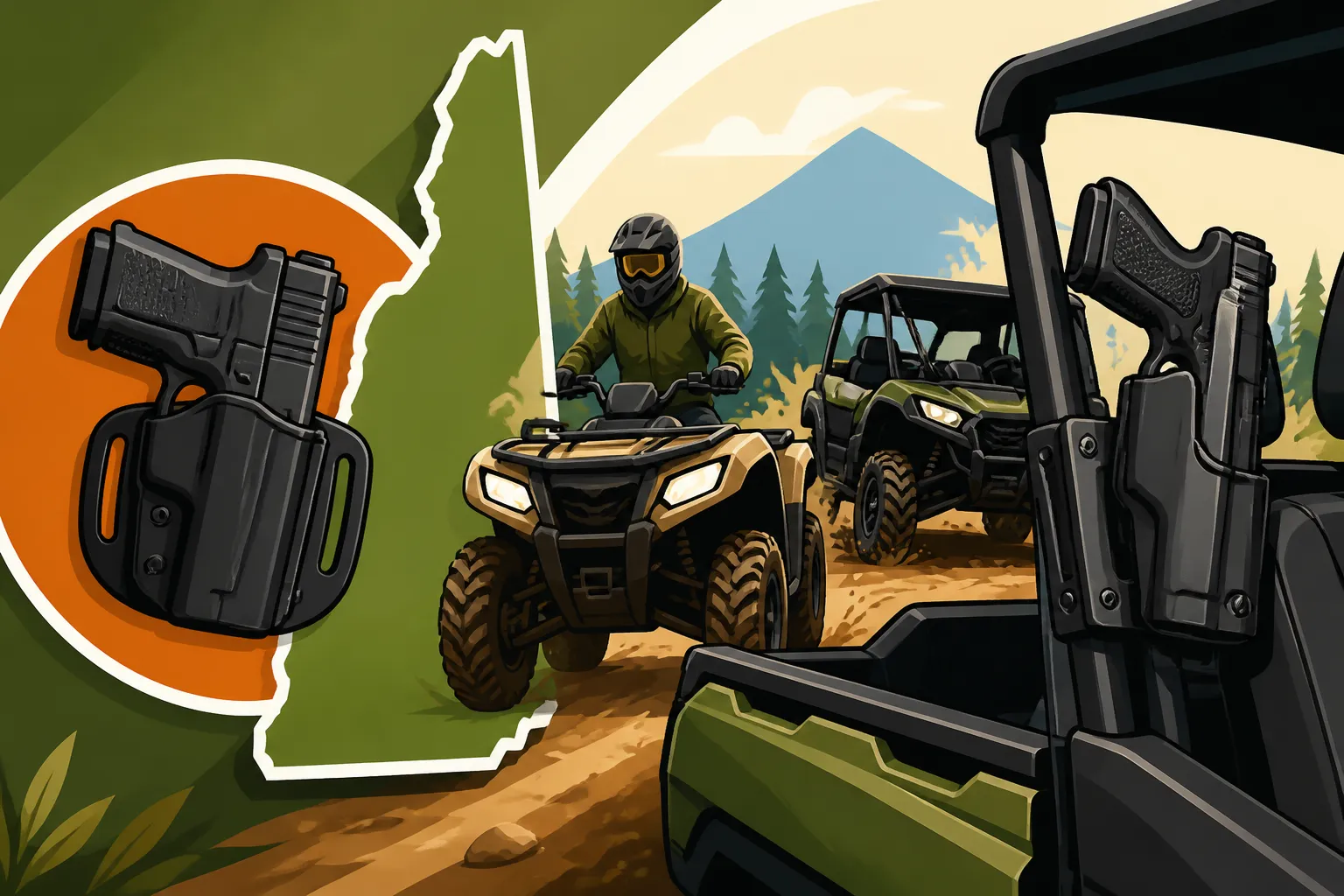
This broad freedom applies to OHRV riders as well. If you're old enough (18 for long guns, 18 for concealed handguns without a permit, or 21 for purchasing handguns from a dealer) and not otherwise prohibited from possessing a firearm (for example, due to a felony conviction or a domestic violence restraining order), you typically have the right to carry your firearm on your ATV or UTV. This means that a loaded handgun in a holster on your hip, or a rifle secured in a scabbard on your UTV, is generally within the bounds of state law.
However, just because the general law is permissive doesn't mean every single situation is identical. The specifics of how you carry it on a moving vehicle, especially an OHRV that can encounter unpredictable terrain and other users, are where responsible choices become crucial. Always remember that even in a free state, common sense and safety are your best companions.
General Rules for Transporting Firearms in Vehicles
While an OHRV might feel different from your pickup truck, many of the underlying principles for transporting firearms still apply. New Hampshire state law generally allows loaded firearms, both long guns and handguns, inside motor vehicles. This is a significant difference from many other states that require firearms to be unloaded, encased, or locked away when being transported.
For OHRVs, this means you can typically transport a loaded firearm. However, the unique nature of an ATV or UTV ride—bouncing over bumps, traversing streams, and leaning into turns—demands extra care. A firearm simply tossed into a cargo net is not only unsafe but also risks damage to your expensive equipment and, more importantly, could lead to an accidental discharge or loss of the firearm on the trail.
The spirit of these laws, even when permissive, is always about responsible ownership and use. While you might legally carry a loaded rifle on your OHRV, securing it properly to prevent it from falling out, getting damaged, or becoming a hazard is paramount. Think about how a sudden jolt or a sharp turn could affect a loose firearm, and plan accordingly. This often means investing in proper storage solutions, which we'll delve into next.
Understanding the "How": Safely and Legally Transporting Firearms on Your Machine
Now that we've covered the "can you," let's dig into the "how to" safely and legally transport your firearm on your OHRV. It's one thing to know your rights, and another to exercise them responsibly, especially when you're roaring down a trail.
Best Practices for Secure Firearm Transport on OHRVs
Safety and security should always be your top priorities when carrying a firearm on an OHRV. The trail environment is dynamic and unforgiving, and a loose firearm can quickly become a serious hazard.
For long guns like rifles or shotguns, a dedicated gun boot or scabbard is almost essential. These protective sleeves are designed to keep your firearm secure, protected from dust, mud, branches, and impacts. They typically mount directly to the racks of your ATV or the frame/roll cage of your UTV, holding the firearm firmly in place. Many manufacturers, including well-known brands like SuperATV, offer a variety of robust gun boots and mounting systems designed to withstand the rigors of off-road riding. When choosing one, look for features like padded interiors, weather sealing, and a secure locking mechanism to deter theft. Mount it in a position that doesn't impede your visibility or control of the machine, and ideally with the muzzle pointed in a safe direction.
For handguns, while an on-person holster (concealed or open) is always an option given New Hampshire's laws, some riders prefer to secure their handgun on the machine itself, especially for longer rides or if they want to avoid discomfort. A locked, hard case bolted securely to your UTV bed, glove box, or ATV rack provides excellent protection from the elements and prevents theft. This method offers the highest level of security and peace of mind. Ensure that any mounting hardware is heavy-duty and can withstand constant vibration and jarring.
Regardless of the method, always perform a quick check before you head out. Tug on the mount, open and close the case, and make sure everything is snug. Nothing ruins a ride faster than realizing your valuable firearm has bounced off a rack somewhere miles back on the trail.
The Importance of Knowing Local Rules and Landowner Permissions
While New Hampshire's state laws are generally permissive, it's a huge mistake to assume that these blanket rules apply everywhere without exception. Always remember that specific locations, especially public lands or private properties, can have their own set of rules.
State Forests and Parks: If you plan to ride your OHRV through or in areas like state forests or parks, you must check their specific regulations. While many allow OHRV use and firearm carry, some might have restrictions, particularly outside of hunting seasons or in areas designated for other types of recreation where firearms might not be appropriate. It’s always best to check the individual park’s rules or the New Hampshire Fish and Game Department's website for clarity. [New Hampshire Rules for Riding State Land] provides a good overview, but always double-check for your specific destination.
Private Land: Many of New Hampshire's best trails cross private property, with permission graciously granted by landowners. If you're carrying a firearm and riding on private land, you absolutely must have explicit [New Hampshire Landowner Permission Rules]. This is not just good etiquette; it's vital for maintaining access. Landowners have the right to prohibit firearms on their property, regardless of state law, and you must respect their wishes. Having written permission, especially if you plan to hunt, is always the safest bet.
Club Trails: New Hampshire boasts an incredible network of OHRV trails, many of which are maintained by dedicated volunteer clubs. These clubs often lease land from private owners or have agreements for public land use. While most clubs are welcoming to responsible riders, they may have specific regulations about firearms, especially concerning target shooting or certain events. Always check with the local club or trail system's rules regarding [New Hampshire Rules for Riding a Club Trail] to ensure compliance and avoid any misunderstandings.
Town Roads: If you're riding your OHRV on designated town roads in communities like Gorham or Berlin that allow OHRV access, remember that you are then subject to both OHRV road rules and general traffic and firearm laws. While still legal to carry, be extra mindful of your presentation and actions in more populated areas.
Specific Scenarios: Hunting, Target Practice, and Beyond
People carry firearms on their OHRVs for a variety of reasons, and each scenario brings its own set of rules and best practices. It’s crucial to understand these distinctions to stay legal and safe.
Carrying Firearms for Hunting on OHRVs
For many, an OHRV is an indispensable tool for hunting, offering access to remote areas that would otherwise be difficult to reach. However, using an OHRV for hunting in New Hampshire comes with specific regulations you absolutely must follow.
First and foremost, it is illegal to shoot a firearm from a motorized vehicle in New Hampshire, and this includes your ATV or UTV. This means that if you're hunting, your firearm must be unloaded and secured while you are operating your machine. You must dismount from your OHRV and be a certain distance away from it (consult the Fish and Game regulations for exact distances, as these can change) before you can legally load and discharge your firearm to hunt. This rule ensures fair chase and prevents irresponsible shooting from moving vehicles.
OHRVs are frequently used for retrieving game, which is perfectly legitimate, provided your OHRV is properly registered and you're following all other OHRV operating rules. Being able to haul out a deer or moose on your UTV can save an immense amount of physical labor. However, even when retrieving game, ensure any firearms you have are secured and handled safely. You can find more details on specific regulations for this in [New Hampshire Rules for Retrieving Game].
Always be acutely aware of hunting seasons and any specific OHRV trail closures or restrictions during these times. Some trails may close temporarily for hunting access or during certain seasons to minimize conflicts. Wearing blaze orange during hunting season, even if you’re not hunting, is always a smart safety precaution. Refer to [New Hampshire Rules for Riding in Hunting Season] for seasonal specifics.
General Carry and Personal Protection on the Trails
Beyond hunting, many OHRV riders choose to carry a firearm for general personal protection, especially when venturing into remote areas where help might be a long way off. New Hampshire's permitless carry laws generally cover this scenario.
If you choose to carry a handgun on your person for self-defense, whether concealed in a jacket or openly on your hip, New Hampshire law typically permits this for any individual legally allowed to possess a firearm. This right extends whether you're hiking, driving your car, or riding your OHRV. The key here is "on your person" – the firearm is directly with you, not simply stowed on the machine.
For those who prefer to carry a handgun or even a long gun openly on the machine for general protection, this is also generally permissible. However, it's wise to consider the optics. While perfectly legal, an openly displayed firearm on an OHRV can sometimes cause concern or alarm for other trail users, particularly families or those unfamiliar with firearm laws. While you have every right to carry, being mindful of the general public's perception can sometimes prevent unnecessary questions or confrontations.
Should you be stopped by a conservation officer or other law enforcement while riding, for example, during a routine [What a New Hampshire Officer Checks Roadside] check, it's always best to be courteous and upfront if you are carrying a firearm. Inform the officer politely and clearly that you have a firearm, and state where it is located. Avoid reaching for it unless instructed, and always follow the officer's directions. This helps ensure a smooth interaction and demonstrates responsible firearm ownership.
Important Considerations for Responsible OHRV Firearm Carry
Carrying a firearm on your New Hampshire machine is a right, but it comes with significant responsibilities. Beyond the letter of the law, there are practical and ethical considerations that every responsible rider and firearm owner should bear in mind.
Safety First: Preventing Accidents and Misunderstandings
When you combine powerful machinery with firearms, safety becomes paramount. You are responsible for ensuring that your firearm poses no danger to yourself, your passengers, or other trail users.
Treat every firearm as if it's loaded. This is the golden rule of firearm safety, and it applies unequivocally when you're on an OHRV. Even if you believe it's unloaded, handle it with the same respect and caution.
Muzzle control is critical. Always be aware of where the muzzle of your firearm is pointed. When secured on your OHRV, ensure it's pointed in a safe direction, away from yourself, passengers, or the general public.
Keep your finger off the trigger. Your finger should only be on the trigger when your sights are on a target and you are ready to shoot. This rule is especially important on a bumpy trail where an accidental bump could lead to an unintended discharge.
Beyond personal handling, properly securing your firearm to your OHRV prevents it from being lost, damaged, or involved in an accidental discharge if it were to fall off or be jostled too much. Using high-quality, purpose-built mounts and cases, perhaps from a trusted brand like SuperATV, is an investment in safety. These accessories are designed to hold up to the specific demands of off-road riding, protecting your firearm and preventing mishaps. Consider adding a lock to your gun boot or case for added security against theft, particularly if you leave your machine unattended for any period.
Finally, while open carry is legal, consider the visibility of your firearm and how it might be perceived by others. In some family-friendly trail areas, a prominently displayed firearm, though legal, might unintentionally cause discomfort or alarm to other riders who are not familiar with firearm ownership or New Hampshire laws. Being considerate of other trail users can contribute to a more positive experience for everyone on the trails.
Legal Consequences of Misconduct
Failing to follow the rules, whether related to OHRV operation or firearm carry, can lead to serious consequences. New Hampshire takes both OHRV safety and responsible firearm ownership very seriously.
Fines and Penalties: Operating an unregistered OHRV or violating specific firearm transport laws can result in substantial [New Hampshire Fines for an OHRV Violation]. These aren't just minor inconveniences; they can be costly and could impact your ability to ride in the future. For instance, if you're found to be illegally discharging a firearm from your machine while hunting, the penalties will be severe, likely including significant fines, loss of hunting privileges, and potentially criminal charges.
Loss of Privileges: Repeated or serious violations, whether OHRV-related (like reckless operation) or firearm-related (like improper discharge), could lead to the suspension or revocation of your OHRV registration, hunting licenses, or other state-issued privileges. This means losing the ability to enjoy the very activities you love in the Granite State.
Criminal Charges: Misuse of a firearm, even if unintentional, can lead to serious criminal charges, completely separate from any OHRV violations. This could include charges for reckless conduct, discharge of a firearm near a dwelling, or other offenses that carry heavy legal ramifications, including potential jail time.
It is your personal responsibility as an OHRV rider and firearm owner to be informed about all applicable laws and regulations. Ignorance of the law is never a valid excuse. Make it a habit to review the latest New Hampshire Fish and Game regulations for OHRVs and hunting, as well as general firearm laws, before you head out. Your diligence ensures a safe, enjoyable, and legal experience for everyone on the trails.
| Carrying Method | Pros | Cons | Best Use Case |
|---|---|---|---|
| On-Person Holster | Readily accessible, discreet (concealed) | Can be uncomfortable on OHRV, less secure against loss | Handguns for personal protection, immediate access |
| Gun Boot/Scabbard | Excellent protection, secure, easy access | Visible, limited to long guns, requires mounting | Long guns for hunting or range, dedicated transport |
| Hard Case (Mounted) | Highly secure, protected from elements, lockable | Less immediate access, takes up space, requires mounting | Any firearm needing maximum security/protection, storage |
| Soft Case (Strapped) | Lightweight, flexible | Less protection from impact/elements, less secure | Short-distance transport, temporary solutions |
Disclaimer
This article is for general informational purposes only and does not constitute professional advice. Laws, prices and regulations vary by location and change over time. Consult a qualified professional for guidance on your specific situation.