Are ATVs Street Legal in New Hampshire?
It's a burning question for so many of us who love to hit the trails: can you actually ride your ATV or UTV on the streets in New Hampshire? The frustration is real when you see these incredible machines, perfectly capable of navigating diverse terrain, and then hit a wall of confusion when it comes to riding them on paved roads. This guide is here to untangle the complexities of New Hampshire's OHRV laws regarding street legality, so you know exactly where you can and can't ride, and what you need to do to stay on the right side of the law.
The Short Answer: Are ATVs Street Legal in New Hampshire?
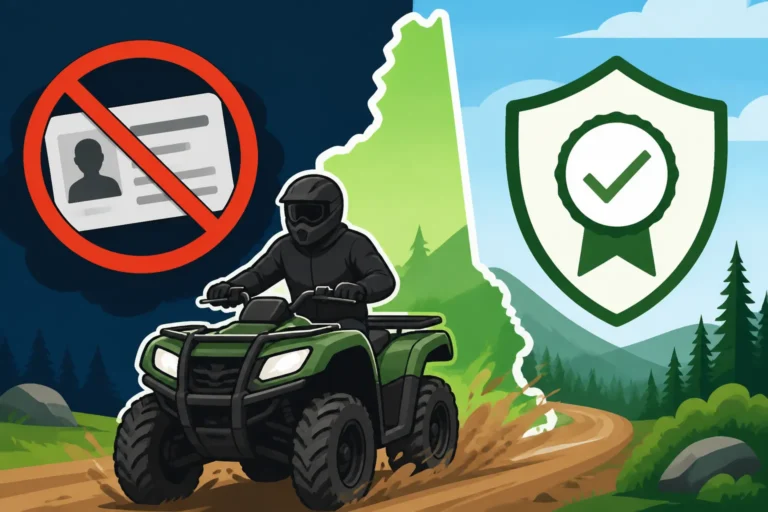
Let's cut right to it, because I know you're eager for clarity. In New Hampshire, the general rule is no, ATVs and UTVs are not street legal. You cannot just hop on your machine and ride down any public road, highway, or even most town streets. It's a common misconception, especially for folks coming from states with different regulations, but New Hampshire has very specific rules that largely restrict these machines to designated trails, private land with permission, and specially opened town roads.
The General Rule and Its Exceptions
The default position in the Granite State is that your Off-Highway Recreational Vehicle (OHRV) – which includes your ATV, UTV, and dirt bike – is not permitted on public roads. This isn't just about big state highways; it applies to most paved and unpaved public ways. However, and this is where it gets interesting, there are critical exceptions. Certain towns and cities have the authority to designate specific public roads or sections of roads for OHRV use. These aren't just informal allowances; they are official decisions made by local authorities, and they come with their own set of rules and limitations. It means you can't assume any road is open just because it looks like a dirt road or a quiet residential street. You have to know for sure.
Why the Default is "No"
The primary reason for this default "no" is safety and the distinct nature of OHRVs compared to conventional motor vehicles. ATVs and UTVs are designed for off-road use, often with features like high ground clearance, aggressive tires, and suspension systems that behave differently on pavement. They're typically not equipped with turn signals, rearview mirrors, or lighting systems that meet the stringent requirements for on-road vehicles. While aftermarket accessories from companies like SuperATV can certainly add some of these features, the fundamental design and the legal framework categorize them differently. The state's goal is to ensure the safety of all road users, and that means keeping off-road machines off general public roads unless very specific conditions are met and designated areas are established. It's also about managing traffic flow and preventing wear and tear on roads not built for the weight or tread patterns of some larger OHRVs.
Town by Town: How Roads Become Open to OHRVs
So, if the state generally says "no," how do we end up with awesome trail systems like Ride the Wilds that allow you to travel from town to town, even crossing or riding on paved roads? It all comes down to local control and a very specific process that towns and cities must follow to [How a New Hampshire Town Opens Its Roads].
The Role of the Local Selectboard
In New Hampshire, the power to open town roads for OHRV use rests with the local legislative body, which is usually the Selectboard in towns or the City Council in cities. This isn't a unilateral decision by a single person; it's a formal, public process. A town's Selectboard has the authority to designate certain Class II, III, IV, V, or VI highways (excluding Class I and II state-maintained highways, though there are specific crossing rules for those) for OHRV travel. This designation isn't permanent, and it's not a blanket approval. They can specify which roads, what times of day, what days of the week, and even what types of OHRVs are allowed. For instance, a town might open a gravel road that connects two parts of a trail system, but keep its main street closed. It's a careful balancing act, considering the needs of riders, residents, and local businesses.
The Public Hearing and Notification Process
Before a town can open any of its roads to OHRVs, there's a required public hearing process. This isn't just a formality; it's a chance for residents, landowners, and riders to voice their opinions and concerns. The Selectboard must provide at least fourteen days' notice of the hearing. This notice usually involves posting information at the town hall, publishing it in a local newspaper, and, crucially, sending verified mail to all abutters – that's property owners whose land directly borders the proposed OHRV route. Imagine getting a letter in your mailbox saying ATVs might soon be riding past your front yard. It’s a big deal for many, and the town wants to ensure everyone affected has a chance to be heard. After the hearing, the Selectboard then votes on the proposal. If approved, the designated roads must be clearly signed, indicating they are open to OHRVs and outlining any specific restrictions, like speed limits or hours of operation. This ensures that both riders and other road users are aware of the rules.
Designated OHRV Roads and Their Limits
Once a road is officially designated, it becomes part of the permissible network where OHRVs can legally operate. However, these aren't "anything goes" zones. There are still rules to follow. For example, [Gorham's Open Streets] are a fantastic example of a town that has embraced OHRV tourism, allowing riders to access fuel, food, and lodging directly from the trail system. But even in Gorham, there are specific speed limits on town roads, and certain routes are designated over others. Likewise, in Berlin, there's a strict [Berlin's Ten O'Clock Closing] time for OHRVs on town streets. These limitations are put in place to manage noise, ensure public safety, and maintain a good relationship between riders and residents. It's crucial for riders to always look for the signage and abide by any local ordinances. Don't assume that because one town has open roads, the next town over will too. Always check the official trail maps or inquire with the local town office or OHRV club.
Navigating Open Roads: Rules and Regulations
When you do find those precious stretches of New Hampshire road that are legally open to OHRVs, it's not simply a free-for-all. There are specific rules of the road that you absolutely must follow to ensure safety and comply with state and local regulations. Failing to do so can result in fines and ruin the experience for everyone.
Speed Limits and Roadway Position
One of the most important rules is about your position on the road. When riding on a designated public road, you are generally required to keep to the extreme right side of the roadway. This means staying as far over as safely possible, giving conventional vehicles ample room to pass. It’s about sharing the road responsibly and minimizing potential conflicts. Speed limits are also strictly enforced. While you might be used to higher speeds on wide-open trails, town roads will have posted speed limits, and you are expected to obey them. In many cases, specific OHRV speed limits on designated roads may be even lower than the posted limit for cars, especially in residential areas or near businesses. For instance, you might encounter a 25 mph limit on a town street, or even 10 mph near trailheads or through town centers. [New Hampshire Rules for Riding the Far Right of a Town Road] really emphasizes this point: you are a guest on these roads, and courtesy and safety are paramount.
Yielding and Crossing Paved Highways
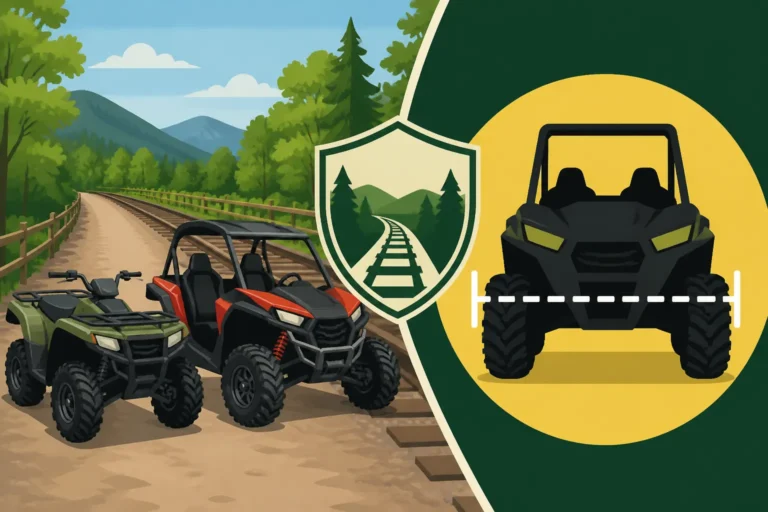
Another critical aspect of riding on designated roads involves yielding and crossing. When you encounter conventional vehicles, whether it's an oncoming car or one attempting to pass, you are legally obligated to yield to them. This might mean pulling further to the shoulder or even stopping briefly to ensure they can pass safely. Road crossings are also a big deal. You can't just zip across a major highway. When crossing any public highway, whether it's designated for OHRVs or not, you must come to a complete stop and yield to all conventional vehicle traffic. You should cross at a ninety-degree angle to the road, essentially going straight across the travel lanes as quickly and safely as possible once the way is clear. This minimizes your time in the path of other vehicles and makes you more predictable. For more detailed guidance, see [New Hampshire Rules for Crossing a Highway].
Equipment Requirements for Road Use
Just like a car needs certain equipment to be street legal, your OHRV needs specific items to be ridden on designated public roads. This isn't just a suggestion; it's a legal requirement designed for your safety and the safety of others.
Here’s a breakdown of common equipment you'll need:
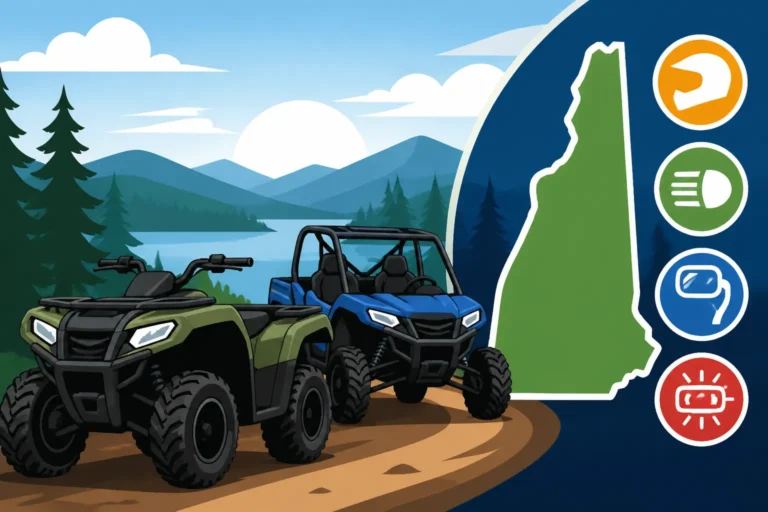
- Headlights and Taillights: Your machine must have a working headlight and taillight, especially if you plan on riding after dark or in low-visibility conditions. These need to be visible from specific distances, similar to conventional vehicles. A bright LED light bar from a brand like SuperATV can certainly enhance visibility, but ensure your standard lights are also functional and meet the requirements. [New Hampshire Lighting Requirements for OHRVs] are clear on this.
- Rearview Mirror: At least one rearview mirror is required on any OHRV operating on a public way. This allows you to see traffic approaching from behind and is crucial for safe merging, yielding, and overall situational awareness. [A Rear-View Mirror for New Hampshire Road Riding] is a must-have if you're venturing onto town roads.
- Spark Arrester: All OHRVs must be equipped with a spark arrester that is in good working order. This is a crucial safety device, especially in dry conditions, to prevent wildfires caused by sparks from your exhaust.
- Muffler: Your OHRV must have an adequate muffler to keep noise levels within legal limits. New Hampshire has decibel limits, and excessively loud machines can result in fines and give OHRV riders a bad reputation, making towns less likely to open roads.
- Brakes: Of course, fully functional braking systems are non-negotiable for safety.
- Helmet and Eye Protection: While adults over 18 are often exempt from helmet requirements on trails, when riding on designated public roads, specific [New Hampshire Helmet Law for OHRV Riders] may apply, especially for riders under 18 or for any passenger. Eye protection is generally recommended at all times and may be required depending on windshield presence.
It's a good idea to conduct a pre-ride check every time you plan to ride on a designated road, ensuring all your lights work, your mirror is properly adjusted, and your machine is generally roadworthy.
Common Misconceptions About Street Legality
When it comes to OHRV laws, there are always a few persistent myths and misunderstandings that can trip up even experienced riders. Let's clear up some of the most common ones that lead to confusion about street legality in New Hampshire.
Why Your Home State Registration Doesn't Count
One of the biggest head-scratchers for visitors is the idea that if their ATV or UTV is registered and considered street legal in their home state (say, Maine or Vermont), it should automatically be street legal in New Hampshire. Unfortunately, that's not how it works. New Hampshire's OHRV laws are specific to New Hampshire. [Why New Hampshire Honors No Neighbor's Registration] is a critical piece of information for out-of-state riders. Even if your machine has a license plate and all the bells and whistles for road use back home, it is only considered street legal on designated roads in New Hampshire if it meets New Hampshire's definition and requirements for OHRV road use, and if those specific roads are designated by a New Hampshire town. You'll still need a New Hampshire OHRV registration if you plan to ride on any public land or designated trails, even if you're just passing through on a designated road that's part of a trail system. There's no reciprocity for "street legal" status between states when it comes to OHRVs.
Sidewalks and Parking Lots Are Generally Off-Limits
It's tempting, especially if you're trying to get from one section of trail to another or pull into a local business for lunch, to cut across a sidewalk or through a parking lot. However, sidewalks are typically for pedestrians, and unless explicitly designated otherwise by local ordinance (which is extremely rare for OHRVs), they are off-limits. Similarly, most private parking lots are also off-limits unless you have specific permission from the property owner. You can usually access a business's parking lot from a designated OHRV road, but you can't use the parking lot itself as a thoroughfare or cut-through if it's not part of an officially opened route. This is about respecting private property and ensuring pedestrian safety. Always assume sidewalks and private parking lots are not part of the OHRV network unless clearly marked otherwise, or you have explicit landowner permission.
"It's Just a Dirt Road" Isn't Always Enough
Many riders see a quiet, unpaved, or gravel road and think, "This must be open to OHRVs!" This is a classic trap. While many OHRV trails are unpaved, not all unpaved roads are OHRV trails or designated OHRV routes. Just because a road is gravel or looks like it leads to a remote area doesn't automatically mean it's open. It must be a specifically designated Class IV, V, or VI road that the town's Selectboard has formally opened for OHRV use. Class VI roads, in particular, can be tricky. They are often unmaintained, sometimes barely passable, and while they might seem like prime OHRV territory, they still fall under the jurisdiction of the town. Unless they've gone through the proper designation process and are signed accordingly, riding on them is illegal. Always consult official maps or check with local OHRV clubs or the town office to confirm road status. Don't rely on assumptions, even for the most rustic-looking back roads.
What to Do If You Want to Ride on Roads
So, you've absorbed the rules and understand the nuances. Now, how do you actually make road riding a reality in New Hampshire? It takes a bit of planning and preparation, but it's absolutely doable within the existing framework.
Researching Open Towns and Routes
Your first step is always research. You need to know [Where New Hampshire Allows OHRVs on Roads]. Start by checking the New Hampshire Bureau of Trails website, which often provides maps or links to club maps. Local OHRV clubs are an invaluable resource for this, as they are often the ones working with towns to open and maintain these routes. For example, the clubs in the Ride the Wilds network in Coos County have done an incredible job of creating a vast interconnected system that includes designated road sections. Websites like the Great North Woods Riders or the Metallak ATV Club will often have detailed maps showing exactly which roads in their area are open. Don't be afraid to call the town clerk's office in the area you plan to visit, or even the New Hampshire Fish and Game Department's OHRV program. They can provide current information on designated roads.
Checking Trail Maps and Local Ordinances
Once you've identified potential areas, get your hands on the most up-to-date trail maps. These maps will usually clearly differentiate between trails, designated OHRV roads, and roads that are strictly off-limits. Pay close attention to any legends or notes on the map regarding speed limits, hours of operation, or specific machine types allowed on certain segments. If a specific town's roads are open, there will usually be local ordinances you can look up, either on the town's website or by contacting the town office. These ordinances will spell out all the fine print, like whether a [New Hampshire OHRV Registration for a Side-by-Side] has different rules than an ATV, or specific rules for [New Hampshire Rules for Riding After Dark]. Never rely on old maps or information from unverified sources; laws and designations can change.
Investing in Proper Lighting and Safety Gear
As we discussed earlier, if you're going to ride on any designated public road, your machine needs to be properly equipped. This often means investing in aftermarket upgrades to ensure you meet all legal requirements and enhance your safety. Brands like SuperATV offer a wide range of accessories that can help, from full street-legal kits that include turn signals, horns, and mirrors, to robust LED light bars that vastly improve visibility.
Here's a quick checklist for your machine and yourself:
- Mirrors: Ensure you have at least one working rearview mirror. Consider a second for enhanced visibility.
- Lighting: Confirm your headlights, taillights, and brake lights are fully functional. If you plan to ride when light conditions are poor, bright auxiliary lighting can be a huge asset.
- Horn: A working horn is often a requirement for road use to alert others to your presence.
- Muffler and Spark Arrester: Ensure these are in good condition and meet decibel limits.
- Safety Certificate/Driver's License: Make sure you meet the [New Hampshire Safety Certificate Minimum Age] requirements or have a valid driver's license, which can often substitute for the safety certificate for adults.
- Helmet and Eye Protection: While not always legally required for adults on certain roads, it's always smart to wear a helmet, and eye protection is a must unless your machine has a full windshield.
Being prepared with the right gear and knowledge not only keeps you legal but also ensures a much safer and more enjoyable experience for everyone on the road.
Summary of New Hampshire OHRV Road Riding Rules
To help clarify the various rules and regulations surrounding OHRV use on New Hampshire roads, here's a quick reference table. Remember, specific local ordinances can add further restrictions, so always check local signage and current trail maps.
| Aspect | General Rule in New Hampshire | Exceptions & Specifics (Town Roads) |
|---|---|---|
| Street Legality | Not street legal on public roads by default. | Only on town roads formally designated and signed by local selectboards. |
| Road Type | Prohibited on Class I & II state highways. | Permitted on designated Class II-VI town highways; crossings allowed with rules. |
| Registration | Must have current New Hampshire OHRV registration (even for visitors). | Out-of-state registrations do not grant street legality in NH. |
| Equipment | Basic off-road requirements (spark arrester, muffler). | Additional for roads: Headlight, taillight, brake light, at least one mirror, horn. |
| Road Position | Not applicable by default. | Must ride on the extreme right of the designated roadway. |
| Speed Limits | Not applicable by default. | Must obey posted road speed limits, and often lower OHRV-specific limits. |
| Yielding | Not applicable by default. | Must yield to all conventional vehicles. |
| Road Crossing | Not applicable by default. | Must stop, yield to traffic, and cross at a 90-degree angle. |
| Sidewalks/Parking Lots | Generally prohibited. | Access to private lots for services typically from designated road; no thoroughfare. |
| Helmet (18+ Rider) | Not required on trails (recommended). | May be required on certain designated roads or for specific local rules. Always recommended. |
| Helmet (Under 18 Rider/Passenger) | Required on trails. | Required on designated roads. |
| Eye Protection | Required unless machine has a windshield. | Required unless machine has a windshield. |
| Age/License | [New Hampshire's Certificate Rule at Age 12] or valid driver's license required. | Same rules apply on designated roads. |
| Noise Limit | 96 decibels for machines manufactured after 1973. | Same rules apply on designated roads; local ordinances may add stricter limits. |
| Signage | Not applicable by default. | Designated roads must be clearly signed as open to OHRVs. |
Remember, this table is a general guide. Always consult the most current regulations and local signage before you ride.
Disclaimer
This article is for general informational purposes only and does not constitute professional advice. Laws, prices and regulations vary by location and change over time. Consult a qualified professional for guidance on your specific situation.