Eye Protection and New Hampshire’s Windshield Exception
Riding the stunning trails of New Hampshire on your ATV or UTV is an incredible experience, but it also comes with essential safety considerations, especially when it comes to protecting your eyes. Many riders find themselves scratching their heads over whether their machine's windshield is enough to meet the state's eye protection requirements, or if they still need to don goggles. This guide will cut through the confusion, explaining New Hampshire's specific rules for eye protection and when a windshield truly makes a difference.
The Mandate for Eye Protection in New Hampshire
New Hampshire takes rider safety seriously, and that includes protecting your eyes from the myriad hazards you can encounter on the trail. It's not just about avoiding a ticket; it's about preserving your vision and ensuring you can react quickly to changing trail conditions. The rules are in place to prevent preventable accidents and injuries, which can range from minor discomfort to serious, life-altering damage.
Why Eye Protection Isn't Just a Suggestion
Imagine cruising along a beautiful, wooded trail in Pittsburg, the sun dappling through the leaves, when suddenly, a low-hanging branch whips across your path. Or perhaps you're following a buddy on a dusty section of the [Ride the Wilds in Coos County], and a cloud of fine dirt engulfs you. Without proper eye protection, these seemingly minor occurrences can turn into major problems. Debris like dust, mud, pebbles, branches, and even insects can impact your eyes at speed, causing immediate pain, temporary blindness, or even permanent injury. Squinting through tears or trying to rub something out of your eye while operating a powerful machine is a recipe for disaster. It distracts you, impairs your judgment, and dramatically increases your risk of crashing.
Beyond the immediate hazards, consistent exposure to wind can dry out your eyes, causing irritation and fatigue over a long day of riding. This cumulative discomfort can make you less alert and less able to enjoy your adventure. Moreover, the sun's glare, even on cloudy days, can reduce visibility, making it harder to spot obstacles or fellow riders. Eye protection addresses all these concerns, ensuring your focus remains on the trail ahead, not on what might fly into your face next. It's a fundamental piece of safety gear, just like your helmet, designed to keep you safe and comfortable.
What Counts as "Adequate" Eye Protection?
So, what exactly does New Hampshire consider "adequate" eye protection? The state's regulations are pretty clear: any person operating an OHRV, or riding as a passenger, must wear eye protection. This typically means goggles, a face shield attached to a helmet, or a windshield. The key is that the protection must be sufficient to prevent foreign objects from entering the eyes. Simple sunglasses, while offering some glare protection, generally don't provide the comprehensive physical barrier needed against flying debris and wind that the law intends.
For most traditional ATV riders, this means a good pair of off-road goggles. These are designed to seal against your face, preventing dust and debris from sneaking in, and are built to withstand impacts. They also typically have anti-fog properties, which is a huge bonus when you're working up a sweat or the weather changes. For those who prefer a helmet with an integrated face shield, that works perfectly too, as long as the shield is lowered and provides full coverage. The standard often applies to both operators and passengers, recognizing that everyone on the machine is exposed to similar risks. Understanding these specific requirements ensures you're not only riding safely but also legally within the Granite State.
Understanding the Windshield Exception
Here's where a lot of the questions come in, especially for UTV owners or those with specific ATV setups. New Hampshire's rules do provide an exception for eye protection if your OHRV is equipped with a functional windshield. But what constitutes "functional," and when can you truly rely on it instead of goggles?
The Letter of the Law: When a Windshield is Enough
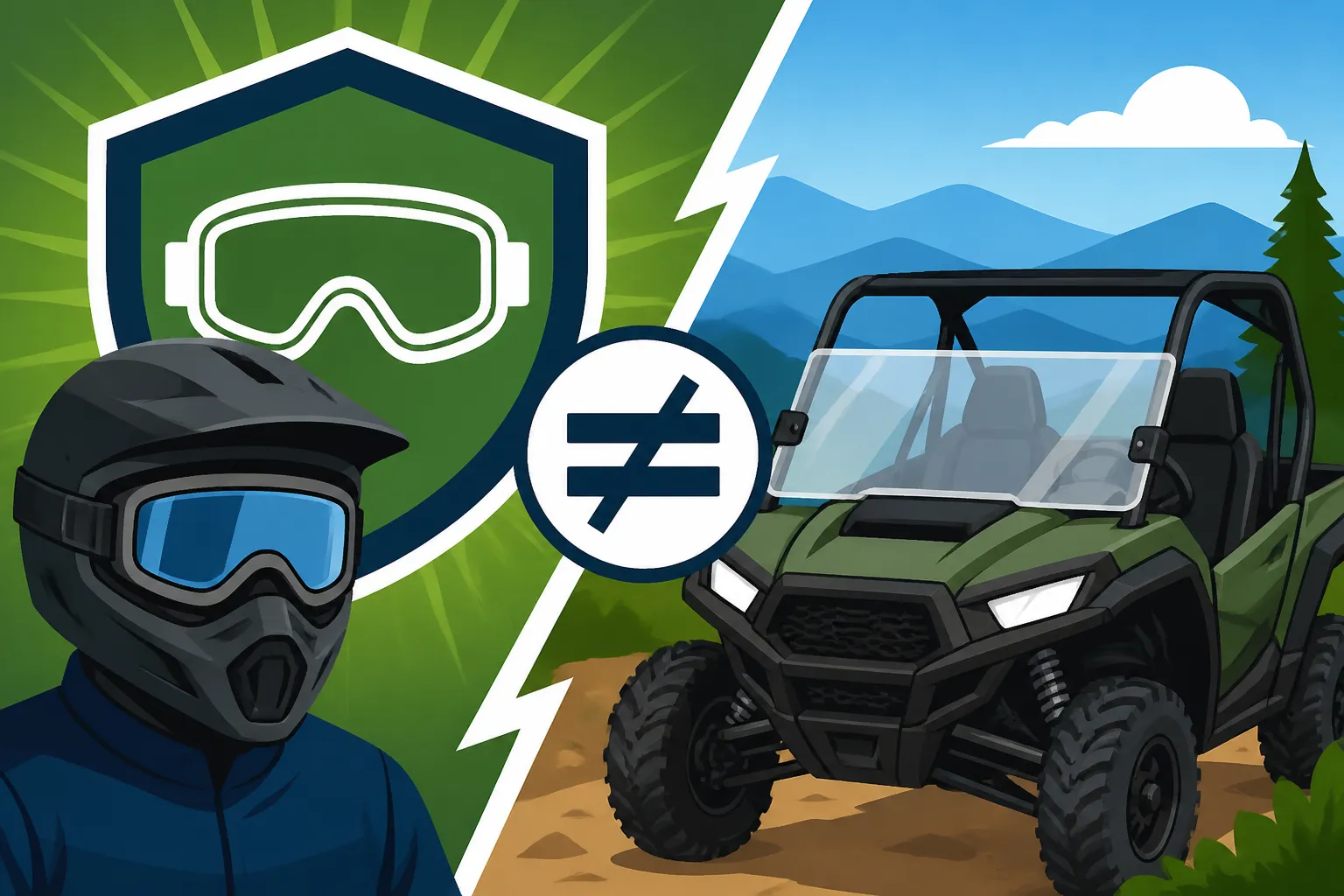
New Hampshire statute allows for an exception to the eye protection requirement if your off-highway recreational vehicle (OHRV) is "equipped with a windshield which protects the operator and passengers." This means that if your side-by-side or ATV has a properly installed and maintained windshield, you and your passengers may not need to wear goggles or a face shield. The intent behind this exception is that the windshield acts as the primary barrier against the elements and debris, fulfilling the protective purpose that goggles or face shields otherwise would.
For many UTV riders, this is a welcome allowance, as it can make for a more comfortable ride, especially in colder weather or during long stretches of open trail. You can chat with your passengers more easily, and the overall experience can feel a bit more relaxed. However, it's crucial that the windshield is actually effective. It should be free of major cracks or obstructions to visibility, and it should be large enough and correctly positioned to deflect debris away from the eyes of both the operator and any passengers. A tiny, decorative wind deflector likely won't cut it, nor will a windshield that only covers half your face. You'll want something that provides substantial coverage to be considered compliant.
The Practicalities: Windshields Aren't Always Perfect
While the windshield exception offers a legal out, practical considerations often suggest that even with a windshield, having some form of eye protection readily available is a smart move. Windshields, even the best ones, aren't always a perfect shield in all riding conditions. For instance, if you're riding on a particularly muddy trail or navigating through thick brush, mud or branches can easily splash up and over, or even around the sides of, a windshield. This is especially true if you're hitting bumps or traversing uneven terrain.
Consider those moments when you're cresting a hill and a sudden gust of wind kicks up dust from the ground, or you're following a few machines on a dry, gravelly road in Jericho Mountain State Park. That fine dust can swirl into the cab, getting into your eyes no matter how tall your windshield is. Many riders find that a windshield helps immensely with the general wind and larger debris, but for those rogue particles or splash-back, goggles are still invaluable. Moreover, in heavy rain, even with a wiper, visibility through a windshield can be compromised, and you might find yourself wishing for the clearer, direct view that goggles provide. It’s always better to be over-prepared for eye safety than to risk your vision because you relied solely on a windshield that couldn't handle every situation.
Specific Scenarios and Rider Considerations
The world of OHRVs is diverse, and so are the riding conditions in New Hampshire. What works for one type of machine or one kind of trail might not be ideal for another. Tailoring your eye protection to your specific setup and anticipated ride is key.
Riding a Side-by-Side Versus an ATV
The distinction between riding a side-by-side (UTV) and a traditional ATV (quad) often plays a significant role in eye protection choices. Side-by-sides, with their automotive-style seating, roll cages, and often factory-installed or aftermarket windshields, naturally lend themselves to the windshield exception. Many UTVs, particularly the more enclosed models, offer substantial protection from the elements, making goggles seem less critical on paper. Companies like SuperATV offer a wide range of windshield options, from full to half, and even flip-up designs, catering to different rider preferences and weather conditions. These can dramatically reduce wind, dust, and debris ingress, making the ride much more comfortable.
However, a traditional ATV exposes the rider much more to the open air. There's no inherent structure to mount a full windshield that would truly protect the rider's eyes in the same way. While some ATVs can be fitted with small wind deflectors, these typically don't meet the legal definition of a "windshield" that would allow you to forgo goggles. For ATV riders, a good pair of goggles or a helmet with a full face shield is almost always a necessity, both legally and practically. It's simply the nature of the beast; you're more exposed, and therefore, you need more direct protection. When you're out exploring the extensive trail networks of the state, remember that [Riding a New Hampshire State Park] like Jericho Mountain might demand different considerations than a wide-open logging road.
Passengers and Eye Protection Rules
It's a common misconception that eye protection rules only apply to the operator. In New Hampshire, the law explicitly states that eye protection is required for "any person operating an OHRV or riding as a passenger." This means everyone on the machine, from the driver to the last passenger in a multi-seat UTV, must have adequate eye protection. This rule is rooted in common sense; a passenger is just as susceptible to flying debris, wind, and other hazards as the operator, if not more so, as they may not have the same level of awareness of approaching obstacles.
If you're taking your family or friends out for a ride, particularly with children, ensuring every single person has correctly fitting and effective eye protection is paramount. Don't assume that just because they're behind a windshield or sitting further back in a UTV, they're fully protected. Always err on the side of caution. Even with a windshield, having spare goggles on hand for passengers is a thoughtful and responsible measure, especially for those unexpected dusty sections or sudden splashes. For details on age and supervision, check out [New Hampshire's Age and Supervision Rules].
Weather, Dust, and Trail Conditions
The efficacy of your eye protection setup, especially a windshield, can vary wildly depending on the weather and specific trail conditions. On a clear, calm day on a well-maintained, damp trail, a windshield might feel perfectly adequate. You get an unobstructed view, and the wind protection is excellent. But conditions in New Hampshire are rarely static.
- Dusty Conditions: A dry spell can turn even the most packed trails into dust bowls. Riding in a group amplifies this, as machines ahead kick up huge plumes of fine particles. A windshield helps, but dust can still creep in, and a sudden gust can bring a cloud right over the top. Goggles provide a much better seal against this pervasive irritant.
- Muddy Trails: After a rain, trails can become a quagmire. Mud flung from tires, especially your own or those of other riders, can coat a windshield in an instant, impairing visibility and often requiring a stop to clean it. Goggles are less likely to get completely obscured, and are easier to clean on the fly.
- Rain and Snow: While a windshield is a blessing in rain or light snow, heavy precipitation can quickly make it difficult to see, even with wipers. The cold wind combined with moisture can also make eyes water excessively, which goggles can mitigate. For winter riding, be mindful of [New Hampshire Rules for Riding in Winter].
- Brushy Trails: Some of New Hampshire's scenic trails can be quite overgrown, especially in less trafficked areas. Low-hanging branches and whipping foliage can bypass a windshield or even strike it hard, and having goggles on provides an extra layer of impact protection.
Always assess the conditions before you head out, and if there's any doubt about your windshield's ability to provide complete protection, grab those goggles.
Choosing the Right Gear for Your Ride
Navigating the options for eye protection can feel a bit overwhelming, but understanding the strengths of each type will help you make the best choice for your New Hampshire adventures.
Goggles: Your Go-To for Open-Air Riding
For most ATV riders and many UTV riders, especially when conditions are dusty, muddy, or brushy, a high-quality pair of off-road goggles is your best friend. They are specifically designed for the rigors of powersports, offering a snug fit that seals against your face, preventing dust, mud, and small debris from getting into your eyes. Modern goggles often come with features like anti-fog coatings, tear-off posts (for quickly clearing mud), and UV protection. They typically have wide fields of view, which is crucial for maintaining situational awareness on the trail.
When choosing goggles, look for a comfortable fit with your helmet. The strap should be adjustable to ensure a secure, yet not overly tight, seal around your eyes. Lens options also abound: clear for low light, tinted for bright sunny days, and even photochromatic lenses that adjust to changing light conditions. Invest in a good pair – your eyesight is worth it. They are universally accepted as adequate eye protection and provide a robust barrier in almost any riding scenario you'll encounter on New Hampshire's diverse trails.
Helmets with Face Shields: The All-in-One Solution
For some riders, particularly those who prefer the feel of a full-face helmet or a modular helmet, an integrated face shield offers an excellent all-in-one solution for eye protection. These shields are typically made from durable, impact-resistant polycarbonate and provide a wide, unobstructed view. When closed, they offer a complete barrier against wind, dust, rain, and debris, satisfying the eye protection requirement without the need for separate goggles. Many come with anti-scratch and anti-fog coatings, making them incredibly practical.
The convenience of a face shield is undeniable: it's always there, always ready, and you don't have to worry about misplacing goggles. Plus, in colder weather, a full face shield provides superior warmth and protection compared to goggles alone. Just make sure your helmet's shield is in good condition, free from deep scratches that could impair vision, and that you keep it clean for optimal clarity. This setup offers comprehensive protection for your head and eyes, streamlining your gear for a hassle-free ride.
Windshield Enhancements and Accessories
If you primarily ride a side-by-side and want to maximize the effectiveness of your windshield, there are plenty of enhancements and accessories available that can boost your protection and comfort. While the windshield itself provides the primary legal exception for eye protection, adding certain features can make it even more practical and robust for varied New Hampshire terrain.
- Wipers and Washers: For muddy or rainy conditions, manual or electric windshield wipers are game-changers. Pair them with a washer kit, and you can quickly clear your view without stopping, essential for maintaining momentum and safety.
- Top and Bottom Seals: Even full windshields can have gaps where wind and dust can seep in. Adding weatherstripping or specific sealing kits around the edges can create a tighter seal, significantly reducing drafts and dust infiltration.
- Half Windshields and Flip-Up Options: If you like the versatility of open-air riding but want protection when needed, a half windshield or a flip-up design offers the best of both worlds. A half windshield offers protection from ground-level debris while allowing airflow, though it won't replace goggles entirely for full eye coverage. Flip-up windshields, like many offered by SuperATV, allow you to close them for full protection or open them for maximum airflow, adapting to conditions on the fly. These are particularly popular because they offer dynamic control over your riding environment, giving you the flexibility to meet the legal requirements when necessary and enjoy the breeze when conditions permit.
- Tinted Windshields: Just like goggles, windshields come in various tints to reduce glare on bright days, enhancing visibility and reducing eye strain.
These accessories can transform your UTV's cab into a more comfortable and protective environment, allowing you to get more out of your machine and enjoy your rides around places like [Gorham's Open Streets] or the expansive [Ride the Wilds] system.
What an Officer Looks For
When you're out on the trails or crossing a town road in New Hampshire, you might occasionally encounter a Fish and Game officer or local law enforcement. Knowing what they're checking for regarding eye protection can help ensure your ride is uninterrupted.
Roadside Checks and Compliance
During a roadside check in New Hampshire, an officer will verify that all operators and passengers on an OHRV are complying with the state's safety regulations. This includes checking for proper registration, helmet use (if applicable), and crucially, eye protection. They'll be looking to see if you are wearing goggles, a helmet with a face shield (and that it's down and effective), or if your machine is equipped with a substantial, functional windshield that adequately protects everyone's eyes.
They are generally looking for clear evidence that you have taken steps to protect your vision. If you have a windshield, they'll assess its condition and coverage. Is it large enough? Is it clear? Does it seem to genuinely shield your eyes and your passengers' eyes? If there's any doubt about the windshield's effectiveness, or if you're on a traditional ATV without one, they'll expect to see you wearing goggles or a face shield. Compliance is straightforward: if your eyes aren't protected by a clear and functional barrier, you're at risk of a citation. Make sure everyone in your party is aware of these requirements before you head out, whether you're riding a two-seater or a six-seater. This applies equally when you are [Crossing a Road on an OHRV in New Hampshire].
The Importance of Being Prepared
The best way to handle a roadside check is to be fully prepared and compliant from the start. Don't wait for an officer to remind you about eye protection. Make it a standard part of your pre-ride checklist. If you're relying on a windshield, ensure it's clean and in good repair. If you're on an open machine, or if conditions warrant extra protection even with a windshield, always have your goggles ready and on.
It's also a good idea to educate your passengers, especially children, about the importance of keeping their eye protection on throughout the ride. A quick explanation before you set off can prevent issues later. Being prepared not only helps you avoid potential fines but, more importantly, keeps you and your riding companions safe. After all, the officers are primarily there to ensure everyone's safety on New Hampshire's trails. Showing that you've taken these precautions seriously reflects positively on all OHRV riders. For more details on what officers check, consider reading [What a New Hampshire Officer Checks Roadside].
Beyond the Law: Why Safety Matters Most
While adhering to New Hampshire's OHRV laws is important, the true value of eye protection goes far beyond avoiding a ticket. It’s about safeguarding one of your most precious senses and ensuring you can enjoy many more years of riding.
Protecting Your Vision from Debris and Insects
Think about the sheer variety of things that can be kicked up or encountered on an OHRV trail. Rocks, twigs, mud clumps, dust, water splashes, and even unexpected critters like bees or beetles. These aren't just minor annoyances; they can cause significant damage to your eyes. A small stone hitting your eye at speed could lead to a corneal abrasion, a detached retina, or even blindness. An insect sting in the eye is not only painful but could cause a momentary loss of control, leading to an accident.
Goggles or a face shield provide a robust physical barrier that can deflect these hazards, absorbing impact and keeping foreign objects from reaching your delicate eye tissue. This protection is critical, especially when riding in areas where visibility might be low, or on trails known for loose surfaces. Never underestimate the potential for injury from seemingly small trail hazards; your eyes are too important to leave unprotected. For example, when exploring a place like [Pisgah State Park's Width Limit] area, you will encounter diverse terrain where flying debris is common.
Long-Term Eye Health on the Trails
Beyond immediate injury, consistent exposure to the elements during OHRV riding can also impact your long-term eye health. Prolonged exposure to UV radiation from the sun, even on cloudy days, can contribute to conditions like cataracts and macular degeneration over time. Many quality goggles and face shields come with UV protection, filtering out harmful rays and preserving your eye health for the long haul.
Furthermore, constant wind exposure can dry out your eyes, leading to chronic irritation, discomfort, and a higher risk of infection. This "dry eye" sensation can be particularly bothersome for riders who spend hours on the trail. Eye protection creates a micro-environment around your eyes, reducing direct wind assault and helping maintain natural moisture. By consistently wearing proper eye protection, you're not just protecting yourself from immediate risks, but you're also making a smart investment in your future vision, ensuring you can continue to experience the beauty of New Hampshire's OHRV trails for years to come.
Disclaimer
This article is for general informational purposes only and does not constitute professional advice. Laws, prices and regulations vary by location and change over time. Consult a qualified professional for guidance on your specific situation.