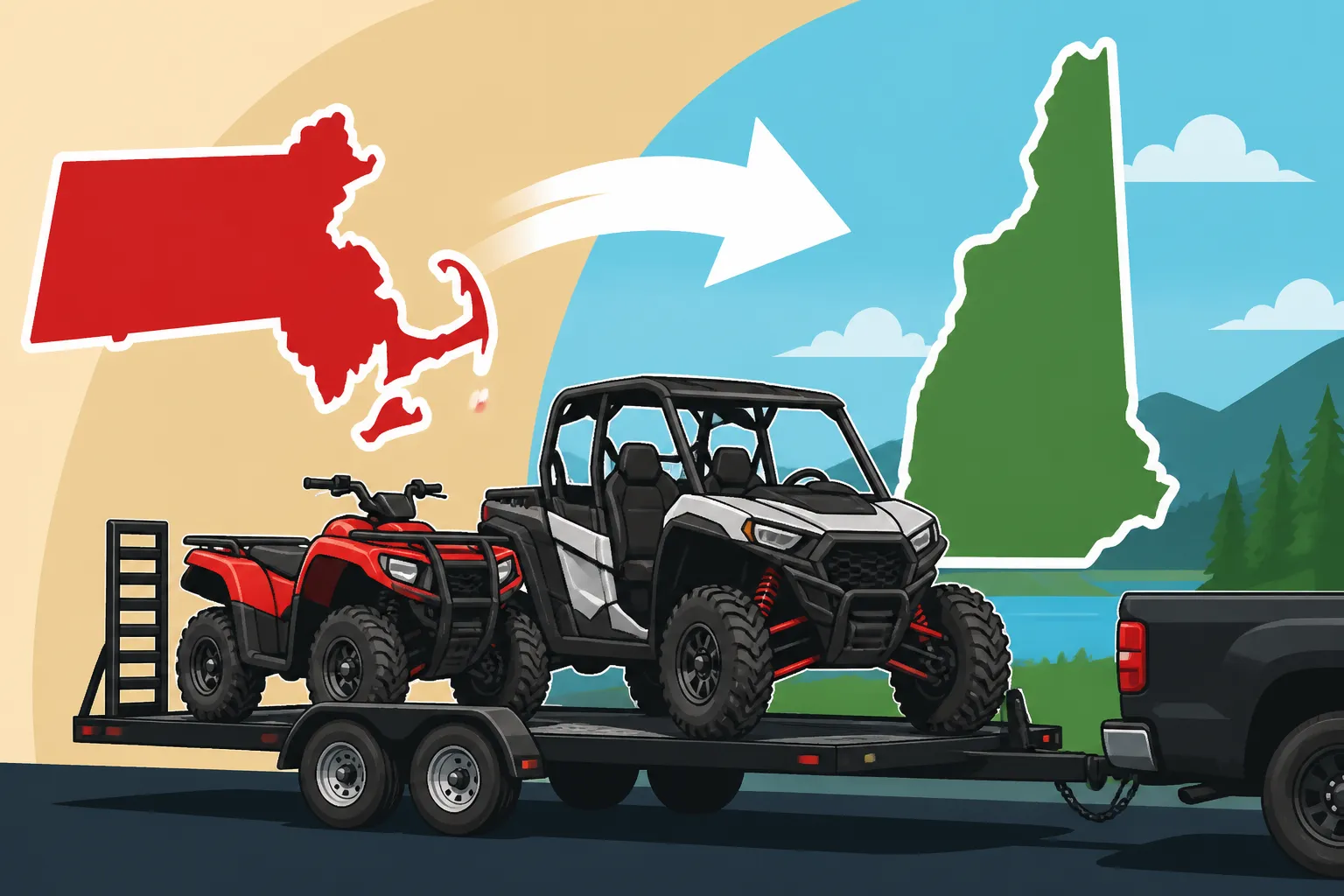
Bringing a Machine From Massachusetts
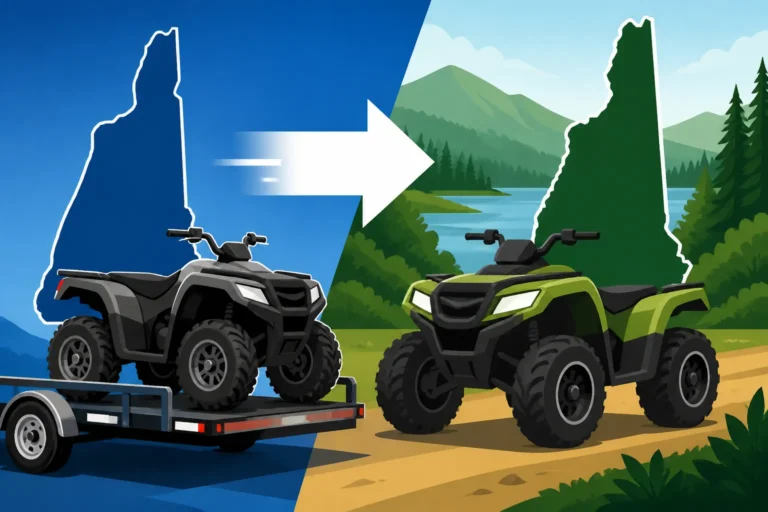
It's a common scenario for many riders heading up from Massachusetts: you've got your ATV or UTV all set, registered in your home state, and you're ready to hit the amazing trails New Hampshire has to offer. The frustration hits when you realize that your Massachusetts registration won't cut it here in the Granite State. This guide is here to unravel that confusion, clearly outlining exactly what you need to do to legally and confidently ride your machine on New Hampshire's fantastic OHRV trails, ensuring your trip is filled with adventure, not headaches.
Why Your Massachusetts Registration Isn't Enough for New Hampshire Trails
One of the biggest misunderstandings for visiting OHRV enthusiasts is the assumption that their home state's registration automatically covers them in New Hampshire. It's a perfectly logical thought process, given how some other vehicle registrations work across state lines, but unfortunately, it's not the case for off-highway recreational vehicles here. New Hampshire has a very specific system in place, and understanding this is the first step to a smooth riding experience.
The Principle of Non-Reciprocity
New Hampshire operates on a principle of non-reciprocity when it comes to OHRV registrations. This simply means that a registration from Massachusetts, Vermont, Maine, or any other state, is not recognized as valid for riding on New Hampshire's public trails, roads, or frozen bodies of water. It can feel like an extra hoop to jump through, especially when you're already registered in your home state, but there's a very practical reason behind it.
Our trail systems, which include hundreds of miles of multi-use trails, former railroad corridors, and designated town roads, are primarily funded by the fees generated through OHRV registrations. These funds go directly to the Bureau of Trails within the New Hampshire Department of Natural and Cultural Resources, and then get disbursed as grants to the volunteer OHRV clubs that actually build, maintain, groom, and sign these trails. When you purchase a New Hampshire OHRV registration, you're directly contributing to the very trails you'll be riding. Without that funding mechanism, our extensive trail network simply wouldn't exist in the way it does. It's a system designed to be self-sustaining, and that means everyone who rides here needs to contribute. This is why [Why New Hampshire Honors No Neighbor's Registration] is such a critical piece of information for out-of-state riders.
When a New Hampshire Registration Becomes Mandatory
The rule is quite clear in New Hampshire: if you plan to operate your OHRV off your own private property, you need a New Hampshire registration. This isn't just about riding on an extensive state trail network like the famous Ride the Wilds system in Coos County; it applies to virtually any scenario where you leave your private land.
Imagine you're staying at a lodge in Pittsburg and want to ride from your accommodation directly onto a club trail. You'll need that New Hampshire registration. Thinking of crossing a town road to get from one section of trail to another, even for a few yards? That machine needs to be registered. Even operating on a frozen lake or pond during the winter months requires a valid New Hampshire OHRV registration. Basically, if your wheels touch anything that isn't your own deeded land, you'll need the appropriate sticker and certificate. This covers all types of OHRVs, from your traditional ATV to a side-by-side (UTV) or even a dirt bike. Don't risk a fine; if you're exploring beyond your backyard, register your machine. You can find more specific scenarios in [Leaving Your Own Property in New Hampshire].
Your Options for Registering a Massachusetts Machine in New Hampshire
Understanding that you need a New Hampshire registration is the first step. Now, let's explore the practical ways a Massachusetts rider can get their machine legally ready for the trails. New Hampshire offers a couple of different registration options tailored to both frequent visitors and those just popping up for a quick weekend escape.
The Annual Nonresident Registration
For many Massachusetts riders who find themselves returning to New Hampshire's trails multiple times a year, the annual nonresident registration is often the most sensible and cost-effective choice. This registration is valid from May 1st through April 30th of the following year, regardless of when you purchase it. So, whether you buy it in May or September, it will still expire on April 30th.
To get an annual nonresident registration, you'll typically need to provide proof of ownership for your OHRV (like a bill of sale or your existing Massachusetts registration), along with your valid photo ID. The cost for nonresidents is higher than for residents, but there's a fantastic way to significantly reduce that fee: by joining a New Hampshire OHRV club. A club membership can shave a considerable amount off the nonresident fee, making it well worth the annual dues, especially if you plan to ride more than once. Many clubs are actively involved in maintaining the very trails you'll be enjoying, so your membership supports a great cause while saving you money. We dive deeper into the fee structure in [Resident and Nonresident OHRV Fees in New Hampshire] and the benefits in [New Hampshire's Club Member Discount]. This annual registration gives you the freedom to ride throughout the season without having to worry about renewing for each visit.
The Convenient Ten-Day Nonresident Registration
If your visits to New Hampshire are infrequent, perhaps just one long weekend adventure per year, the ten-day nonresident registration might be a more convenient option. This special registration is designed for short-term visitors and allows you to legally operate your OHRV for ten consecutive days.
However, there are a few key limitations to be aware of. This registration is generally only available for wheeled OHRVs (ATVs and UTVs), not typically for snowmobiles. It also has a specific validity period, usually running from May 1st to October 31st, making it unsuitable for winter riding. Furthermore, you can typically only purchase one ten-day registration per machine per season. So, if you visit in June for a weekend and then decide to come back in September, you'll need to either purchase another annual registration or consider if the annual would have been more cost-effective from the start.
The cost of the ten-day registration is naturally less than the annual, reflecting its limited duration. It's often purchased directly from authorized OHRV registration agents, which include many powersports dealers and some town clerks in popular riding areas. It's a great option for that spontaneous trip north, but if you're a regular visitor, calculate if the annual option might save you money in the long run. Learn more about its specifics in [New Hampshire's Ten-Day Nonresident Registration].
Navigating the Registration Process and Important Details
Once you've decided which type of New Hampshire registration is right for your Massachusetts machine, the next step is to gather your documents and understand the process. It's generally straightforward, but having everything in order before you head to the registration agent will save you time and hassle.
Essential Documents and Proof of Ownership
To register your OHRV in New Hampshire, you'll always need a valid photo ID. This verifies who you are as the registrant. Beyond that, the most crucial document is proof of ownership for your machine. For a Massachusetts-registered OHRV, this usually means your current registration certificate from Massachusetts. This document proves that you legally own and have registered the machine in your home state.
If you've recently purchased your machine in Massachusetts and haven't yet received an official MA registration, or if you bought it privately and only have a handwritten receipt, you might need a more formal document. A clear, legible bill of sale is essential in these situations. It should include the seller's and buyer's full names and addresses, the sale date, the machine's make, model, year, and crucially, its Vehicle Identification Number (VIN). If you're unsure about the legitimacy of a private bill of sale or need to create a new one to be fully prepared, resources like LawDepot offer templates that can help you draft a comprehensive and legally sound document that will satisfy New Hampshire's registration requirements. This ensures there are no hiccups when proving ownership. You can also refer to [New Hampshire ATV Bill of Sale Requirements] for specific details. Remember, New Hampshire does not title OHRVs, so a bill of sale or previous registration is your primary proof of ownership here.
Where to Complete Your Registration
New Hampshire offers several convenient avenues for OHRV registration, catering to different preferences and situations. You have a few main options:
- Online: The New Hampshire Fish and Game Department's website offers an online registration portal. This is often the quickest and easiest way to renew an existing New Hampshire registration. For first-time registrations, or if you have specific questions, you might find other methods more suitable.
- Authorized Agents: Across the state, many powersports dealerships and other retail locations are authorized to process OHRV registrations. These agents can often handle new registrations, renewals, and sometimes even the ten-day nonresident option. They're particularly helpful if you're buying a new machine in New Hampshire, as they can often handle the registration on the spot.
- New Hampshire Fish and Game Department Offices: You can visit a Fish and Game Department office in person to complete your registration. This is a good option if you have complex questions or need in-depth assistance.
- Certain Town Clerks: Some town clerks, particularly in popular OHRV riding areas, are authorized to process registrations. It's always a good idea to call ahead to confirm if your chosen town clerk offers this service and what their hours are.
No matter where you choose to register, once your application is processed and fees are paid, you'll receive a paper registration certificate and two OHRV decals (stickers). These decals must be properly affixed to your machine in designated locations, usually on the front and rear. Your certificate should be carried with you whenever you're riding. For more details on where to go, check out [Where to Register an OHRV in New Hampshire] and for what you receive, see [New Hampshire OHRV Decals and the Certificate].
Age, Safety, and Club Membership
Beyond the practicalities of paperwork and where to go, there are a few other critical details that Massachusetts riders bringing their machines to New Hampshire need to be aware of:
- Age of Registrant: In New Hampshire, the person registering the OHRV must be at least 18 years old. This is true even if the primary rider of the machine is a minor. The adult registrant is ultimately responsible for the machine and its legal operation. This is an important distinction covered in [New Hampshire OHRV Registration Age Requirement].
- Safety Certificates: While adults (18 and older) with a valid driver's license generally don't need a separate OHRV safety certificate, riders under the age of 18 do. If you have a younger rider from Massachusetts who will be operating the machine in New Hampshire, they will need to complete an approved New Hampshire OHRV safety education course. There are online and in-person options available. This is crucial for ensuring safe and legal riding for the younger generation. For full details, see [New Hampshire Safety Education Requirements].
- Club Membership Benefits: We touched on this earlier, but it bears repeating: joining a New Hampshire OHRV club is highly recommended for nonresidents. Not only does it provide a significant discount on your annual registration fee (which can often offset the cost of dues), but it also connects you to the local riding community. Clubs are the backbone of the trail system, and your membership supports their vital work. They often provide valuable local information, trail maps, and host events. Look for clubs that maintain trails in the areas you plan to ride. [Why Club Membership Saves $30 in New Hampshire] explains the financial benefits in detail.
Beyond Registration: Riding Legally and Safely in the Granite State
Getting your Massachusetts machine registered in New Hampshire is a huge step, but it's just the beginning of a safe and enjoyable riding experience. The Granite State has a comprehensive set of rules and regulations designed to protect riders, landowners, and the environment. Familiarizing yourself with these goes a long way.
Understanding New Hampshire's Rules of the Trail
Once your OHRV is properly registered in New Hampshire, you're ready to explore. However, it's vital to understand that riding comes with responsibilities. New Hampshire has specific rules regarding speed limits (which can vary by trail and location), noise levels, and equipment requirements (such as spark arrestors and appropriate lighting for night riding).
Always remember to stay on marked and open trails. Riding off-trail or on closed trails can lead to significant fines and jeopardizes the delicate relationship with landowners who generously allow access to their property. Respect posted private land and never venture onto it without explicit permission. Helmet laws apply to all riders under 18, and eye protection is recommended for everyone. Always check the current trail conditions and status before heading out, as mud season closures, logging operations, or other events can temporarily shut down sections of trail. Getting caught riding an unregistered machine or violating other trail rules can result in substantial [New Hampshire Fines for an Unregistered OHRV] and spoil your trip.
Planning Your Massachusetts to New Hampshire OHRV Adventure
Successfully bringing your machine from Massachusetts to New Hampshire for a riding adventure requires a little planning. Think about where you want to ride. Iconic areas like the Ride the Wilds network in northern New Hampshire, which links communities like Pittsburg, Colebrook, and Gorham, offer hundreds of miles of diverse terrain. Jericho Mountain State Park in Berlin is another popular destination with its own dedicated trail system and day-use fees.
When planning, consider your route, potential fuel stops along the way (some trail towns like Gorham and Colebrook have gas stations accessible directly from trails), and lodging options that are OHRV-friendly. Many establishments in the North Country cater specifically to riders, offering direct trail access from their properties. Always carry your New Hampshire OHRV registration certificate with you while riding, alongside your ID. Having a trail map, either paper or on a GPS device, is also highly advisable, as cell service can be spotty in remote areas. A little preparation ensures your Massachusetts-to-New Hampshire OHRV trip is memorable for all the right reasons.
Disclaimer
This article is for general informational purposes only and does not constitute professional advice. Laws, prices and regulations vary by location and change over time. Consult a qualified professional for guidance on your specific situation.