Replacing Lost New Hampshire Decals
It's incredibly frustrating when you realize those little stickers that prove your OHRV is legal and ready to hit the trails have gone missing. Whether they peeled off in the mud, faded in the sun, or mysteriously vanished, not having your New Hampshire registration decals can put a serious damper on your riding plans and even lead to fines. This guide is here to walk you through the process of replacing those lost decals, ensuring you get back to enjoying the Granite State's incredible trails without a hitch.
The Frustration of Lost Decals and Why They Matter
Picture this: you've loaded up your ATV or UTV, driven an hour north, parked at the trailhead, and you're just about to unload when you notice it – one of your registration decals is gone. My heart sinks just thinking about it! It's not just a minor annoyance; lost decals are a real problem that can stop your ride before it even starts.
Why Decals Are More Than Just Stickers
Those two little decals that New Hampshire Fish and Game issues aren't just decorative. They're tangible proof that your Off-Highway Recreational Vehicle (OHRV) is legally registered and permitted to ride the vast trail networks across the state. Think of them as tiny, mighty guardians of your riding privileges. Without them, even if you have your certificate of registration tucked safely in your wallet, a conservation officer might still question your machine's legality. It's about easy identification for law enforcement and trail managers, ensuring that only properly registered machines are out there enjoying our natural resources. They confirm the year of your registration, the type of machine, and that you've paid your dues to help maintain those very trails. Trust me, the last thing you want is a conversation with a Fish and Game officer about missing decals when you're geared up and ready to ride.
Common Ways Decals Go Missing
OHRVs lead a tough life, don't they? They brave mud, dust, rocks, and every kind of weather New Hampshire can throw at them. It's no wonder those decals can sometimes give up the ghost. I've seen decals peel off from relentless power washing, fade into oblivion after years of sun exposure, or simply get scraped off by a rogue branch on a tight trail. Sometimes, it's just plain old wear and tear. The adhesive weakens, the plastic gets brittle, and one day, poof – gone. And yes, unfortunately, there are also cases of theft, where someone might try to snag your decals for their own unregistered machine. Keeping them clean and checking them regularly as part of your pre-ride routine can help, but sometimes, despite your best efforts, they just disappear. It's a common complaint among riders, so know you're not alone in this particular battle against the elements.
Understanding New Hampshire's OHRV Decal Requirements
Understanding what those decals mean and where they belong is half the battle. New Hampshire has pretty clear guidelines, and knowing them will not only help you prevent future loss but also ensure you're compliant once you get your replacements.
What Your Decals Signify
When you register your OHRV in New Hampshire, you're not just getting a piece of paper; you're getting two distinct decals that serve as the visual proof of that registration. These decals display the registration year, making it easy for anyone, from fellow riders to law enforcement, to quickly see that your machine is currently legal. They're specific to your machine, indicating whether it's an ATV, UTV, or trail bike, and they're intrinsically linked to the registration certificate you carry. Think of the certificate as the "birth certificate" for your machine's legal status, and the decals as its visible ID tags. They go hand-in-hand, and if you ever need to show proof of registration, both are essential. For a deeper dive into the relationship between these two critical pieces, check out our guide on [New Hampshire OHRV Decals and the Certificate].
Proper Placement and Visibility
New Hampshire Fish and Game has specific rules about where your decals need to go, and it's not just about aesthetics. The law requires them to be clearly visible on both sides of the OHRV. For ATVs, this typically means on the left and right side of the machine, often on the fenders or side plastics where they won't be easily obscured. For side-by-sides, it's usually on the rear fenders or the side panels, again, ensuring maximum visibility. The goal is that an officer, or even another rider, can easily spot them from either side as you pass by or are parked. Placing them correctly after replacement is crucial because if they're hidden or in an unapproved spot, it can still lead to issues. It's worth taking a moment to review [New Hampshire OHRV Decal Placement] to ensure you're putting them in the right spot for full compliance. A quick glance at another registered machine on the trail can often give you a good visual cue if you're ever unsure!
Step-by-Step Guide to Replacing Your Decals
Okay, so you've established your decals are gone and you need new ones. Don't fret! The process isn't overly complicated, but it does require a bit of attention to detail and a few pieces of paperwork.
Gathering Your Essential Documentation
Before you even think about heading out or mailing anything, you'll need to gather your existing proof of registration. The most important document here is your original OHRV registration certificate. This is the paper certificate with your name, address, machine details (VIN, make, model), and the registration number. Think of it as your machine's passport. Without it, replacing your decals becomes a much trickier endeavor, sometimes requiring extra steps to verify ownership and registration status. You'll also need a valid form of personal identification, like a driver's license, especially if you're replacing them in person. This confirms you're the registered owner. Having these documents ready and easily accessible will streamline the entire replacement process. For general OHRV related forms and keeping personal records in order, many people find online resources helpful. For example, if you ever needed to draft a bill of sale for a private transaction or other general legal templates, platforms like LawDepot can be useful for organizing your personal legal documents, though for the decal replacement itself, you'll be using official state forms.
The Replacement Application Process
New Hampshire Fish and Game has a specific application for replacing lost or damaged decals. This isn't just a simple request; it's a formal declaration that your original decals are indeed gone and you need new ones. You'll typically fill out a specific section on the standard OHRV registration application form, or a dedicated replacement form, indicating that you require replacement decals. On this form, you'll need to provide all the details of your OHRV – the make, model, year, VIN (Vehicle Identification Number), and your current registration number. Be sure to double-check every digit, as errors can cause delays. You’ll also need to state the reason for the replacement (e.g., lost, stolen, damaged). Make sure all information matches your current registration certificate exactly. It's a good practice to keep a copy of your completed application for your records. This ensures you have a paper trail if any questions arise later.
Fees and Payment for Replacement Decals
Yes, unfortunately, there's usually a small fee associated with replacing lost OHRV decals. While it's not a huge sum, it's enough to make you wish you'd secured those originals a bit better! This fee covers the administrative costs of processing your request and issuing new decals. The exact cost can vary, so it's always best to check the current schedule on the New Hampshire Fish and Game website or by calling their OHRV registration line before you go. You'll typically be able to pay by cash, check, or credit card, depending on where you process the replacement. Remember, this fee is separate from your annual registration fee; it's specifically for the replacement of the physical decals. For precise figures and details on how to pay for replacement decals, our article on Replacing Lost New Hampshire Decals provides the most up-to-date information available. Always be prepared with the correct payment method to avoid any last-minute hassles.
Where to Submit Your Replacement Decal Request
Once you've got your paperwork filled out and your payment ready, you have a few options for submitting your request. Convenience often dictates the choice, but it's good to know all your avenues.
Options for In-Person Submission
If you prefer a face-to-face interaction or need your decals quickly, in-person submission is your best bet. You can usually go to the New Hampshire Fish and Game headquarters in Concord during business hours. They handle all OHRV registrations and replacements directly. Another fantastic option, especially if you live outside the Concord area, is visiting a local town clerk's office. Many town clerks are authorized agents for OHRV registrations and can process decal replacements right on the spot. It's always a good idea to call ahead to your specific town clerk's office to confirm their hours and that they process decal replacements. Lastly, many powersports dealers throughout the state are also authorized registration agents. If you're near a dealership, especially one where you bought your machine, they might be able to help you out. For a comprehensive list of places where you can take care of your OHRV registration needs, including decal replacements, check out [Where to Register an OHRV in New Hampshire].
Handling Your Request by Mail
For those who aren't in a rush or live a bit further from an authorized agent, submitting your replacement request by mail is a perfectly viable option. You'll need to send your completed replacement application, a copy of your current OHRV registration certificate (never send the original through the mail!), and a check or money order for the replacement fee to the New Hampshire Fish and Game Department's OHRV registration division. The mailing address is usually available on their official website or on the application form itself. While convenient, keep in mind that mailing will add several days to the process for both sending your request and receiving your new decals. Factor in postal transit times plus the Fish and Game Department's processing time. If you have a ride planned soon, mail might not be the quickest route. However, it's a good, reliable option if you're planning ahead.
What to Do While You Wait for New Decals
The waiting game can be tough, especially when you're itching to hit the trails. So, what's a responsible rider to do in the interim?
Riding Legally Without Physical Decals
This is a really important point and one that causes a lot of confusion. While you wait for your replacement decals to arrive, it is absolutely crucial that you always carry your valid OHRV registration certificate with you when riding. This physical certificate is your primary proof of registration. If stopped by a conservation officer, presenting your certificate, along with an explanation that you've applied for replacement decals, is your best defense. Many officers understand that decals can go missing, but they need concrete proof that your machine is, in fact, registered. Having that certificate easily accessible, perhaps laminated and stored in a waterproof bag, is non-negotiable. Don't risk a fine just because you left it at home! For more on this, our article [What Happens If Your Certificate Is at Home] dives into the importance of always having it on your person or machine.
Avoiding Common Pitfalls
While waiting, there are a few things you definitely want to avoid. First and foremost, do not ride an unregistered machine. If your registration has also expired and your decals are missing, you're looking at a much more serious situation than just missing stickers. Make sure your underlying registration is current. Secondly, don't try to "borrow" decals from another machine or create your own homemade ones. This is a big no-no and can lead to serious legal trouble. Officers are trained to spot discrepancies. Lastly, avoid riding in areas where compliance checks are frequent if you're concerned about explaining your situation, though with your certificate in hand, you should generally be fine. The key is honesty and having all your legitimate documentation ready. Be patient, be prepared, and those new decals will be on your machine before you know it.
Here's a quick reference table for the decal replacement process:
| Step | Action | Key Requirement | Estimated Timeframe (Excl. Shipping) |
|---|---|---|---|
| 1. Assess Loss | Confirm decals are truly missing or unreadable. | Physical inspection of OHRV. | Immediate |
| 2. Gather Documents | Locate your current OHRV registration certificate and a valid photo ID. If you keep personal vehicle records, maybe through a system you've developed with tools like LawDepot for other legal documents, now's the time to cross-reference them. | Original NH OHRV Registration Certificate, Valid Photo ID. | 10-15 minutes |
| 3. Obtain Application | Download the OHRV registration application form from the NH Fish and Game website, or pick one up from an authorized agent. | Access to internet/printer, or a visit to an agent. | 5-10 minutes |
| 4. Complete Application | Fill out the application, clearly indicating you are requesting replacement decals and stating the reason for replacement (e.g., lost, damaged, stolen). Include all machine details (VIN, make, model) and your current registration number. | Accurate OHRV details. | 15-30 minutes |
| 5. Prepare Payment | Determine the current replacement decal fee (check NH F&G website) and prepare payment (cash, check, money order, or credit card depending on submission method). | Current fee amount, appropriate payment method. | 5 minutes |
| 6. Submit Request | In-Person: Visit NH Fish and Game headquarters, a participating town clerk, or authorized powersports dealer. By Mail: Send application, a copy of registration certificate, and payment to NH Fish and Game Department. |
Your choice of submission method. For mail, proper postage and address. | In-person: 10-30 min + travel; Mail: 1-2 weeks total |
| 7. Carry Certificate While Waiting | Always have your valid OHRV registration certificate with you when riding, even if you don't have the physical decals yet. This is your primary proof of registration if stopped. | Valid OHRV Registration Certificate. | Ongoing |
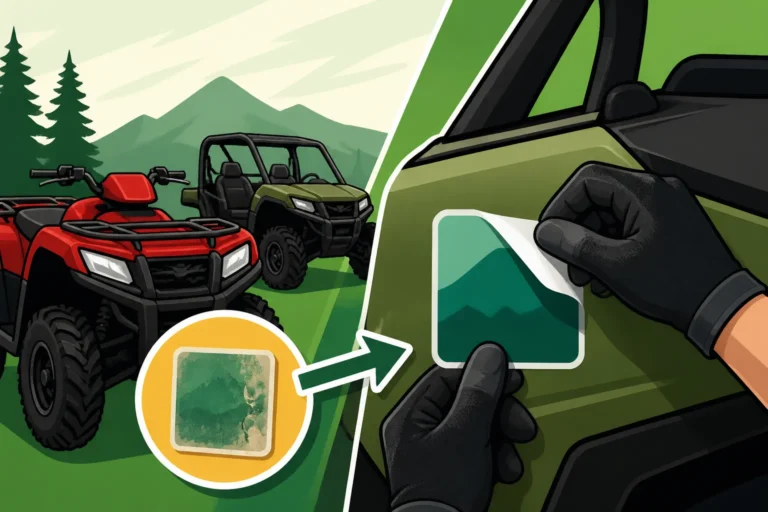
| 8. Affix New Decals | Once received, carefully clean the designated areas on your OHRV and apply the new decals according to New Hampshire's placement guidelines. | Clean application surface. | 5-10 minutes |
Preventing Future Decal Loss and Damage
Nobody wants to go through this process more than once! While some decal loss is unavoidable, there are definitely steps you can take to make your new ones last longer.
Best Practices for Decal Longevity
Think of your OHRV decals like a fresh coat of wax on your truck – they need a little care to stay looking good and, more importantly, stay attached. When you apply your new decals, make sure the surface is absolutely clean and dry. Any dirt, dust, or grease will compromise the adhesive. Use a gentle cleaner, let it dry completely, and then press those decals on firmly, working out any air bubbles.
Beyond initial application, consider their exposure. If your machine is stored outdoors, constant sun and weather can take a toll. A cover or even just parking it in a shaded spot can help prolong their life. When washing your machine, be mindful around the decals. Power washers are fantastic for blasting mud, but they can also blast off your decals if you're not careful. Keep the nozzle a safe distance away and avoid directly spraying the edges of the stickers. Some riders even apply a clear protective film over their decals for an extra layer of defense, especially if they're particularly aggressive riders or frequently navigate tight, brushy trails. Taking these small precautions can make a huge difference in how long your decals stick around.
Regular Checks and Maintenance
Incorporating a decal check into your pre-ride routine is such a simple yet effective habit. Just as you check your tires, fuel, and oil before heading out, take a quick glance at your registration decals. Are they starting to peel at the edges? Are they faded to the point of being unreadable? Catching these issues early means you can often re-adhere a loose edge before it becomes a full loss, or proactively order replacements if they're becoming illegible, rather than being caught off guard at the trailhead. This is especially true after a particularly rough ride or a long period of storage.
Winter can be notoriously hard on decals too. The constant freezing and thawing, combined with scraping ice, can quickly damage them. Our guide on [When Winter Peels the Decal Off Your Machine] offers more specific tips for cold-weather decal care. A little vigilance goes a long way in ensuring your registration is always visibly clear and you're ready to ride legally, every single time. It's all about being a prepared and responsible OHRV enthusiast, keeping yourself and your machine compliant so you can focus on the fun.
Disclaimer
This article is for general informational purposes only and does not constitute professional advice. Laws, prices and regulations vary by location and change over time. Consult a qualified professional for guidance on your specific situation.