Why Snowmobiles Cost More in New Hampshire
It’s a common moment for many folks here in New Hampshire, or for those planning to visit our beautiful state for some outdoor adventure: you're looking to register your off-highway recreational vehicle (OHRV), and you notice a stark difference in the fees. Specifically, if you're a snowmobiler, you might find yourself wondering why your registration tag costs a bit more than your friend's ATV or UTV. This can feel a little frustrating, especially when every dollar counts. This guide is here to shed some light on the various reasons behind this difference, helping you understand where your hard-earned registration money goes and why snowmobiles carry a slightly higher fee.
The Curious Case of Snowmobile Registration Costs in New Hampshire
When you first dive into the world of OHRV registration in New Hampshire, it can feel like navigating a maze of different rates and rules. Many riders, especially those new to the state or those who own both wheeled OHRVs and snowmobiles, often express a bit of confusion – and sometimes a touch of irritation – when they realize the cost disparity. It's not immediately obvious why one machine type might incur a higher fee than another, especially when both contribute to the vibrant OHRV culture we cherish here in the Granite State. But rest assured, there are very specific, practical reasons rooted in the unique demands and infrastructure associated with each type of riding.
Breaking Down the Base OHRV Fee Structure
First, let's talk about the foundational elements of New Hampshire's OHRV registration. Every OHRV, whether it has wheels or skis, requires a valid registration to be operated off your own property. This isn't just a formality; it's how the state manages and maintains our extensive trail systems, ensures safety, and supports the efforts of the dedicated clubs that make our riding experiences possible. The base fee for OHRVs covers a wide range of administrative costs, from processing applications to printing decals and certificates. It also contributes to the general OHRV fund, which is then distributed for various trail-related projects and overheads handled by the New Hampshire Fish and Game Department. This initial fee provides the essential funding that keeps the whole system running. You’ll find different rates based on whether you're a resident or nonresident, and if you're a member of an approved OHRV club. For instance, there’s a significant discount if you're a club member, which is a fantastic incentive to get involved with the local riding community. You can always check out [Resident and Nonresident OHRV Fees in New Hampshire] for a full breakdown of the general costs.
The Perception of "More Expensive"
It’s easy to look at the numbers and immediately feel like snowmobilers are getting the short end of the stick. The "more expensive" perception often comes from a direct comparison of the numerical value on the registration form. For example, a resident OHRV club member pays a certain rate for their ATV or UTV, while a resident snowmobile club member will see a slightly higher figure. This isn't an arbitrary decision designed to favor one type of rider over another. Instead, it reflects a calculated difference in the financial investment required to support and maintain the unique infrastructure that snowmobiling demands. While both types of OHRVs rely heavily on volunteer club efforts and state funding, the specific needs for snowmobile trails – particularly regarding maintenance and preparation – tend to be more intensive and costly per mile. This isn't to say ATV/UTV trails are cheap to maintain; far from it! But the specific nature of winter grooming and dedicated snow infrastructure is a key differentiator.
Unpacking the Financial Demands of Snowmobile Trails
When you're out on a pristine snowmobile trail, gliding through the silent, snow-covered woods, it's easy to forget the immense effort and cost that goes into creating and maintaining that perfect surface. Snowmobiling, by its very nature, requires a unique set of resources and a significant financial commitment that differs substantially from maintaining summer trails for wheeled vehicles. This is where much of the cost difference in registration truly lies.
The Unique Challenges of Winter Trail Grooming
Imagine trying to maintain hundreds of miles of trails through fluctuating winter weather – that's the reality for New Hampshire's snowmobile clubs. Unlike summer trails where the main work involves clearing brush, filling potholes, and maintaining signage, snowmobile trails require constant grooming. This isn't just about packing down the snow; it involves using specialized, heavy-duty grooming equipment, often large tractors with expensive attachments, to smooth out bumps, fill in ruts, and create a consistent, safe riding surface. These groomers are incredibly expensive to purchase, operate, and maintain. They consume a significant amount of fuel, require frequent repairs due to the harsh conditions, and often need replacement parts that aren't cheap or easily sourced. The labor involved is also substantial, with volunteers often working late into the night, sometimes in sub-zero temperatures, to ensure trails are ready for riders by morning. The sheer scale and specialized nature of this equipment and labor represent a major ongoing expense that is largely unique to snowmobiling. You can learn more about how all these contributions come together by looking at [New Hampshire Fish and Game and OHRVs].
Dedicated Infrastructure for Snowmobile Networks
Beyond the grooming, snowmobiling often requires dedicated infrastructure that isn't always shared with wheeled OHRVs. While some rail trails might be multi-use, many snowmobile trails traverse private land under specific agreements, or utilize unique bridges and crossings designed for winter conditions. Sometimes, trails need specific snow fencing or markers that aren't necessary for summer use. There are also specific needs for shelters or warming huts in remote areas, which cater primarily to snowmobilers seeking refuge from the cold. The trail network for snowmobiles is often much more extensive in certain regions, particularly in the northern parts of the state like Coos County, connecting towns and villages across vast distances. Building and maintaining this vast, interconnected system, often over varied terrain and through remote wilderness, requires substantial upfront investment and continuous upkeep. Think about the signs that guide you, the bridges that span streams – all these elements need to withstand freezing and thawing cycles, often requiring specific materials and construction methods to ensure longevity and safety through the winter months.
The Role of Snowmobile Clubs in New Hampshire
It's impossible to talk about snowmobiling in New Hampshire without highlighting the absolutely vital role of our local snowmobile clubs. These volunteer-driven organizations are the backbone of the entire trail system. They are responsible for negotiating access with landowners, maintaining the trails, clearing fallen trees, installing signage, and, most importantly, operating and maintaining the expensive grooming equipment. Without their tireless dedication, the vast network of snowmobile trails we enjoy simply wouldn't exist. The higher snowmobile registration fees directly support these clubs through grants that help them cover their operational costs, including groomer maintenance, fuel, and material purchases. When you register your snowmobile, a portion of that fee goes directly back into this system, empowering these clubs to continue their invaluable work. This financial support helps offset the considerable expenses involved in keeping the trails open and safe all winter long. Understanding this direct link between your registration dollars and the volunteer efforts on the ground helps to make the cost more transparent. Joining a club, as highlighted in [Why Club Membership Saves $30 in New Hampshire], not only saves you money on registration but directly supports these critical efforts.
Why Wheeled OHRVs Have Different Funding Needs
While snowmobiles demand specialized winter attention, wheeled OHRVs – your ATVs, UTVs, and trail bikes – also require significant investment, but often for different reasons and with some shared benefits that can influence their registration costs. The "four-season" nature of many wheeled OHRV trails, and their frequent co-existence with other forms of recreation, creates a different dynamic for maintenance and funding.
Summer Trail Maintenance and Multi-Use Corridors
For wheeled OHRVs, trail maintenance during the warmer months involves a different set of challenges. We're talking about managing erosion from rain and snowmelt, repairing washouts, maintaining drainage systems, and constantly clearing vegetation overgrowth. Trees fall, culverts get clogged, and trails become muddy or rutted – all requiring consistent effort from clubs and state resources. While this work is intensive, it generally doesn't require the same level of specialized, heavy-duty, constantly fuel-consuming equipment as winter grooming. Many sections of wheeled OHRV trails, especially the popular rail trails, are also multi-use corridors, meaning they are shared with hikers, bicyclists, and sometimes even equestrians. This shared use can sometimes distribute maintenance costs or make certain types of infrastructure (like basic bridges or gravel surfaces) less specialized and therefore less expensive than snow-specific infrastructure. The fact that these trails are used by multiple user groups can mean a broader base of support, even if it's not always direct financial contribution from every single user. This broad usage contributes to the overall sustainability of the trail network.
The Lower Barrier to Entry for Some ATV/UTV Riding
Another factor that subtly influences the funding model is the diverse range of riding opportunities for wheeled OHRVs. While there are certainly challenging, dedicated ATV/UTV trail systems like those at Jericho Mountain State Park or within the Ride the Wilds network, there are also many miles of gravel roads, logging paths, and old woods roads that are accessible with minimal specialized maintenance beyond basic clearing. This isn't to say these areas don't require upkeep, but the initial investment and ongoing operational costs can sometimes be lower than a purpose-built, heavily groomed snowmobile trail. For some riders, a quick trip down a well-maintained gravel connector might be their primary use, while others seek out technical rock crawls. This wider spectrum of usage and terrain means that the overall funding model can be slightly different. Trail bikes, for example, have their own specific rate structure, reflecting their unique impact and trail requirements; you can read more about this in [Trail Bike Rates in New Hampshire].
Shared Costs Across Different Wheeled Machine Types
Within the wheeled OHRV category, there's a certain degree of shared infrastructure and maintenance. Whether you're riding a small ATV, a larger side-by-side (UTV), or a dirt bike, many of the basic trail maintenance activities—such as clearing fallen trees, maintaining signs, and managing basic trail surfaces—benefit all wheeled users. This commonality can lead to efficiencies in resource allocation and overall lower per-machine costs for these shared elements compared to the very distinct and specialized demands of snowmobiles. The state's OHRV program is designed to be comprehensive, supporting all these different types of riding, but the cost distribution reflects the actual expense of maintaining the specific environments each machine thrives in.
Understanding Where Your Registration Dollars Go
It's natural to wonder, "Where exactly does my money go?" when you pay a registration fee. In New Hampshire, the OHRV registration system is designed to be a self-sustaining model, meaning the fees collected directly fund the program's operations and the extensive trail network we all enjoy. This transparency is key to understanding why different machines have different costs.
The New Hampshire OHRV Fund
Every dollar collected from OHRV registrations, including those for snowmobiles, ATVs, UTVs, and trail bikes, flows into a dedicated fund managed by the New Hampshire Fish and Game Department. This fund is specifically earmarked for OHRV-related activities. It's not tossed into a general state budget to be used for just anything; it's protected and directed back into the OHRV program. This fund covers a wide array of expenses, from the administrative costs of the registration process itself to law enforcement patrols, educational programs, and, critically, the trail grant program. This direct allocation means that when you register your machine, you're investing directly into the future of OHRV riding in New Hampshire. The integrity of this fund is paramount to the success and expansion of our trail systems. For more detailed information, check out [Where New Hampshire OHRV Fees Go].
Trail Grants and Club Support
A significant portion of the OHRV fund is distributed back to the local OHRV clubs in the form of trail grants. These grants are absolutely essential for the clubs to operate. As mentioned, the clubs are the boots on the ground, the hands-on heroes who clear, sign, groom, and maintain thousands of miles of trails. These grants help them purchase and maintain their equipment, cover fuel costs, buy materials for bridges and culverts, and generally keep the trails in top condition. Snowmobile clubs, given the high cost of groomers and winter operations, often receive substantial portions of these grants, reflecting the higher operational expenses associated with their specific trail networks. This direct funding mechanism ensures that the money generated by registrations directly benefits the trails and the volunteers who work tirelessly to maintain them. Without this grant program, the extensive, well-maintained trail system we have today simply wouldn't be possible.
The $2 Administrative Fee: A Universal Addition
Beyond the specific OHRV fund allocation, there's a small, consistent administrative fee added to every single OHRV registration, regardless of machine type. This $2 fee is a standard addition that helps cover general administrative costs across the board. While it's a small amount, it's consistent and applies equally to all registrations, whether it's for a snowmobile, an ATV, or a dirt bike. It's a reminder that even beyond the specific trail maintenance and operational costs, there are always some overheads associated with running such a comprehensive statewide program. You can find more context on this by reading [Why $2 Is Added to Every Registration].
Maximizing Your Value: Club Membership and Other Savings
Understanding the "why" behind snowmobile registration costs is one thing, but knowing how to make the most of your investment and potentially save some money is another. New Hampshire's OHRV system offers several ways for riders to reduce their costs while still contributing to the overall health of the trail network.
The Power of Joining a Local Club
This cannot be emphasized enough: joining an approved New Hampshire OHRV club is hands down the best way to save money on your registration, for both snowmobiles and wheeled OHRVs. The state offers a significant discount for club members, recognizing the invaluable contribution these clubs make to the trail system. For snowmobilers, this discount helps offset the inherently higher base registration fee. When you factor in the cost of annual club dues, you'll almost always find that the savings on registration far outweigh the membership fee. Beyond the financial benefit, becoming a club member connects you with a passionate community of riders, provides opportunities to volunteer, and gives you a direct say in the future of the trails you love. Many clubs also offer benefits like organized rides, events, and local discounts. It's a win-win situation, and a critical component of New Hampshire's successful OHRV model. The simple act of joining a club before you register can save you a chunk of change. You'll want to review [New Hampshire's Club Member Discount] to fully grasp the savings.
Comparing Resident and Nonresident Rates
New Hampshire differentiates between resident and nonresident OHRV registration fees. As a nonresident, you'll generally pay a higher rate for your registration, again, for both snowmobiles and wheeled OHRVs. This difference reflects the fact that New Hampshire residents, through their taxes and other contributions, already support the state's infrastructure. Nonresidents, while incredibly welcome and vital to our tourism economy, are asked to contribute a bit more directly to the OHRV fund since they don't contribute to the general tax base that indirectly benefits state-managed resources. If you're a nonresident who plans to ride frequently, becoming a club member becomes even more financially advantageous, as the club discount significantly reduces the nonresident fee. For visitors considering a purchase or planning to operate a machine they already own, understanding these distinctions is important for budgeting. If you're buying a used machine, say from a private seller, you might use a service like LawDepot to draft a robust bill of sale. Clear documentation is crucial not just for the purchase itself, but for ensuring a smooth registration process afterwards, regardless of your residency.
When to Register and Why Timing Matters
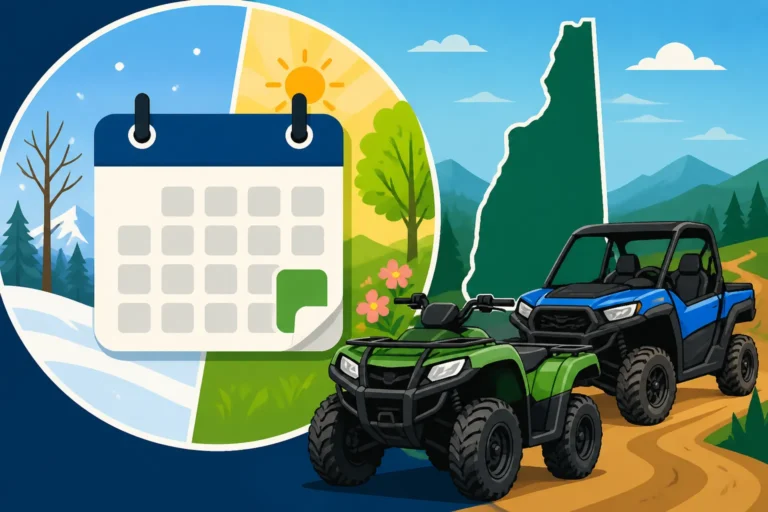
New Hampshire's OHRV registration year runs from May 1st to April 30th for wheeled OHRVs, and from November 1st to October 31st for snowmobiles. This split registration year acknowledges the distinct riding seasons for each machine type. While it might seem like a small detail, the timing of your registration can impact how much value you get from your annual fee. For example, if you register your snowmobile late in the season, you're still paying the full annual fee for a potentially shorter riding window. However, the system is set up this way to ensure consistent funding for trail maintenance year-round, preparing for the next season. It's always a good idea to register early in the season to maximize your riding time. For those bringing a machine into the state for a short visit, there are also short-term options, like the ten-day nonresident registration, though this is typically only available for wheeled vehicles. Make sure you know [When New Hampshire Registration Applies] to avoid any issues. For those who frequently visit or have a camp here, the annual registration, especially with a club discount, almost always makes the most financial sense.
Disclaimer
This article is for general informational purposes only and does not constitute professional advice. Laws, prices and regulations vary by location and change over time. Consult a qualified professional for guidance on your specific situation.