What a New Hampshire ATV Rental Includes
A New Hampshire ATV rental can look like a simple machine-and-keys deal, but the details shape your whole ride. Helmets, fuel, registration, trail access, route help and damage terms may be handled separately. Here’s what rental packages commonly cover, what to verify before booking, and how to arrive ready to ride.
What a New Hampshire ATV rental may include
There isn’t one standard rental package across New Hampshire. What’s included depends on the rental company, machine, rental length and location. A basic booking may cover the vehicle and a safety briefing; another package might also provide helmets, a mapped route or trail access. Treat every inclusion as something to confirm, not an assumption.
| Item | Often included or arranged by the rental shop | What to confirm |
|---|---|---|
| ATV or side-by-side | The machine reserved for your rental period | Exact model, seat count, passenger rules and pickup time |
| Registration | The rental company may handle registration for its machine | Whether the machine is registered for the places you’ll ride |
| Helmet | Some shops provide one | Sizes, condition and whether every rider gets one |
| Orientation | Often includes controls and basic operating instructions | How much time is set aside and what route or trail rules are covered |
| Fuel | Policies differ | Whether you start with a full tank and how to return the machine |
| Route or GPS support | A map, suggested route or GPS help may be available | Whether navigation is included, loaded for you or an add-on |
| Trail access | May be included, sold separately or limited by the booking | Which trails you may use and whether any day-use fees apply |
| Damage coverage | Some companies offer protection options; others rely on the rental agreement and your responsibility | Deductibles, exclusions and charges for damage, recovery or cleaning |
The machine itself is only one piece of the outing. You also need to know where it can go, who may drive it, what gear you must bring and what happens if something goes wrong. A few specific questions before paying can prevent an unpleasant surprise at pickup.
When comparing options, check What a New Hampshire ATV Rental Includes only if you are reading another page with a different rental focus; for this topic, compare package details directly with [New Hampshire ATV Rental Cost] and Booking a New Hampshire ATV Rental. The listed rental duration and advertised vehicle type don’t tell you everything about the actual ride.
The machine, passengers and pickup process
Start by confirming exactly what you booked. “ATV” and “side-by-side” describe different kinds of machines, and a listing may show a particular model or a representative vehicle rather than guarantee the exact unit. Ask the shop what you’ll receive, whether a substitute is possible and whether the seating layout fits your group.
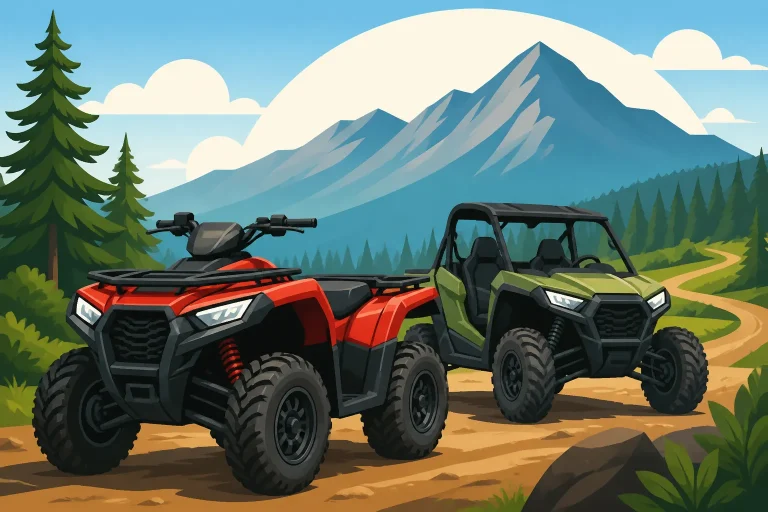
An ATV is generally designed for a rider to sit astride the machine. A side-by-side has seats and a steering wheel, and may have room for a passenger or several passengers. Capacity is not a suggestion: don’t assume that a child can ride on a lap or that a machine can carry more people than its approved seating allows. Confirm passenger age, restraint and seat requirements with the rental company before booking.
If you are considering a UTV, verify that the booking is for a side-by-side and that the passenger count matches the actual machine. A listing that says “four-seat” is not a guarantee that every passenger can ride without restrictions. The rental operator can explain who may drive, what passengers must do and whether the route suits the machine’s size. For more on the differences in booking and operation, see Renting a Side-by-Side in New Hampshire.
Before you commit, ask whether the quoted rental time includes the shop briefing and return process. The clock may start at a set pickup time, not when you reach the trail. You may need to arrive early for paperwork, fitting gear and instruction, and you’ll need time to return the machine and report any issue. Confirm the start and end times, what happens if you arrive late and how the shop handles a late return.
At pickup, take a moment to inspect the machine with an employee. Look at visible body damage, tires, lights, mirrors, seat belts and any supplied equipment. If something looks damaged or doesn’t work, point it out before departing and ask for it to be recorded. Taking your own clear photos can help document the machine’s starting condition. This is a straightforward precaution, not a substitute for the rental company’s check-in procedure.
Rental shops may require a valid driver’s license, a minimum age, a credit card or other forms of identification. Requirements vary by operator and by who will drive. A passenger may have different requirements from the primary driver, while a person who books a machine may not be the only person allowed to operate it. Read New Hampshire Rental Age and License Rules and confirm the shop’s current policies for everyone in your group.
Registration and trail access are separate questions
A rental machine’s registration and permission to ride a particular trail are related, but they are not the same thing. A rental company may manage the machine’s registration, but that does not mean every trail, road or property is open to it. Ask what the rental company handles and what access is included in the package.
In many rentals, the vehicle is supplied as a business-owned machine, and the operator takes care of the machine’s registration. Still, confirm that directly. Ask whether the rental machine is registered for the planned ride and what documents, decals or instructions you should expect to see. The question Does a Rental Come With Its Own Registration? covers why this matters; a renter shouldn’t assume that having a rental agreement is a replacement for whatever registration the machine needs.
Then ask where you’re allowed to ride. “Trail access included” can mean different things: perhaps a rental leaves from a location connected to an open trail network, or perhaps a particular access fee is part of the booking. It may not mean that all local trails are open, that every route suits your vehicle, or that you can ride anywhere beyond the designated network. Check New Hampshire Rentals That Include the Trail Access for the distinction between a machine rental and access arrangements.
Access can depend on the route, season, landowner permission, trail conditions and machine dimensions. Some trail systems have width restrictions. A wide side-by-side may not fit on every route, even if it is available to rent nearby. A trail can also close after a rental is booked. Ask which routes the shop recommends for your machine and how to check for closures before leaving.
A rental company’s map or route suggestion is not permission to leave the approved route. Stay on open, designated trails and obey posted signs and closures. Don’t assume that an unmarked woods road, a field or a connecting track is available for recreational riding. If a route crosses private property, the required access depends on the land and permissions in place; the rental agreement does not give you blanket permission to roam.
A separate fee may apply at a destination or riding area even when the rental includes a machine and trail access. Jericho Mountain State Park, for example, may have a day-use fee separate from your rental. Ask the shop whether your package includes that specific charge, whether you pay it at the site or whether it is not part of your itinerary. Check current information with the operator and destination rather than relying on an old listing.
Helmets, clothing and other gear
Ask whether helmets are included, how many are available and what sizes the shop carries. If you’re booking for more than one rider, confirm that each person who needs a helmet will have one that fits. Don’t assume the helmet shown in a photo is part of the rental, or that one size can be adjusted to fit everyone.
Even when a helmet is supplied, it’s worth checking its fit and condition before riding. It should sit securely and be comfortable enough to wear for the whole trip. Ask the shop for help if you’re unsure how to adjust it. For legal requirements that apply to riders, including age-related rules, see New Hampshire Helmet Law for OHRV Riders. Rental equipment doesn’t override state requirements.
Eye protection deserves its own check. A helmet may not include goggles or a face shield, and a helmet’s design does not automatically satisfy every rider’s eye-protection needs. Dust, debris, insects and branches can make eye protection important even on a dry day. Ask whether goggles are provided and bring suitable protection if they aren’t. Why Eye Protection Is Still Your Job explains why it’s best to confirm rather than count on the rental counter to solve this.
The operator may provide other equipment, but don’t assume it will. Gloves, rain gear, warm layers, boots and a change of clothes are common items to ask about or bring yourself. A rental is an outdoor ride, not a promise that weather protection is included. Conditions can change, and trails may be wet, dusty or muddy. Wear clothing that can handle the conditions and footwear that stays secure while operating the machine.
For a side-by-side, ask what restraints or other passenger safety equipment are fitted, and how passengers are expected to use them. For an ATV, ask the shop to explain the vehicle’s approved riding position and passenger rules. Don’t add a passenger to a machine that isn’t designed or authorized to carry one.
If your group includes children, ask the rental company about their minimum ages, passenger policies and any extra equipment needed. A child’s size, ability to sit safely and understanding of instructions all matter. The operator may restrict children from driving or riding in certain machines even when a child can legally be present under applicable rules. Confirm the requirements for your particular booking instead of relying on a general description of the machine.
Fuel, route maps and help on the trail
Fuel policies vary. One rental might begin with a full tank; another may provide a different starting level or expect you to handle refueling before return. Ask how fuel is measured and billed, whether a fuel stop is available on the route and what to do if the machine gets low before you reach one. New Hampshire Rental Fuel Policy is a useful companion when you’re checking what fuel arrangements a rental might have.
Don’t plan a long ride based only on the machine’s advertised range. Actual fuel use can depend on terrain, load, riding style, weather and route conditions. Your rental operator can suggest a route and explain any known fuel options, but build in a sensible margin. If the route has few services, ask whether the company offers a safe way to carry additional fuel or whether you should choose a shorter ride.
Navigation support may be another inclusion. A shop might offer a paper map, point out a recommended loop or load a route onto a GPS device. Those are different levels of support. Ask whether the map or device is included, whether someone will show you how to use it and whether it remains useful if your phone has no service. See Mapped Routes and GPS Support for more on what to clarify.
A route map helps you follow the planned ride; it is not a guarantee that every segment will be open. Check trail status close to your departure and follow closure signs on the ground. A route may need to change because of weather, maintenance, landowner restrictions or seasonal access. If your phone’s battery, signal or mapping app is your only navigation plan, consider a backup.
Ask what assistance the rental company provides if the machine develops a problem. Clarify the contact method, the hours when help is available and what location information you should provide. In a remote area, “call the shop” may not be practical if you have no cell signal. Get instructions before leaving and keep the relevant contact information accessible.
Also ask what to do in common situations: a flat tire, a machine that won’t start, a minor collision, an injury, getting separated from the group or an unexpected trail closure. Don’t attempt a repair or recovery beyond your ability. Follow the shop’s instructions, keep the group together where safe and use emergency services for an emergency.
A useful briefing should cover more than the throttle and brake. It should explain how to start and stop the machine, use its controls, respond to basic warning indicators, travel as a group and follow the approved route. If you have not used that vehicle type before, say so. Ask for a slower walk-through before you ride away rather than trying to work out unfamiliar controls on the trail.
Damage terms, deposits and exclusions
The rental agreement is where the practical limits of the package become important. It describes what you are responsible for, what the company considers damage and whether there are charges for cleaning, recovery, late returns or other situations. Don’t treat the deposit or card authorization as the maximum you could owe unless the agreement clearly says that.
Ask how the rental company handles damage and whether it offers any optional protection. If it does, request the written terms and check what is excluded. Coverage options can have limits and conditions, and the word “protection” alone doesn’t explain who pays for what. Make sure you understand responsibility for damage to the machine, damage to another person’s property, injury and recovery costs; these may be treated differently.
Look closely at the permitted-use rules. The agreement may restrict where you can ride, who can operate the machine and whether you may take it beyond a specified area. It may prohibit riding under the influence, racing, carrying extra passengers or using an unapproved route. A violation can affect your responsibility even if you selected an optional protection product. New Hampshire Rental Damage Charges is relevant when you’re comparing how companies explain damage and recovery.
Clarify whether the rental price includes cleaning and what condition the vehicle must be in at return. Mud is part of many trail rides, but that does not mean every rental company treats a heavily soiled machine the same way. Ask how the shop distinguishes ordinary trail dirt from cleaning that may trigger an extra charge. Follow the company’s return instructions and don’t wash a machine unless the operator says where and how to do it.
A late return can affect the next booking and may bring a charge under the agreement. Set a turnaround time that leaves room for a slow trail, a wrong turn or a delay at the fuel stop. If you expect to be late, notify the shop as soon as you can. A short, early conversation is better than returning after closing with no way to report an issue.
Read the cancellation and weather policy before paying. Trail closures, poor conditions, operator decisions and a customer’s change of plans may be handled differently. Ask whether the shop reschedules, issues a refund or applies other terms in each case. Don’t assume that the booking platform’s general policy overrides the rental company’s agreement. See New Hampshire Rental Cancellation Policies and get the answer for the exact reservation you’re making.
If you book through a marketplace or travel platform, confirm which business is actually operating the rental and who handles changes, cancellation and customer support. A listing can help with discovery, but the operator’s rental contract governs important details. Polaris Adventures may help travelers find participating experiences, and Viator may list activities from local operators; check the specific listing and operator terms rather than assuming the same inclusions apply across bookings.
How to verify your package before booking
A short written checklist makes it easier to compare rentals and avoid relying on a vague “everything included” description. Ask the rental company to answer the details for your actual date, machine and group.
- Confirm the vehicle. Ask whether the reservation is for an ATV or side-by-side, what seating configuration is included and whether the exact model is guaranteed.
- Check who can drive and ride. Confirm age, license, passenger and supervision rules for every person in your group. Ask whether the company has stricter policies than the general rules.
- Ask about safety gear. Confirm helmet availability and sizes, and whether goggles or other items are provided. Make a list of what you need to bring.
- Verify registration and access. Ask whether the rental machine is registered for the planned ride, which routes are approved and whether any separate trail or destination charges apply.
- Clarify fuel and navigation. Find out how the tank is supplied and returned, whether maps or GPS support are included and what backup is recommended.
- Read the financial terms. Check the payment requirements, any card hold or deposit, damage responsibility, optional protection, cleaning rules and possible recovery or late-return charges.
- Get the cancellation and closure policy. Ask what happens if you cancel, the shop closes the ride or a trail becomes unavailable.
- Confirm pickup and return logistics. Note the shop’s location, check-in time, rental period, orientation time and the process for reporting a problem.
When comparing listings, put the answers side by side rather than comparing only the vehicle name and rental duration. A slightly different package can be a better fit if it includes a route that suits your group, usable helmets and clear assistance arrangements. Conversely, a package that advertises more equipment may still leave important questions unanswered about trail access or damage responsibility.
Keep confirmation details somewhere you can reach them on the day. Save the operator’s phone number, pickup instructions and any route information offline if possible. If someone else in your party will drive, make sure they know the check-in requirements and that the operator has approved them. Don’t rely on a friend’s understanding of the booking to fill gaps in the written terms.
Before leaving, listen to the full orientation even if you’ve ridden before. Similar-looking machines can have different controls and handling. Ask what to do if you encounter a closed trail, an oncoming group, a road crossing or a mechanical problem. The company’s route instructions and applicable riding rules still matter after you leave the parking area.
Frequently Asked Questions
Do New Hampshire ATV rentals usually include helmets?
Some do, but policies and sizes vary. Ask whether every rider will receive a properly fitting helmet, and confirm whether goggles or other eye protection are included. Bring suitable gear if the operator does not supply it.
Is trail access automatically included with the machine?
No. A rental can include the vehicle without including every trail or any separate day-use charge. Confirm the approved riding area, any access fees and whether the trails suit the machine you booked.
Does a rental machine need its own registration?
The rental company may handle registration for its machine, but confirm that the vehicle is properly registered for the planned use and ask what documentation or instructions you should have. A rental agreement and trail access are separate issues.
Should I bring fuel?
Check with the operator. Fuel may be supplied, included at a particular level or handled another way. Ask about refueling on the route, the return policy and what to do if you run low.
What should I do if the machine is damaged during the ride?
Follow the rental company’s reporting instructions and contact it promptly. The agreement explains damage responsibility and any recovery or other charges, so read those terms before departing and document the machine’s condition at pickup.
Disclaimer
This article is for general informational purposes only and does not constitute professional advice. Laws, prices and regulations vary by location and change over time. Consult a qualified professional for guidance on your specific situation.