Registering a Quad You Trailer in New Hampshire
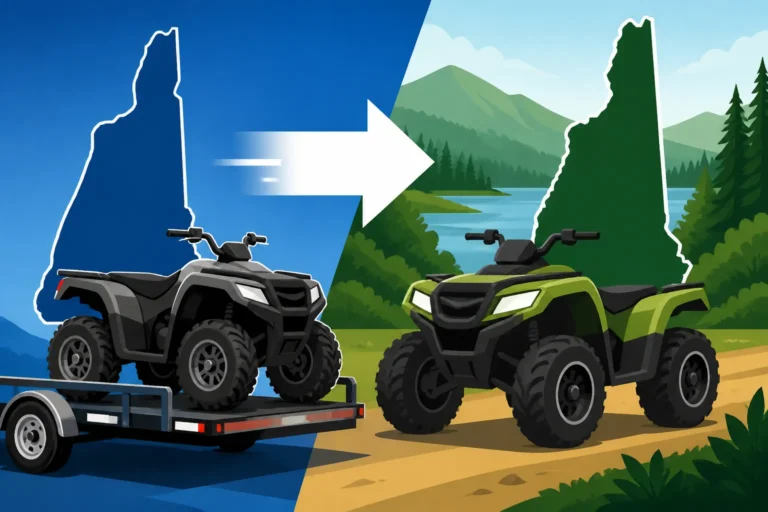
You’ve finally loaded up your quad, secured it tightly to the trailer, and you're dreaming of hitting those incredible New Hampshire trails. But then a little voice creeps in: "Wait, do I need to register my machine in New Hampshire even if it's already registered back home?" It’s a common question, and one that can cause a lot of headaches if you don't have the right answer before your tires ever touch a trail. This guide is here to unravel the confusion around registering your off-highway recreational vehicle (OHRV) in the Granite State, especially when you're just trailering it in for a visit, ensuring your adventure starts with peace of mind, not a ticket.
The Essential Truth: Your Trailered Quad Needs New Hampshire Registration
It's a moment many riders experience: you've driven hours, your OHRV is perfectly loaded, and you're ready to unload and hit the dirt. But whether you're coming from Maine, Massachusetts, Vermont, or beyond, the simple act of trailering your quad into New Hampshire doesn't exempt you from its registration requirements. The moment your tires are on any public trail or land in New Hampshire, you need to be properly registered with the state. This often comes as a surprise to riders who assume their home state's registration is enough, leading to frustration and sometimes costly fines.
Why "Out of State" Doesn't Mean "Out of Rules"
One of the biggest misconceptions we hear from riders is the idea of reciprocity. People often think, "My ATV is registered in my home state, so why would I need another one for a short trip to New Hampshire?" Unfortunately, when it comes to OHRVs, New Hampshire doesn't have reciprocity agreements with neighboring states or provinces like Maine, Vermont, Massachusetts, or Quebec for a simple reason: all the registration money collected in New Hampshire goes directly back into maintaining the trails, building bridges, and funding the volunteer clubs that make riding here so spectacular.
Imagine if everyone just brought their out-of-state registrations; the very trails you want to ride wouldn't have the funding to exist. This can feel like a bit of a burden, especially if you're only visiting for a weekend, but it's crucial for understanding why New Hampshire maintains its strict policy. It ensures that the responsibility for trail maintenance is shared by everyone who benefits from the vast network of trails across the state. Without these funds, the incredible riding opportunities we all enjoy simply wouldn't be possible.
When Does New Hampshire's Registration Requirement Kick In?
The rule of thumb in New Hampshire is straightforward: if you're leaving your own private property and riding on any public OHRV trail, designated public land, or crossing a public way, your machine needs to be registered. This applies whether you're riding a quad, a side-by-side, a dirt bike, or any other OHRV. It doesn't matter if you're just going a quarter-mile down a trail to get to another piece of private property, or if you're embarking on a multi-day journey across the [Ride the Wilds in Coos County].
The moment your machine's tires leave the confines of your private land – say, your camp property, a friend's private lot, or a dedicated private riding park – and touch a state-managed trail, a club trail, or even a designated OHRV road crossing, you must have a valid New Hampshire registration and decals displayed. This is particularly important when you consider [Leaving Your Own Property in New Hampshire], as even short excursions onto public access points can lead to interactions with Fish and Game officers or local law enforcement. It's best to simply consider any ride outside fully private land as requiring registration.
Navigating the New Hampshire OHRV Registration Process for Trailered Machines
So, you've accepted the fact that your machine needs a New Hampshire registration. Now what? The process might seem a little daunting at first, especially if you're used to different systems in other states, but it's quite manageable once you know the steps. The key is to arrive prepared with the right documents and understand the options available to you, whether you're a temporary visitor or planning many trips to the Granite State.
Gathering Your Paperwork: What You'll Need
Getting your quad registered starts with proving ownership and identity. For a machine you're trailering in, you'll generally need your proof of ownership, such as a bill of sale, a previous registration from your home state, or a certificate of origin if it's a newer machine. New Hampshire doesn't issue titles for OHRVs, which can be a point of confusion, so your bill of sale is often the most critical document. If you've recently purchased your machine, especially through a private sale, make sure you have a clear, signed [New Hampshire ATV Bill of Sale Requirements] document. Resources like LawDepot can provide easy-to-use templates for bills of sale, ensuring you cover all the necessary details.
In addition to ownership proof, you’ll need a valid form of identification, such as a driver's license. If you're a New Hampshire resident, you'll also need proof of residency, like a utility bill or a New Hampshire driver's license. Non-residents, of course, just need their ID. It’s always a good idea to bring all original documents, even if copies are accepted, just to be safe. You'll also be filling out the [New Hampshire OHRV Registration Application], which requires details about your machine (make, model, VIN) and personal information. Having all this readily available will significantly speed up the process at the registration agent.
Choosing Your Registration Path: Options for Visitors and Residents
New Hampshire offers a couple of pathways for registration, depending on how often you plan to ride here. For residents or non-residents who anticipate frequent trips to the state, the annual registration is typically the most cost-effective and convenient. This registration is valid from May 1st through April 30th of the following year, regardless of when you purchase it. So, if you plan to come up multiple times a season, or even just for one extended trip, this is likely your best bet.
However, if you're truly just planning a single, short visit – say, a long weekend – then the [New Hampshire's Ten-Day Nonresident Registration] might be an option to consider. This special registration is specifically for wheeled OHRVs (not snowmobiles) and is valid for ten consecutive days. While it offers a lower initial cost, it’s worth doing the math. If you're coming for two or more short trips, or one trip longer than ten days, the annual registration will almost certainly be a better value. We've got a whole article dedicated to [Registering an Out-of-State Machine in New Hampshire] that dives deeper into these options.
Understanding Costs and Maximizing Your Savings
Nobody wants to pay more than they have to, especially when you're just trying to enjoy your hobby. While New Hampshire's registration fees contribute directly to the trails we love, it's still smart to be aware of the costs involved and how you might be able to reduce them. The fees aren't just arbitrary numbers; they reflect the investment needed to maintain thousands of miles of trails.
Breaking Down the Fees: What to Expect
When you go to [Registering an OHRV in New Hampshire], you'll encounter a few different cost components. There's the base registration fee, which varies depending on whether your OHRV is a wheeled vehicle (like an ATV, UTV, or dirt bike) or a snowmobile. Generally, snowmobile registrations are a bit higher, reflecting the more extensive grooming and maintenance required for winter trails. On top of the base fee, there's a small additional surcharge that is added to every registration, regardless of machine type. This supplemental fee contributes to specific administrative and programmatic needs within the OHRV system.
Since specific prices can change, I won't list exact figures here, but it's always wise to check the current rates on the New Hampshire Fish and Game website or with an authorized registration agent before you head out. Understanding the different categories – resident vs. nonresident, wheeled vs. snowmobile – will help you anticipate your exact [New Hampshire OHRV Registration Cost]. Just remember that these fees are an investment in the incredible trail system that New Hampshire offers, directly funding everything from bridge repairs to signage.
The Club Member Discount: Your Best Friend for Savings
Here’s where you can really make a difference in your registration cost, whether you're a resident or a non-resident: join a New Hampshire OHRV club! New Hampshire actively encourages riders to support the volunteer clubs that do the bulk of the trail work. To incentivize this, the state offers a significant discount on your annual OHRV registration if you are a member of an approved New Hampshire OHRV club. This isn't just a minor discount; it’s typically a substantial amount, often around $30 off the standard registration fee. This makes joining a club a win-win: you save money, and you support the very organizations that keep the trails open and rideable.
To take advantage of this, you simply need to present proof of your club membership when you register your OHRV. This usually means a current membership card or a receipt showing your paid dues. For nonresidents, this discount is particularly attractive, as it brings their fee closer to what a resident club member pays. Even if you're only visiting, joining a club for the season can easily pay for itself with the registration discount, not to mention the benefits of local knowledge and camaraderie. Our article [Why Club Membership Saves $30 in New Hampshire] explains this in more detail, and you'll find that the [New Hampshire's Club Member Discount] is a real game-changer for many riders.
Getting Your Decals and Hitting the Trails Legally
Once you've navigated the paperwork and paid your fees, the final step is to make sure your machine is properly marked and that you have your proof of registration with you. This isn't just a formality; it's what ensures you can ride legally and avoid any potential issues with law enforcement or trail patrols.
Decal Placement and What to Carry
When you successfully register your OHRV, you'll receive two key items: a printed certificate of registration and two adhesive decals. The certificate is your official proof of registration and should always be carried with you when you ride. I recommend keeping it in a waterproof bag in a secure compartment on your machine, or even a well-protected wallet, to prevent it from getting lost or damaged. You'll also receive two decals that must be affixed to your OHRV in a visible manner. Typically, one decal goes on each side of the machine's forward half, making them easy for trail patrols to spot. The specific placement might vary slightly depending on your OHRV type (ATV, UTV, dirt bike), but the goal is clear visibility.
Failing to properly display your decals or not having your [New Hampshire's Printed Certificate and Two Decals] with you can lead to a stop by a New Hampshire Fish and Game officer. While some officers might offer a warning if your certificate is truly just "at home," it's always better to be prepared. Riding an unregistered OHRV on public land is a violation and can result in fines, so always double-check you have everything before you unload your machine from the trailer.
Where to Actually Register Your OHRV
You have several convenient options for where to register your OHRV in New Hampshire, making the process fairly accessible. The most common places are authorized registration agents, which include many New Hampshire town clerks' offices, and licensed powersports dealers. Many of these agents can process your registration on the spot, issue your decals, and print your certificate. If you're buying a new or used OHRV from a dealer in New Hampshire, they can often handle the registration for you right there, which is incredibly convenient.
Another option for some renewals, if you have all your previous information, might be online through the New Hampshire Fish and Game Department's website. However, for initial registrations, especially for out-of-state machines, visiting an agent in person is usually the most straightforward way to ensure all documentation is correctly verified. Our article [Where to Register an OHRV in New Hampshire] gives a detailed breakdown of each option. No matter which method you choose, it’s about making sure you’re properly equipped to enjoy the vast and beautiful OHRV trail network that New Hampshire has to offer. And remember, if you need to prepare any documentation for a private sale before registering, services like LawDepot can be helpful for ensuring you have all your paperwork in order.
| Feature | Annual Nonresident Registration (Without Club) | Annual Nonresident Registration (With Club) | Ten-Day Nonresident Registration (Wheeled Only) |
|---|---|---|---|
| Eligibility | All nonresidents | Nonresidents with NH OHRV Club Membership | Nonresidents, Wheeled OHRVs only |
| Validity Period | May 1st to April 30th (full season) | May 1st to April 30th (full season) | 10 consecutive days |
| Cost | Higher standard rate | Significantly reduced rate | Lower initial rate |
| Best For | Frequent visitors, extended stays | Any nonresident seeking savings | Single, very short visits (e.g., a long weekend) |
| Club Membership | Not required | Required (proof needed) | Not required |
| Value over time | Less cost-effective for multiple visits | Most cost-effective for multiple visits | Least cost-effective for multiple short visits |
Disclaimer
This article is for general informational purposes only and does not constitute professional advice. Laws, prices and regulations vary by location and change over time. Consult a qualified professional for guidance on your specific situation.