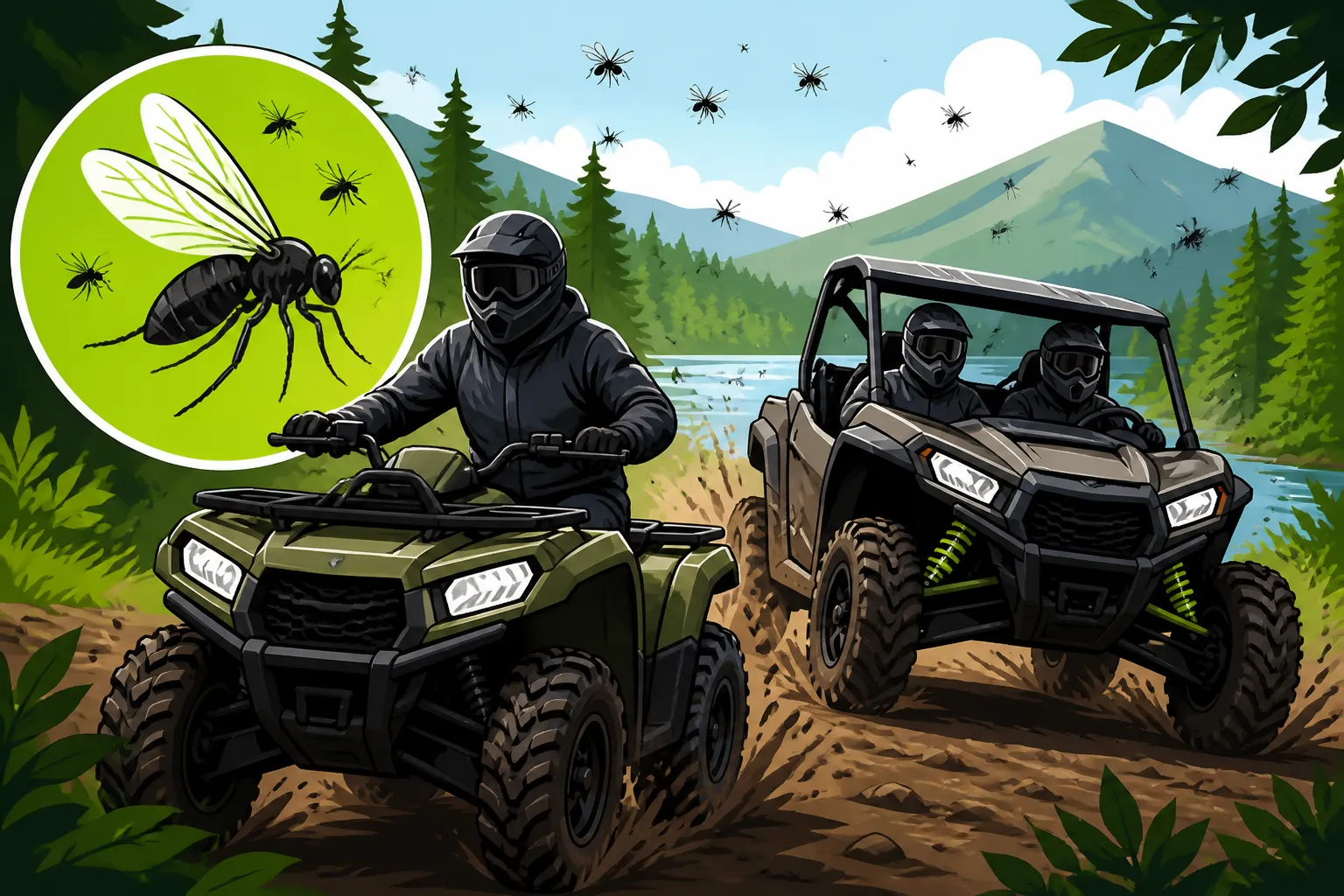
New Hampshire Riding in Blackfly Season
Blackflies can turn a quiet New Hampshire trail ride into a miserable one, especially when the air is still and riders stop in damp, wooded areas. Their numbers and timing vary with weather and location, so planning matters as much as packing repellent. This guide covers when to expect them, how to prepare, and how to choose a legal route without letting bugs—or changing trail conditions—catch you off guard.
When Blackflies Affect New Hampshire Trail Riding
Expect a changing season, not a fixed calendar
Blackfly season in New Hampshire is commonly associated with late spring and early summer, but there is no dependable date when the insects suddenly appear or disappear. Temperature, rain, local waterways, and the particular conditions in a given year all influence what you encounter. A ride near Pittsburg may feel different from a ride farther south, and a breezy afternoon can be more comfortable than a calm morning in the same area.
For riders, the useful takeaway is to treat blackfly season as a possibility rather than a short, precisely scheduled window. Check the forecast close to your ride, but remember that a weather app will not tell you how many insects are on a specific trail. Ask a local club, lodge, or rental shop about recent conditions when you can. Their observations can help you decide whether to stick with a shorter loop, wear a head net, or postpone a ride that would involve long stops outside.
Blackflies are also only one part of spring riding conditions. Trails may still be closed or recovering from mud season even when the weather feels inviting. Before hauling machines north, review [New Hampshire's Mud Season Ban] and [New Hampshire Trail Opening Day]. A sunny weekend is not a reason to ride around a closure, bypass a barrier, or assume that every winter corridor is open to ATVs and UTVs.
Notice the places and moments when bugs feel worse
A ride can feel pleasant while the machine is moving and become uncomfortable the moment everyone stops. Blackflies may be especially bothersome in sheltered, shaded areas where the air is still, near wet ground, or at a trailhead where riders gather without much airflow. A group waiting beside a machine to check a map can become a much easier target than the same group moving along an open stretch.
That difference affects how you plan breaks. Rather than stopping at the first quiet-looking pull-off, keep an eye out for a place with some breeze and enough room to park safely without blocking the trail. If someone needs to adjust a helmet, answer a call, or check directions, make the stop deliberate. Pull fully out of the travel lane, keep the group together, and avoid lingering in a tight cluster when bugs are swarming.
Conditions can change over the course of a day, too. A breezy morning may give way to a still, warm afternoon, while a shaded trail section may feel very different from a more open connector. Build flexibility into your route instead of assuming that a planned lunch stop or scenic pause will be comfortable. A shorter ride with a useful turnaround option is often a better choice than pressing on simply because the group expected to complete a long loop.
Prepare Your Clothing and Bug Protection
Dress for protection as well as comfort
A head net can make a major difference when blackflies are active, especially when you have to stop. Choose one that fits comfortably over your helmet or other headwear without blocking your view or interfering with straps. If you are buying gear specifically for a ride, try it on before leaving home. A net that bunches against your face, catches on your goggles, or restricts movement can become its own distraction.
Long sleeves, long pants, gloves, and closed footwear help reduce exposed skin. Lightweight layers can be more comfortable than heavy clothing when the ride is warm, but fit matters: loose fabric that flaps or snags is not a good choice on an ATV or UTV. Make sure cuffs and openings sit securely, and check that your clothing does not interfere with controls, protective equipment, or your ability to get on and off the machine safely.
For a UTV, do not assume the cab will keep insects out. Open windows or doors, ventilation, and stops can still leave riders exposed. Bring a head net or other suitable protection even if you expect to spend most of the day inside the vehicle. Also pack an extra layer in a place where it will stay clean and dry; once someone has removed a sweaty shirt or soaked a jacket, spare clothing can make the ride home much more comfortable.
Use repellent carefully and pack for the whole group
If you use insect repellent, follow the product label and apply it as directed. Keep it away from eyes, mouth, and damaged skin, and take care around helmets, visors, goggles, and machine surfaces. Some products may affect materials, so avoid spraying near plastics or lenses unless the label says it is appropriate. Applying repellent before gearing up can be easier than trying to manage it with gloves on at a busy staging area.
Pack supplies where you can reach them without unloading the whole machine. A small kit might include repellent, a head net, spare gloves, tissues, drinking water, and a sealable bag for used or contaminated items. For a group, check that everyone has what they need rather than assuming one person’s bottle will cover the whole day. Children and passengers may need extra help fitting protective gear comfortably and applying products according to the label.
A brief stop to reapply or adjust gear is easier when you have already chosen a safe place to pull over. Keep the machine stationary, away from other trail users, and follow the trail’s parking and access rules. If someone is reacting badly to bites or is too uncomfortable to continue, treat that as a reason to shorten the outing. No planned route is worth pushing a rider past their limits.
Choose a Route With Conditions in Mind
Confirm that the trail is open before you travel
Spring is a tempting time to get back out, but trail access depends on local openings, landowner permissions, weather, and maintenance. A route shown on a map may cross trails that are closed, temporarily restricted, or not intended for the type or width of machine you are riding. Checking several days ahead is helpful; checking again before departure is better.
Start with the club responsible for the area and look for its latest trail notices. [New Hampshire Trail Status Before You Ride] and [New Hampshire Trail Conditions Before You Ride] are useful topics to keep in mind when building a pre-ride routine. Some clubs post conditions frequently, while others may share updates through a trail-status board or local contacts. [Checking the Trail Status Board] and [Clubs That Post Trail Conditions Every Day] can help you understand where to look for timely information.
Do not treat a map app as proof that a trail is open. onX Offroad can be useful for reviewing a route and understanding where you are, but compare what you see with current club and land-manager information. Keep a route option that allows you to turn back if a closure, soft section, or weather change makes continuing a poor choice. A responsible turnaround is part of planning, not a failed ride.
Build a shorter loop with easy exit points
During blackfly season, a route with natural places to stop or turn back can be more appealing than a long out-and-back with few options. Before starting, identify the general direction of travel, a realistic turnaround point, and the places where your group might safely regroup. Avoid planning stops in narrow trail sections or assuming you can park wherever the map looks open.
This is also a good time to consider the group’s pace and experience. New riders may need more frequent pauses to check controls, adjust helmets, or sort out navigation. Those stops can become uncomfortable if the group has no plan for them. A shorter loop near a staging area gives everyone a chance to see how the day feels before committing to a longer ride. If the bugs are intense, or a rider is tired, you can end the outing without being far from the trailer.
Use onX Offroad or another navigation tool to review the route before you leave, and save the information you need for areas where cell service may be unreliable. A digital map can help with orientation, but it should not replace posted signs, official closures, or local trail maps. [New Hampshire Trail Maps From a Club] is a good reminder to consult the club that manages the trails you intend to ride. For northern routes, plan around the possibility of limited signal with [Cell Dead Zones in the North Country] in mind.
| Planning choice | Why it helps during blackfly season | What to check |
|---|---|---|
| Short loop near the staging area | Makes it easier to shorten the ride if bugs or weather become uncomfortable | Trail opening notices and machine-width limits |
| Route with safe regrouping areas | Reduces rushed stops and keeps the group organized | Legal pull-offs and places that do not block the trail |
| Offline navigation backup | Helps when cell service is weak | Downloaded map details and a club map |
| Flexible turnaround point | Lets the group change plans without pressing on | Current trail status and any posted closures |
| Earlier check-in with local contacts | Adds context about recent conditions | Club updates, lodge advice, or trailhead notices |
Ride Safely and Respect Access Rules
Do not let discomfort lead to rushed decisions
When bugs are biting, it is natural to want to get moving quickly. Still, take the time to put on helmets, secure protective gear, check passengers, and make sure everyone understands the route. A hurried start can lead to overlooked straps, forgotten supplies, or confusion at a junction. Give the group a few minutes to get organized, even if standing still feels unpleasant.
Set a simple regrouping plan before riding. Agree on what the group should do if riders become separated, and choose clear places to pause rather than stopping unpredictably. Keep the pace appropriate for the least experienced rider and for the trail surface. Wet or soft ground can be damaged easily, and trying to rush through a difficult section may increase the risk of losing control or getting stuck.
If a rider needs to pull over because of discomfort, fatigue, or a gear problem, make the stop safe first. Move out of the path of other machines when possible, communicate clearly, and avoid blocking a junction or crossing. If a rider cannot focus on operating the machine because they are swatting insects or struggling with equipment, take a proper break or turn back. A calm decision is safer than trying to push through distraction.
Follow the trail network’s rules and protect access
A trail appearing on a digital map does not automatically mean it is open to public OHRV use. Stay on marked, authorized routes, respect signs and barriers, and do not cut across private land to avoid a closure. Access in New Hampshire depends on the permissions and agreements that allow trails to cross different properties. One person’s shortcut can create a problem for an entire club network.
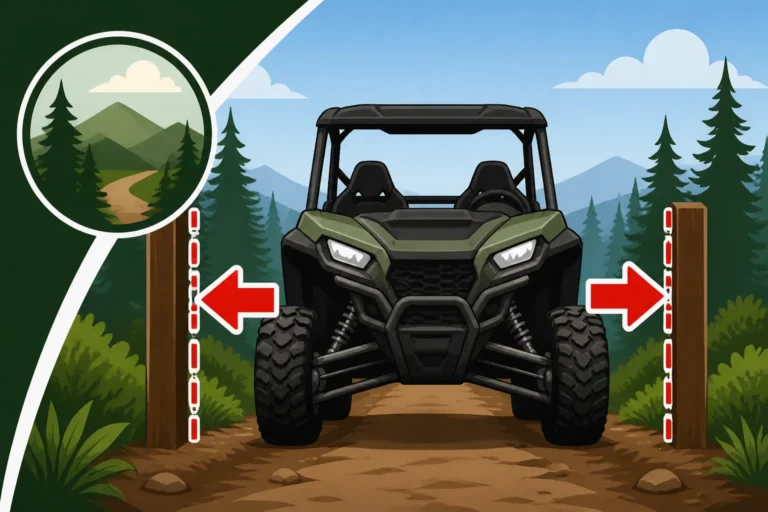
Confirm that your ATV or UTV fits the route’s limits, and check whether a trail has restrictions that apply to your particular machine. Width matters on some corridors, and a route that works for a narrow ATV may not be suitable for a wider side-by-side. For more on route planning, see [New Hampshire Trails for a Wide Machine]. If you are unfamiliar with the area, ask the local club or trail contact rather than relying on a guess at a junction.
Before the ride, make sure the machine is properly registered for the riding you plan to do and that you have the required documents and safety equipment. Pack out wrappers, used wipes, and other litter, and avoid disturbing wildlife or damaging wet trail edges. Blackflies are temporary; access depends on riders showing respect for landowners, other trail users, and the clubs that maintain the routes.
Make a Practical Blackfly Season Ride Plan
Prepare the machine and the people riding it
A little preparation at home can prevent an uncomfortable scramble at the trailhead. Check the machine, fuel level, tires, lights, and other basic items before loading it. Pack protective gear where it will stay clean, and keep insect supplies separate from food and spare clothing. If you are carrying fuel for a longer route, review [Carrying Fuel on a Long Loop] and follow safe handling practices.
For a family or mixed-experience group, do a quick comfort check before departure. Make sure each rider has suitable clothing, eye protection, and a way to protect their face and neck from insects. If children are riding, consider whether they can tolerate a head net and whether it fits without interfering with their helmet. A ride that is manageable for an adult may be exhausting for a younger rider who is hot, tired, or bothered by bites.
Agree on a few basic decisions in advance: who leads, who follows, where the group will regroup, and what conditions mean you will turn around. For example, the group might choose to shorten the ride if the trail is muddy, the wind drops and insects become intense, or someone is no longer comfortable operating. Naming those limits beforehand makes it easier to follow through without anyone feeling pressured to keep going.
Use a simple go-or-change-the-plan checklist
Before leaving, check whether the trails are open, whether the route permits your machine, and whether recent conditions suggest a shorter outing. Look at the forecast for temperature, wind, and rain, but treat it as one piece of the decision rather than a guarantee of comfort. Ask a local contact about recent insect activity if that information is available.
At the staging area, confirm that everyone has protective gear and that the group knows the planned route. Make sure your navigation works without assuming you will have a phone signal throughout the ride. If the route changes because of a closure or an uncomfortable stop, update the group before moving again. A shared plan is easier to follow than several riders making different assumptions.
During the ride, pay attention to both the trail and the people in your group. If blackflies are making a rider distracted, if wet ground is being damaged, or if a route is closed, change plans. The best blackfly-season ride is not necessarily the longest one. It is the one where everyone returns safely, the trail remains in good condition, and the group leaves with enough energy to want to ride again.
Disclaimer
This article is for general informational purposes only and does not constitute professional advice. Laws, prices and regulations vary by location and change over time. Consult a qualified professional for guidance on your specific situation.