Leaving Your Own Property in New Hampshire
It’s a beautiful day in New Hampshire, and you're itching to take your ATV or UTV out for a spin. You've got it parked right in your backyard, ready to go, and you might be thinking, "Hey, I'm just riding on my own land, no big deal, right?" But the truth is, the moment your tires leave your private property, even if it's just to hop across the road to a neighbor's field or connect to a local trail, the rules change fast. This guide will walk you through exactly when your Off-Highway Recreational Vehicle (OHRV) needs to be registered in the Granite State and what you need to know to stay legal and safe.
The Core Question: When Does Your OHRV Need a Registration Off Your Land?
This is perhaps the most common question I hear from riders, especially those new to New Hampshire or just getting into the sport. It seems straightforward: if it's your land, it's your rules, right? And largely, that's true on your land. But the second you venture beyond your property markers, the state of New Hampshire has very clear expectations for your OHRV. It's not about being a killjoy; it's about safety, trail funding, and ensuring everyone enjoys the trails responsibly.
What "Your Own Property" Really Means for OHRV Use
Let’s be honest, many of us have a little patch of land, whether it’s a sprawling twenty acres in the woods or a more modest lot with some open space. You can ride your OHRV all day long within the defined boundaries of your own private property without a New Hampshire registration. This means no decals, no certificate, no worries – as long as you never, ever leave that property. This is great for practice, breaking in a new machine, or just having some fun without the formalities.
However, the definition of "your own property" is crucial. It means land that you personally own, or that you have an explicit, documented right to use for OHRV recreation. This doesn't extend to a neighbor's field, even if they've given you a verbal nod, or a nearby abandoned logging road, or certainly not a town-maintained gravel road that just happens to border your land. It's a precise legal boundary, and crossing it unintentionally can lead to unwanted conversations with a conservation officer.
The Moment You Cross the Line: Public or Private Land?
The instant your OHRV’s tires touch anything other than your specifically owned private property, New Hampshire law requires it to be registered. This applies whether you're venturing onto a designated OHRV trail, crossing a public road (even briefly, to get from one piece of private land to another), or riding on private land that isn't yours, even with permission. It really is that black and white. Think of it like this: your property is your personal riding arena. Anything outside of that arena is part of the larger network, and to be a part of that network, you need to be properly credentialed.
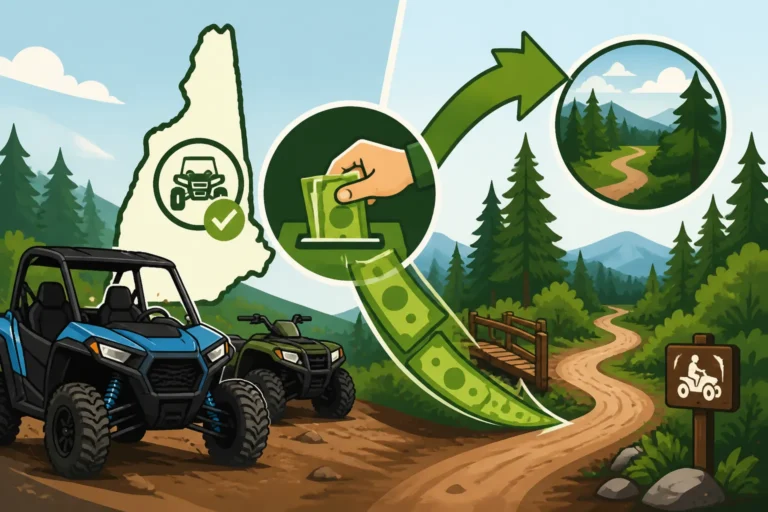
This requirement is a cornerstone of how New Hampshire manages its vast OHRV trail system. Without registration, there's no way to fund trail maintenance, signage, or safety patrols. It's a collective responsibility, and every time you see a well-maintained bridge or a clearly marked intersection on a trail, you're seeing your registration dollars at work. So, while it might feel like a hassle, it's truly essential for keeping our trails open and enjoyable for everyone. For a deeper dive into these regulations, check out [When New Hampshire Registration Applies].
Understanding the New Hampshire Registration Requirement
New Hampshire's approach to OHRV registration is pretty unique compared to some other states. We don't have separate "trail passes" or annual fees specifically for trail use. Instead, your OHRV registration is your trail pass for designated OHRV trails and approved roads. It's a bundled deal, and it's designed to be comprehensive.
Why Registration Exists: Funding Trails and Safety
The fees collected from OHRV registrations in New Hampshire are directly funneled back into the OHRV program. This is critical for the sustainability and growth of our extensive trail network. A significant portion of these funds goes towards trail maintenance, new trail development, signage, and education programs. Our trail system, particularly the "Ride the Wilds" network in the North Country, relies heavily on these registration dollars, complemented by the tireless efforts of volunteer OHRV clubs. These clubs often receive grants from the state that are funded by your registration money, allowing them to build bridges, clear fallen trees, and groom trails.
Beyond funding, registration is also a safety measure. It helps the state track machines and ensures that there's an accountable party for each OHRV operating outside of private property. While New Hampshire doesn't require OHRV insurance, the registration system still provides a layer of oversight, encouraging responsible riding and helping authorities identify machines in case of an accident or other incident.
The "Where" of Registration: Public Trails and Shared Corridors
Anytime you plan to ride on a designated OHRV trail in New Hampshire, your machine must be registered. This includes state-owned trails, club trails (which are often leased from private landowners with specific agreements), and even multi-use rail trails where OHRVs are permitted. These trails are clearly marked, and you'll typically see signage indicating OHRV use is allowed.
It's also important to remember that many OHRV trails share corridors with snowmobile trails in the winter. During the OHRV season, these are still considered public access points, and registration is mandatory. Don't assume that because a trail looks like a private logging road, it doesn't require registration. Always verify trail status and requirements with local clubs or the New Hampshire Bureau of Trails. For comprehensive information on how to get your machine registered, see [Registering an OHRV in New Hampshire].
Special Cases: Frozen Waters and Road Crossings
New Hampshire has some unique circumstances where registration is still required, even if you might not think of it as "riding a trail."
-
Frozen Lakes and Ponds: If you plan to take your OHRV out onto a frozen lake or pond, it absolutely needs to be registered. While it might feel like an open, unregulated space, any navigable body of water in New Hampshire is considered public property, and OHRV laws apply. Always check ice conditions and local regulations before venturing out, as safety is paramount on ice. The state specifically addresses this in regulations for OHRVs on frozen bodies of water. You can learn more about this in [New Hampshire Rules for Riding a Frozen Lake].
-
Road Crossings and Designated Ways: This is a big one that often catches people off guard. Even if you just need to cross a paved or gravel road to get from one section of private land to another, or to access a trail system, your OHRV must be registered. You cannot ride an unregistered OHRV on or across any public way. Additionally, many New Hampshire towns have opened certain roads or sections of roads to OHRV traffic as connectors to trails. If you're on one of these designated OHRV-friendly roads, registration is a must. Failing to register your OHRV for a quick road hop or crossing is a common infraction that can lead to fines. Make sure you understand all the nuances of this; [New Hampshire Rules for Crossing a Highway] offers helpful details.
The Consequences of Riding Unregistered in New Hampshire
Nobody wants to have their fun cut short by a law enforcement officer, especially not when you’re out enjoying the beautiful New Hampshire scenery. But riding an unregistered OHRV off your own property isn't just a minor oversight; it carries real legal and financial consequences. It’s important to understand these not to scare you, but to help you make informed decisions and ensure your adventures stay on the right side of the law.
Fines and Penalties: What You Could Face
Getting caught riding an unregistered OHRV in New Hampshire will almost certainly result in a fine. The exact amount can vary depending on the specific circumstances, but it's generally not a slap on the wrist. These fines are designed to deter unregistered operation and reinforce the importance of the registration system for trail funding and safety. You could be looking at a several hundred dollar penalty, which is far more expensive than simply paying for an annual registration.
Beyond the initial fine, repeated offenses or other accompanying violations (like operating recklessly or without a required safety certificate) could lead to more severe penalties. A conservation officer might also issue a warning or a court summons, depending on the situation. It’s always best to be prepared and registered to avoid these unnecessary hassles. You can find more information about the potential penalties in [New Hampshire Fines for an Unregistered OHRV].
Impoundment and Other Enforcement Actions
In some cases, if you're found operating an unregistered OHRV, especially if it's accompanied by other serious violations or a history of non-compliance, your machine could be impounded. Imagine having your day of riding abruptly ended, your machine loaded onto a trailer, and facing the fees and paperwork to get it back. It's a significant disruption and an additional financial burden that no rider wants. Impoundment is a tool law enforcement uses to ensure compliance and maintain safety on public lands and trails.
Furthermore, an unregistered machine might not be the only issue. An officer will also check for a valid safety certificate (if required by age), proper equipment, and adherence to other OHRV laws. An unregistered machine often opens the door to a more thorough inspection, potentially uncovering other issues. It's a domino effect you definitely want to avoid.
Why Risk It? The Benefits of Being Registered
When you weigh the cost of a registration against the potential fines, impoundment, and stress of a legal encounter, it's clear that registration is the far better path. An annual registration is a relatively small investment for peace of mind and full access to New Hampshire’s incredible trail network.
Beyond avoiding penalties, being registered means you're contributing directly to the trails you love to ride. You're supporting the clubs that maintain these trails, the signage that keeps you from getting lost, and the resources that promote rider safety. It's a way to be a responsible member of the OHRV community and ensure that these opportunities remain available for years to come. Plus, carrying your valid [New Hampshire's Printed Certificate and Two Decals] means you can confidently explore new areas without looking over your shoulder.
How to Get Your New Hampshire OHRV Registered
Registering your OHRV in New Hampshire is a fairly straightforward process, but it does require a few specific documents and choices about where to register. Don't let the paperwork deter you; once it's done, you're set for a full season of adventure!
The Basic Paperwork You'll Need
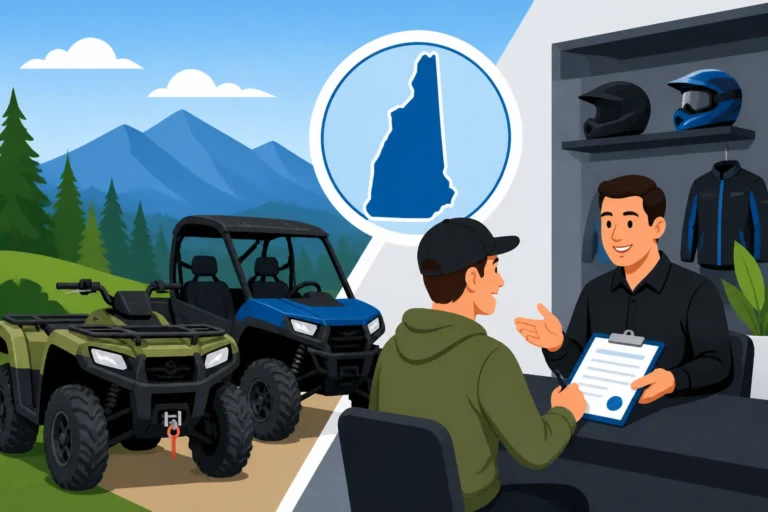
When you head in to register your OHRV, you’ll need to have a few key pieces of information and documents ready. This usually includes:
- Proof of Ownership: This is crucial. If you bought your machine new from a dealer, you'll likely have a Manufacturer's Statement of Origin (MSO). If you bought it privately, you'll need a bill of sale. New Hampshire does not title OHRVs, so the MSO or bill of sale is your primary proof of ownership. Make sure the bill of sale clearly identifies the machine (make, model, VIN/serial number) and includes the seller's and buyer's information, the date of sale, and the purchase price. If you’re buying a used machine, it’s always a good idea to confirm the seller has a valid bill of sale from when they acquired it. For an example of what to look for, check out [New Hampshire ATV Bill of Sale Requirements].
- Proof of Residency: If you're a New Hampshire resident, you'll need a valid New Hampshire driver's license or state ID. Non-residents will provide proof of residency from their home state.
- OHRV Registration Application: You’ll fill out a specific application form provided by the registering agent. This asks for details about you and your machine. You can often find a blank form online to fill out in advance, which can save time at the counter. [The New Hampshire OHRV Registration Application] provides more specifics on this.
- Club Membership (Optional, but Recommended): If you're a member of an approved New Hampshire OHRV club, bring your membership card or proof of membership. This will qualify you for a significant discount on your registration fee. We'll talk more about this soon, but trust me, it's worth it!
Where to Go: Dealers, Town Clerks, and Online Options
New Hampshire offers several convenient ways to get your OHRV registered:
- Powersports Dealers: Many authorized powersports dealers in New Hampshire can process OHRV registrations right when you buy a new machine, or even if you just need to renew. This is often the easiest route, as they are familiar with the process and can handle everything on the spot. They often have the necessary forms and can guide you through it.
- Town Clerks and Municipal Agents: A great number of town clerks throughout New Hampshire are authorized to register OHRVs. This is a fantastic resource, especially if you live in a smaller community. It's always a good idea to call ahead to your local town clerk's office to confirm their hours and that they process OHRV registrations, as not all do. Check out [Where to Register an OHRV in New Hampshire] for more on this.
- Online Registration: New Hampshire also provides an online system for renewing registrations. This is incredibly convenient for returning riders, allowing you to handle the process from the comfort of your home. However, initial registrations or certain transfers might still require an in-person visit.
- Fish and Game Department: While you can’t walk into every Fish and Game office to register, their main headquarters typically handles registrations, and they oversee the entire OHRV program.
LawDepot and Preparing for a Private Sale or Transfer
When you're dealing with buying or selling an OHRV privately, especially without a title, clear documentation is absolutely key. This is where tools like those offered by LawDepot can be incredibly helpful. Using a reliable template for a bill of sale or a general agreement can ensure that all the necessary details are captured, protecting both the buyer and the seller. A well-drafted bill of sale from a resource like LawDepot ensures you have the proper proof of ownership needed for registration.
For example, if you're selling your OHRV, creating a detailed bill of sale through a platform like LawDepot can help you document the sale terms, the vehicle identification number (VIN), and the transfer of ownership clearly. This protects you in case the new owner doesn't register the machine promptly or if there are any disputes later on. Conversely, if you're the buyer, having a solid bill of sale is your primary evidence of ownership when you go to register the machine in your name. LawDepot can offer templates that walk you through the necessary fields, helping you avoid common omissions that can hold up your registration at the counter.
Navigating Different Types of Land in New Hampshire
Riding an OHRV in New Hampshire is a fantastic experience, but it’s crucial to understand that not all land is created equal when it comes to access. The "rules of the trail" can vary significantly depending on whether you're on private property, state-owned land, or public roads. Knowing the distinctions will keep you out of trouble and ensure you’re always riding legally.
Private Land with Permission: The Importance of Written Consent
This is a common scenario: your friend owns a huge parcel of land, or maybe a neighbor says, "Sure, ride on my back forty!" While a verbal agreement might feel sufficient among friends, for OHRV use in New Hampshire, it’s highly recommended, and often legally necessary, to have written permission from the landowner.
Why the emphasis on written permission? First, it protects you. If a conservation officer stops you, a piece of paper signed by the landowner stating you have permission to ride their property can save you a lot of grief. Second, it protects the landowner. It can clarify boundaries, usage terms, and demonstrate that they are aware of and approve of your activity, which can be important for liability reasons. Without it, you could inadvertently be accused of trespassing, even if you thought you had permission.
A simple letter stating the landowner's name, the rider's name, the date, and a description of the land (e.g., "my property at 123 Main St, Anytown, NH") is usually sufficient. Some riders even carry a small, pre-printed form for landowners to sign. You could even use a basic legal document template from a service like LawDepot to create a more formal permission slip, detailing specifics like dates or restricted areas. This provides a clear, undeniable record of permission. For more details, consult [New Hampshire Landowner Permission Rules].
State-Owned Land and Designated Trails
New Hampshire boasts extensive state-owned lands, including state parks and forests, and within these, there are often designated OHRV trails. When riding on state land, you are generally required to stick to marked, open trails. Venturing off-trail on state land is almost always prohibited and can lead to fines and environmental damage. These rules are in place to protect natural resources, wildlife habitats, and to ensure the safety of all recreational users.
It's important to remember that state-owned land might also have specific rules regarding hours of operation, noise limits, or even vehicle width restrictions. Always check the specific regulations for the state park or forest you plan to visit. The New Hampshire Bureau of Trails website is an excellent resource for current trail maps and conditions. Your OHRV registration is your permission to be on these trails, but it doesn't grant you carte blanche to ignore other rules.
Roads and Public Ways: A Separate Set of Rules
As mentioned earlier, riding on public roads or even crossing them is a regulated activity for OHRVs in New Hampshire. By default, most public roads are closed to OHRVs. However, many towns have taken advantage of state law to open certain town roads to OHRV traffic, typically as connectors between trail systems or to allow access to local businesses. These are clearly marked with OHRV signs.
When riding on these designated OHRV roads, you must obey all traffic laws, including speed limits (which are often lower for OHRVs), stop signs, and yielding to conventional vehicle traffic. Your OHRV must also meet certain equipment requirements, such as lights, mirrors, and spark arrestors. You must pull over to the far right for conventional vehicles, and your OHRV needs to be properly registered.
It’s crucial to understand that riding an unregistered OHRV on any public way – even if it’s an OHRV-friendly town road – is a direct violation. You also cannot ride on state-maintained routes (like Route 2 or Route 16) unless explicitly permitted for a specific section within a town that has opened it up (like parts of Gorham). Always do your homework before riding on any public road; don't assume. For more on town roads and OHRVs, check [New Hampshire Towns That Allow OHRVs on Roads].
Beyond Registration: Other Essentials for Riding in New Hampshire
While getting your OHRV registered is a huge step, there's more to responsible and enjoyable riding in New Hampshire than just having your decals. A few other key elements will ensure your safety, enhance your experience, and keep you in good standing with the law and fellow riders.
Safety Certificates and Age Requirements
New Hampshire takes rider safety seriously, especially when it comes to younger operators. While adults (18 and older) who hold a valid driver's license generally don't need a separate OHRV safety certificate, minors do.
- Riders 12 and Over: Anyone aged 12 or older must complete an approved OHRV safety course and carry a valid safety certificate if they do not possess a valid driver's license. This certificate is crucial for riding on public trails and lands. The courses cover safe operating practices, environmental awareness, and OHRV laws. This is a critical step for younger riders to gain the knowledge and skills needed to safely operate an OHRV. For a deep dive into this, refer to [New Hampshire's Safety Certificate at Twelve].
- Riders Under 12: Children under the age of 12 may only operate an OHRV on private property or as a passenger on an OHRV that is approved for carrying passengers. They cannot operate an OHRV on public trails or designated roads, even with a safety certificate.
- Adults Without a Driver's License: If you are 18 or older but do not possess a valid driver's license, you do need to complete an OHRV safety course and carry the certificate. This ensures that every adult operator on public land has received some formal safety education.
It's not just about the law; it's about being safe out there. The trails can be challenging, and understanding proper riding techniques and etiquette is vital.
Club Membership: More Than Just a Discount
Joining a New Hampshire OHRV club is one of the best decisions you can make as a rider. Yes, it comes with a fantastic financial incentive – a significant discount on your annual OHRV registration fee. In fact, for both residents and non-residents, joining a club can save you a good chunk of change on your registration, often making the cost of membership nearly pay for itself. For example, [Why Club Membership Saves $30 in New Hampshire] explains the direct financial benefit.
But beyond the discount, club membership is about community and conservation. These local clubs are the backbone of New Hampshire's OHRV trail system. They are volunteer-run organizations that:
- Maintain Trails: Members dedicate countless hours to clearing trails, building bridges, installing signage, and grooming surfaces.
- Build Relationships with Landowners: Clubs work tirelessly to secure and maintain landowner permission, which is crucial for trail access. Without these relationships, much of our trail system wouldn't exist.
- Advocate for Riders: Clubs represent riders' interests at local and state levels, advocating for new trails, fair regulations, and funding.
- Organize Events: From group rides to poker runs and charity events, clubs offer opportunities to connect with fellow enthusiasts.
When you join a club, you're not just getting a discount; you're directly supporting the trails you love and becoming part of a passionate community. It's an investment in the future of OHRV riding in New Hampshire. When completing your registration, you'll simply show proof of your club membership, which can be a membership card or a letter from the club, and the discount will be applied.
Essential Gear and Equipment Checks
Before you ever hit the trails, beyond registration and safety certificates, always do a thorough check of your machine and your gear.
- Helmets and Eye Protection: While helmets are only legally required for riders under 18 (and all passengers under 18), they are strongly recommended for everyone. Eye protection is also required unless your OHRV has a windshield. Don't skimp on safety gear; an unexpected branch or kicked-up rock can ruin your day – or worse.
- Spark Arrester: All OHRVs operating in New Hampshire must be equipped with a spark arrester that is in good working order. This is a crucial fire prevention measure, especially during dry seasons.
- Lights and Mirrors: If you plan to ride on designated OHRV roads, or if there's any chance you'll be out at dusk or after dark, your machine must have functional headlights and taillights. A rear-view mirror is also typically required for road use.
- Tires and Brakes: Before every ride, give your tires a quick once-over for pressure and damage, and test your brakes to ensure they're responsive.
- Emergency Kit: Consider carrying a small emergency kit with basic tools, a first-aid kit, water, snacks, and a way to communicate (like a fully charged cell phone, though coverage can be spotty in the backcountry).
- Registration and Certificate: Always carry your physical OHRV registration certificate and, if applicable, your safety certificate with you while riding. Keep them in a waterproof bag or container.
Being prepared with the right gear and a well-maintained machine makes for a much safer and more enjoyable ride for everyone.
Disclaimer
This article is for general informational purposes only and does not constitute professional advice. Laws, prices and regulations vary by location and change over time. Consult a qualified professional for guidance on your specific situation.